Sleeping, Travel, and Posture Guide: First Month After Breast Augmentation
The main rule for your first 30 days is simple. Keep your body stable and protect your incisions.
Your body is now adjusting to the implants. Avoid sudden movements and keep your posture supportive. This stops the implants from shifting and lowers swelling for a natural look.
At Kalpana Aesthetics, Dr. Vishal Purohit (M.Ch. Plastic Surgery) focuses on your needs. He helps you handle this transition with confidence.
Follow these expert tips to make your recovery smooth. Whether you are sleeping or traveling, these steps help. For full care, Dr. Purohit offers personalized breast augmentation in Jaipur to boost your beauty and confidence.
Move carefully and use the right support this month. This protects your results and ensures a beautiful, long-term outcome.
Optimal Sleeping Positions for Implant Stability

How you sleep matters for your recovery. You want to avoid implant displacement. This is when the implant moves out of its correct place.
Keeping the implants still ensures your results look natural and symmetrical. Avoid putting pressure on your incisions, which are the surgical cuts.
Direct pressure can cause pain or slow down your healing. Back sleeping is the safest choice to keep your chest stable.
Use pillows for elevation. Prop your upper body up at a slight angle to reduce swelling.
This makes you more comfortable. It also helps you recover faster.
Sleeping on the Back: The Gold Standard
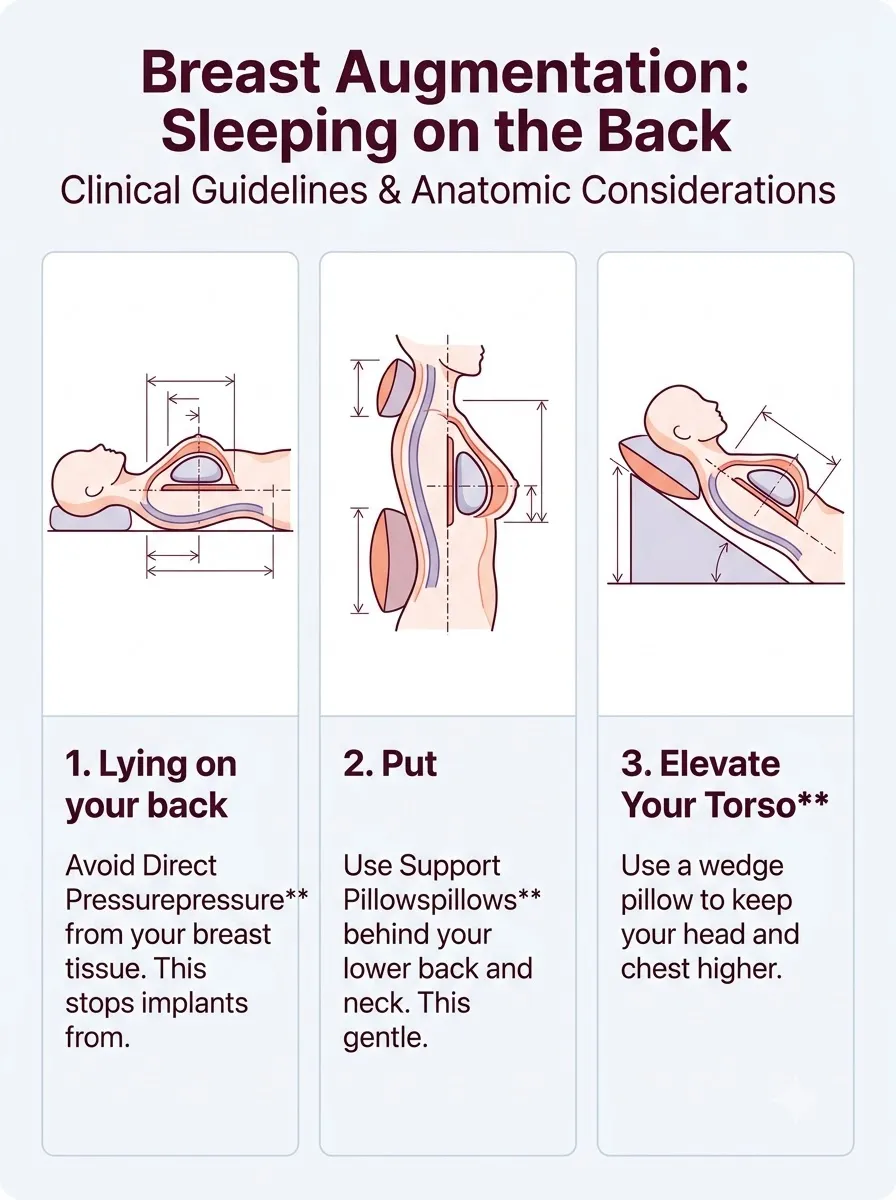
Sleeping in the supine position (lying flat on your back) is the best way to heal. This keeps your chest open and protects your new shape.
Follow these steps to sleep safely:
- Avoid Direct Pressure: Lying on your back removes all pressure from your breast tissue. This stops implants from shifting while they settle.
- Use Support Pillows: Put pillows behind your lower back and neck. This gentle slope keeps you from rolling over.
- Elevate Your Torso: Use a wedge pillow to keep your head and chest higher than your waist. This drains fluid to lower swelling.
- Secure Your Surroundings: Put pillows on both sides of your body. This creates a “nest” to lock you in place all night.
Side Sleeping: Precautions and Timing

Side sleeping is usually a bad idea early in your healing. Sleeping on your side puts uneven pressure on your chest.
This can lead to an implant shift. This means the implant moves from where it should stay.
Follow this recovery timeline to stay safe:
- Weeks 1 to 2: Do not sleep on your side. Stay on your back so your implants settle in the right spot.
- Weeks 3 to 4: You can try side sleeping if it feels okay. Only do this if your surgeon says it is okay.
- Use a Support Pillow: Put a pillow between your arms and chest. This stops you from rolling too far onto your incisions.
- Check for Symmetry: Check that your breasts look even when you wake up. Go back to sleeping on your back if you feel any pulling.
Stomach Sleeping: Risks and Restrictions

Do not sleep in the prone position (lying on your stomach) during your first month. This position puts too much weight on your chest.
Follow these rules to protect your results:
- Avoid Direct Pressure: Lying on your stomach pushes the implant against your ribs. This can move the implant out of place.
- Reduce Incision Tension: Sleeping face down pulls on your skin. This increases incision tension, which can cause scars to open or widen.
- Protect the Surgical Site: Your surgical site needs time to bond. Putting weight on it too early disrupts the healing process.
- Prevent Displacement: Implants shift more easily when you press them directly. Keep your chest clear so your results look natural and symmetric.
Support Garments and Sleep Compatibility
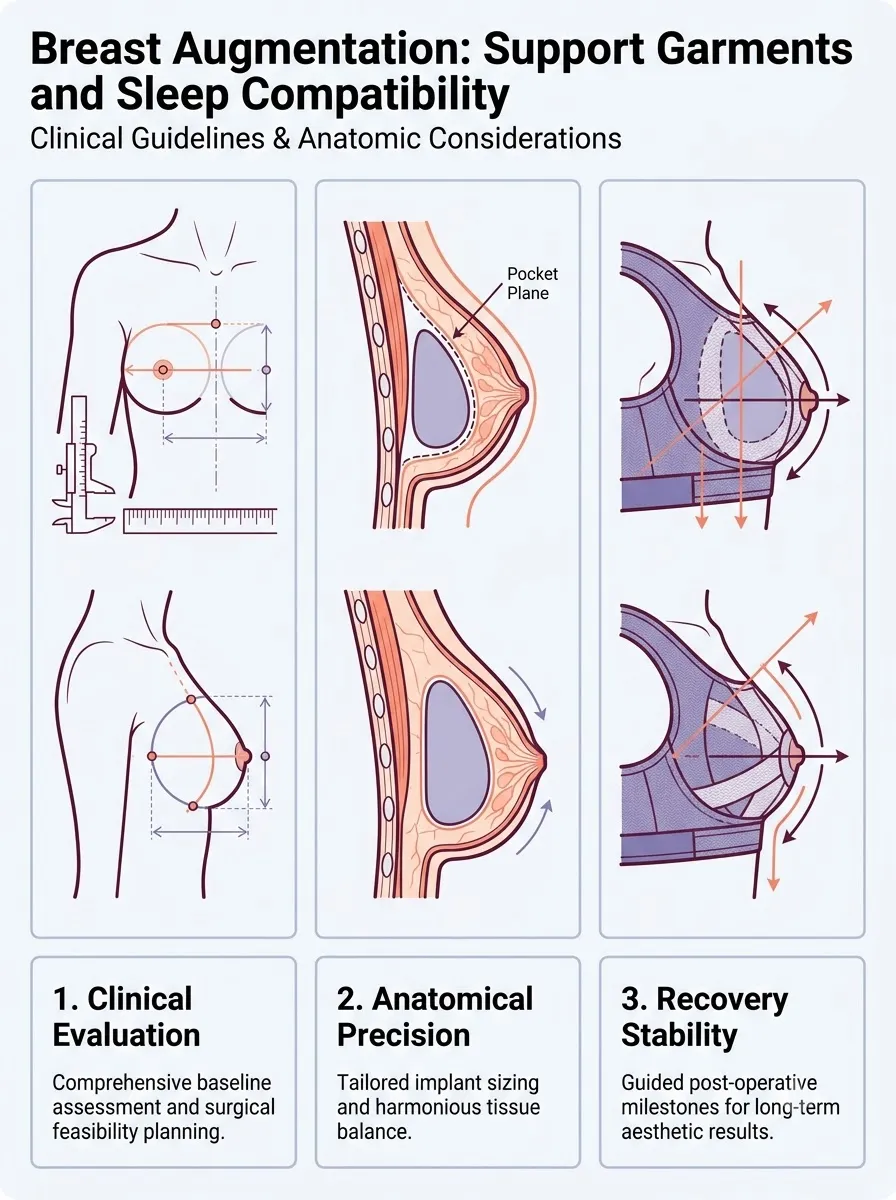
You must wear a surgical bra when you sleep. This support garment stops your implants from shifting while you rest.
Using a post-surgical bra helps. It gives you better implant stability and a more natural shape.
A firm sports bra or compression bra limits movement. This lowers your pain and keeps implants in place at night.
A proper fit is key to maintaining soft tissue support. This ensures that “there should be some overlap of a patient’s goals and what range is best to maintain soft tissue support.”
Managing Posture to Minimize Incision Tension
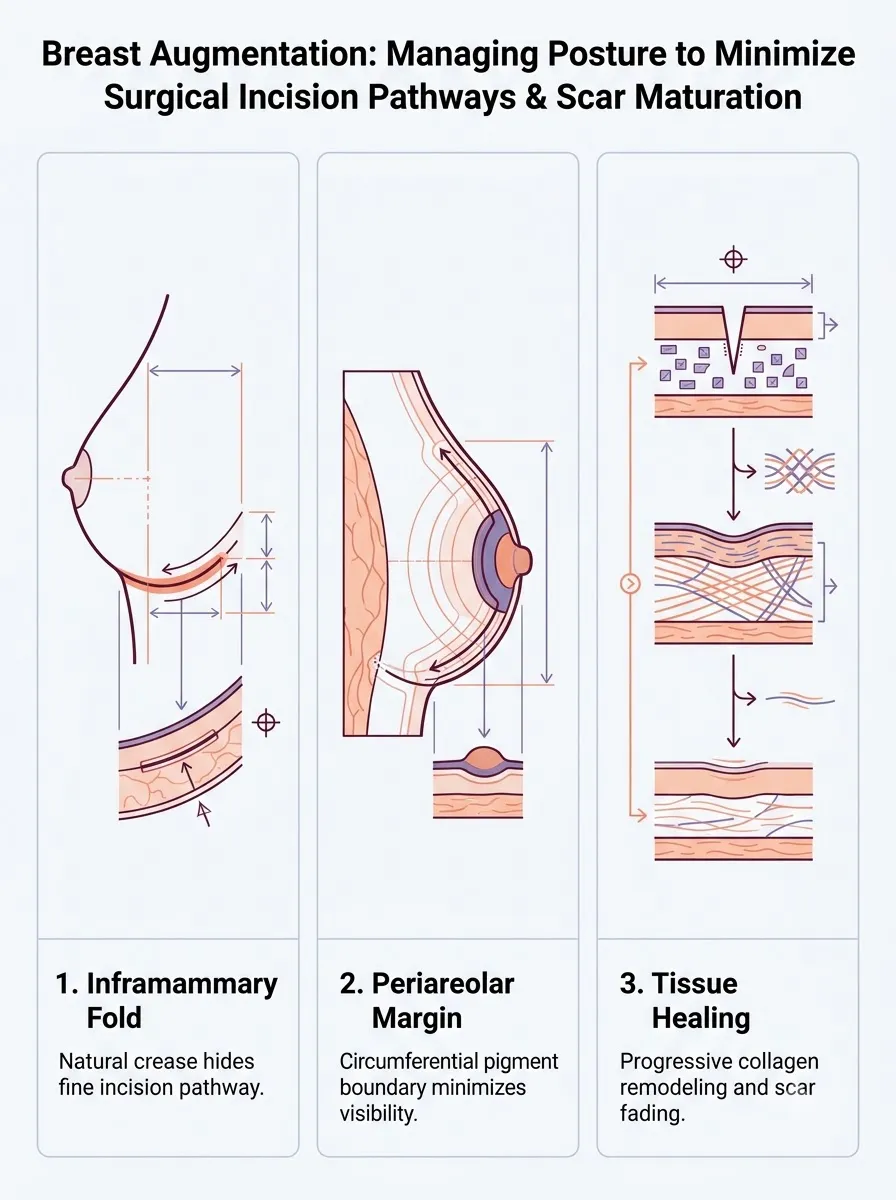
How you sit and stand changes how your skin stretches. Slouching pulls the skin tight across your chest.
This creates posture-induced tension. This can stress your incision sites.
Too much surgical site strain can lead to wider scars. Keep your shoulders back and your spine straight.
This protects your aesthetic outcome. It stops the skin from reaching “the limit of its elastic deformation” which could cause peripheral skin blistering and breakdown1.
Ergonomic Sitting and Standing Guidelines
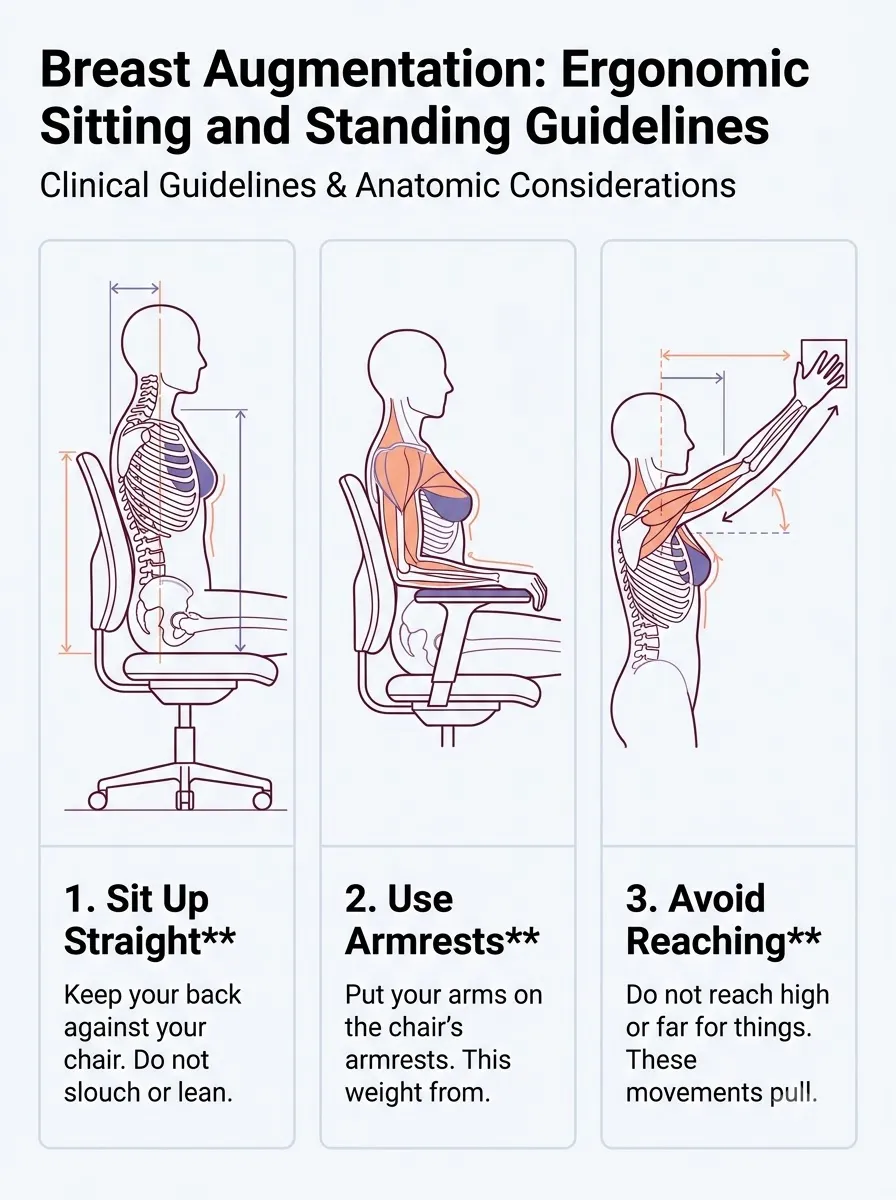
You must move carefully every day to protect your results. Good sitting posture keeps the skin on your chest from stretching too much.
Follow these steps to lower upper body tension and protect your incisions:
- Sit Up Straight: Keep your back against your chair. Do not slouch or lean forward. This stops your chest skin from pulling tight.
- Use Armrests: Put your arms on the chair’s armrests. This removes weight from your chest muscles.
- Avoid Reaching: Do not reach high or far for things. These movements pull on your chest.
- Getting Out of a Chair: Turn your whole body toward the exit. Push up using your legs. Do not pull yourself up with your arms.
- Stand Naturally: Keep your shoulders relaxed and slightly back. Do not hunch over your laptop or phone.
- Limit Bending: Keep your chest upright when you pick things up. Bend your knees instead of your waist.
Travel Guidelines: From Road Trips to Air Travel
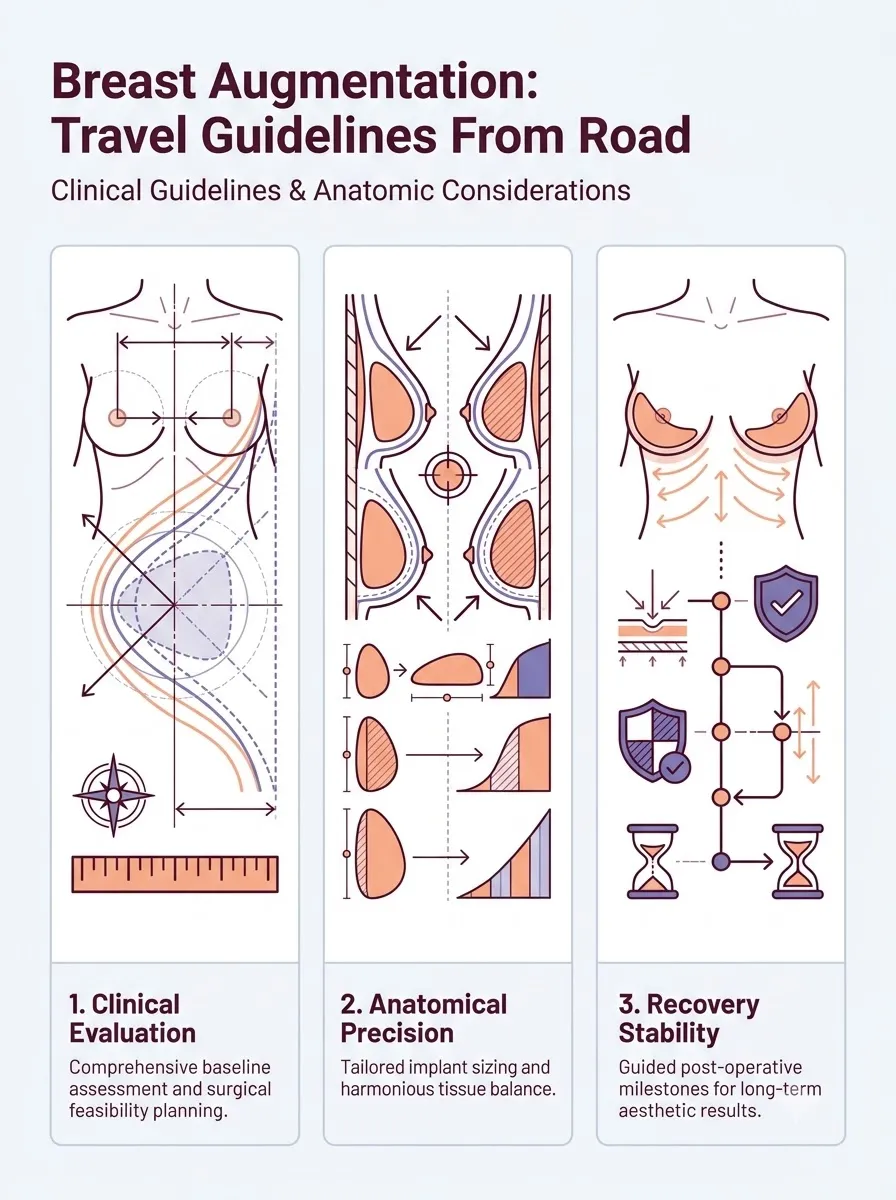
Traveling too soon after surgery can stress your body. Your body needs to stay stable to heal the surgical site.
Moving around or changing environments can increase postoperative swelling. This happens when fluid builds up in your tissues.
Air travel has special risks like cabin pressure. This pressure change can cause more inflammation in your chest.
It may make your breasts feel tight or sore. Long trips also increase your DVT risk.
This is when a blood clot forms in the deep veins of your legs. You must move your legs often to keep your blood flowing.
Doing this protects your health while you recover.
Air Travel: Pressure and Inflammation Risks
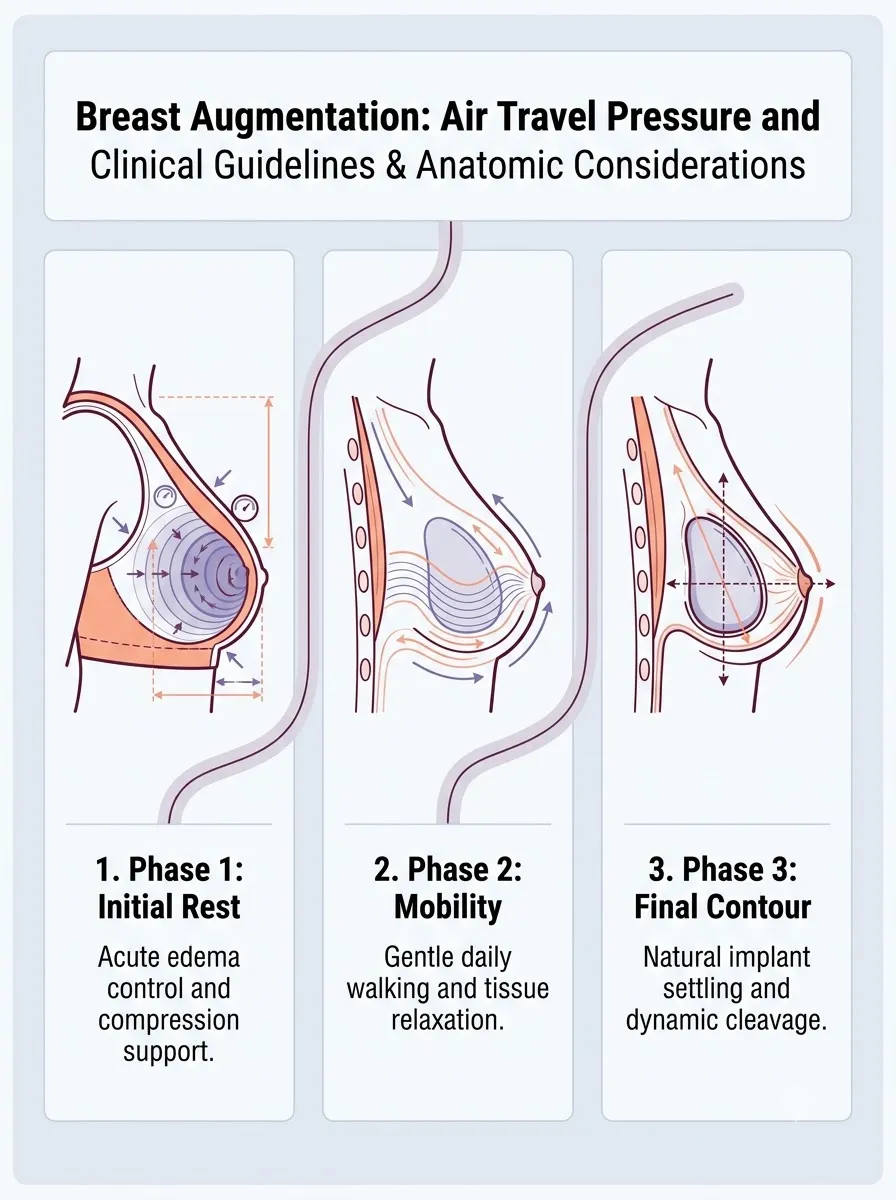
Flying too soon after surgery can stress your body. Changes in air pressure and long sits increase swelling. Use this guide for your flight safety and a smooth recovery.
| Risk Factor | Why it Happens | How to Prevent It |
|---|---|---|
| Cabin Pressure | Air pressure changes can cause fluid to build up in your tissues. | Wear your surgical bra to manage swelling and pain and support the implants. |
| Blood Clots (DVT) | Sitting still for hours slows down blood flow in your legs. | Wear medical compression stockings and walk the aisle every hour. |
| Chest Tension | Seatbelts and tight clothing can rub against your incisions. | Wear loose, button-down shirts and adjust the seatbelt to avoid direct pressure. |
| Dehydration | Dry cabin air makes it harder for your body to heal. | Drink plenty of water to keep your skin and tissues hydrated. |
Vehicle Ergonomics for Local Transit
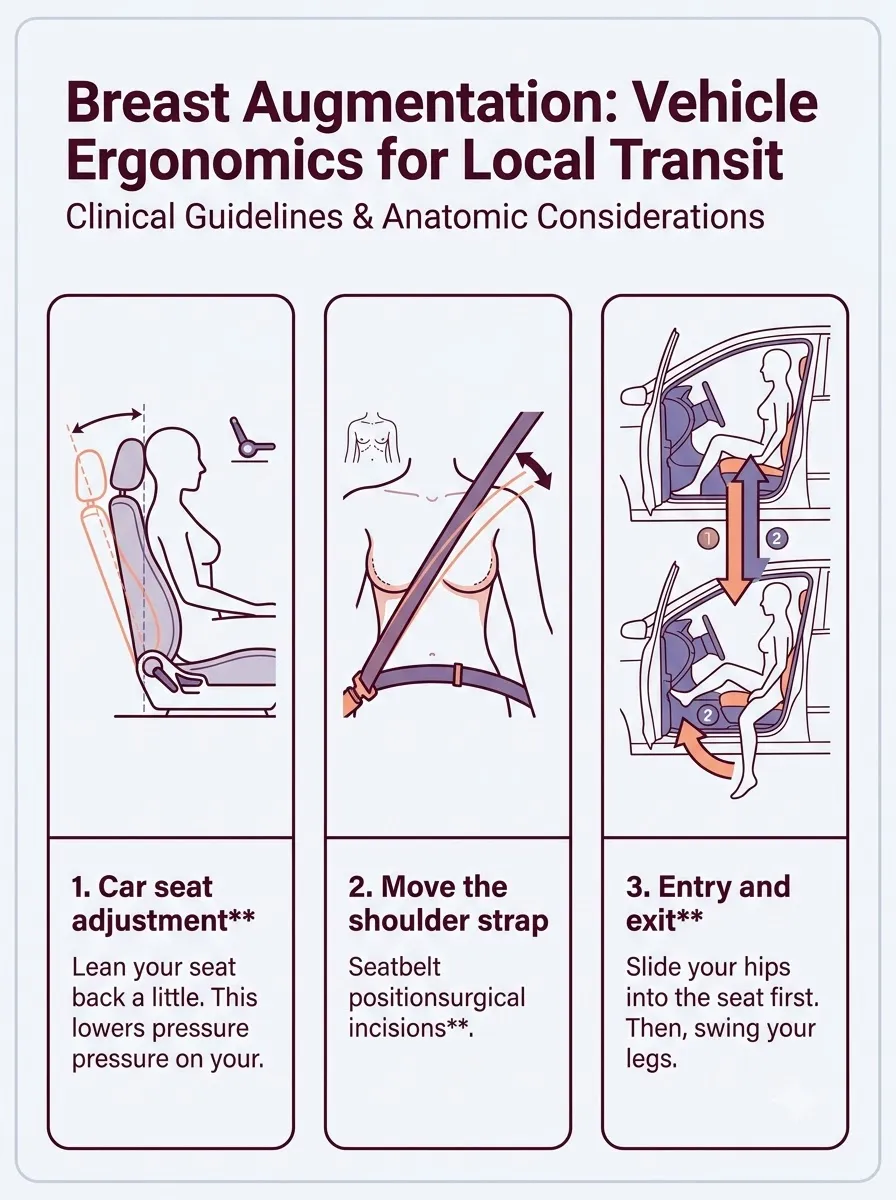
Are you going to a check-up or running an errand? You need a plan for your Kalpana Aesthetics commute.
Small bumps in the road can hurt if you sit the wrong way. Use these tips to stay comfortable in the car:
- Car seat adjustment: Lean your seat back a little. This lowers pressure on your chest and keeps your spine straight.
- Seatbelt position: Move the shoulder strap slightly out. You can also use a soft cloth pad. This stops the belt from rubbing your surgical incisions.
- Entry and exit: Slide your hips into the seat first. Then, swing your legs inside. This keeps you from twisting your body or straining your chest.
- Support: Put a small, soft pillow between your chest and the belt. Use this if you feel any rubbing. It adds a layer of protection while you ride.
Frequently Asked Questions
What is the best sleeping position after breast augmentation surgery?
Patients must sleep exclusively on their back with the head and torso elevated at 30 to 45 degrees on 2 to 3 pillows for the first 3 to 4 weeks, instructed by Dr. Vishal Purohit in Jaipur. Sleeping elevated minimizes chest edema and prevents accidental pressure from rolling over. As an M.Ch plastic surgeon, Dr. Purohit advises against sleeping on your side or stomach for at least 6 to 8 weeks.
When is it safe to travel by car or flight after breast enlargement in Jaipur?
Short local car rides can resume after 48 hours, while domestic flights and highway journeys are safely permitted 7 to 10 days post-operatively once cleared by Dr. Vishal Purohit in Jaipur. Cabin pressure changes in aircraft do not harm or rupture silicone implants. Dr. Purohit advises staying hydrated and performing calf flexes during travel to maintain venous circulation.
How should I maintain good posture without straining my pectoral muscles?
Patients frequently hunch forward instinctively to protect their chest, but Dr. Vishal Purohit in Jaipur advises gently rolling the shoulders back and standing tall to prevent secondary neck and upper-back spasms. Keep arm movements below 90 degrees (shoulder level) for the first 14 days to avoid pectoral muscle tension. Dr. Purohit demonstrates proper posture during your first follow-up visit.
When can I resume sleeping flat on my back or on my side?
Sleeping flat on your back is permitted around week 3, while side-sleeping can be cautiously resumed at week 4 to 6 with a soft pillow supporting the chest, approved by Dr. Vishal Purohit in Jaipur. Stomach sleeping must wait until month 3 when tissue capsules are completely mature. As an M.Ch. plastic surgeon, Dr. Purohit monitors pocket healing before clearing new sleeping angles.