
Injecting botulinum toxin into anterior neck muscles requires rigorous clinical evaluation before any procedure begins. Baseline respiratory capacity, swallowing function, and vocal cord stability must be thoroughly documented to protect patient safety. Weakening accessory breathing muscles can lead to serious difficulties in susceptible individuals.
Patients should understand Swallowing, Voice or Breathing Changes After Neck Botox: Red Flags because toxin spread can compromise adjacent airway structures. A comprehensive medical assessment ensures elective platysma treatments remain clinically sound and suitable for each individual.
Swallowing Breathing and Voice History
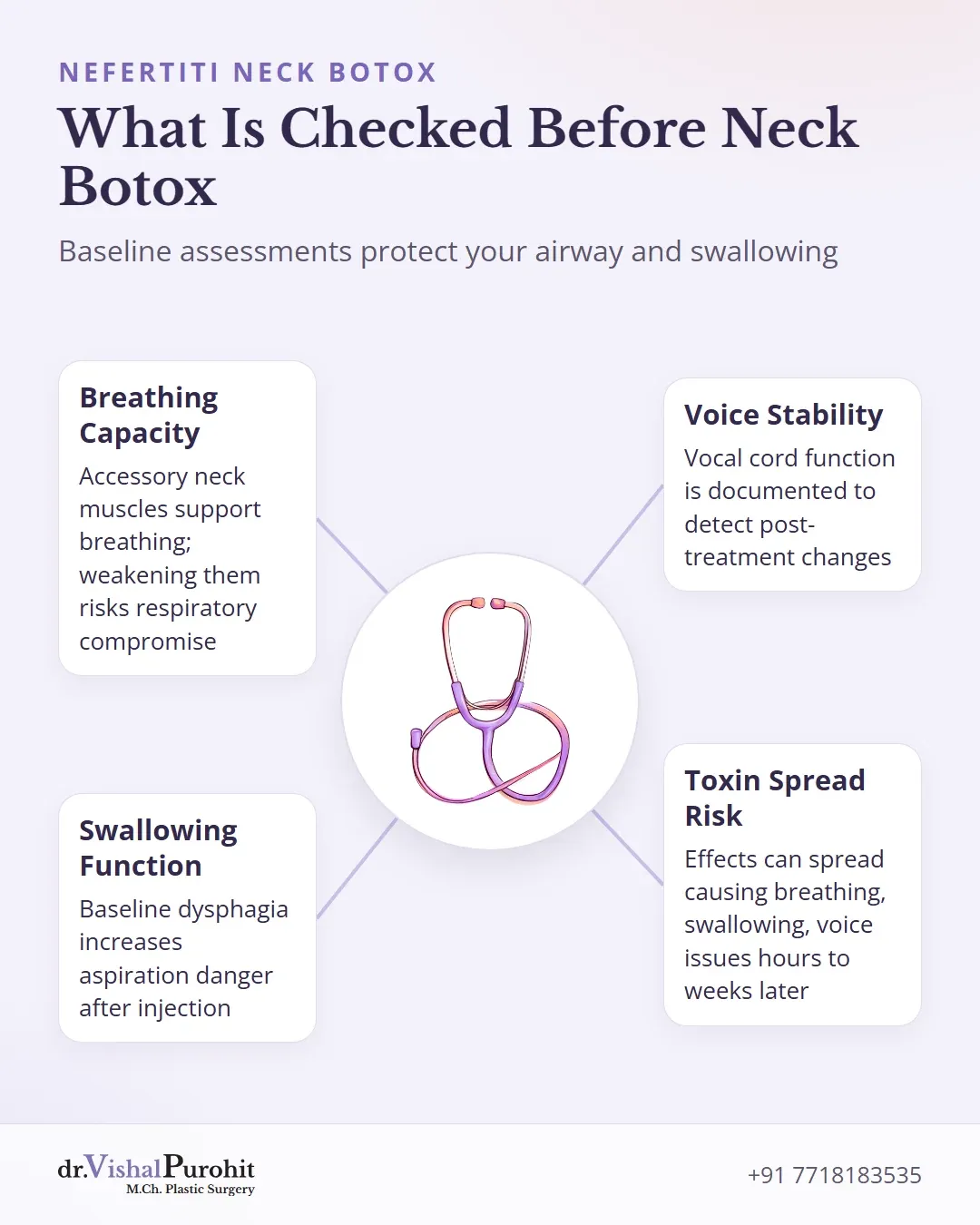
A detailed evaluation of past medical history and prior baseline difficulties is essential before any injection into the anterior neck muscles12. Treatment with botulinum toxins can weaken neck muscles that act as accessory muscles of ventilation, which may lead to a critical loss of breathing capacity in individuals with preexisting respiratory disorders who depend on these muscles34.
Furthermore, severe dysphagia has led to reported deaths after treatment4. Aspiration is a particular danger when treating individuals whose swallowing or respiratory function is already compromised4. In addition, postmarketing reports indicate that botulinum toxin effects can spread from the injection site to cause breathing difficulties, dysphagia, dysphonia, and dysarthria, with symptoms appearing hours to weeks after administration345. These adverse effects can be life-threatening345.
Dr. Purohit’s note: In his practice in Jaipur, Dr. Vishal Purohit assesses each patient’s medical history thoroughly during the consultation.
Any baseline weakness, respiratory impairment, or swallowing difficulty significantly alters the safety margin when treating the platysma. Patients who notice breathing, swallowing, or speaking problems after an injection require immediate medical care4.
Neuromuscular Disease and Previous Reactions

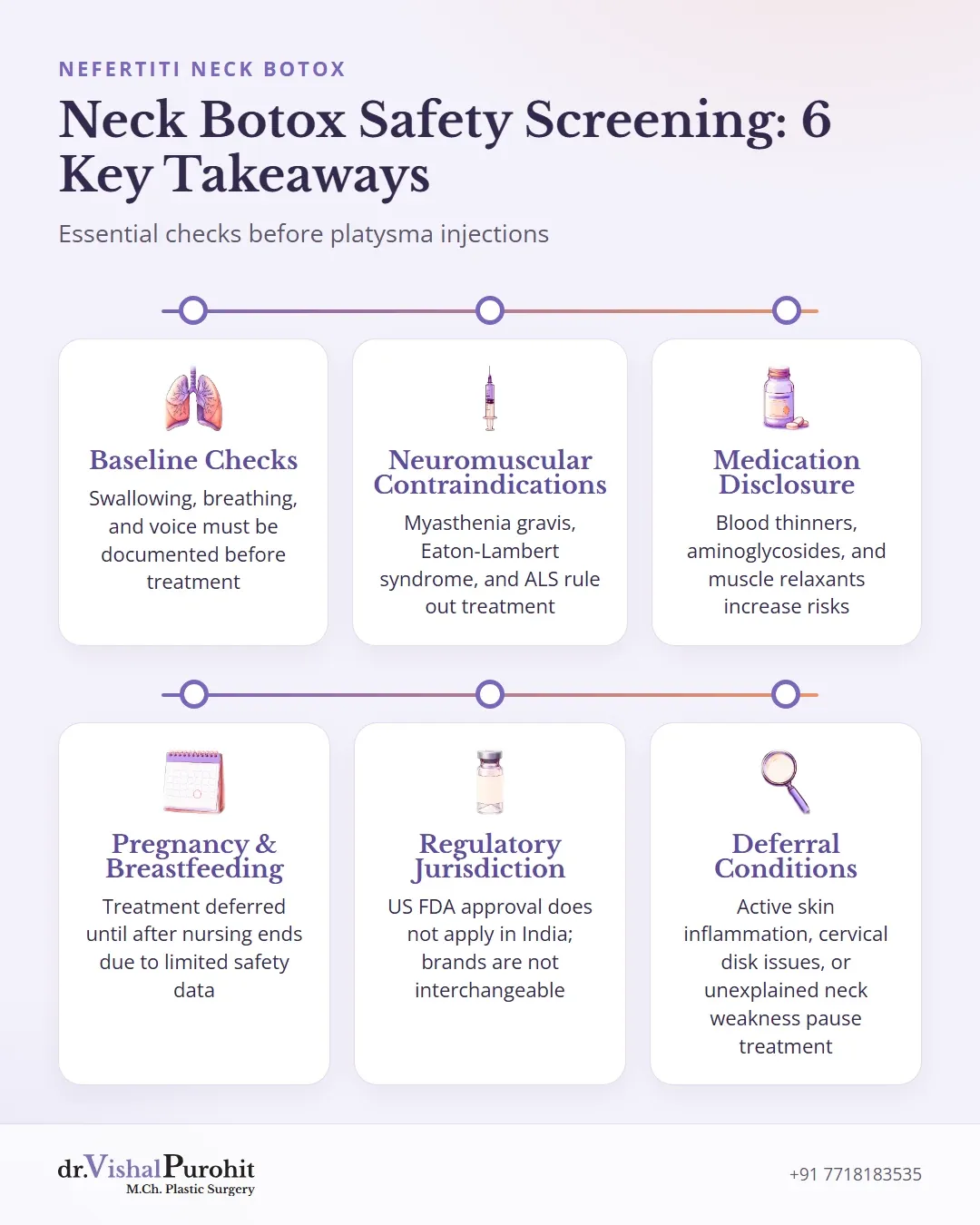
Certain medical conditions strictly contraindicate neurotoxin injections, including treatments targeting the platysma muscle67. During clinical screening, Dr. Vishal Purohit identifies factors that make treatment unsafe.
Clear Contraindications
Patients must not receive botulinum neurotoxin if they present with:
- Pre-existing neuromuscular disorders, including myasthenia gravis, Eaton-Lambert syndrome, or amyotrophic lateral sclerosis678.
- Known hypersensitivity or prior allergic reactions to botulinum toxin products or formulation ingredients such as albumin6789.
- Active cutaneous or local infections at or near the planned injection sites679.
Risks of Generalized Muscle Weakness
Systemic neuromuscular disorders impair transmission between nerves and muscles810. Introducing botulinum toxin can potentiate these underlying conditions, heightening vulnerability to generalized muscle weakness46. In affected individuals, treatment may lead to clinically significant complications, such as severe difficulty swallowing, speech changes, double vision, eyelid drooping, or respiratory compromise411.
Careful disclosure of all pre-existing nerve or muscle conditions, breathing problems, past adverse reactions, and skin infections is therefore essential prior to any proposed procedure57.
Disclosing Medicines and Prior Treatments

During the consultation, Dr. Vishal Purohit reviews a complete medical and treatment history. Patients must report all active prescriptions, over-the-counter drugs, and previous aesthetic procedures.
Certain medications alter how the body responds to treatment:
- Anticoagulants or blood-thinning therapies, which can increase bleeding or bruising risks9.
- Aminoglycosides, which can potentiate the neuromuscular blockade of botulinum toxin and increase muscle weakness51213.
- Agents affecting neuromuscular transmission, such as curare-type compounds or muscle relaxants513.
Patients must also disclose the dates and details of any recent botulinum toxin injections. Administering another botulinum neurotoxin before the effects of a prior dose have resolved can exacerbate excessive neuromuscular weakness5.
Patients must never independently pause, stop, or adjust their essential prescription medications without direct guidance from their treating clinician. Any necessary medication adjustments must be coordinated safely with the prescribing physician.
Pregnancy Breastfeeding and Elective Timing
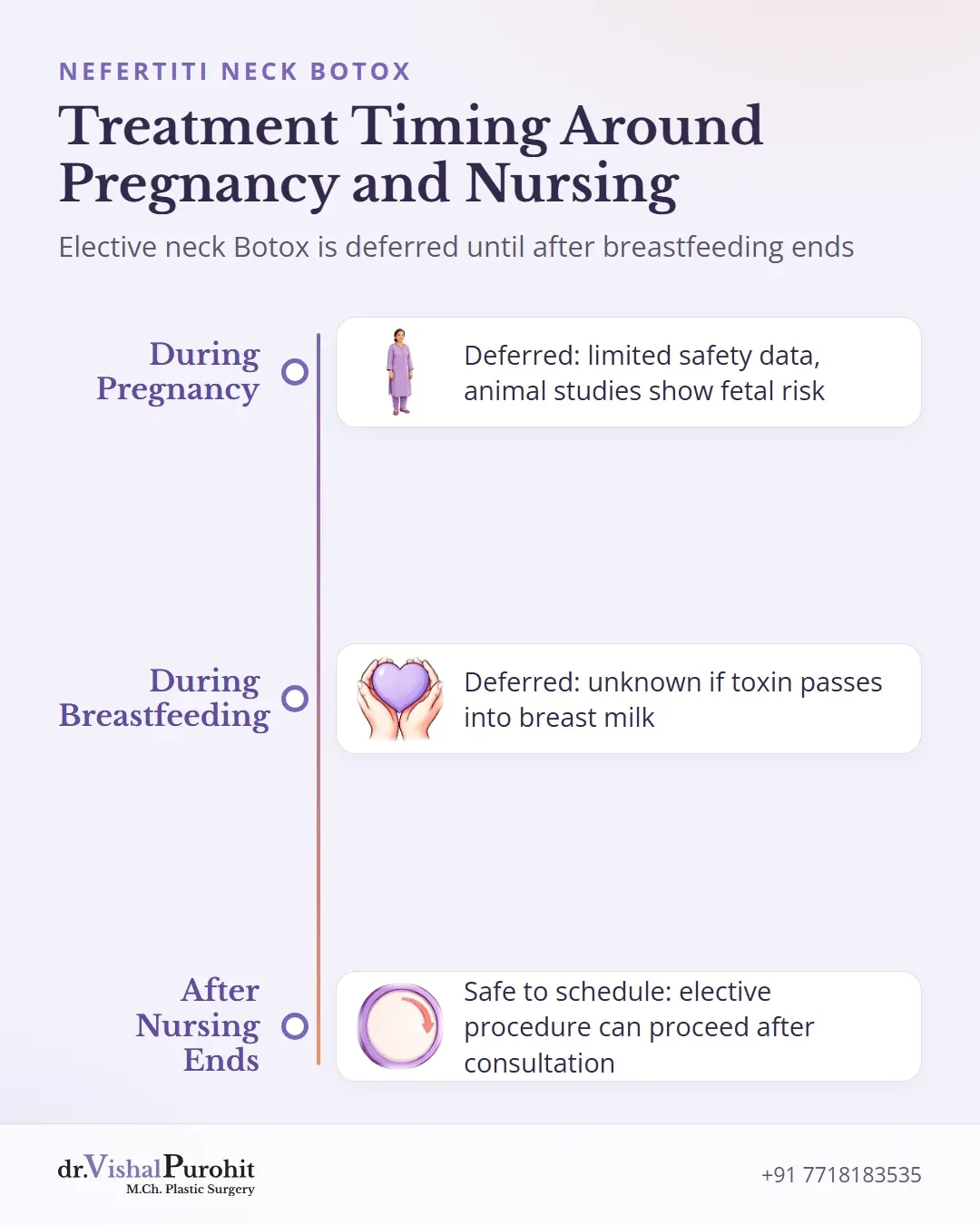
Clinical safety data for botulinum toxin type A administration during pregnancy and lactation remain limited14. Botulinum toxins are categorized as pregnancy category C715. Adverse fetal effects have been documented in animal studies, and it is not known whether the toxin causes fetal harm or affects human reproductive capacity215. Furthermore, whether botulinum toxin passes into human breast milk remains unconfirmed215. Consequently, clinical literature does not recommend administering injections to pregnant or breastfeeding women715.
Smoothing vertical neck bands and contouring the jawline is an entirely elective aesthetic procedure. In Dr. Purohit’s practice, patient safety remains the guiding principle. Treatment is deferred until both pregnancy and breastfeeding have fully concluded.
Key Considerations for Mothers
Product Labels and Consent Questions

Regulatory Approval and Jurisdiction
Regulatory approvals granted by foreign authorities, such as the US FDA for onabotulinumtoxinA in treating platysma prominence, apply specifically to those foreign jurisdictions and do not constitute regulatory approval in India16. In clinical research, regulatory approval applies strictly to a specific product and defined indication, rather than endorsing every individual muscle target within an anatomical region16.
Key points
- Foreign regulatory approvals do not constitute product approval within India.
- Dosing units cannot be interchanged or converted across different botulinum toxin brands.
- Informed consent must cover approved versus off-label indications and potential adverse effects.
Brand Non-Interchangeability
Treatment doses and individual brand units are not interchangeable across different botulinum toxin formulations1617. Dosing units originating from clinical studies of one formulation cannot be converted into presumed equivalent units of another product16.
Informed Consent Discussion
During the consultation, patients should review current Indian product labeling and informed consent:
- The specific brand selected and its approved indications versus off-label cosmetic use1617.
- The fact that dosing units are unique to that product and cannot be substituted unit-for-unit with another toxin1617.
- Potential adverse effects, including risks of dysphagia, dysphonia, or regional muscle weakness1819.
- Discussion of all realistic aesthetic expectations, alternatives, and the option of choosing no treatment.
Conditions Requiring Assessment or Deferral
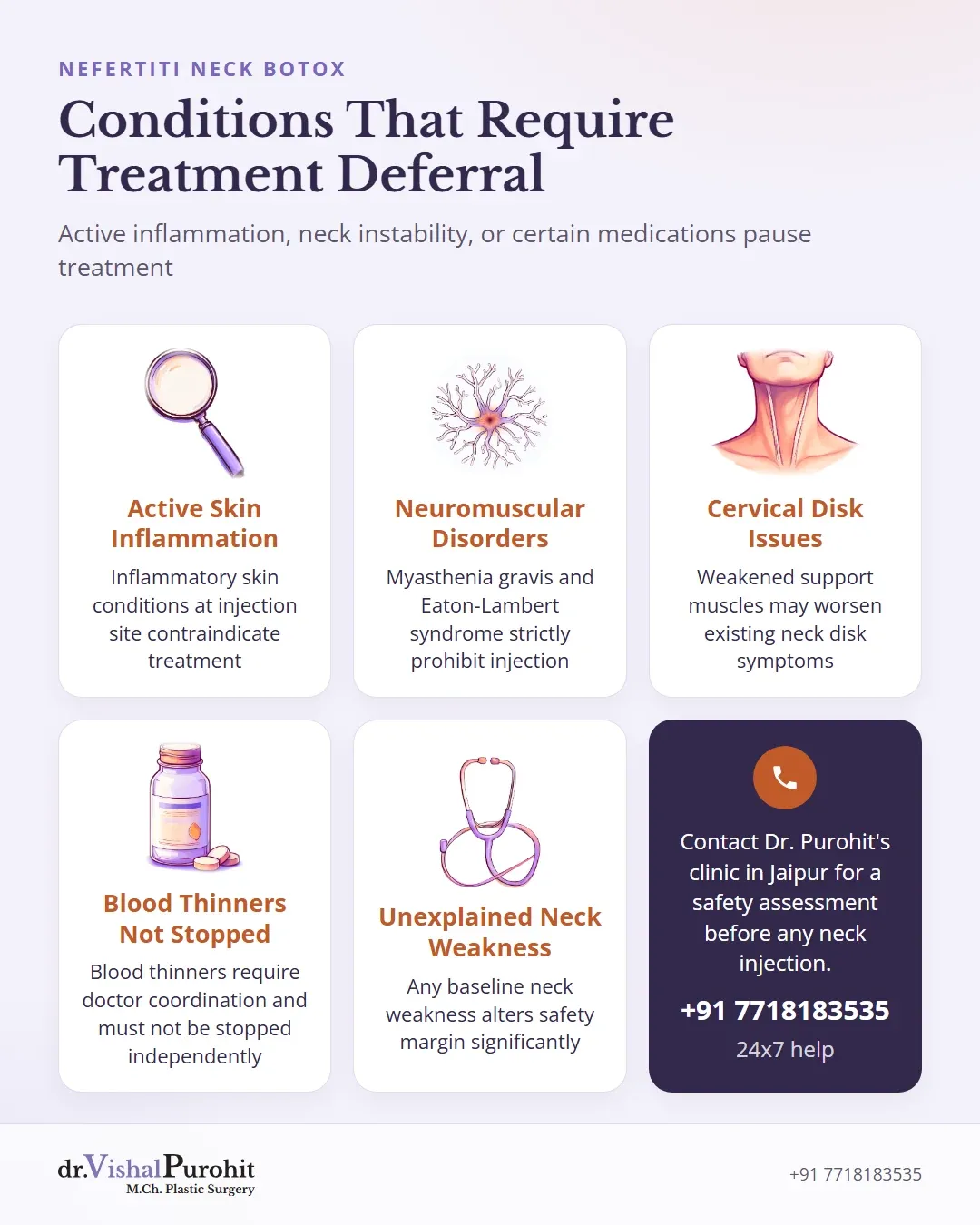
Patient safety takes precedence before performing injections into the platysma muscle. Botulinum toxin A should not be given in the presence of inflammatory skin conditions20. Likewise, patients diagnosed with myasthenia gravis, Eaton-Lambert syndrome, or those who are lactating should not receive botulinum toxin A20.
Key points
- Active skin inflammation and specific neuromuscular conditions require injections to be avoided or deferred.
- Pre-existing anatomical neck issues must be evaluated to prevent complications like muscle weakness or swallowing difficulty.
- Medication histories are reviewed prior to treatment to manage bleeding and bruising risks safely.
Pre-existing anatomical or neuromuscular issues require careful evaluation. Toxin spread into underlying structures can lead to dysphagia, dysphonia, or neck muscle weakness21. Diffusion into neck supporting muscles may cause difficulty controlling neck movement, and patients with cervical neck disk issues may experience worsened symptoms from weakened support muscles21. Consequently, active local inflammation, unexplained neck weakness, or unclear medical stability indicate treatment postponement rather than rushed intervention.
Which specific patients are declined or deferred in Dr. Purohit’s practice is decided at the consultation. A thorough medical and drug history is documented beforehand20. For individuals taking aspirin, nonsteroidal anti-inflammatory drugs, or vitamin E, these medications are stopped 7 to 10 days before treatment to avoid bruising20. Blood thinners are never stopped or changed on your own; any change is a decision for the doctor who prescribed them20.
Consultation and Safety Screening in Jaipur
Elective contouring of the jawline and platysma bands begins with comprehensive medical screening. Deciding whether treatment proceeds requires reviewing past health conditions, prescription medicines, and anatomical stability. Patients considering Nefertiti Neck Botox in Jaipur can review treatment details and examine Nefertiti Neck Botox FAQs to understand elective safety standards before scheduling an in-person consultation.
This is educational information, not medical advice.