
Dynamic neck cords form as the superficial platysma muscle pulls down during speech or expression. Over time, many adults find it difficult to tell whether visible neck aging stems from active muscular contraction or loose skin.
A systematic clinical evaluation separates muscular pull from tissue laxity before any procedure. Understanding key safety considerations through Neck Botox Health Screening: Swallowing, Breathing and Medicines helps clarify whether non-surgical relaxation suits individual neck anatomy.
What Changes When the Neck Contracts
The platysma is a broad, thin superficial muscle extending across the neck to the lower face and jawline12. Dynamic changes in neck contour become visible when speaking, smiling, or clenching the neck, as repeated activation pulls the superficial tissues and causes vertical cords to stand out134.
Distinguishing Muscular Bands from Structural Laxity
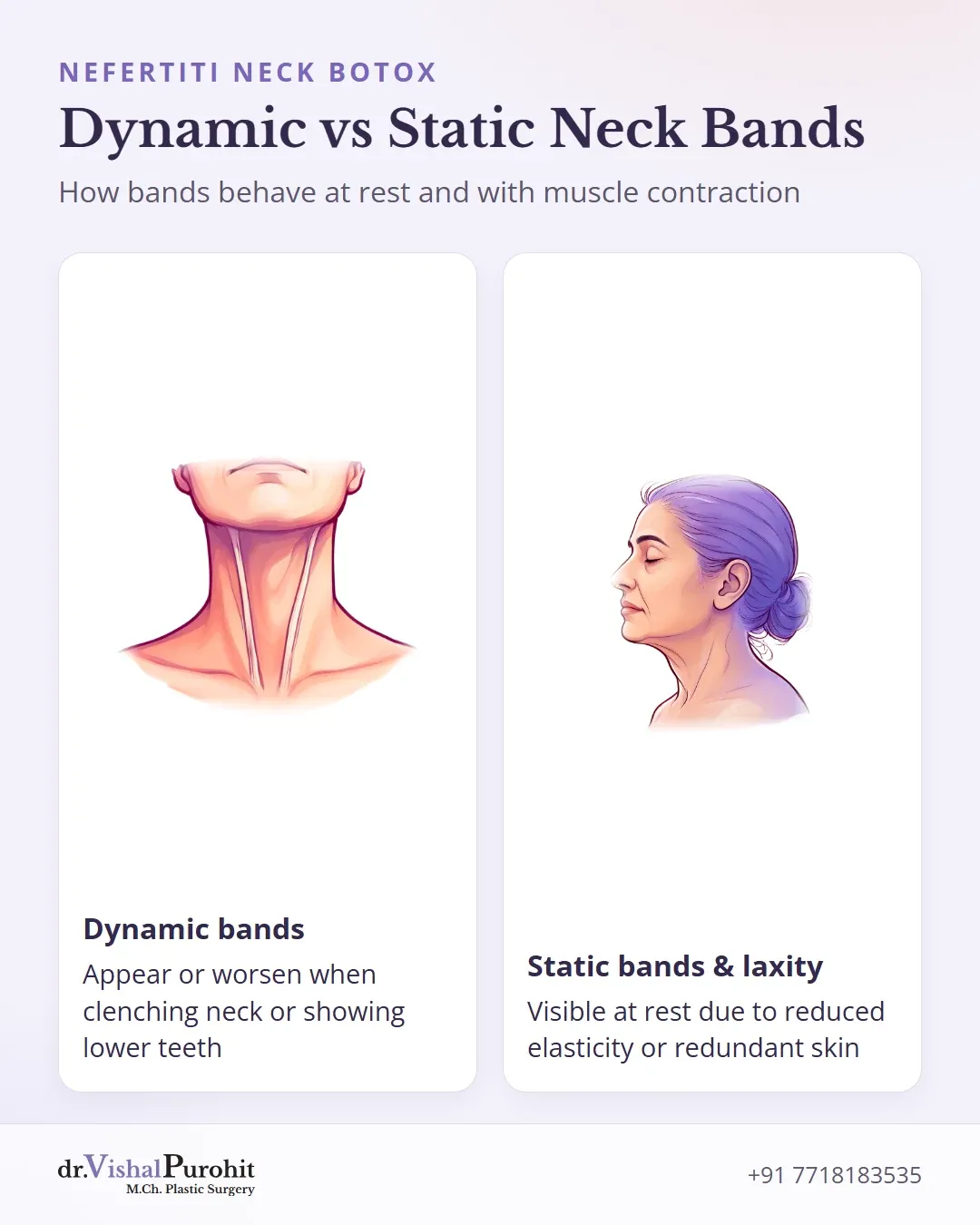
A systematic clinical assessment evaluates the neck both at rest and during active muscular contraction to clarify the origin of visible cords56:
- Dynamic bands: These appear or accentuate when clenching the neck muscles or showing the lower teeth, indicating active muscular tension in the superficial platysma345.
- Static bands and skin laxity: Changes visible at rest often relate to decreased fascia elasticity or loose, redundant skin rather than pure muscular hyperactivity356.
Patients with active dynamic muscular bands and minimal skin laxity achieve the most targeted improvements from botulinum toxin injections467. Where excess skin laxity or heavy structural descent predominates, neurotoxin treatment offers minimal change47.
Vertical Bands, Horizontal Creases and Glands
Vertical platysma bands differ fundamentally in anatomy from horizontal necklace creases, submental fat, and prominent salivary glands.
Dr. Purohit’s note: In his practice in Jaipur, Dr. Vishal Purohit assesses each anatomical layer carefully before advising on care, as botulinum neurotoxin type A acts exclusively on active muscular pulling.
Distinguishing Anatomical Concerns
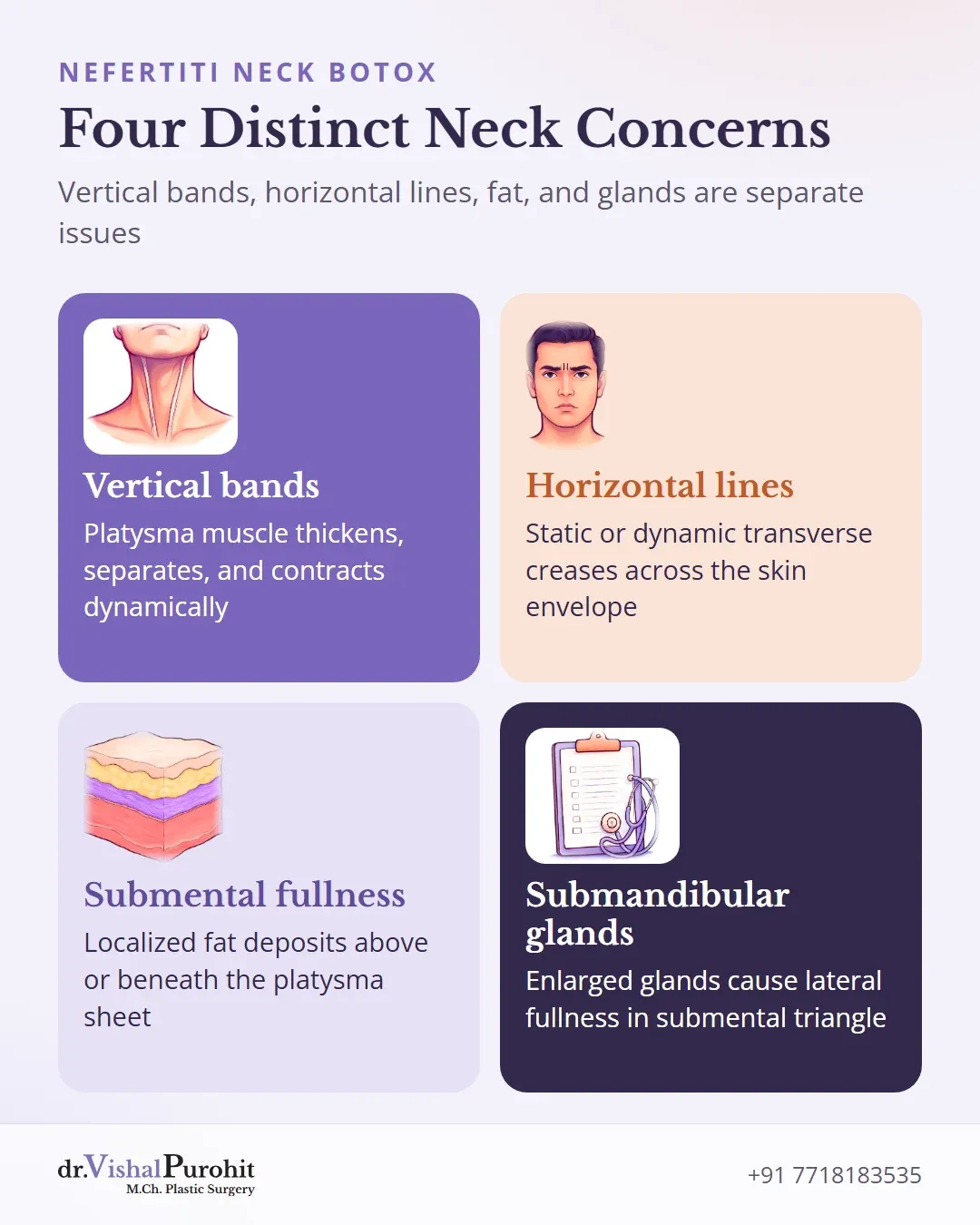
A youthful neck typically features a smooth contour without vertical chords, noticeable fat excess, or protruding submandibular glands8. Different neck issues stem from distinct tissues:
- Vertical bands arise when the superficial platysma muscle thickens, separates anteriorly, and contracts dynamically189.
- Horizontal neck lines are static or dynamic transverse creases across the skin envelope810.
- Submental fullness involves localized fat deposits situated above or beneath the platysma sheet811.
- Lateral fullness in the submental triangle often stems from enlarged or prominent submandibular salivary glands1213.
Limits of Neurotoxin Treatment
Botox relaxes muscle fibers; it cannot dissolve localized fat deposits or physically reposition bulging submandibular salivary glands812. Furthermore, literature notes that while platysma bands respond consistently, treating horizontal neck lines with neurotoxin remains less predictable9. Addressing fat excess or deeper gland prominence requires alternative clinical modalities rather than muscular neuromodulation alone810.
Why Elasticity and Contour Affect Suitability
The aesthetic outcome of platysma injections depends heavily on baseline tissue quality. When dynamic muscle contraction pulls the neck into vertical cords, softening that tension allows the overlying skin to redrape smoothly over the deeper structures, provided tissue recoil remains intact1415. Retained skin elasticity and active muscle pulling are the primary characteristics seen in patients who achieve favorable jawline and band improvement141516.
Key points
- Platysma injections deliver favorable results when active muscle pulling occurs alongside good skin elasticity.
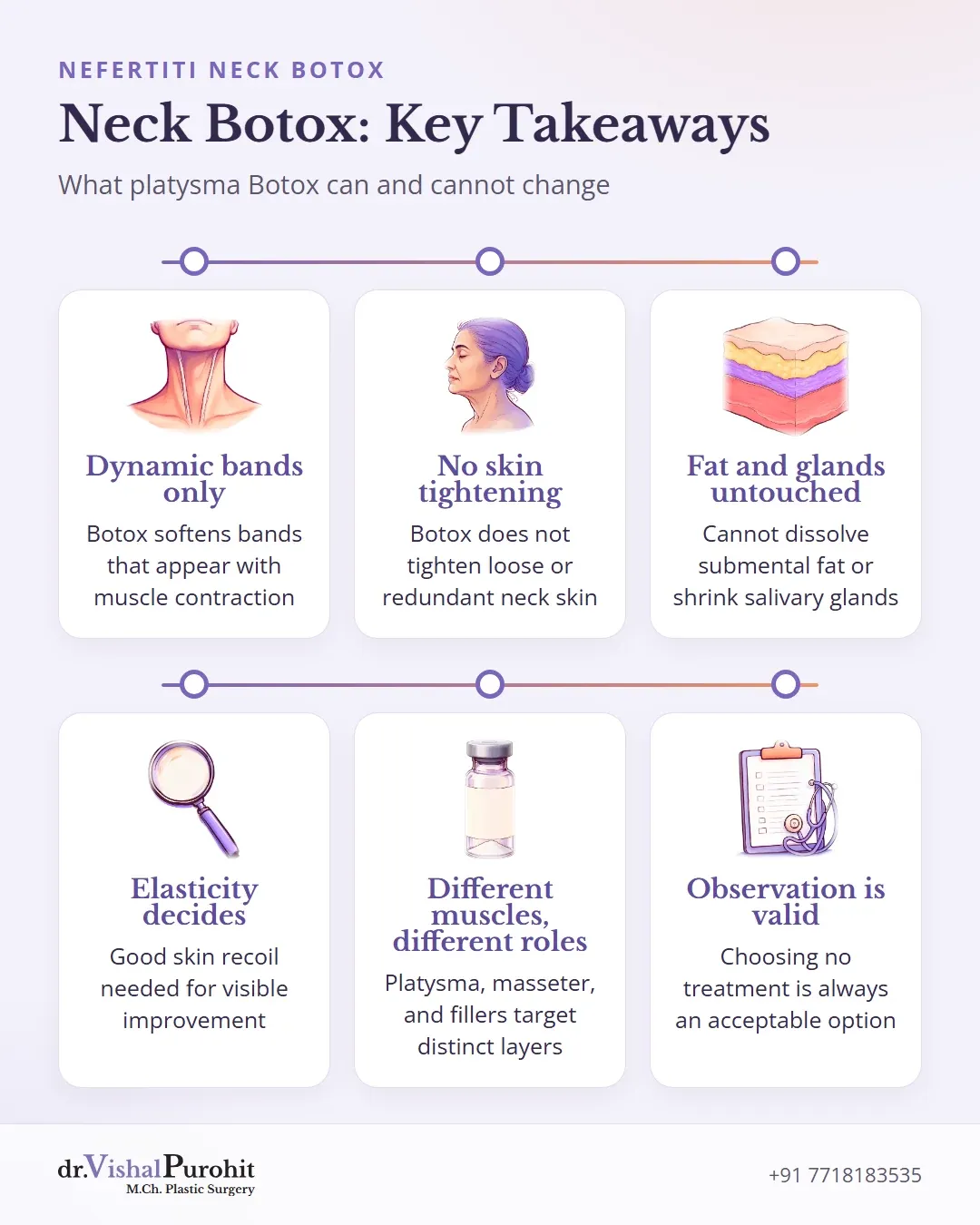
- Botulinum toxin relaxes dynamic muscle cords but cannot tighten loose skin or reduce excess volume.
- Patients with significant tissue laxity or structural sagging see minimal contour change from injections alone.
However, botulinum toxin targets only muscle activity. It does not tighten stretched skin or remove structural volume151718. When significant skin laxity, excess submental fat, or pronounced jowl descent predominates, relaxing the platysma produces minimal visual change1519.
Factors Limiting Isolated Injection Results
- Loose or redundant skin continues to hang even if underlying muscle bands are completely relaxed16.
- Platysma relaxation does not produce the lifting effect of surgical repositioning15.
- Age-related changes driven by tissue elasticity loss or structural sagging do not resolve with neuromodulators alone171820.
Patients whose neck contour is primarily compromised by skin laxity rather than muscle pull typically derive little benefit from isolated injections1516.
What Muscle Relaxation Cannot Remove
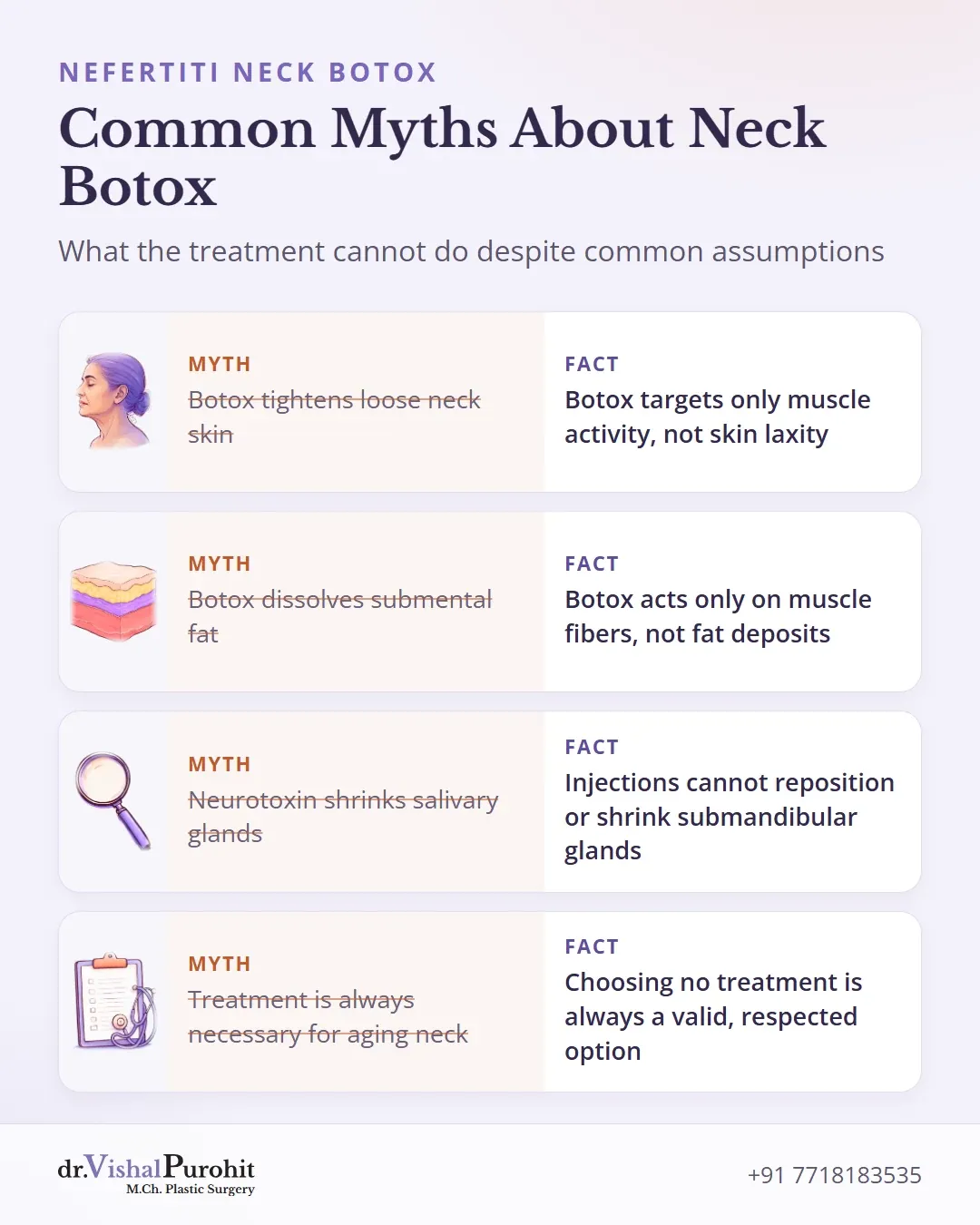
Injecting botulinum toxin into the platysma muscle targets dynamic bands caused by muscle pull1521. However, relaxing the muscle cannot correct underlying structural problems15.
Neuromuscular blockade cannot address:
- Redundant or loose skin: The platysma is a free-sliding sheet and does not create a facelift-like lifting effect; expecting skin tightening in a neck with loose skin leads to disappointment15.
- Jowl sagging and excess fat: Jawline blunting primarily caused by subcutaneous fat or sagging jowls will not clear with platysma relaxation alone15.
- Deeper tissue descent: Visible neck bands can represent loose skin combined with ptotic platysmal borders, for which definitive surgical repair involves platysmaplasty rather than neurotoxin injections alone22.
Neck aging involves multiple anatomical layers10. While dynamic pull softens with neuromodulators, prominent skin excess, submental fullness, and descending tissues require procedural or surgical intervention rather than toxin injections101522. Dr. Purohit evaluates each patient during consultation to distinguish active muscular cords from lax skin and tissue descent, discussing surgical lifting when muscle relaxation cannot meet the anatomical need.
Different Targets for Neck and Jawline
Cosmetic concerns around the lower face and neck stem from distinct structural layers. Each non-surgical intervention addresses a specific anatomic contributor rather than serving as an interchangeable fix.
Distinct Anatomical Roles
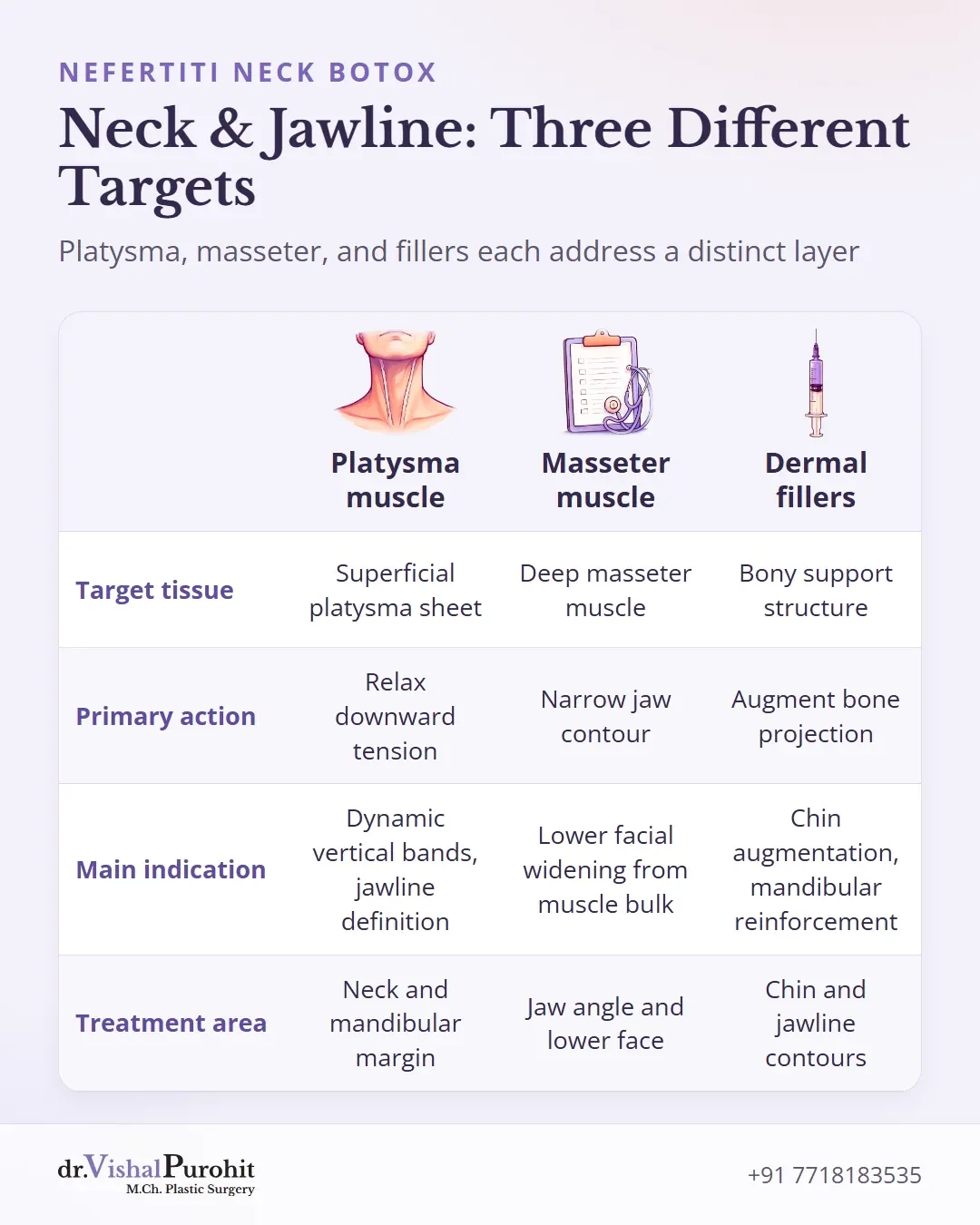
Treatment targets differ depending on which tissue layer contributes to the cosmetic concern.
Platysma Muscle
The platysma forms a superficial sheet that pulls downward across the neck and mandibular margin1523. Injections targeting this muscle relax superficial downward tension, softening dynamic vertical bands and defining the jawline152324.
Clarifying Treatment Selection
Patients often assume these procedures are routinely layered together. In practice, whether Dr. Purohit combines Botox with fillers is decided at the consultation based on individual anatomy.
Combining modalities is meaningful only when distinct anatomical issues coexist, such as structural bone deficiency alongside muscular pulling1524. Each intervention must target a confirmed underlying tissue layer rather than being combined as a default package.
When Assessment Favors Observation or Surgery
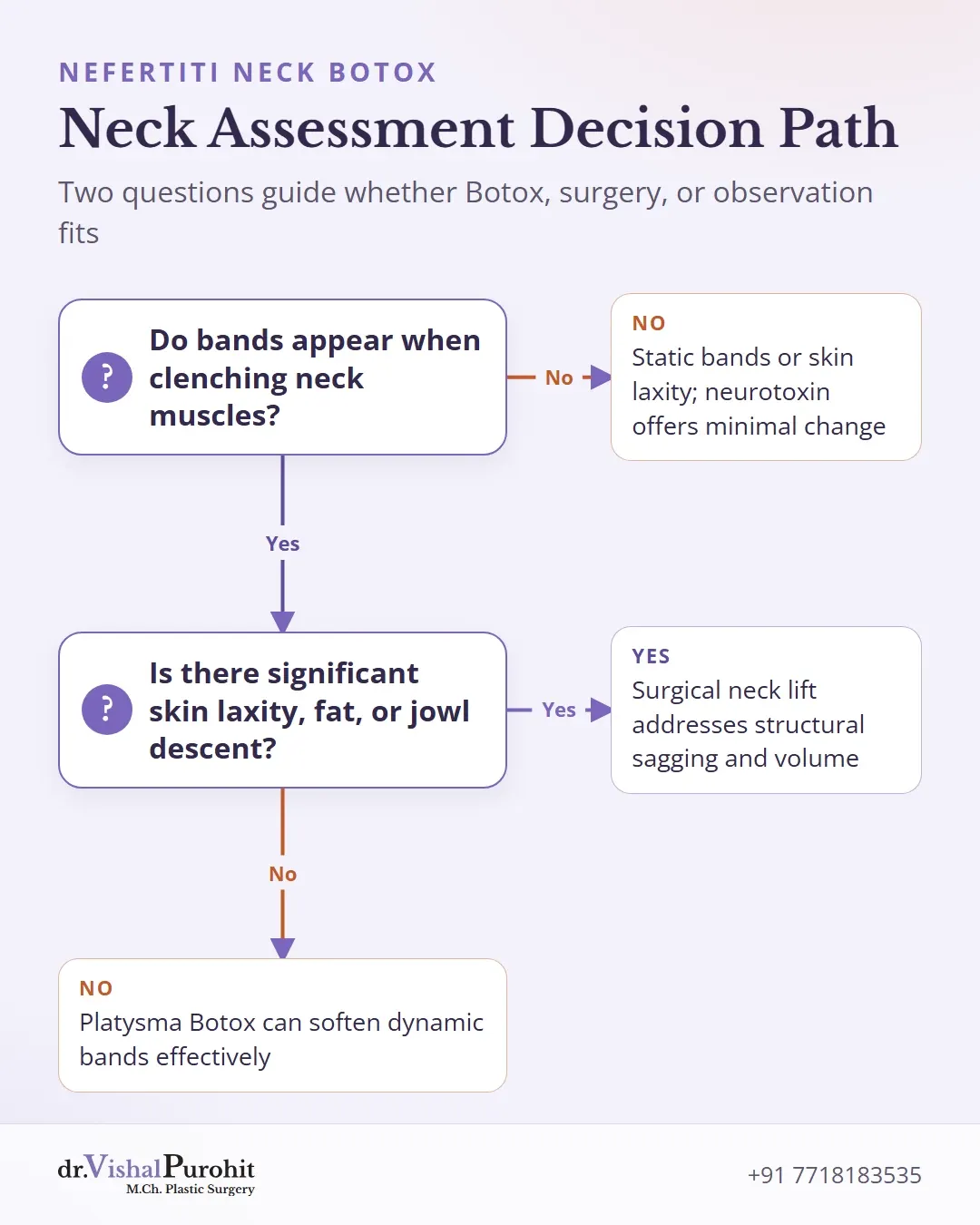
Careful clinical evaluation identifies the primary structural features of the lower face and neck to guide appropriate management10. Successful rejuvenation depends on determining the dominant anatomical driver rather than applying a uniform approach10.
Patients presenting for neck assessment generally display distinct anatomical concerns:
- Dynamic muscle bands: Active platysma cords show the clearest improvement from botulinum toxin injection27.
- Fat redundancy: Prominent submental fullness or excess fatty deposits under the chin are structural changes28.
- Tissue laxity: Significant skin relaxation and heavy jowl descent represent mechanical sagging28.
Static lines and redundant skin do not respond to neurotoxin injections27. While Botox relaxes vertical neck bands to reduce wrinkling, it cannot achieve the repositioning delivered by surgery28. Where heavy jowls, excess fat, or marked skin laxity predominate, a surgical neck lift addresses these visible signs of aging28.
In Dr. Vishal Purohit’s practice, whether a patient is a candidate for Botox or surgical intervention is decided at the consultation. Choosing no treatment is always a valid choice, and patient wishes must be respected without pressure29.
Consulting for Neck Rejuvenation in Jaipur
Distinguishing active muscular bands from loose skin ensures realistic expectations from non-surgical care. To explore whether muscle relaxation matches your anatomical needs, consider Nefertiti Neck Botox in Jaipur for lower facial and platysma evaluation. You can also review common procedural details through the Nefertiti Neck Botox FAQs before arranging an in-person clinical assessment.
This is educational information, not medical advice.