
Botox injections targeting the platysma muscle treat vertical bands, but unintended diffusion into deeper cervical musculature can impair essential functions. While localized skin redness, tenderness, and superficial bruising represent typical trauma from the needle, functional deficits require urgent clinical attention.
Patients should understand critical safety considerations before treatment, including Neck Botox Health Screening: Swallowing, Breathing and Medicines. Any onset of voice hoarseness, speech changes, choking, or respiratory compromise indicates functional involvement rather than standard surface discomfort and warrants immediate medical evaluation.
Local Injection Discomfort Versus Functional Loss
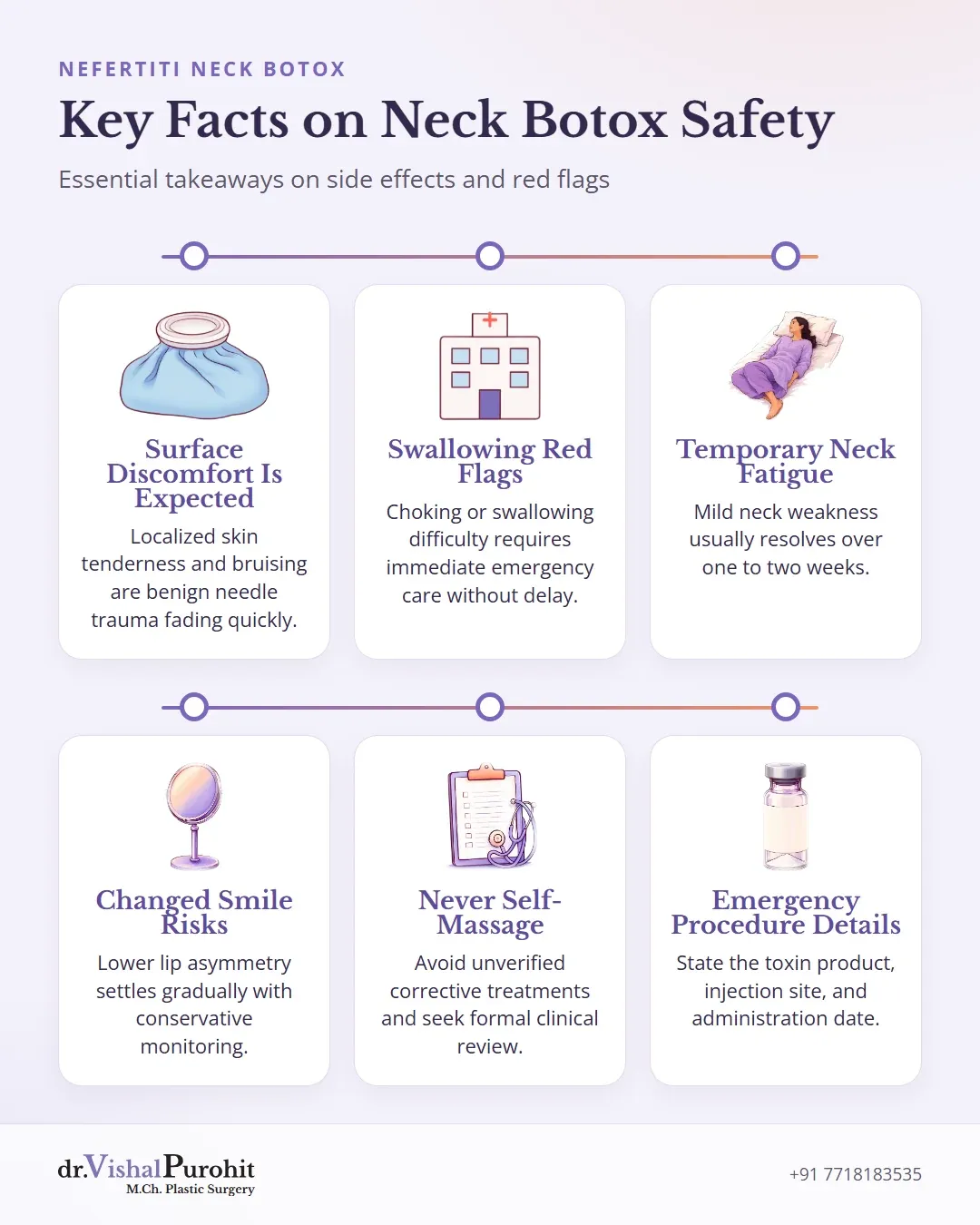
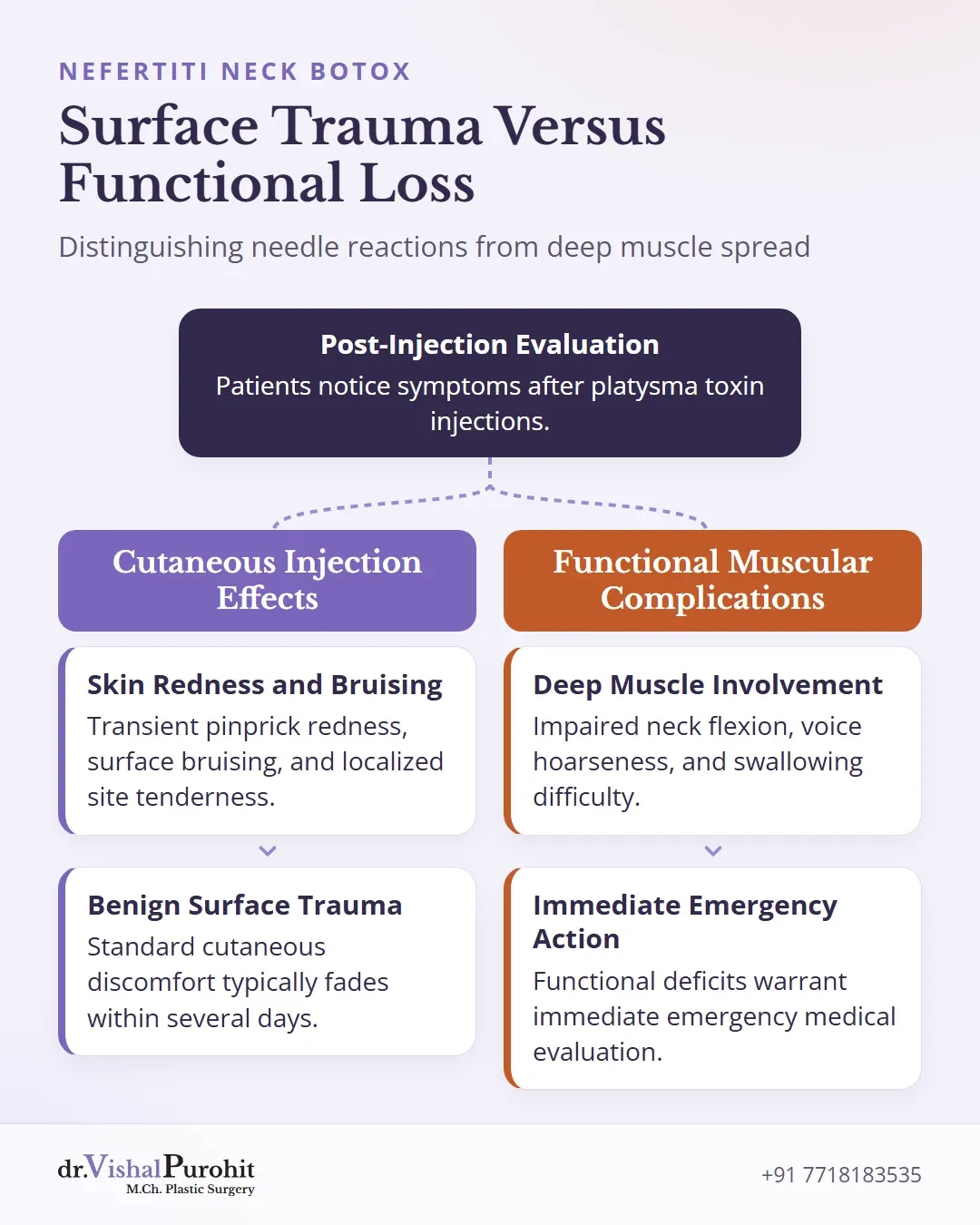
Following platysma injections, mild skin-level reactions commonly stem from the physical passage of the needle through the skin. These expected responses include localized pain, tenderness, swelling, erythema, and mild bruising or injection-site bleeding12. Such superficial discomforts typically fade within several days and represent standard cutaneous trauma from the injection procedure itself3.
These minor surface reactions must not be confused with functional impairment of deeper structures in the neck:
Cutaneous Injection Effects
Functional Muscular Complications
- Impaired neck flexion
- Voice hoarseness
- Difficulty swallowing (dysphagia)3
Impairment of deeper muscular function occurs when toxin spreads or migrates away from the superficial target into adjacent deep neck musculature234. While local skin tenderness and bruising are benign, any difficulty with swallowing, speaking, or breathing indicates functional involvement and warrants immediate emergency medical evaluation3.
Urgent Swallowing Speech and Breathing Symptoms
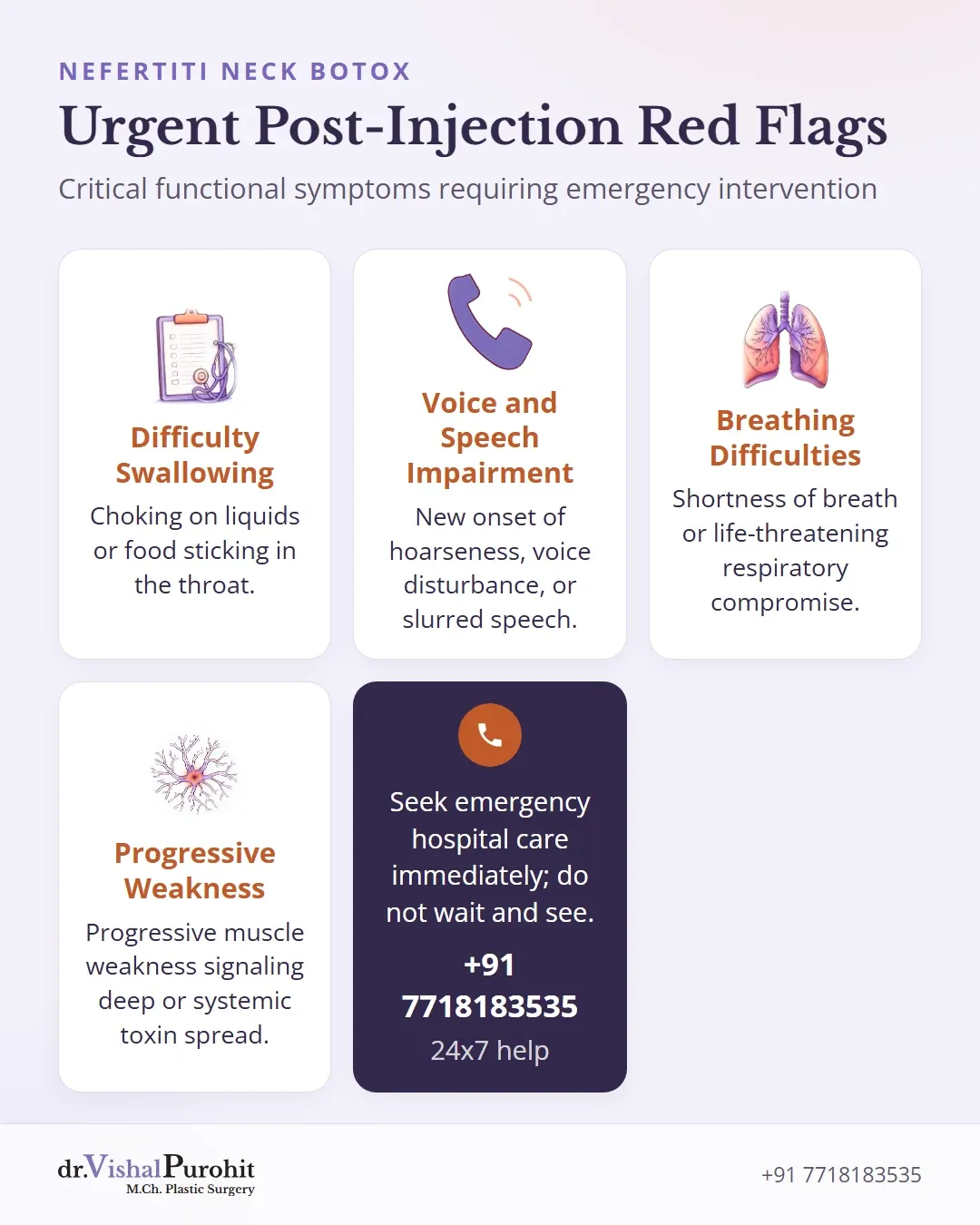
Following botulinum toxin injection into the platysma muscle, certain symptoms indicate a medical emergency5. Although uncommon in aesthetic neck treatments, unintentional spread or injection into deeper neck structures can cause serious functional impairment567.
Key critical red flags include:
- Choking on liquids or difficulty swallowing (dysphagia)58
- Sensation of food sticking in the throat9
- New onset of hoarseness or voice disturbance (dysphonia)5610
- Slurred speech or difficulty speaking (dysarthria)578
- Shortness of breath or any breathing difficulties578
Swallowing and breathing difficulties can become life threatening81112. Symptoms related to systemic toxin spread or deep muscle diffusion have been reported hours to weeks following injection810.
Patients experiencing any breathing, swallowing, or speaking difficulty after toxin treatment must seek emergency medical care at an emergency department at once78. Never adopt a wait-and-see approach. Once emergency medical attention is underway, notify the treating clinician immediately so the medical team can coordinate clinical details and follow-up care7.
Distinguishing Neck Fatigue from Emergencies
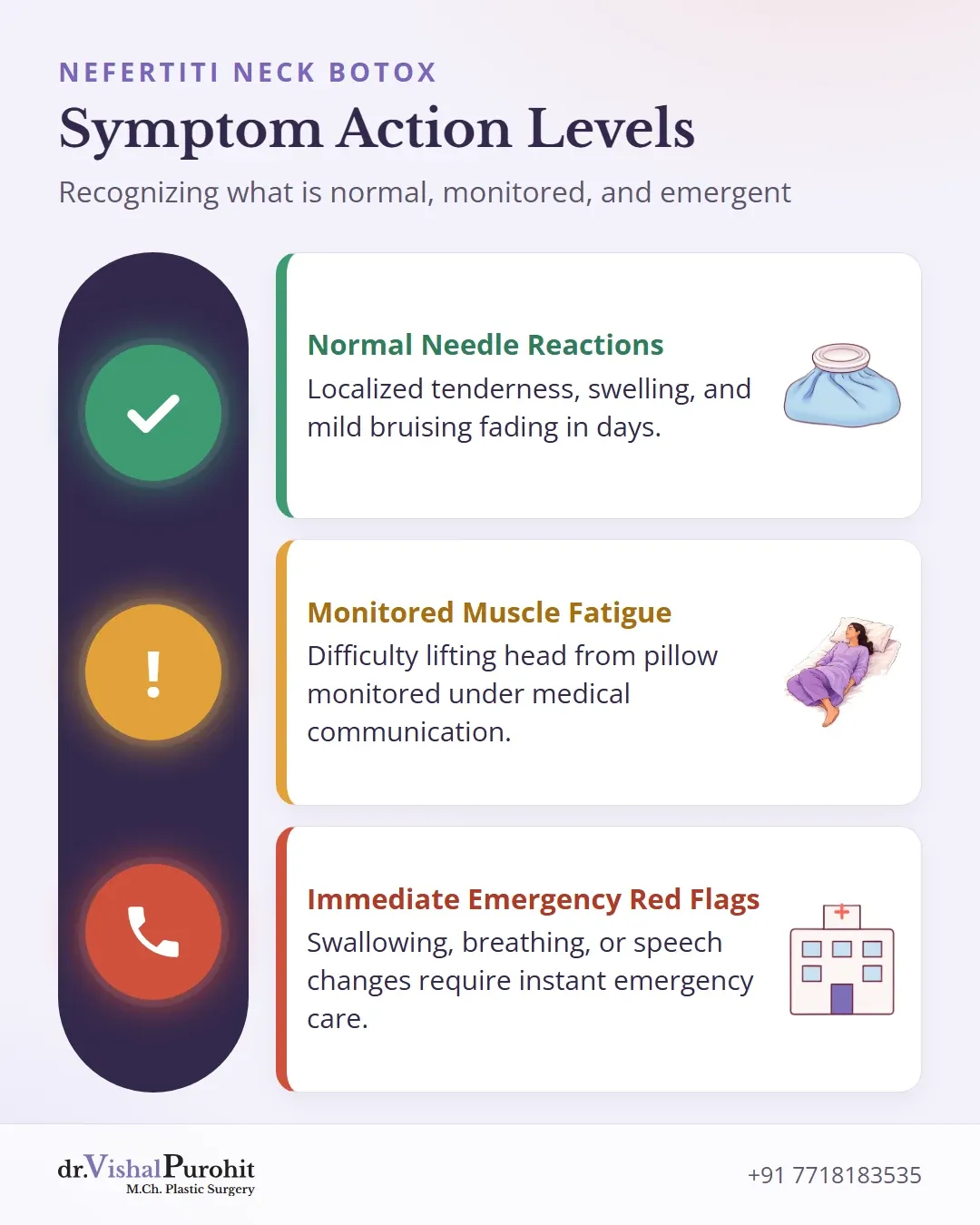
Toxin diffusion or deep injection can affect underlying cervical muscles during platysma treatments3613. Patients may experience transient neck weakness, muscle soreness, or difficulty lifting the head from a pillow or supine position61314. This fatigue occurs when the toxin spreads to deeper flexors or adjacent sternocleidomastoid muscles, particularly in individuals with long, thin necks6.
While localized neck tiredness requires ongoing clinical monitoring, it remains entirely distinct from true respiratory or digestive emergencies. Any disruption to the airway or normal swallowing is not routine fatigue.
Signs that separate muscular fatigue from critical complications include:
- Isolated neck tiredness: Difficulty elevating the head or mild neck soreness, which typically resolves over time as neural function returns3614.
- Emergent red flags: Difficulty swallowing (dysphagia), voice hoarseness, vocal function disturbance, or breathing impairment3614.
Dr. Purohit’s note: Any breathing, swallowing, or speaking difficulty after toxin treatment constitutes a medical emergency that requires prompt medical attention rather than a wait-and-see approach. In contrast, uncomplicated cervical muscle fatigue can be observed under close medical communication until muscle control normalizes.
Timeline of Potential Adverse Effects
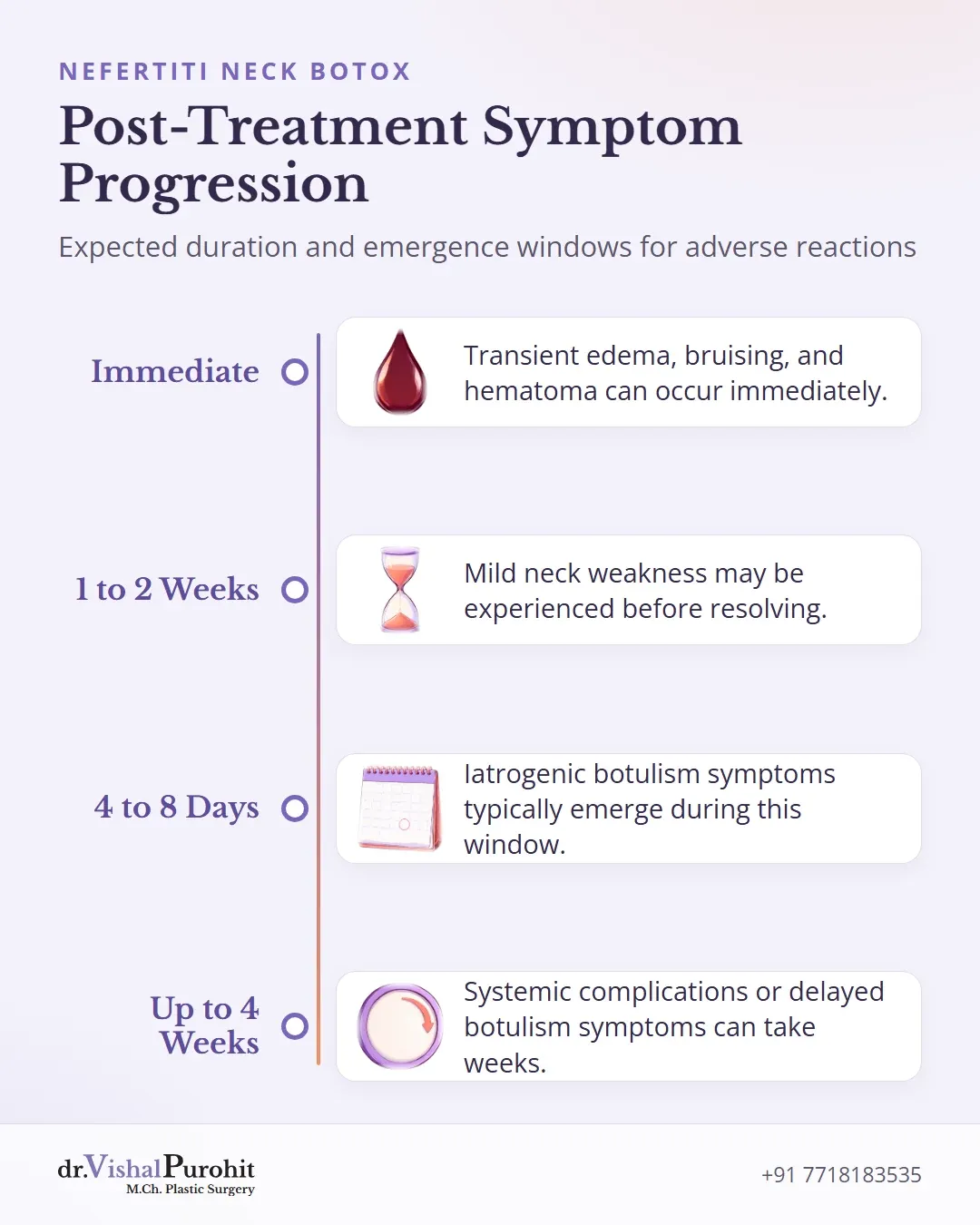
Local surface reactions can occur immediately following neck injections. In general literature on platysmal injections, transient edema, ecchymoses, hematoma formation, and headache are recognized adverse reactions15. If blood vessels rupture, immediate pressure application for five minutes is advised16.
Deeper functional adverse effects follow a different progression. Botulinum toxin can spread into deeper underlying musculature, causing complications such as dysphagia, dysphonia, or general neck weakness16. In published reports, mild neck weakness may be experienced for a period of one to two weeks15. Classical neurotoxin injections for platysmal bands also carry risks of respiratory impairment, speech difficulty, and swallowing problems if toxin diffuses into surrounding structures1517.
Patients should monitor for functional changes across the entire post-treatment window. Any breathing, swallowing, or speaking difficulty is a medical emergency that warrants immediate care, rather than waiting for a scheduled follow-up review.
Lower Lip Asymmetry and Changed Smile
During botulinum toxin injections around the jawline and neck, unintended spread into neighboring muscles can alter normal facial expressions. The platysma muscle inserts near the lateral chin and oral commissure, positioned adjacent to the perioral muscles that control mouth movement18.
Key points
- Unintended diffusion of botulinum toxin into nearby perioral muscles can cause lower lip asymmetry or a distorted smile.
- Conservative management and clinical observation are typically indicated while neuromuscular function gradually recovers.
- Patients experiencing movement deficits should seek formal clinical evaluation rather than trying unverified corrective remedies.
Muscle Diffusion and Smile Distortion
An asymmetric smile can arise from unintended weakening of muscles involved in oral commissure movement19. Specifically:
- Inadvertent diffusion of toxin toward or into the depressor labii inferioris causes asymmetry of the lower lip19.
- Spread into the depressor labii inferioris gives an asymmetric smile when attempting to smile or depress the lip20.
- Toxin affecting the depressor anguli or mental diffusion into adjacent lower facial fibers can distort normal lower lip movement1921.
Clinical Assessment
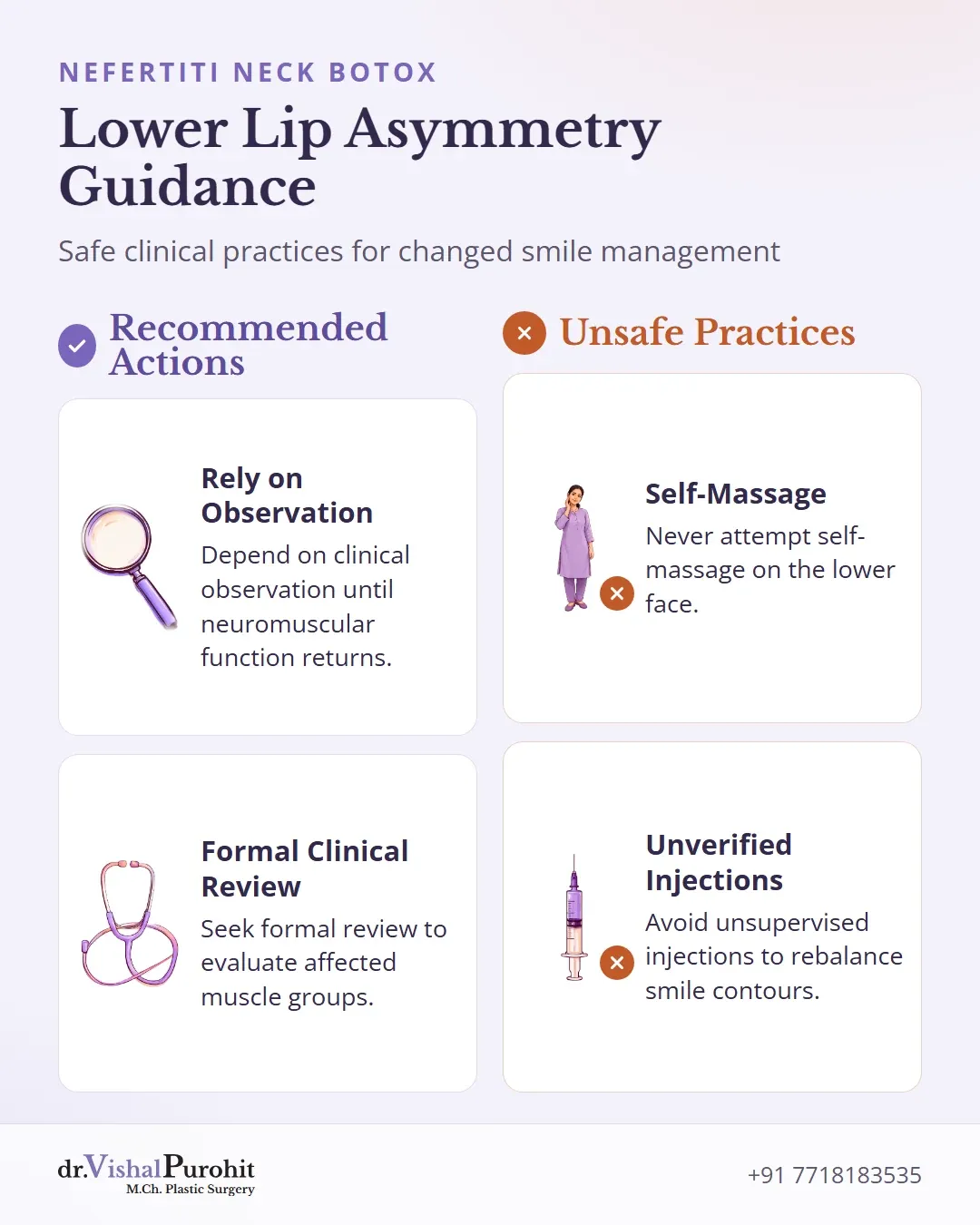
When lip distortion or asymmetry occurs, management is generally conservative, relying on clinical observation and reassurance until neuromuscular function gradually returns19.
Patients should never attempt unverified corrective treatments, self-massage, or further unsupervised injections to rebalance their smile. Any new movement deficit or asymmetry requires a formal clinical review with Dr. Vishal Purohit, M.Ch. plastic surgeon, to evaluate the affected muscle groups and monitor recovery.
Emergency Care and Medical Escalation
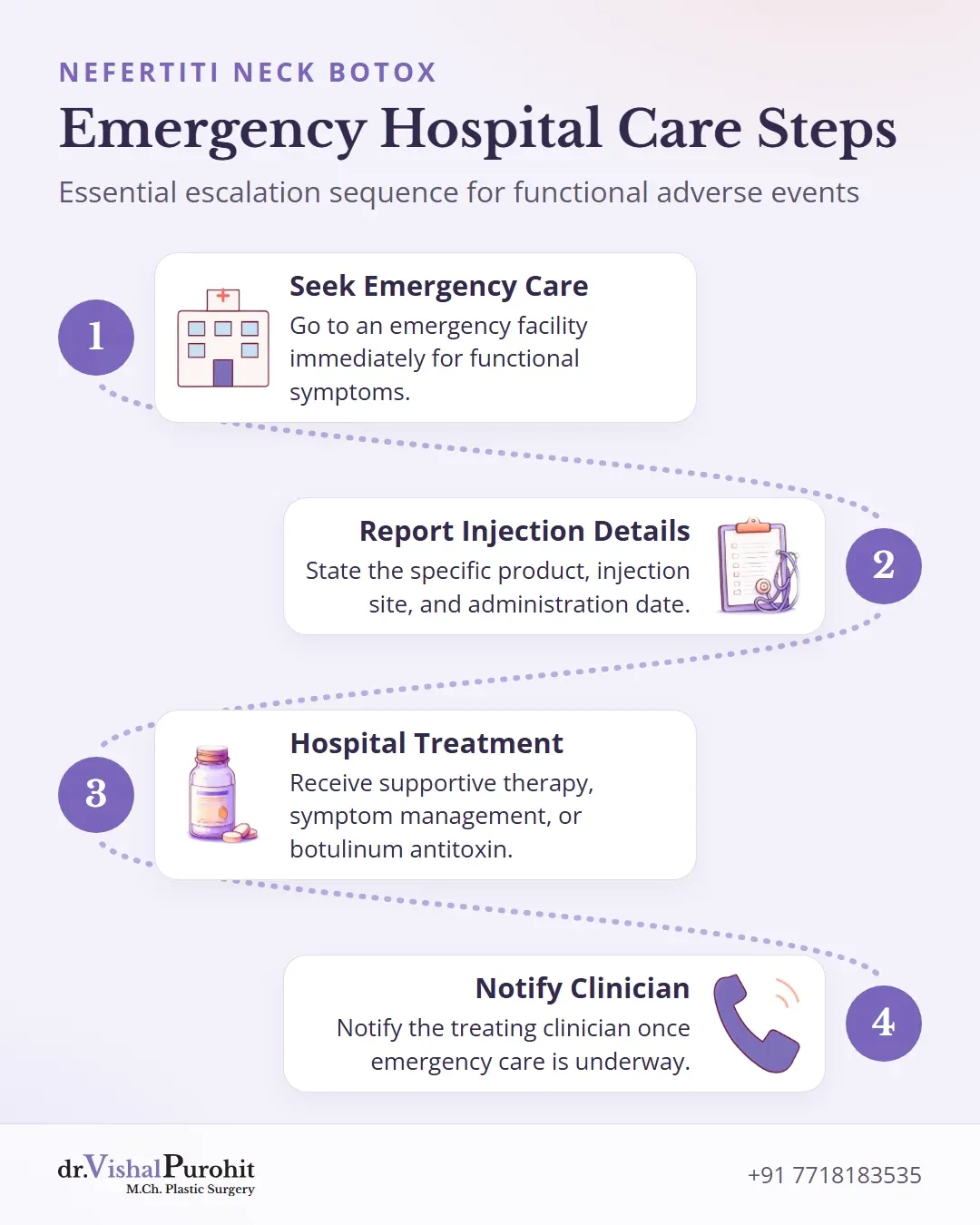
Difficulty breathing, swallowing, or speaking, as well as progressive muscle weakness after botulinum toxin treatment, are medical emergencies22. These functional symptoms can indicate distant toxin spread or iatrogenic botulism, which may rarely require intensive care treatment and mechanical ventilation22. Patients experiencing any such symptoms must seek immediate medical attention at an emergency facility rather than waiting22.
When presenting to an emergency facility for systemic or functional symptoms, patients must state the specific product, injection site, and date administered. In Dr. Purohit’s practice, the specific botulinum toxin product selected is decided at the consultation.
Treatment in a hospital setting varies based on clinical severity and may include supportive therapy, symptom management, or botulinum antitoxin to neutralise circulating toxin22. Symptoms of iatrogenic botulism typically emerge between 4 and 8 days following an injection, but they can take up to 4 weeks to develop22. Providing medical staff with exact procedural details ensures immediate, targeted clinical management.
Professional Neck Care and Consultation in Jaipur
Understanding potential complications ensures timely medical care if unintended functional changes arise after platysma injections. Adults seeking aesthetic contouring can evaluate treatment options through Nefertiti Neck Botox in Jaipur with Dr. Vishal Purohit, M.Ch. plastic surgeon. Detailed guidance on safety and procedure expectations is available in the Nefertiti Neck Botox FAQs.
This is educational information, not medical advice.