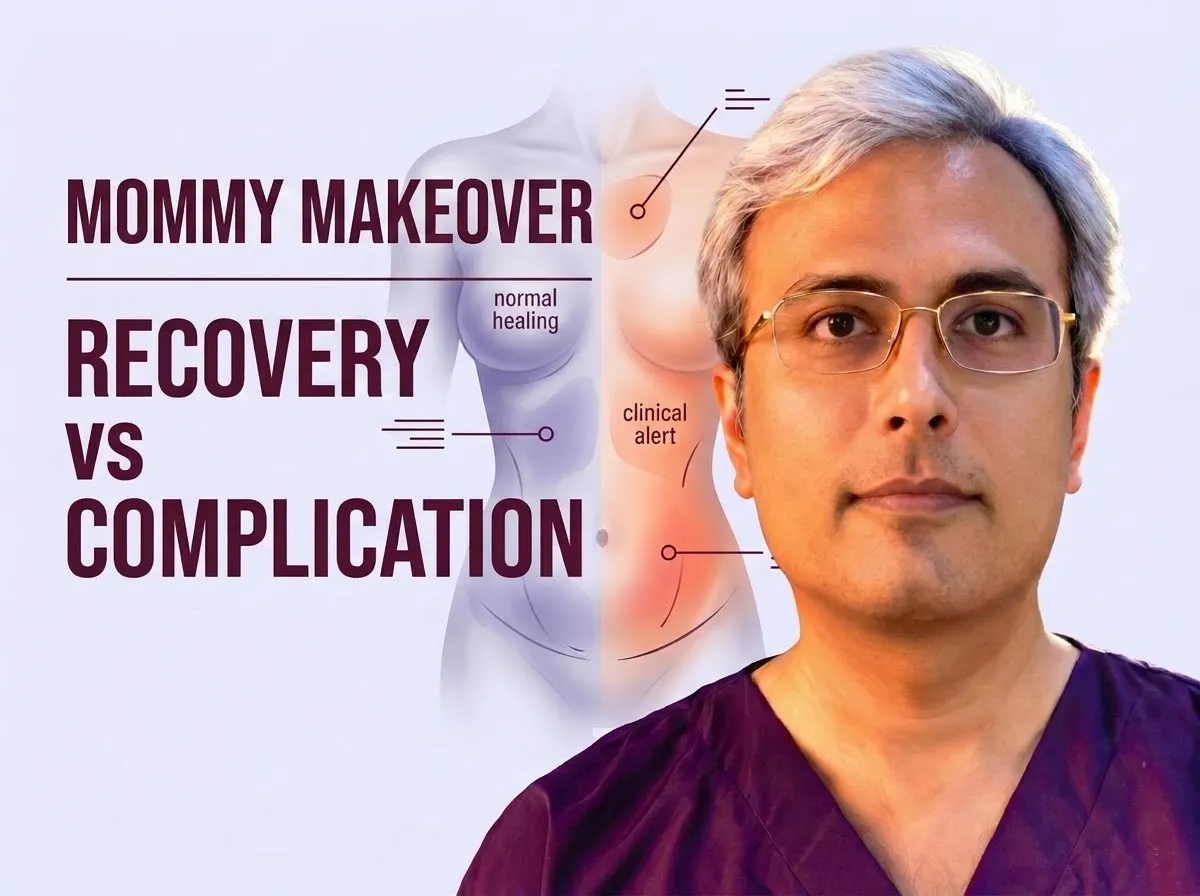
Recovery after multiple body contouring procedures brings predictable discomfort, including swelling, bruising, tightness, and temporary sensory changes across treated areas. Understanding expected bodily responses helps patients remain calm while healing progresses week by week.
During initial consultations, Dr. Vishal Purohit helps patients planning a mommy makeover in Jaipur understand these normal post-operative sensations so they can confidently distinguish routine discomfort from issues requiring clinical attention.
At the same time, recognizing uncommon surgical complications protects health and recovery outcomes. Following guidance on moving, sleeping and returning to work after a mommy makeover allows patients to rest safely and identify unexpected symptoms without delay.
What Normal Recovery Feels Like
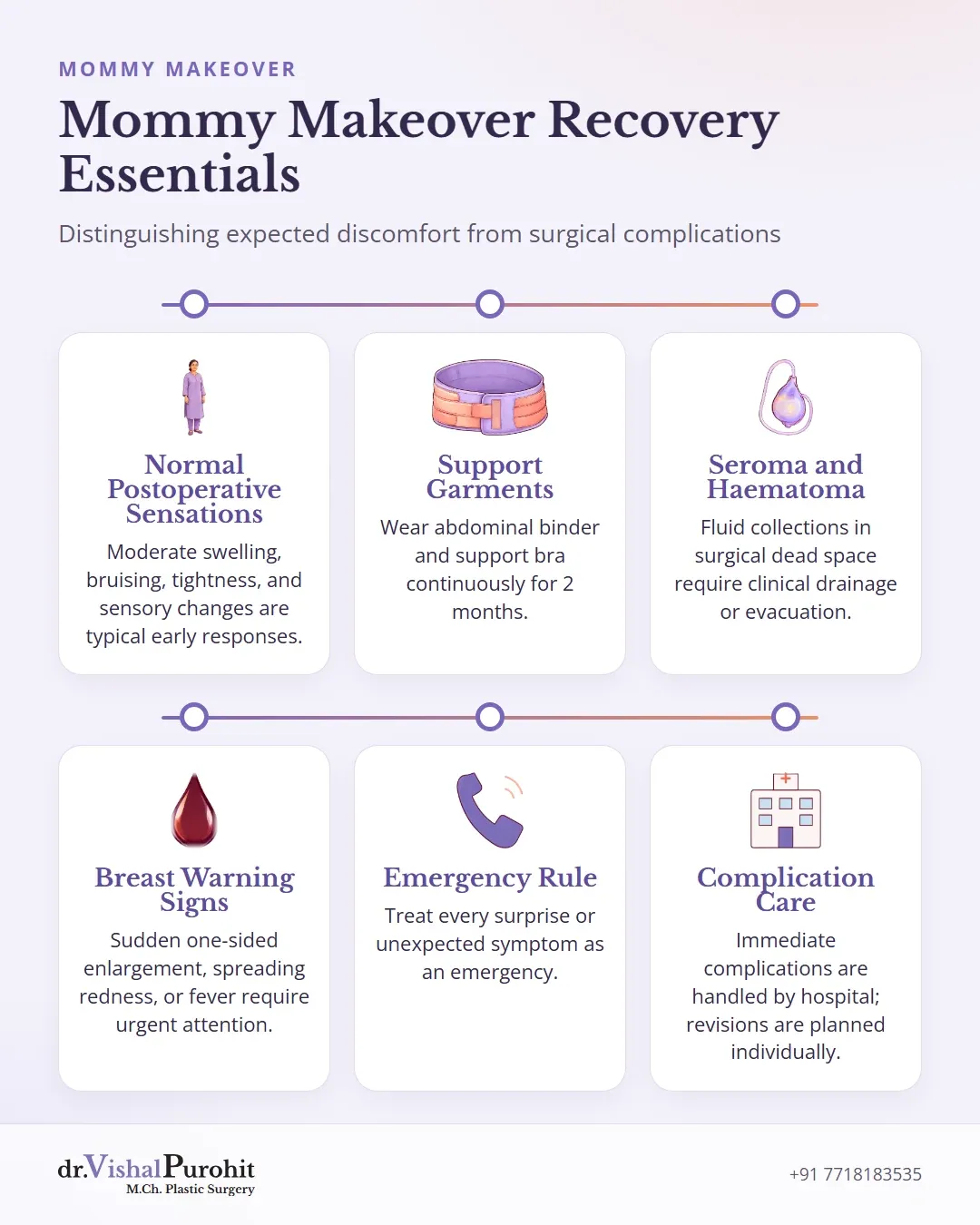
Healing after a mommy makeover continues for several weeks as swelling decreases and tissue contours settle1. Moderate swelling, bruising, tightness, and temporary sensory changes are typical early bodily responses to surgery23.
Expected Postoperative Sensations
During the initial weeks, several predictable discomforts arise across the treated areas:
- Swelling and volume changes: Tissues remain swollen initially, and breasts may appear larger before edema reabsorbs over the first month2.
- Bruising: Bruises are common and tend to migrate downwards with gravity, occasionally extending toward the lower abdomen or hips24.
- Tightness and motion restriction: Initial pain and stiffness can make moving the trunk and arms difficult, particularly after submuscular breast surgery2.
- Altered sensibility: Changes in breast and nipple sensation frequently occur after surgery, though sensitivity improves considerably over time35.
Supporting the Healing Tissues
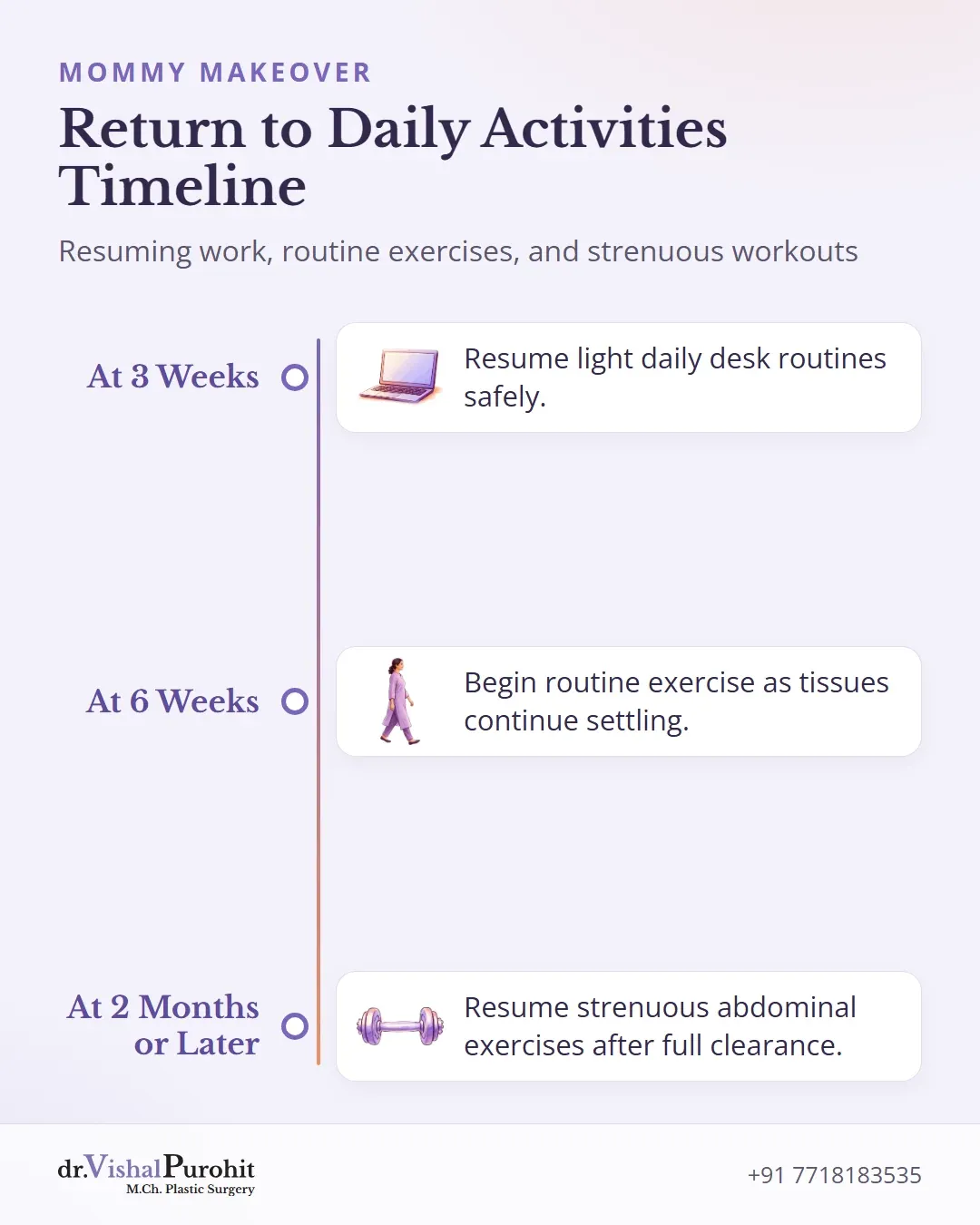
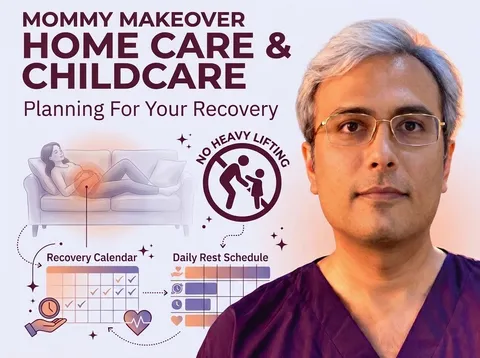
A compression garment is applied to reduce fluid accumulation in the abdomen, waist, and treated contours6. Light daily desk routines can resume at 3 weeks, routine exercise at 6 weeks, and strenuous abdominal exercises at 2 months or later.
Dr. Purohit’s note: Dr. Purohit requires patients to wear an abdominal binder and a support bra continuously for 2 months to support the healing tissues and control swelling.
Seroma, Bleeding and Wound Problems
During recovery from mommy makeover procedures such as a tummy tuck (abdominoplasty), specific complications may arise that require clinical attention. In published literature, seroma, haematoma, wound separation, and wound infection represent recognized complications7.
Seroma and Haematoma
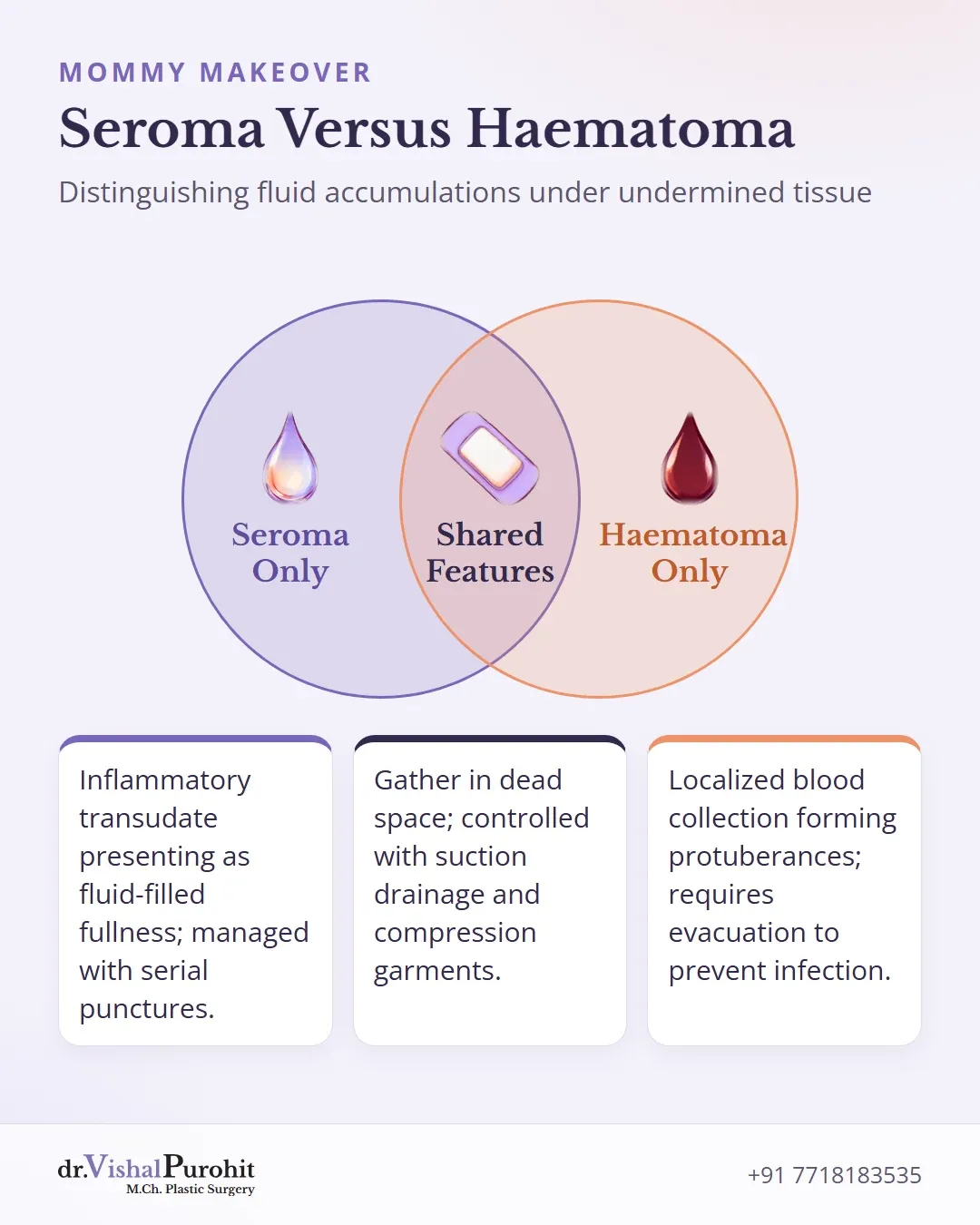
Seroma is the most frequent complication in abdominoplasty, with literature reporting incidence rates between 3.0% and 37.3%7, or approximately 17% in general body contouring series8. It consists of an inflammatory transudate that gathers in dead space created by surgical undermining9. Patients typically observe a fluid-filled fullness or swelling9. Persistent seromas are managed with serial punctures and drainage sessions89.
Haematomas involve a localized collection of blood, documented at approximately 3% incidence8. They present as protuberances or distinct swelling below undermined skin flaps9. Larger haematomas require evacuation because they facilitate infection or abscess development9. To manage dead space and prevent seroma or haematoma fluid accumulation, closed suction drainage is placed, and compression garments are worn10.
Wound Separation and Infection
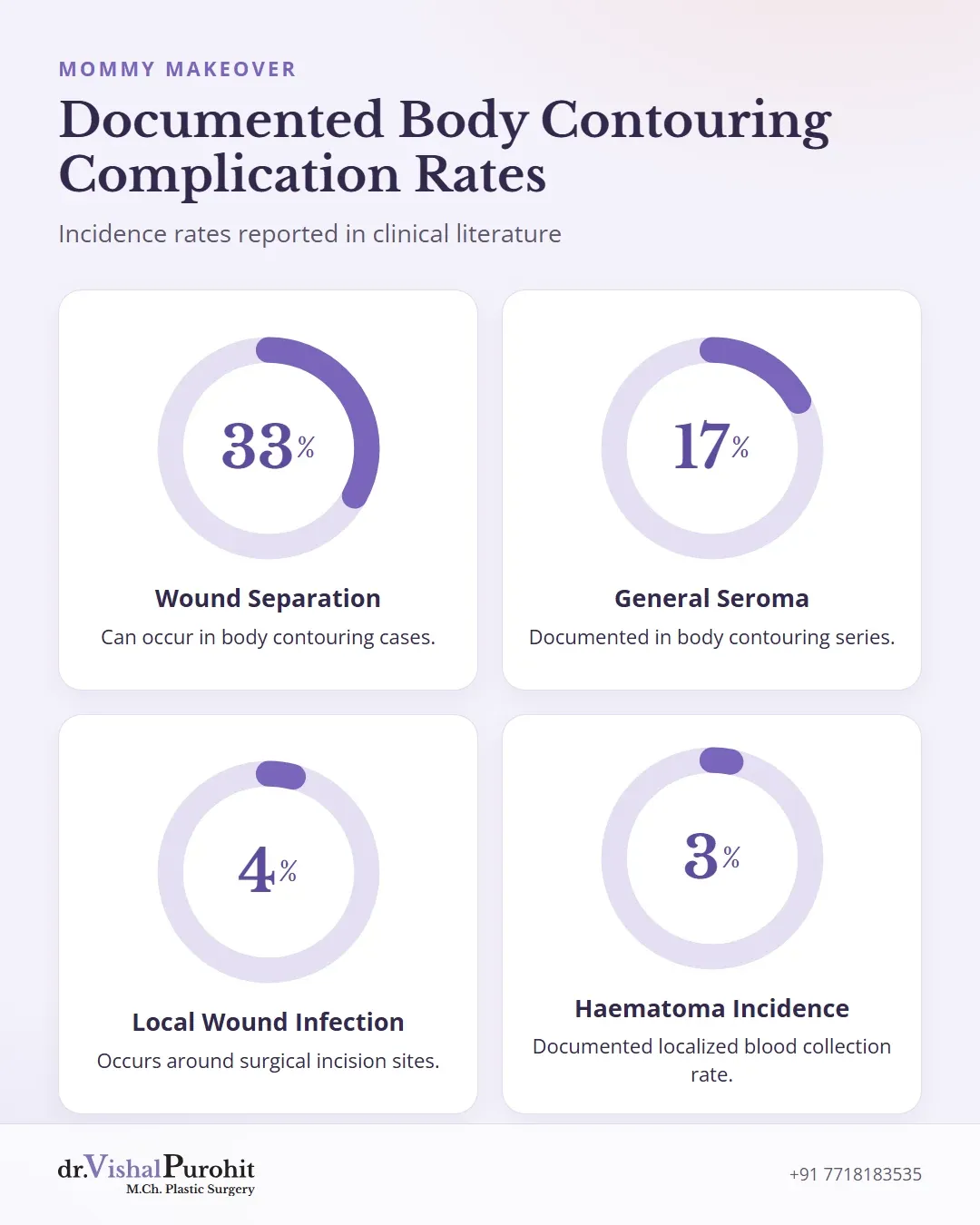
Wound dehiscence (separation) can occur in up to 33% of body contouring cases, while local wound infections occur in approximately 4%8. High wound closure tension and inadequate immobilization contribute to wound margins pulling apart11. Small areas of separation are generally managed with conservative local dressings, whereas larger disruptions may require secondary revision810.
For any warning sign or unexpected discomfort, Dr. Purohit advises patients to contact the surgical team immediately on +91 7718183535.
Breast-Specific Signs
Symmetric mild fullness and soreness are expected after breast surgery, but sudden or uneven changes require close clinical attention.
One-Sided Swelling and Increasing Pain
A sudden, painful enlargement of only one breast, often accompanied by visible bruising or tightness, is the hallmark sign of a haematoma121314. Literature reports show that haematomas most commonly develop within the first 48 hours13, or within the first 6 to 12 hours after surgery14. In some instances, physical exertion or coughing can precipitate bleeding into the surgical pocket1214. Unchecked fluid or blood accumulation can compress tissues and compromise circulation1516.
Redness and Fever
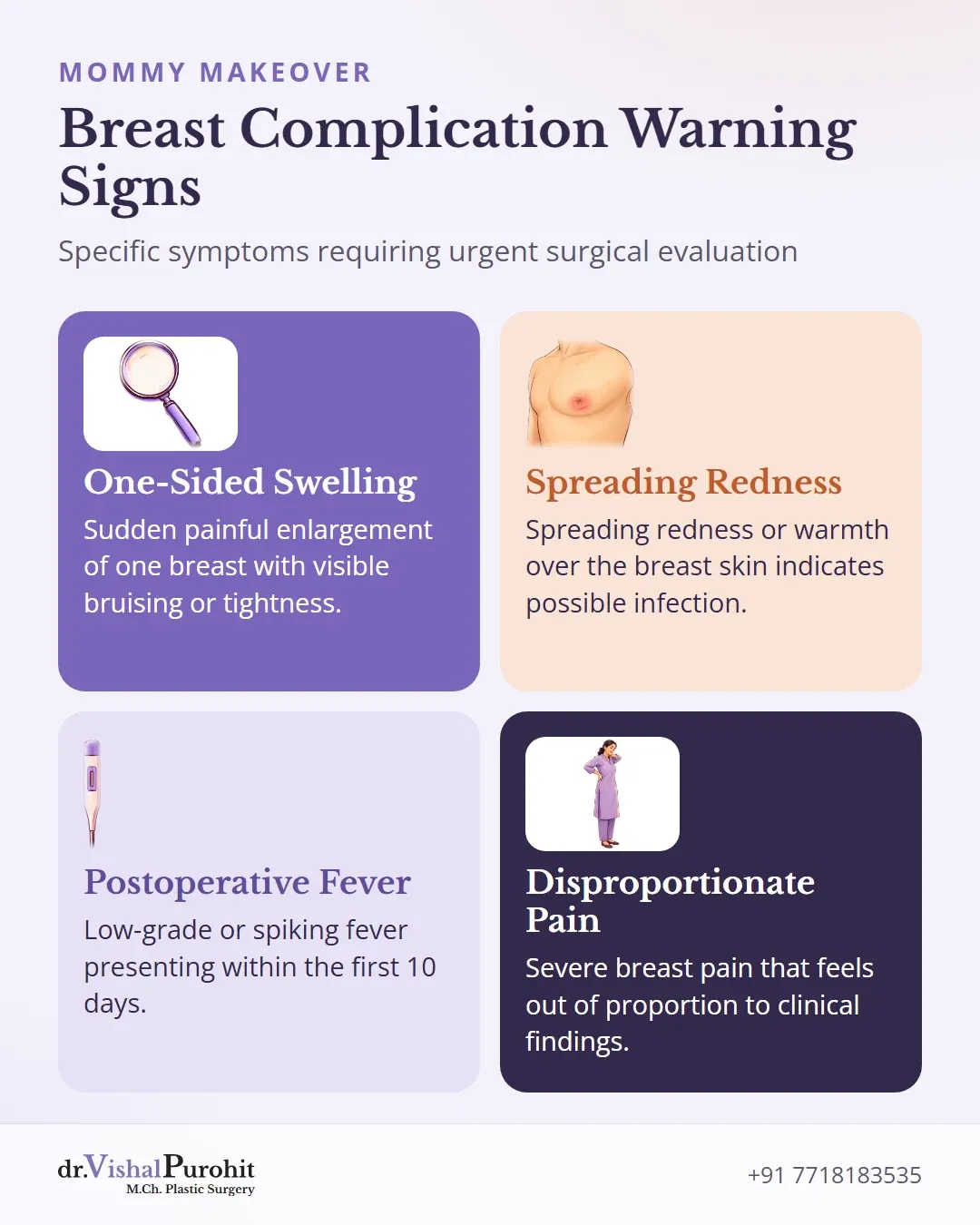
Postoperative infection is an uncommon event, generally reported in 1% to 4% of breast procedures15, and often presents within the first 10 days13. Key warning signs include:
- Spreading redness or heat over the breast skin15
- Low-grade or spiking fever1215
- Severe breast pain that feels out of proportion to clinical findings1215
Dr. Vishal Purohit advises patients to treat any unexpected discomfort or sudden breast change as an emergency.
Treat Every Surprise as an Emergency
In the postoperative period after a mommy makeover, unexpected changes require prompt medical assessment rather than waiting to see if they resolve on their own.
Dr. Vishal Purohit advises patients to treat every surprise or unexpected discomfort as an emergency. Patients do not need to judge the severity of an issue before calling; the surgical team sorts urgent medical emergencies from routine recovery queries.
Checklist of Warning Signs
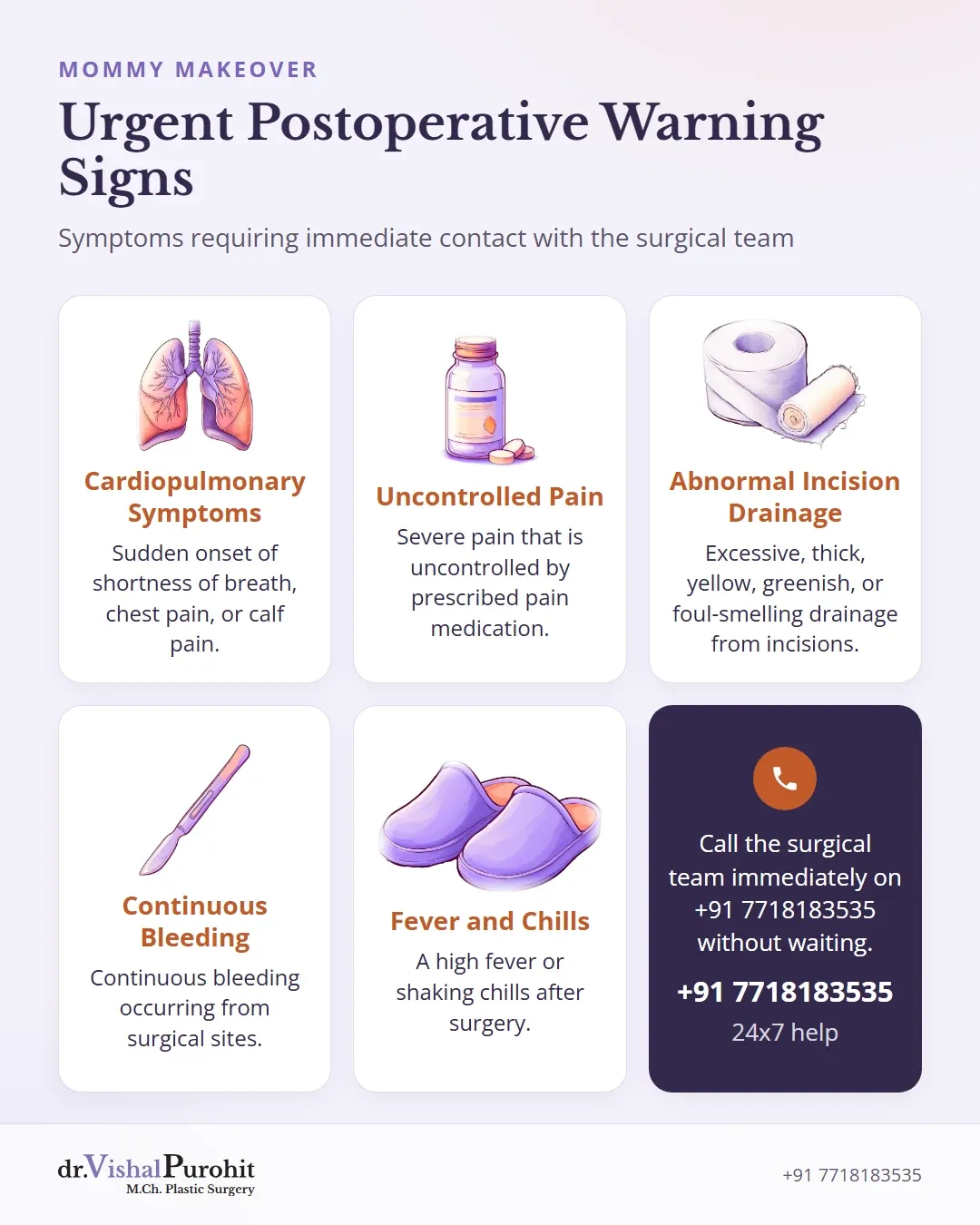
Patients should monitor their recovery closely and call the team right away upon noticing any of the following:
- Sudden onset of shortness of breath, chest pain, or calf pain17
- Severe pain that is uncontrolled by prescribed pain medication17
- Sudden unilateral swelling or excessive tightness compared to the opposite side1718
- Excessive, thick, yellow, greenish, or foul-smelling drainage from an incision1719
- Continuous bleeding from surgical sites19
- A high fever or shaking chills17
- New skin rashes or hives17
Prompt communication ensures any developing concern is evaluated without delay.
Call the surgical team immediately if you notice sudden shortness of breath, chest pain, calf pain, uncontrolled severe pain, sudden unilateral swelling or tightness, foul-smelling incision drainage, continuous bleeding, high fever, shaking chills, or new skin rashes.
Who Takes Care of a Complication
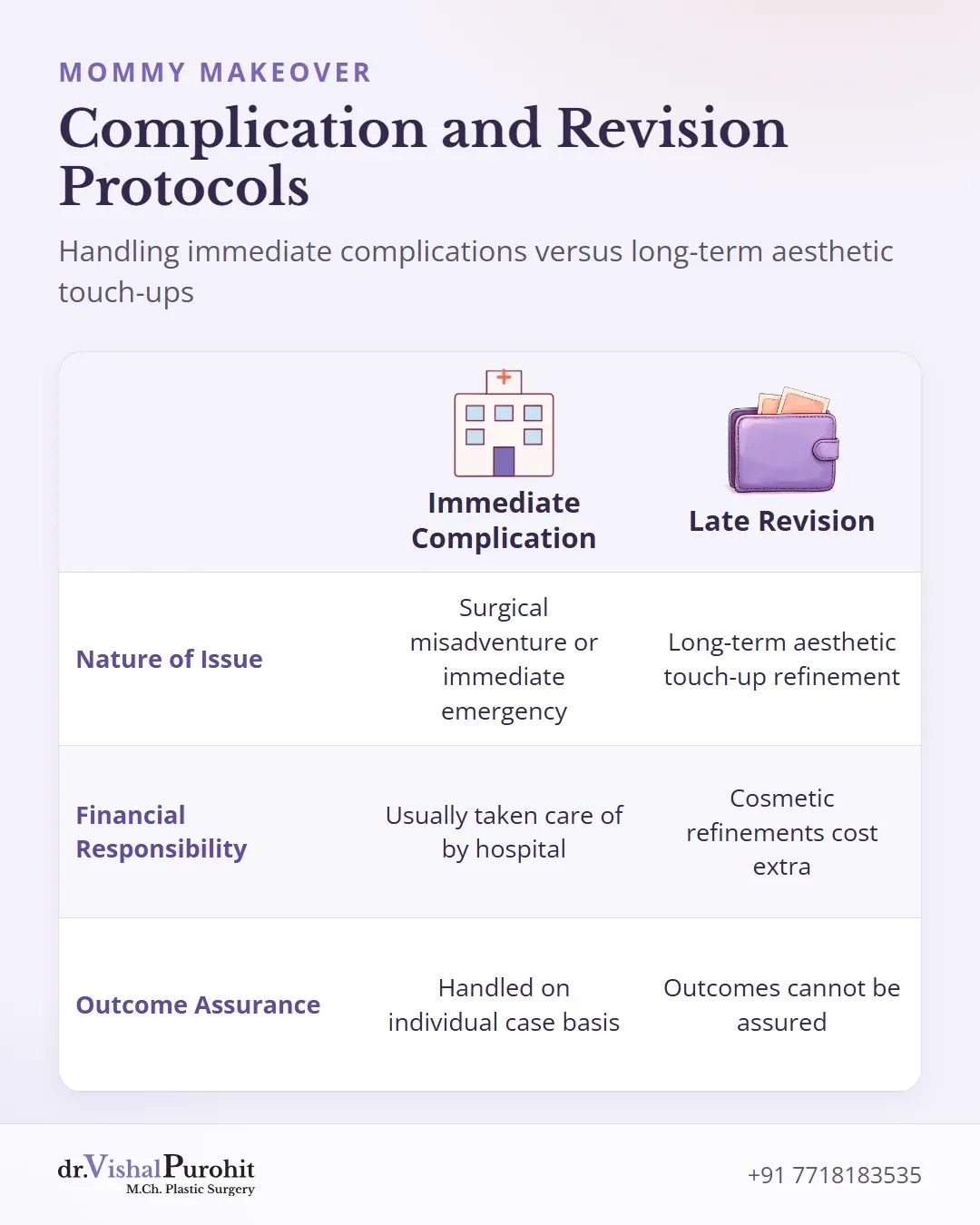
Postoperative recovery requires clear protocols for addressing unexpected concerns or aesthetic revisions. In Dr. Vishal Purohit’s practice, surgical revisions and complications are evaluated and handled on an individual, case-by-case basis.
When addressing medical and aesthetic concerns, responsibilities and financial expectations are handled according to specific situations:
- Immediate complications: An immediate complication or surgical misadventure is usually taken care of by the hospital.
- Long-term aesthetic touch-ups: Late aesthetic revisions or cosmetic refinements cost extra.
- Outcome expectations: Surgical outcomes cannot be assured, and results are not guaranteed.
Immediate Care
An immediate complication is usually taken care of by the hospital.
Late Refinements
Subsequent aesthetic touch-ups and cosmetic revisions carry additional fees.
Realistic Outlook
Healing varies individually and final results cannot be promised.
The clinical team treats every unexpected symptom as urgent, sorting genuine clinical emergencies from routine recovery questions to ensure patient safety remains the highest priority.
Comprehensive Postoperative Care in Jaipur
Patients preparing for a mommy makeover in Jaipur benefit from understanding healing milestones and potential complications before surgery. Reviewing mommy makeover FAQs helps clarify surgical timelines, garment requirements, and routine follow-up expectations. If sudden one-sided swelling, high fever, or wound issues arise, treat every surprise as an emergency for timely care.
This is educational information, not medical advice.