Pregnancy and lactation alter maternal contours through abdominal wall stretching, muscular separation, and glandular changes in breast tissue. Allowing the skin envelope and breast parenchyma adequate time to reach a dependable resting state is vital before proceeding with surgical revision.
Dr. Vishal Purohit carefully evaluates tissue stability and post-weaning involution before advising patients on the timing for a mommy makeover in Jaipur.
Establishing an ongoing exercise routine and reviewing The Consultation Checklist Before a Mommy Makeover helps confirm physical readiness. Evaluating anatomical changes early allows a patient to understand suitable procedures and plan recovery logistics calmly.
The Body Keeps Changing After Delivery
Pregnancy and nursing lead to noticeable shifts in physical contours, most frequently involving the breasts, abdomen, waist, buttocks, and flanks12.
Abdominal and Breast Changes
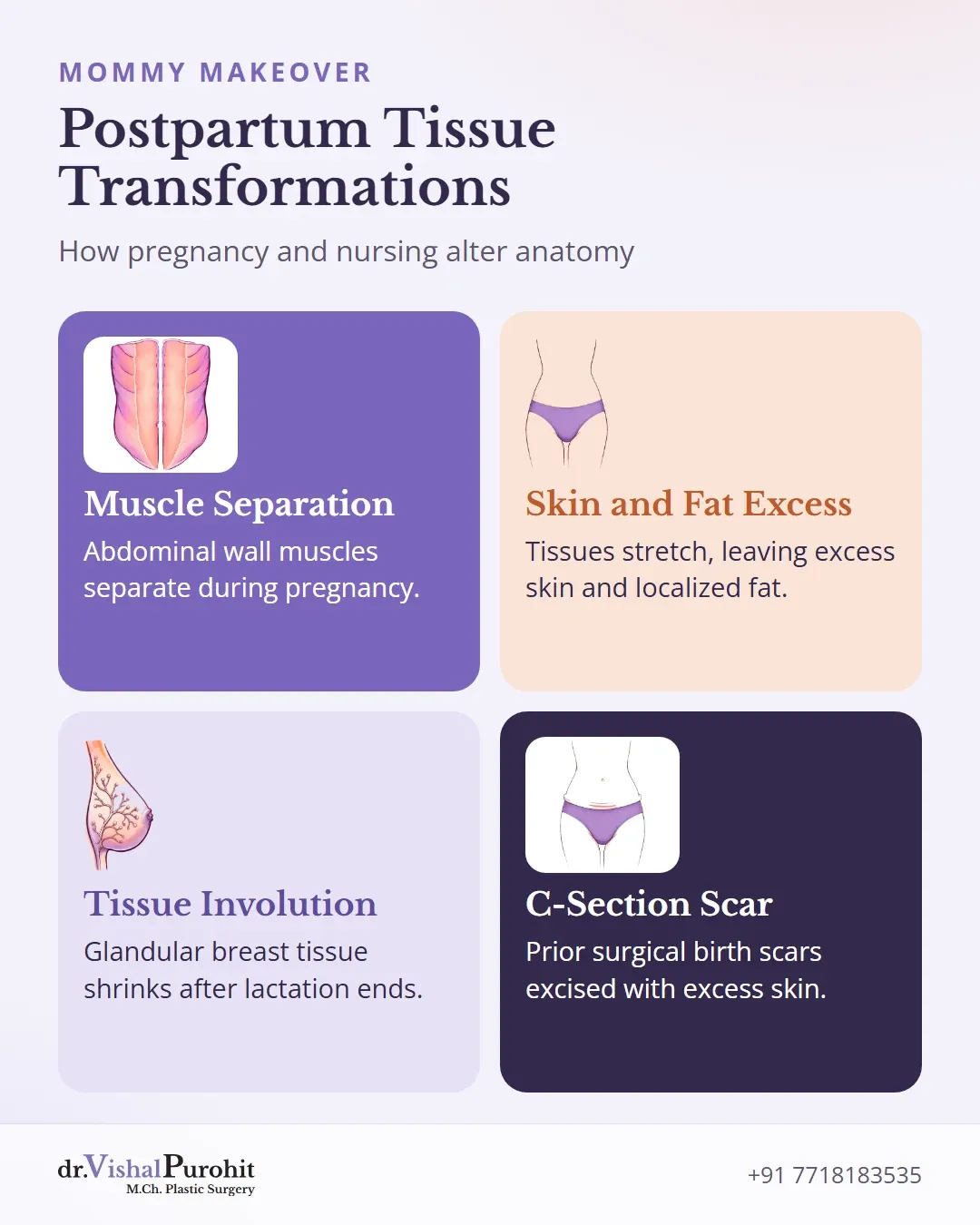
Following pregnancy, the abdominal wall and breasts undergo distinct tissue transformations:
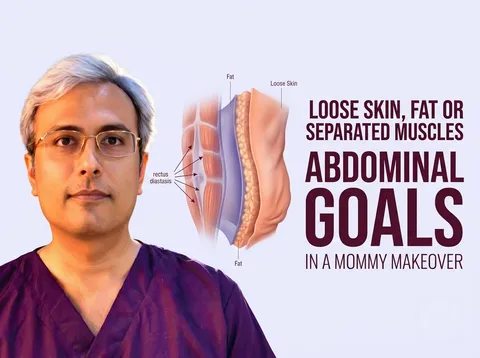
- The abdominal tissues stretch, leaving excess skin, localised fat deposits, and separated abdominal wall muscles2.
- Breast volume often alters substantially, resulting in loose skin, ptosis (sagging), or involution where glandular tissue shrinks after lactation23.
- In some women, breasts become smaller than their pre-pregnancy baseline once nursing ends3.
Allowing approximately a year provides the ideal timeframe for tissues to settle. A stable weight is necessary before planning any intervention; being overweight is acceptable, but obesity is not. In his practice, separated abdominal muscles (rectus diastasis) are always repaired during the tummy tuck (abdominoplasty) when present.
Dr. Purohit’s note: Dr. Vishal Purohit considers surgery only when at least 6 months have passed after delivery and after breastfeeding has ceased entirely, alongside an established regular exercise routine.
Recovery and Delivery Type
For mothers with a prior surgical birth, Dr. Purohit removes the existing C-section scar along with the excised abdominal skin during a tummy tuck (abdominoplasty). Because surgical correction relies on stable anatomical margins, waiting for postpartum involution ensures optimal long-term results3.
Breastfeeding, Weaning and a Stable Breast Shape
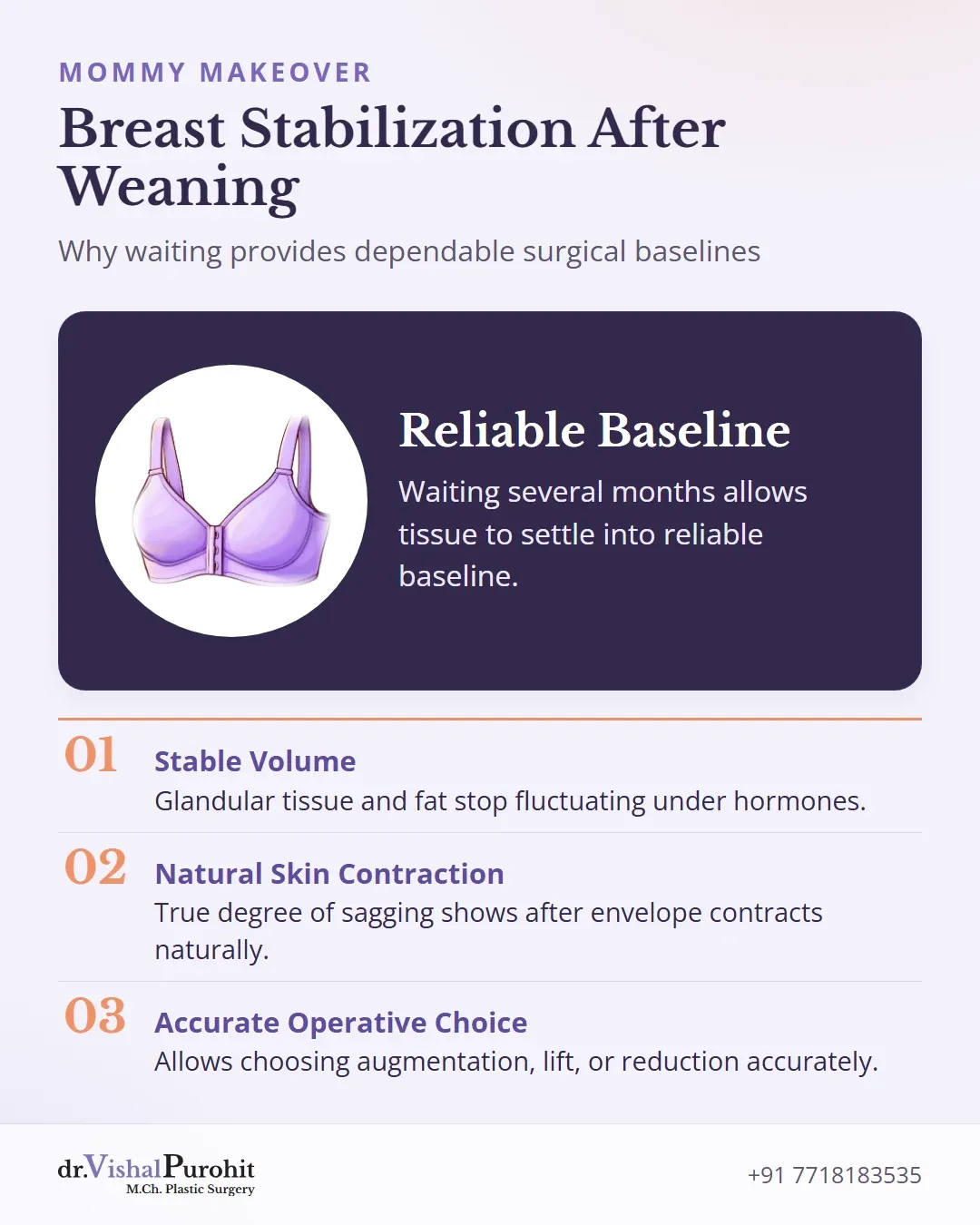
Pregnancy and lactation expand both the glandular tissue and the overlying skin of the breasts, stretching the musculofascial ligaments4. When high hormone levels drop and milk production ends, the skin envelope may tighten to varying degrees, but weakened fascial support can leave the breasts with lasting changes in volume, skin elasticity, and position4. As breast tissue volume shifts, the nipple-areolar complex may also sit lower or move laterally4.
Key points
- Pregnancy and lactation cause lasting changes in breast volume, skin laxity, and nipple position.
- Waiting several months after weaning allows breast tissues to settle into a stable baseline before surgery.
- Planning on a stable contour makes the surgical plan more accurate.
Planning surgery while milk production continues or immediately after stopping can compromise surgical precision, provided a woman maintains a regular exercise routine.
Waiting until several months after weaning ensures that breast tissue settles into a reliable, post-lactational baseline:
- Breast parenchyma and surrounding fat reach a stable volume rather than fluctuating under hormonal stimulation4.
- The true degree of skin laxity and tissue sagging becomes evident once the expanded skin envelope contracts as much as it naturally can4.
- An accurate operative plan can be chosen, whether that requires breast augmentation, a breast lift, or a breast reduction.
Following surgery, a dedicated support bra is worn continuously for 2 months as part of the recovery routine. Completing weaning and confirming a stable breast contour allows surgical adjustments to match the final shape of the chest wall.
How Long Dr. Purohit Asks Patients to Wait
At his practice in Jaipur, Dr. Vishal Purohit requires an established, regular exercise routine. A stable weight is also required prior to surgery, where being overweight is acceptable but obesity is not. In addition, completing family planning beforehand is recommended, as carrying a future pregnancy would undo the tightening achieved during surgery5.
Why Recommendations Differ
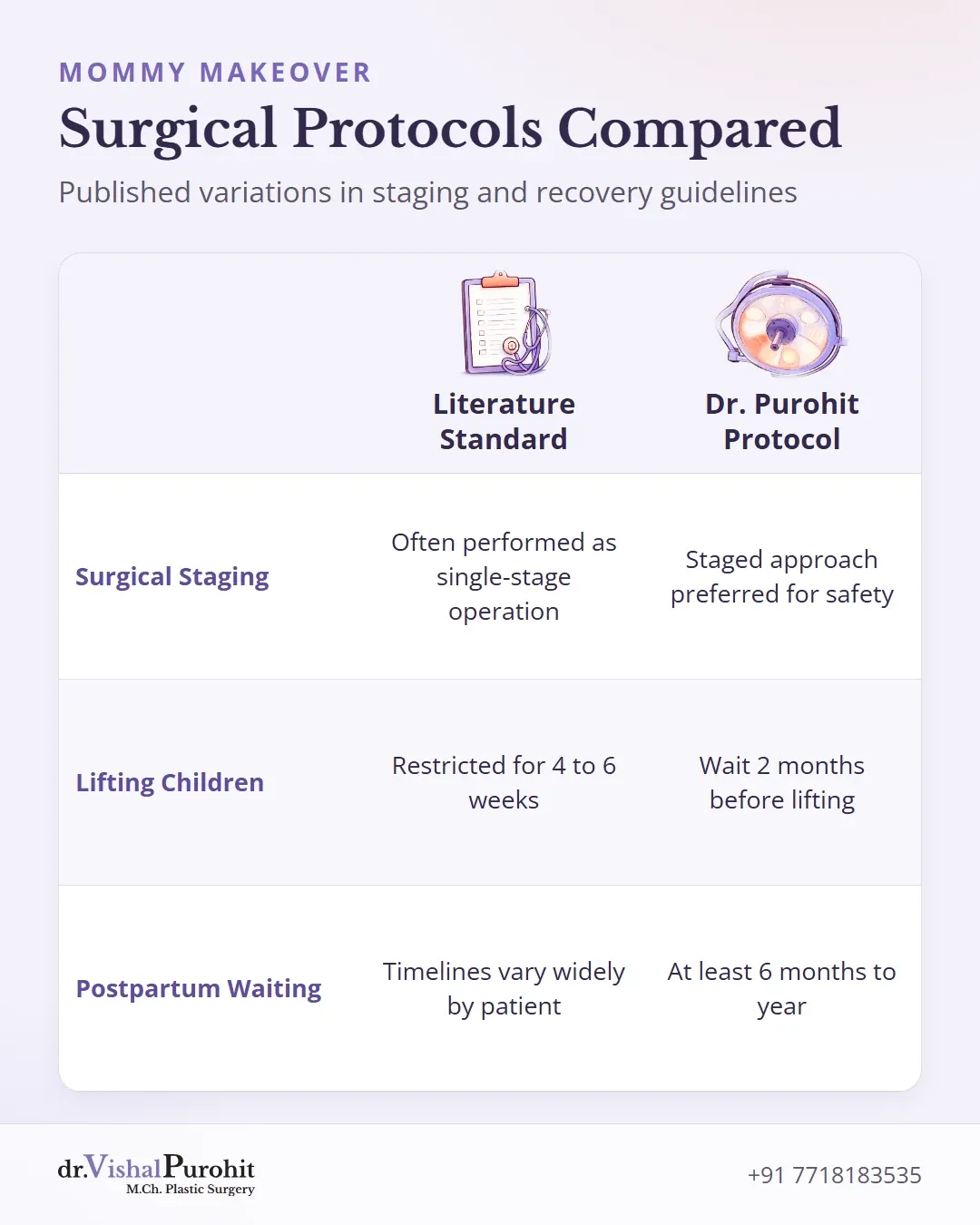
Published medical sources describe different approaches to planning and staging postpartum procedures:
- Mommy makeover procedures are often performed as a single-stage operation1, while a staged approach is described as the safest option to avoid prolonging anaesthesia beyond 6 hours or increasing perioperative risks6.
- Surgical recovery timelines vary widely based on the extent of tissue dissection and the individual patient, with typical recovery spanning 2 to 4 weeks7.
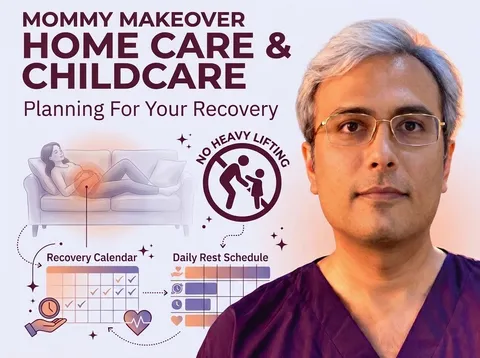
- Heavy lifting and strenuous exertion are restricted for 4 to 6 weeks in general literature7, whereas Dr. Purohit asks mothers to wait 2 months before lifting their children.
Complete Your Family First
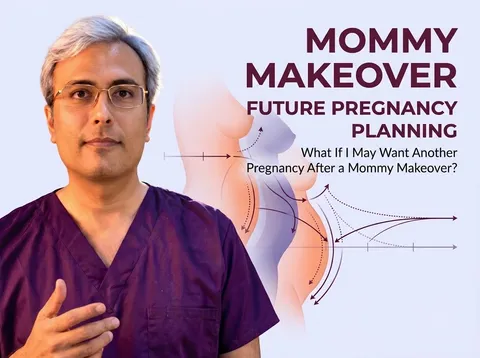
Dr. Vishal Purohit advises completing the family before planning a mommy makeover. A woman who plans to have another child should have that child first.
Key points
- Completing your family before a mommy makeover protects your surgical results.
- Future pregnancy stretches tightened abdominal muscles and skin, which may need further surgery.
- Waiting until childbearing is finished helps the contour improvements last.
Why Future Pregnancy Can Alter Surgical Results
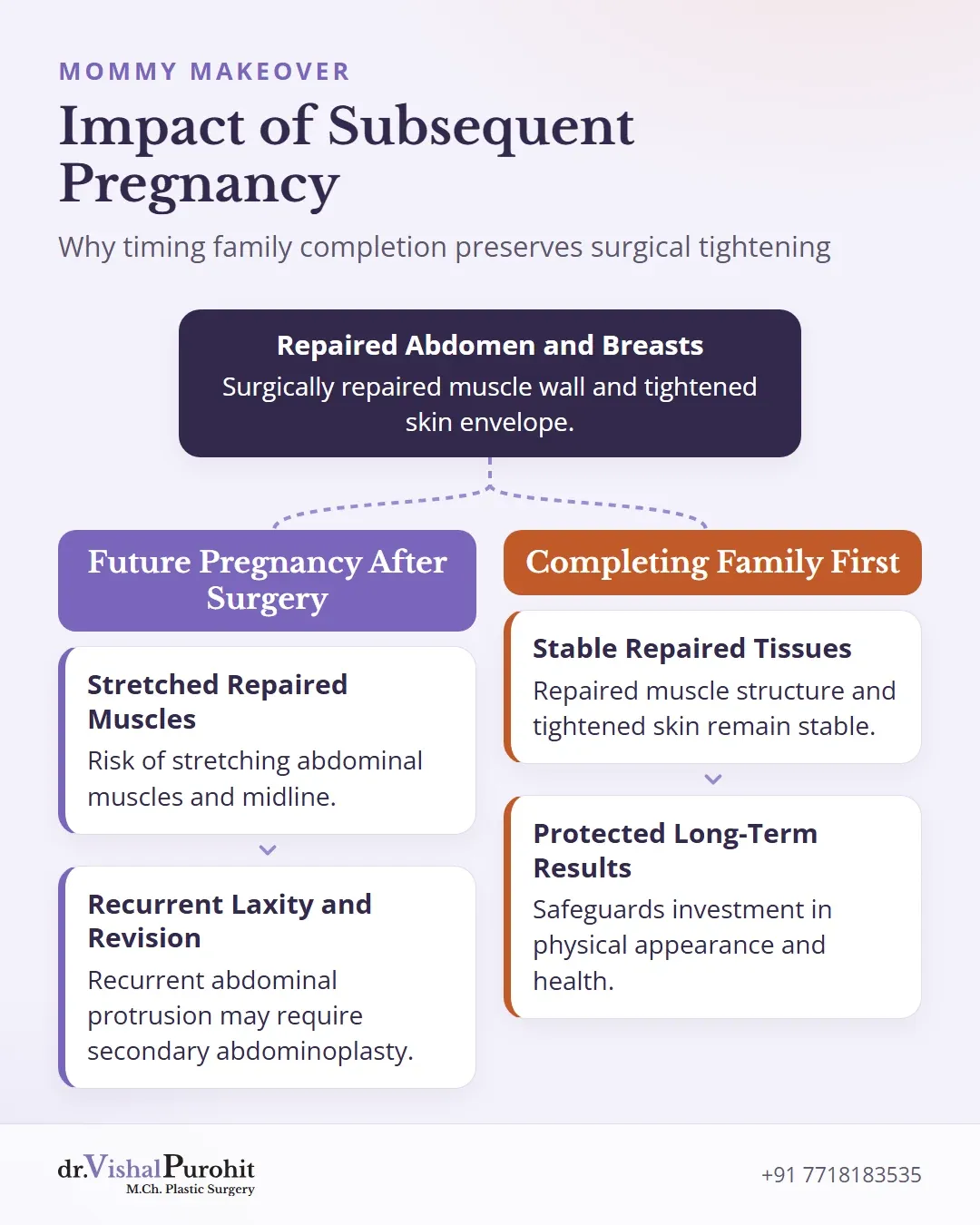
A subsequent pregnancy places new physical strain on the abdominal wall and breast tissues, which can reverse the aesthetic improvements achieved during surgery.
According to surgical literature:
- A pregnancy after abdominoplasty creates a risk of stretching the abdominal muscles and the midline8.
- It can cause loose abdominal skin and new striae (stretch marks)8.
- These structural changes can lead to recurrent abdominal protrusion or laxity, which may ultimately require a secondary abdominoplasty8.
- Changes in breast volume and tissue involution also occur following pregnancy and lactation, which can alter long-term surgical contour3.
Most surgeons advise patients to wait until their family is complete before undergoing definitive body contouring8. Making this decision early ensures that the repaired muscle structure and tightened skin remain stable over time, protecting the investment in your health and appearance.
A Consultation Can Come Before You Are Ready
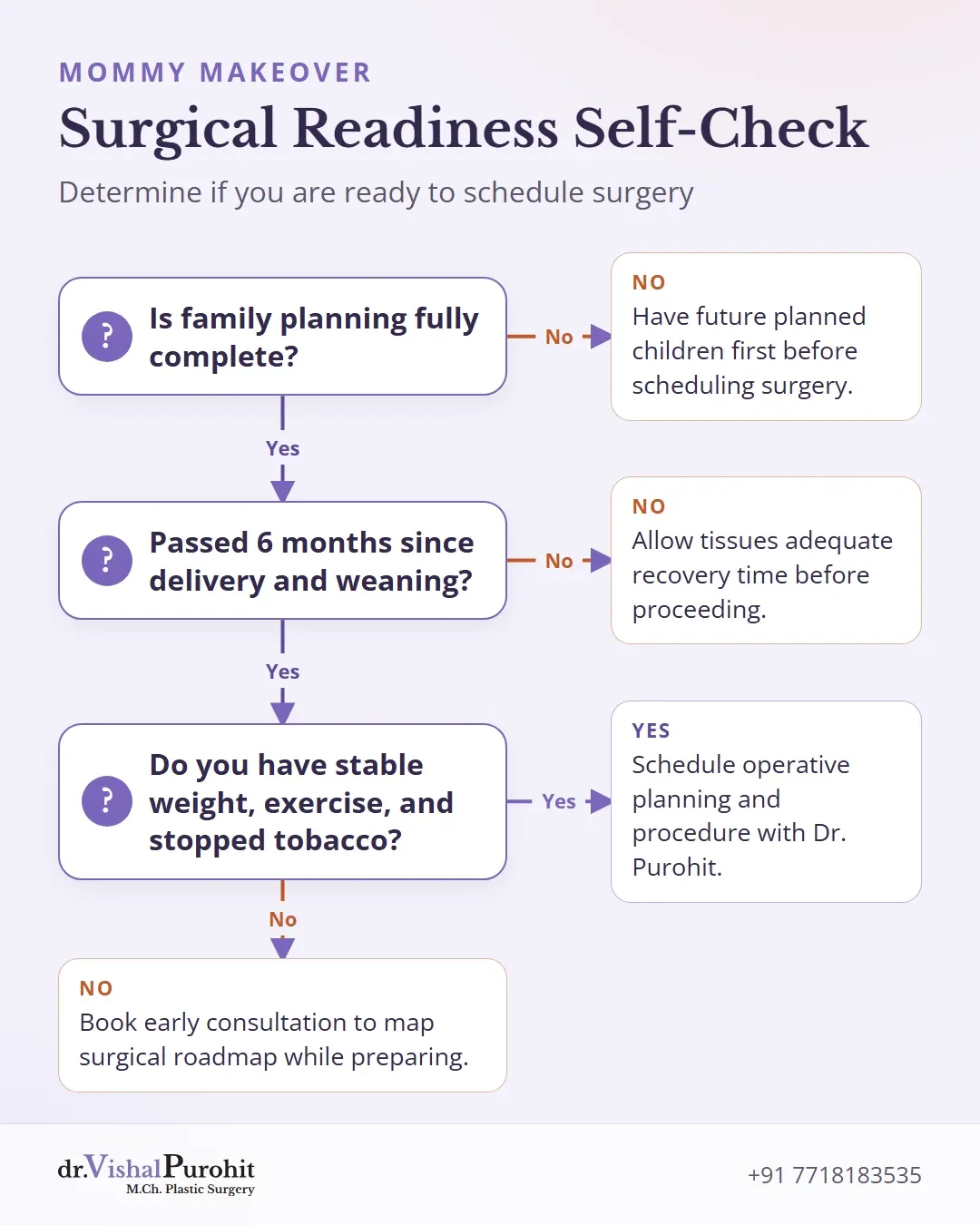
An initial evaluation allows a woman to understand what procedures might be suitable and to map out a clear surgical roadmap well in advance. At his practice in Jaipur, Dr. Vishal Purohit assesses individual anatomical changes and discusses operative staging, even while a patient is still preparing physically for surgery. To ensure privacy and personal comfort during assessments, the practice provides a private female consultation suite supported by a dedicated female nursing team.
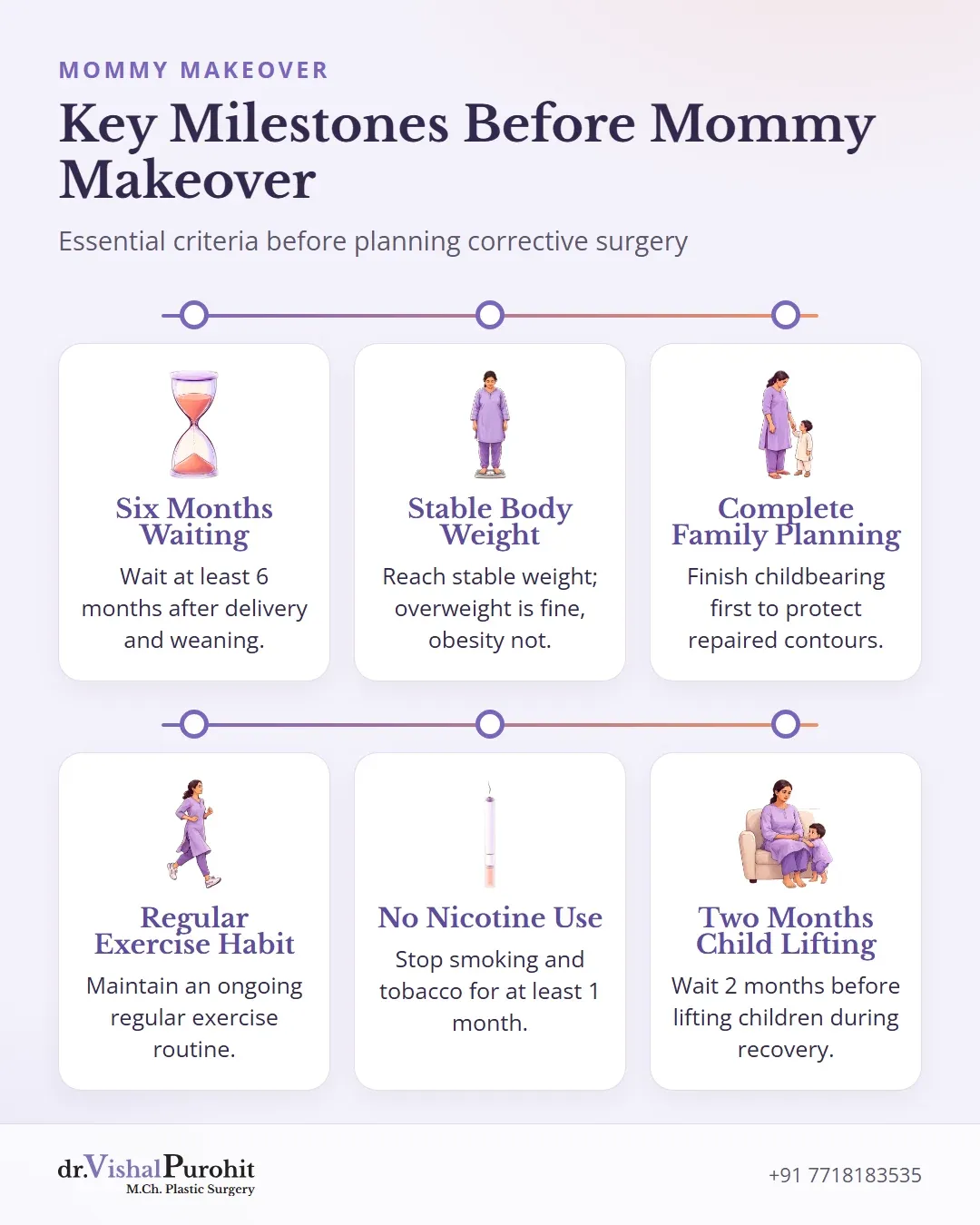
Actual surgery is only scheduled when clinical milestones and safety criteria are satisfied. Under Dr. Purohit’s protocol, surgery is considered:
- Once recovery from delivery and breastfeeding is complete
- Alongside an established, regular exercise routine
- Once a stable body weight is reached, where being overweight is acceptable but obesity is not
- When routine pre-anaesthetic tests confirm sound general physical health
- After smoking and tobacco use have been stopped for at least 1 month
- When family planning is complete, as having any future planned children first is advised
Detailed operative planning remains essential prior to any combined procedure6. This planning visit ensures that every physical requirement is met before setting a surgical date.
Planning Your Mommy Makeover in Jaipur
Planning surgical recovery requires careful evaluation of post-weaning tissue stability, personal health markers, and family goals. For structured guidance on operative combinations, explore mommy makeover in Jaipur to review procedure details. If you have questions regarding the appropriate post-delivery timeline, review the mommy makeover FAQs to prepare thoroughly before your visit.
This is educational information, not medical advice.