Is Anaesthesia Safe for Breast Augmentation? Safety Protocols, Sedation, and Risk Mitigation
Yes, anesthesia is very safe for breast augmentation. It is safe when an M.Ch plastic surgeon and a qualified anesthesiologist handle your care.
Sedation can feel scary, but modern medicine keeps you safe. Our goals are to keep you comfortable and secure during your journey.
At Kalpana Aesthetics, Dr. Vishal Purohit (M.B.B.S., M.S., M.Ch. Plastic Surgery) uses strict rules to lower risks. Safety is personal, so we create a risk profile just for you.
We use advanced methods to stop nausea and blood clots. We match your sedation level to your health needs. This makes your breast augmentation in Jaipur smooth and easy.
We want to take away your anxiety. This lets you focus on your new look and higher self-esteem.
Our team uses expert skills and puts patients first. We provide a safe place to reach your health and beauty goals.
Understanding Anaesthesia Types for Breast Augmentation
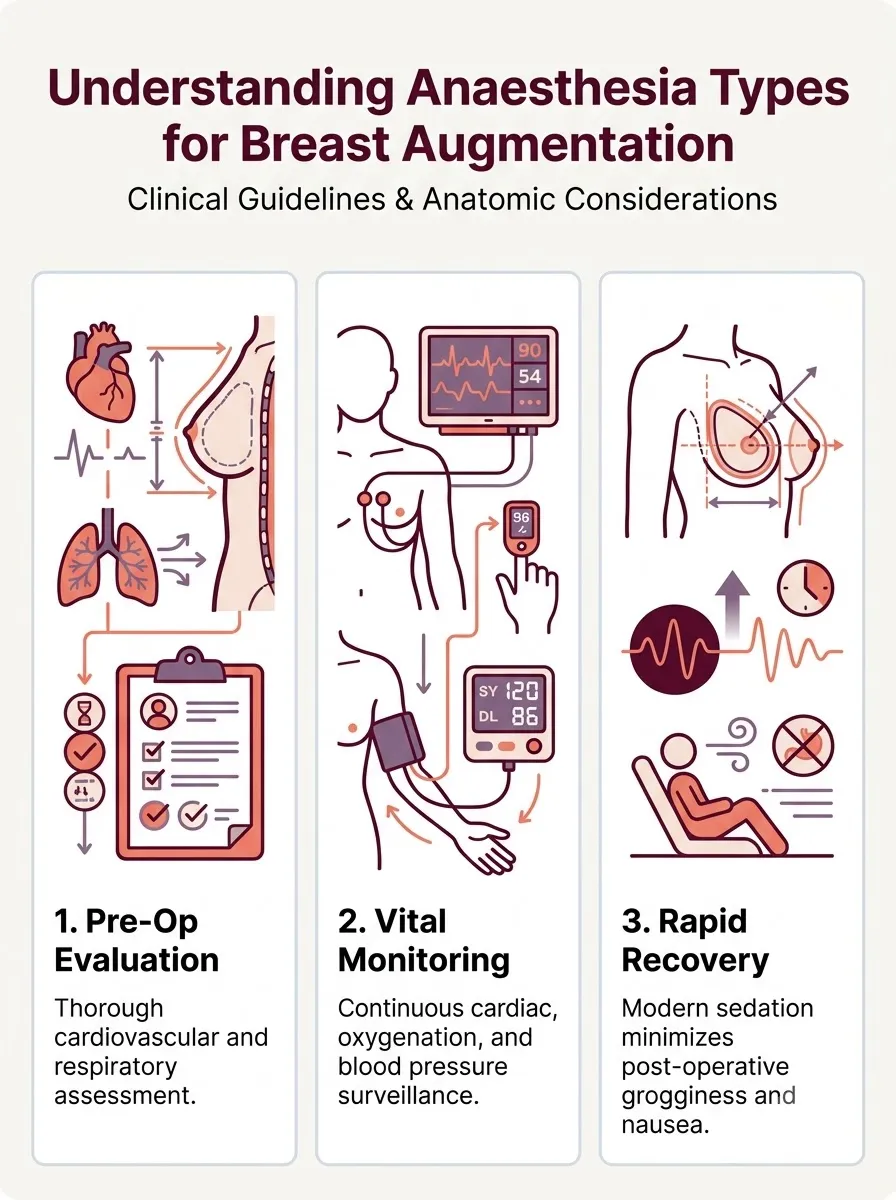
Picking the right anaesthesia balances your comfort and your health. Most people choose between general anaesthesia and sedation.
General anaesthesia puts you in a deep sleep. You will not feel anything during the surgery.
It affects your whole body. It “presents the potential for aspiration, allergic reactions, increased blood pressure” 1.
Some patients prefer IV sedation. This is often called monitored anaesthesia care.
Doctors may use “titrated doses of alfentanil 0.5-1.0 mg intravenous (i.v.) for analgesia” 2 to help you relax. This keeps you calm without putting you fully under.
The safety profile changes based on the method. Local anaesthetics only numb the surgery site.
This helps by “alleviating most of the potential risks associated with general or MAC anesthesia” 1. Your surgeon will help you pick the safest option.
General Anaesthesia: Total Unconsciousness
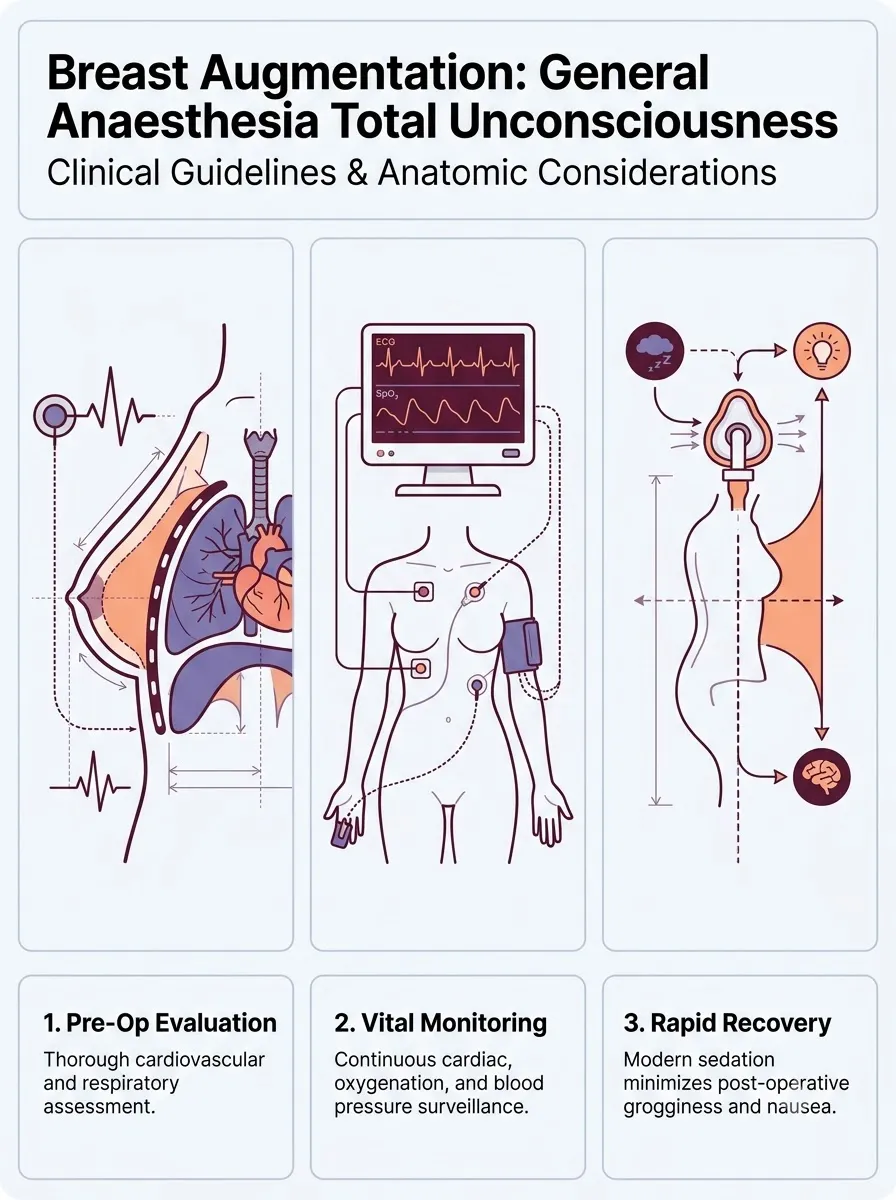
General anaesthesia is a great way to stop pain. It puts you into a deep sleep so you don’t notice the surgery.
This lets the surgeon work with surgical precision. This means they can be totally accurate while they work.
Your safety is the most important part. Your team uses a controlled environment to watch your heart and breathing every second.
This keeps you stable and safe while you sleep. A big part of this safety is airway management.
This process keeps your breathing tube open and clear. Experts handle this so you get plenty of oxygen during the procedure.
Sedation and Local Anaesthesia: The Minimalist Approach
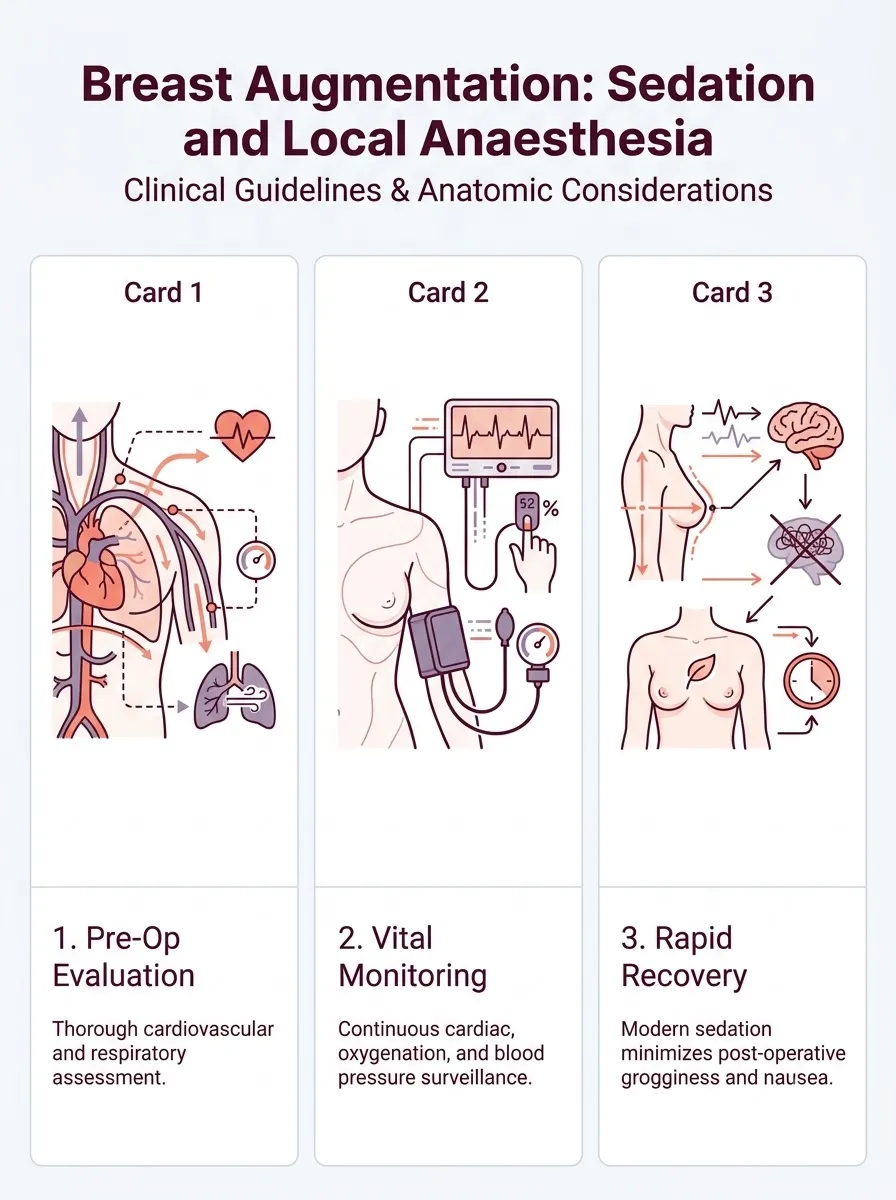
Conscious sedation is a lighter choice. You won’t be fully unconscious.
You will feel relaxed and sleepy. However, you can still breathe on your own.
This method focuses on patient awareness. You stay awake enough to answer the doctor, but you feel no pain.
This simple approach means a reduced recovery time. You wake up faster.
You will likely feel less groggy after your procedure. It is a great way to regain your confidence gently.
Doctors often use local anaesthesia with sedation. It numbs just the breast area to stop pain.
This mix is personalized for you. It keeps you calm and comfortable.
Patient-Specific Anaesthetic Risk Profiling
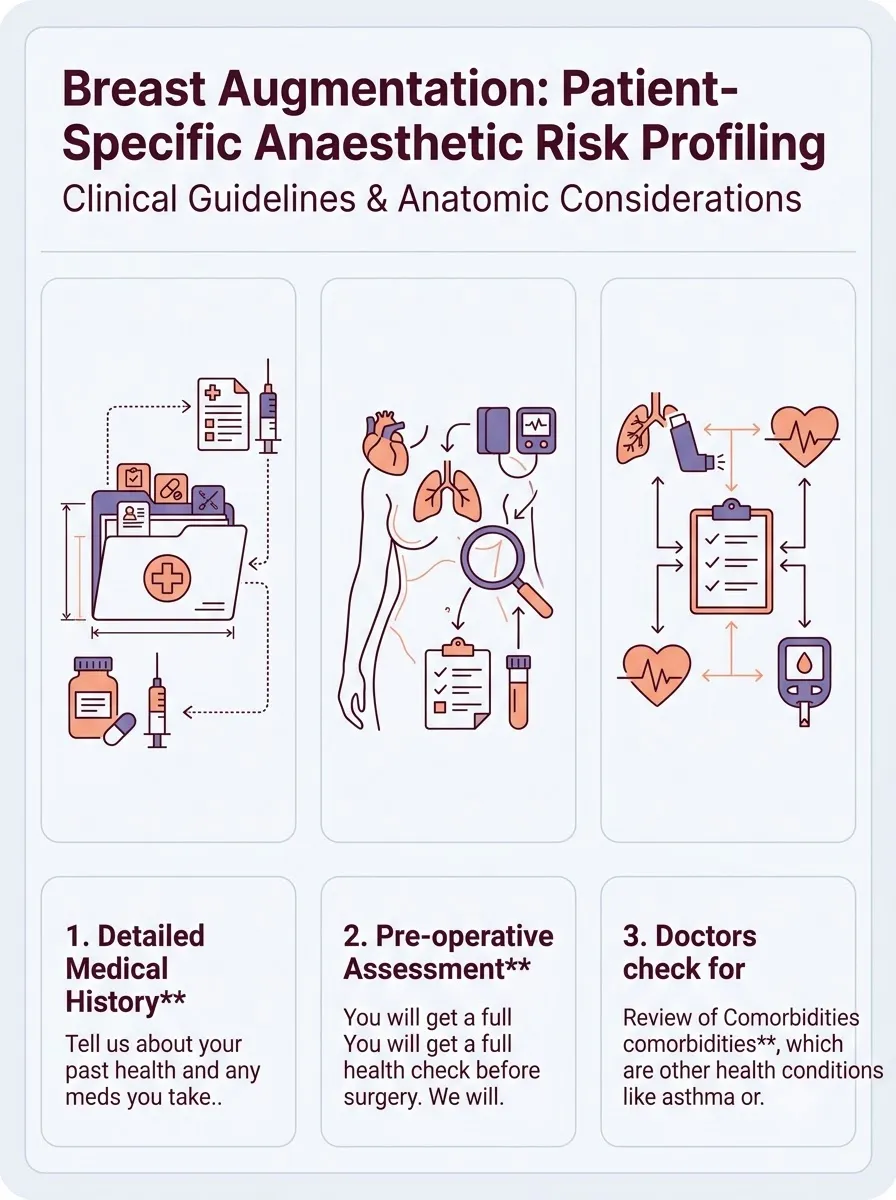
Your safety depends on a plan made just for you. Dr. Vishal Purohit reviews your health to pick the best sleep method.
This ensures you are a good candidate for the procedure. The team follows these steps to protect you:
- Detailed Medical History: Tell us about your past health and any meds you take. This helps the team spot risks early.
- Pre-operative Assessment: You will get a full health check before surgery. We will test your heart, lungs, and blood.
- Review of Comorbidities: Doctors check for comorbidities, which are other health conditions like asthma or diabetes. Knowing these lets the team adjust your care.
- Customized Safety Plan: The team uses your data to pick the safest dose and medicine. This keeps your journey smooth and secure.
Intraoperative Safety: The Sedation-to-General Transition Protocol
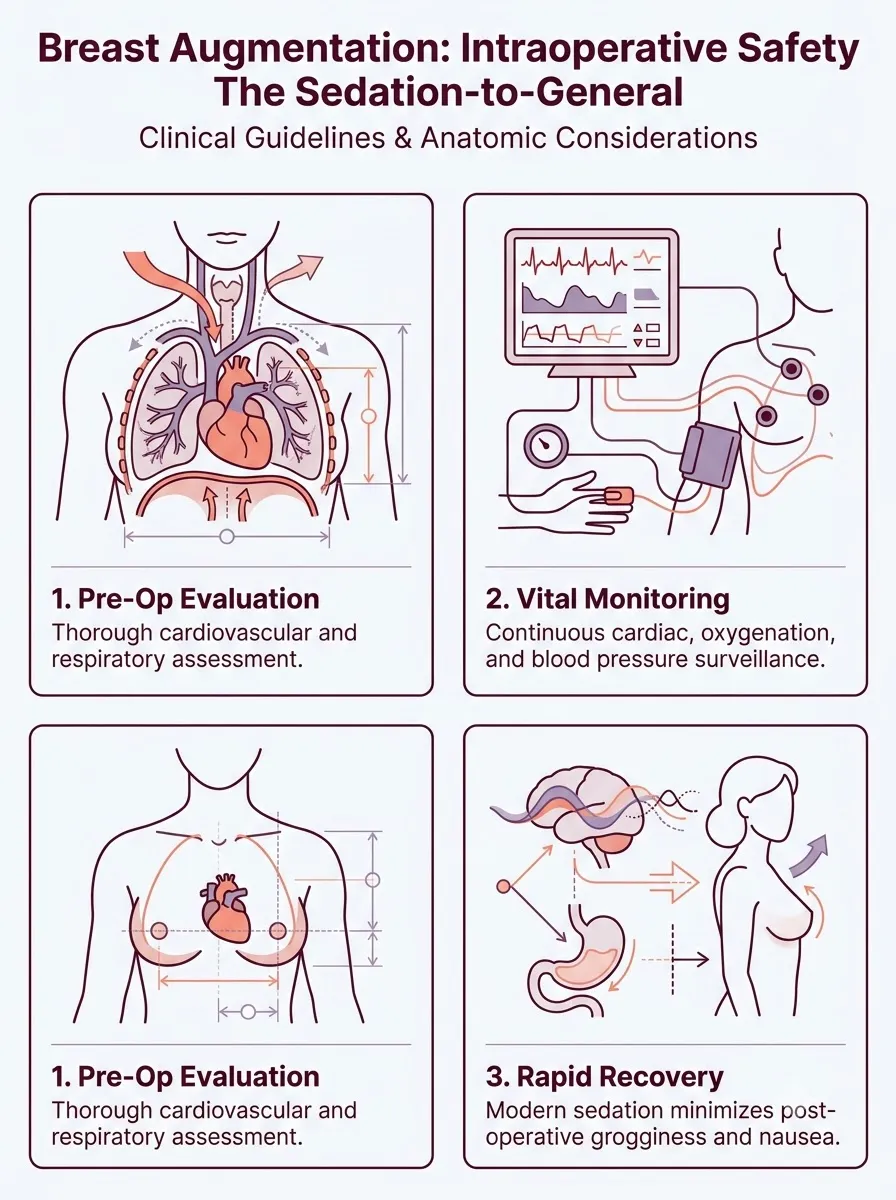
Your safety comes first during surgery. Your medical team follows a strict transition protocol.
These rules help move you from light sedation to general anaesthesia if you need it. This happens if you wake up or feel uncomfortable.
The team uses intraoperative monitoring to track your vitals. They watch your heart rate and oxygen levels every second.
This keeps you below a safety threshold. This limit tells the doctor when to change your sleep level.
This careful switch stops your body from feeling sudden stress. It helps manage risks and potential complications during the process.
This keeps you calm and safe. It lets your surgeon focus on your results.
Managing Post-Operative Nausea and Vomiting (PONV)
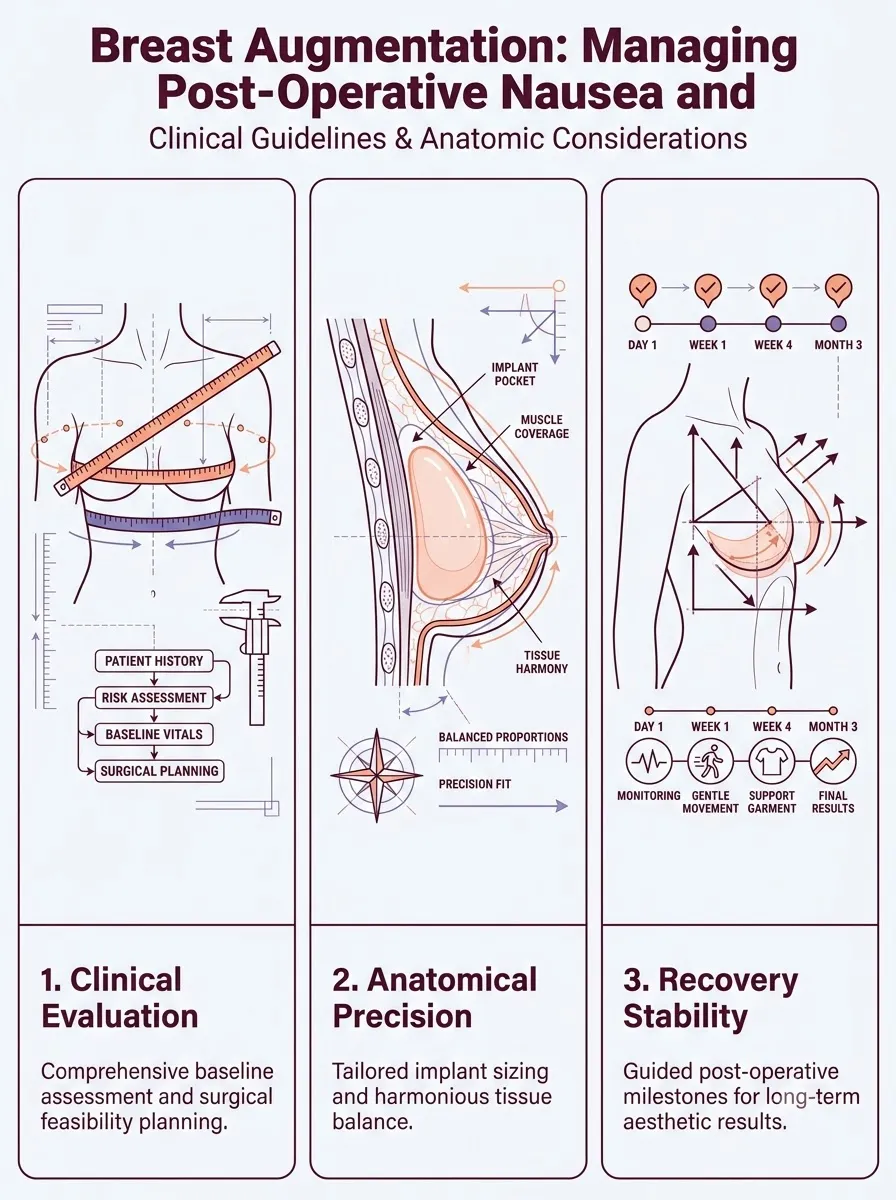
It is common to feel sick to your stomach after surgery. This is called Post-Operative Nausea and Vomiting (PONV).
We want you to be comfortable. Our goal is to help you feel your best.
Our team has a clear PONV management plan. We want to stop nausea before it even starts.
We use antiemetics. These are medicines that stop vomiting. We give these during your recovery phase as you wake up.
| Prevention Step | How it Works | Benefit to You |
|---|---|---|
| Pre-Surgery Planning | We check if you are likely to feel sick. | A plan made just for your body. |
| Antiemetics | We give medicine to block nausea. | You will feel sick less often. |
| Fluid Balance | We use IV fluids to keep you hydrated. | You will wake up feeling fresh. |
| Recovery Monitoring | Nurses check on you as you wake up. | You get fast relief if you feel uneasy. |
Thrombosis Prophylaxis: Preventing Blood Clots After Surgery
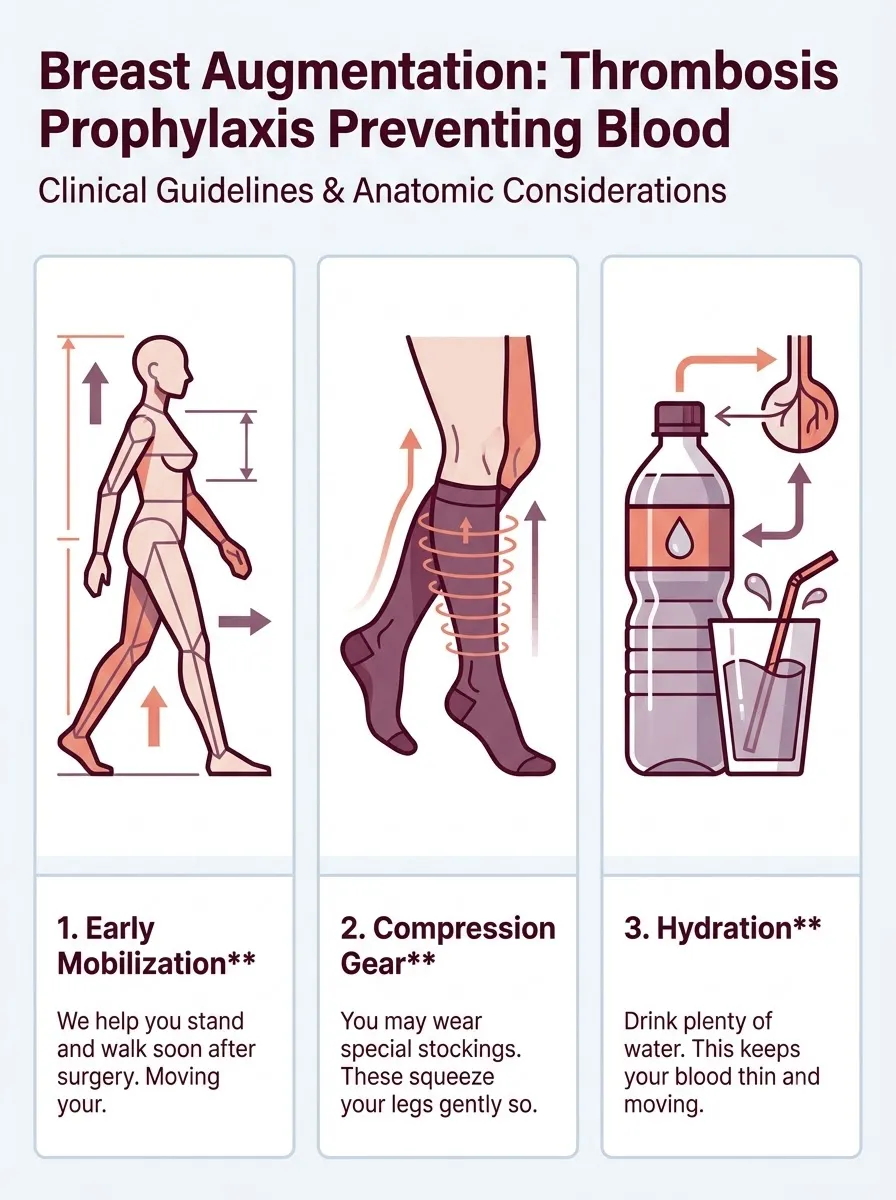
Your surgeon works hard to keep your blood flowing well. They focus on microvascular safety to protect the tiny blood vessels in your skin and implants. This helps you heal faster.
To keep you safe, we use blood-clot prophylaxis. These are steps that stop blood from thickening into a clot. We focus on DVT prevention to stop clots in your leg veins.
We use these methods to protect your health:
- Early Mobilization: We help you stand and walk soon after surgery. Moving your legs keeps blood flowing to your heart.
- Compression Gear: You may wear special stockings. These squeeze your legs gently so blood does not pool.
- Hydration: Drink plenty of water. This keeps your blood thin and moving.
- Walking Plans: We give you a movement guide to fit your recovery timeline after breast augmentation.
Frequently Asked Questions
How safe is general anesthesia for breast augmentation surgery in Jaipur?
General anesthesia for breast augmentation is exceptionally safe when administered by senior, board-certified cardiac anesthesiologists in NABH-accredited surgical suites partnering with Dr. Vishal Purohit in Jaipur. Advanced laryngeal mask airways, continuous capnography, and bispectral brain monitoring ensure precise anesthetic control with safety profiles exceeding 99.9%. As an M.Ch plastic surgeon, Dr. Purohit operates only in fully equipped hospitals.
How is post-operative nausea and vomiting (PONV) prevented?
Dr. Vishal Purohit in Jaipur employs a multi-agent antiemetic protocol combining dexamethasone, ondansetron, and total intravenous anesthesia (TIVA) with propofol to eliminate post-operative nausea. Avoiding inhalational gases reduces nausea rates to under 3%, allowing patients to eat and drink comfortably within 2 hours of surgery. Dr. Purohit prioritizes a smooth, nausea-free emergence from anesthesia.
What protocols prevent blood clots (DVT) during and after surgery?
Deep vein thrombosis is prevented through intraoperative sequential pneumatic calf compression devices, thermal warming blankets, gentle IV hydration, and mandatory ambulation within 4 hours of surgery under Dr. Vishal Purohit’s protocol in Jaipur. Low-molecular-weight heparin is administered for high-risk profiles. As an M.Ch. plastic surgeon, Dr. Purohit enforces international safety benchmarks to ensure zero thromboembolic complications.
Can breast augmentation be performed under local anesthesia with sedation?
While technically possible, general anesthesia is clinically preferred for dual-plane submuscular breast augmentation by Dr. Vishal Purohit in Jaipur because it ensures complete pectoral muscle relaxation and absolute patient comfort during pocket dissection. Local anesthesia alone causes unnecessary muscle resistance and distress. Dr. Purohit explains anesthesia options thoroughly during your pre-operative assessment.