
Excessive gingival display often occurs when hyperactive elevator muscles lift the upper lip too high during dynamic facial movement. Understanding Why Does My Smile Show So Much Gum: Causes and Assessment helps determine whether excessive gum show stems from muscular hyperactivity rather than underlying skeletal or periodontal issues.
Targeted botulinum toxin injections temporarily reduce neuromuscular signaling to soften upward lip elevation during a smile while preserving resting posture. A thorough clinical assessment establishes whether neurotoxin administration matches an individual patient’s anatomical presentation.
How Lip Relaxation Alters Gum Display
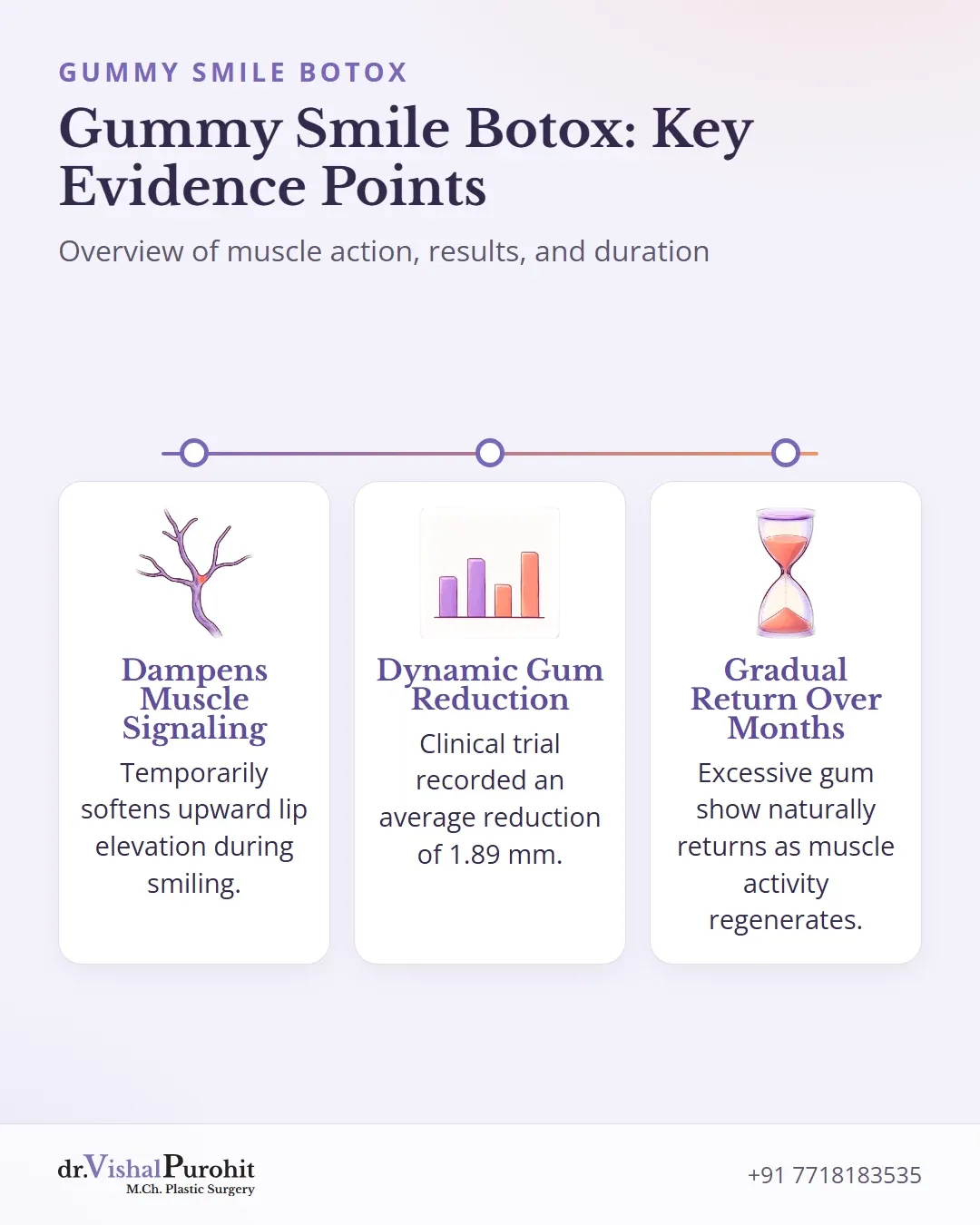
Excessive gingival exposure during smiling can occur when the elevator muscles of the upper lip become hyperactive12. When these muscles contract with excessive force during animation, they pull the upper lip upward, exposing the dental crowns and an unwanted band of gum tissue23.
Botulinum toxin temporarily dampens neuromuscular signaling within these specific elevator muscles13. By softening their contraction strength during a smile, the treatment prevents the lip from rising excessively over the gingival line345.
Common muscles involved in this elevation include:
This targeted intervention moderates dynamic upward elevation during facial movement while preserving natural resting lip posture13. In a systematic review of prospective controlled trials, targeted botulinum toxin injections produced consistent reductions in dynamic gingival exposure, reaching maximal effect at 2 to 4 weeks and lasting approximately 12 to 24 weeks1.
Published Study Groups and Exclusions
Published clinical reviews evaluate carefully selected adults rather than general populations6. In these trials, patients presented with excessive gingival display confirmed to exceed 2 mm6. The evidence emphasizes that treatment selection depends on identifying the underlying cause, specifically targeting hyperactive perioral muscles7.
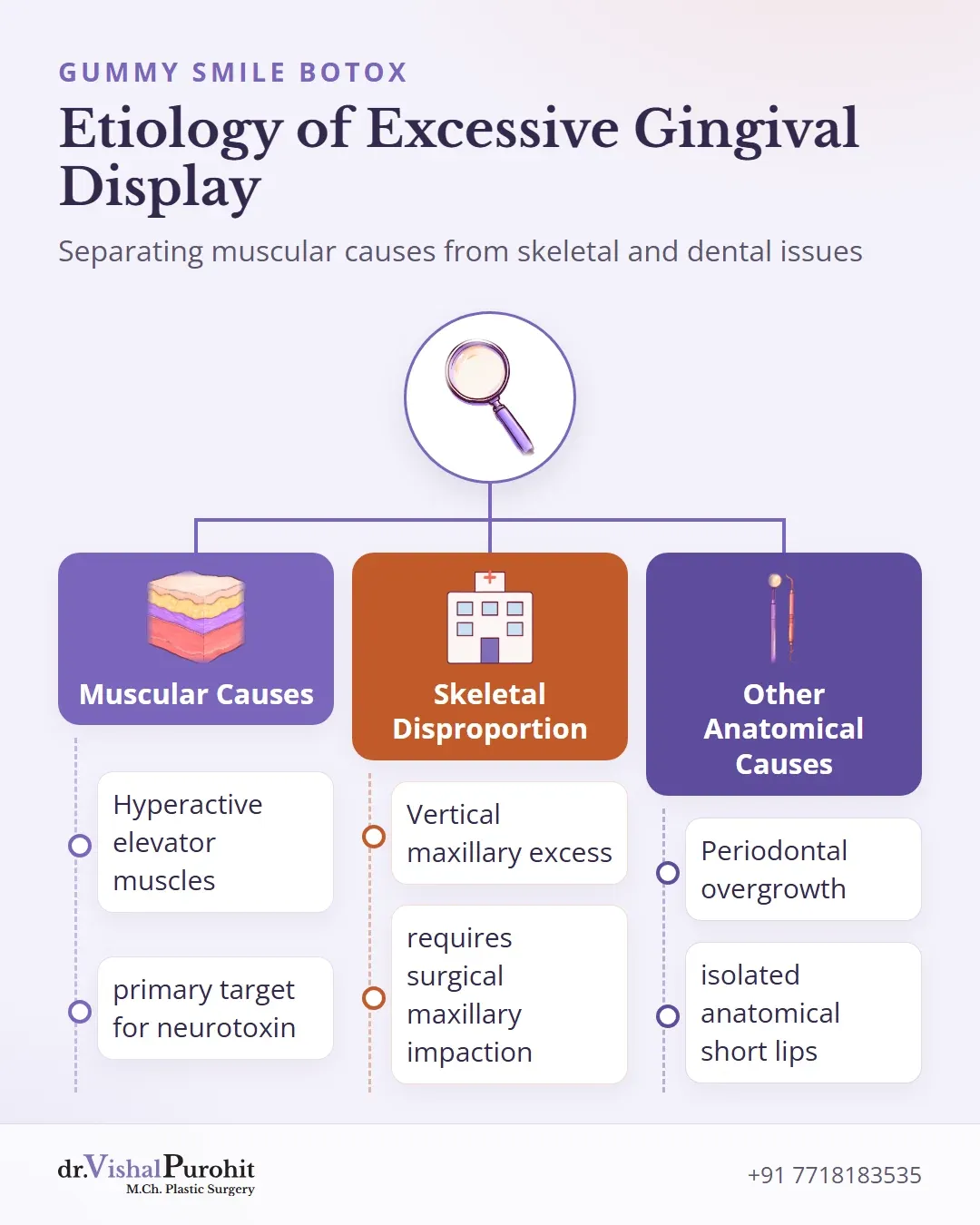
Clinical trials and reviews typically separate muscular causes from structural or dental issues:
- Hyperactive muscles: Patients with confirmed muscular hyperfunction formed the primary study cohorts78.
- Skeletal disproportion: Severe vertical maxillary excess usually requires surgical maxillary impaction rather than toxin alone67.
- Other anatomical causes: Severe periodontal overgrowth or isolated anatomical short lips are distinct etiologies addressed with dental or surgical approaches rather than isolated neurotoxin7.
Because published trials focus on narrow, pre-screened cohorts of adults with muscular hyperactivity67, these outcomes cannot be generalized to every individual presenting with gum show. A detailed clinical analysis of the smile and its etiology is required to establish whether toxin injection is appropriate for a given patient7.
Average Reductions Versus Individual Outcomes
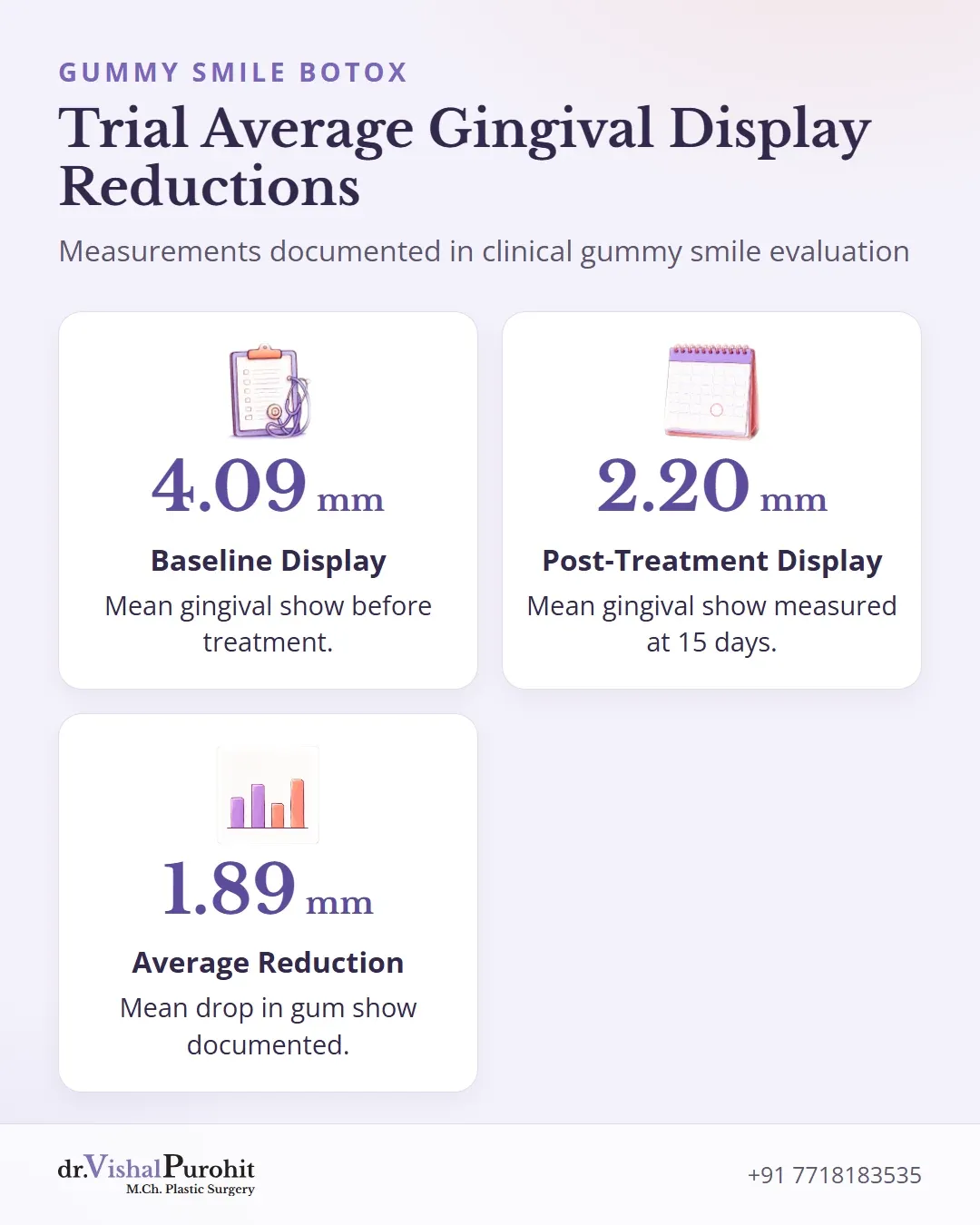
Clinical studies document measurable reductions in gingival display across treated groups. In one clinical evaluation of botulinum toxin for gummy smile reduction, the mean gingival display decreased from 4.09 mm at baseline to 2.20 mm at 15 days, reflecting an average reduction of 1.89 mm before gradually increasing over time9. In an uncontrolled study, injections of abobotulinumtoxinA resulted in decreased gum display across all 16 evaluated patients10.
However, individual patient responses vary considerably. Several personal anatomical elements shape the final visual outcome:
Dynamic Factors
Structural Factors
- Smaller lip volume
- Lip inversion or maxillary bone variations11
Because these underlying features differ in every person, assessing these unique structural factors ensures realistic expectations regarding how the upper lip elevates during animation.
Dr. Purohit’s note: Clinical consultations with Dr. Vishal Purohit focus on individual facial anatomy, dynamic lip movement, and personal aesthetic goals rather than promising a fixed millimetre change.
Quality of Evidence and Study Limits
Much of the published literature evaluating botulinum toxin type A for excessive gingival display is constrained by small participant cohorts and short follow-up intervals6910. Studies often assess patient response across varied protocols, which limits standardisation913.
Key points
- Most published studies on botulinum toxin for gummy smile feature small participant groups, varied protocols, and short follow-up periods.
- Systematic review reveals a moderate risk of bias across nearly all evaluated clinical trials.
- Long-term cumulative outcomes and broader functional impacts remain insufficiently characterised in current literature.
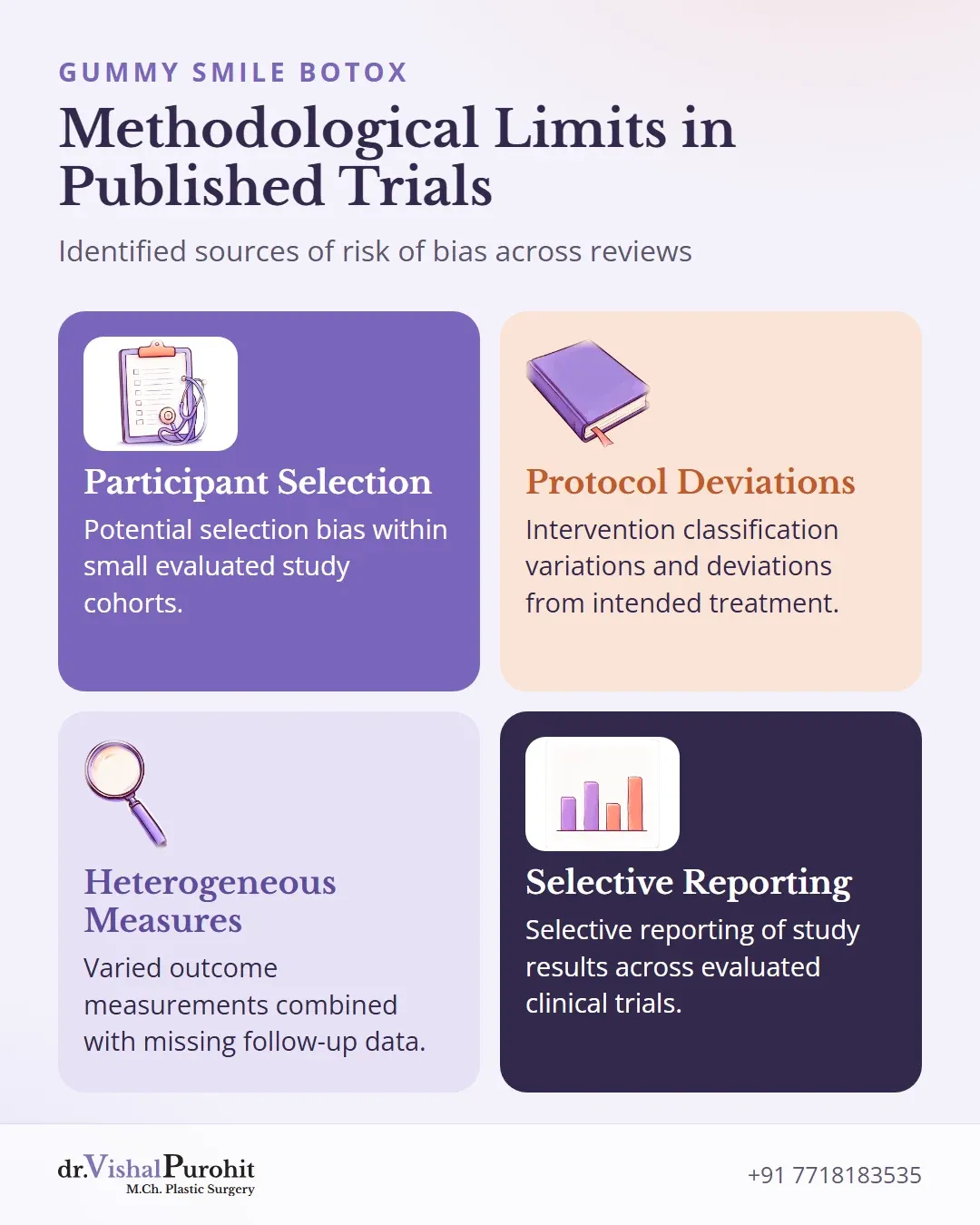
In a systematic review of controlled clinical trials, most included studies (92.3%) exhibited a moderate risk of bias under ROBINS assessment6. Key methodological limitations identified across trials include:
- Selection of study participants and potential selection bias6
- Classification of interventions and deviations from intended treatment protocols613
- Heterogeneous outcome measurements and missing follow-up data613
- Selective reporting of study results613
Only a single trial demonstrated a low risk of bias6. Furthermore, investigations systematically examining broader functional impacts, muscle mechanics, and subjective quality of life remain scarce9.
These methodological constraints leave long-term cumulative outcomes and extended response profiles less thoroughly characterised69. A clear, transparent discussion of these study limits helps individuals evaluate published evidence realistically for their specific anatomical presentation before proceeding with treatment.
Duration Recurrence and Wearing Off
The clinical effect of Botox develops over initial weeks and gradually fades as neuromuscular junction activity regenerates.
Clinical Longevity and Return of Gum Display
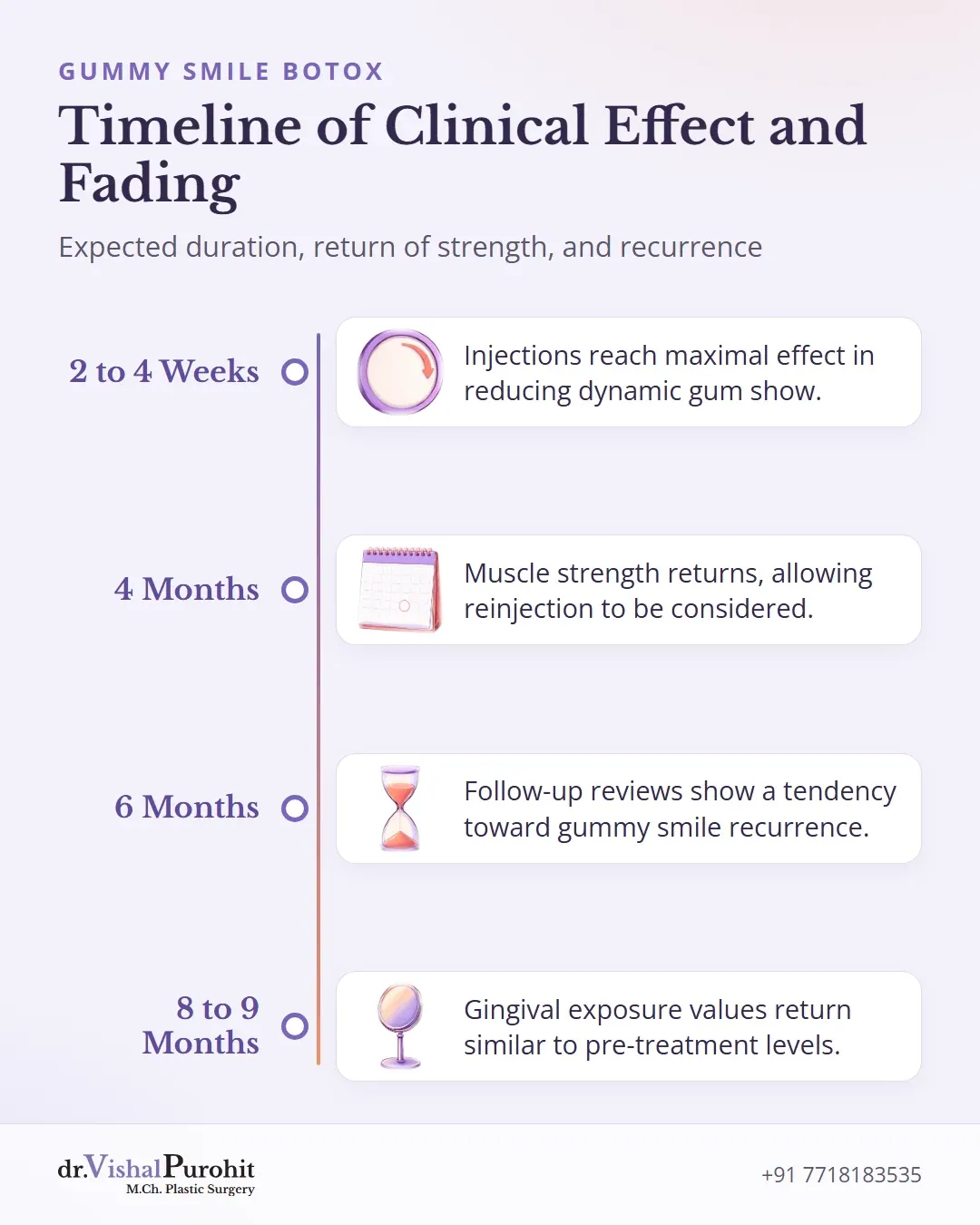
Temporary study results do not establish permanent correction, and excessive gum show naturally returns over subsequent months:
- Studies reviewing patients at six months after botulinum toxin type A infiltration showed a tendency toward gummy smile recurrence6.
- Research evaluations with longer follow-up times at eight and nine months observed gingival exposure values similar to those measured before infiltration6.
- Follow-up records note that muscle strength returns at four months, at which point reinjection may be considered14.
- Repeated injections before a four-month interval are discouraged to prevent immunoresistance14.
Vishal Purohit. Every patient presents with distinct smile dynamics and muscle anatomy, making personalized evaluation essential before determining treatment intervals.
Photography and Managing Incomplete Outcomes
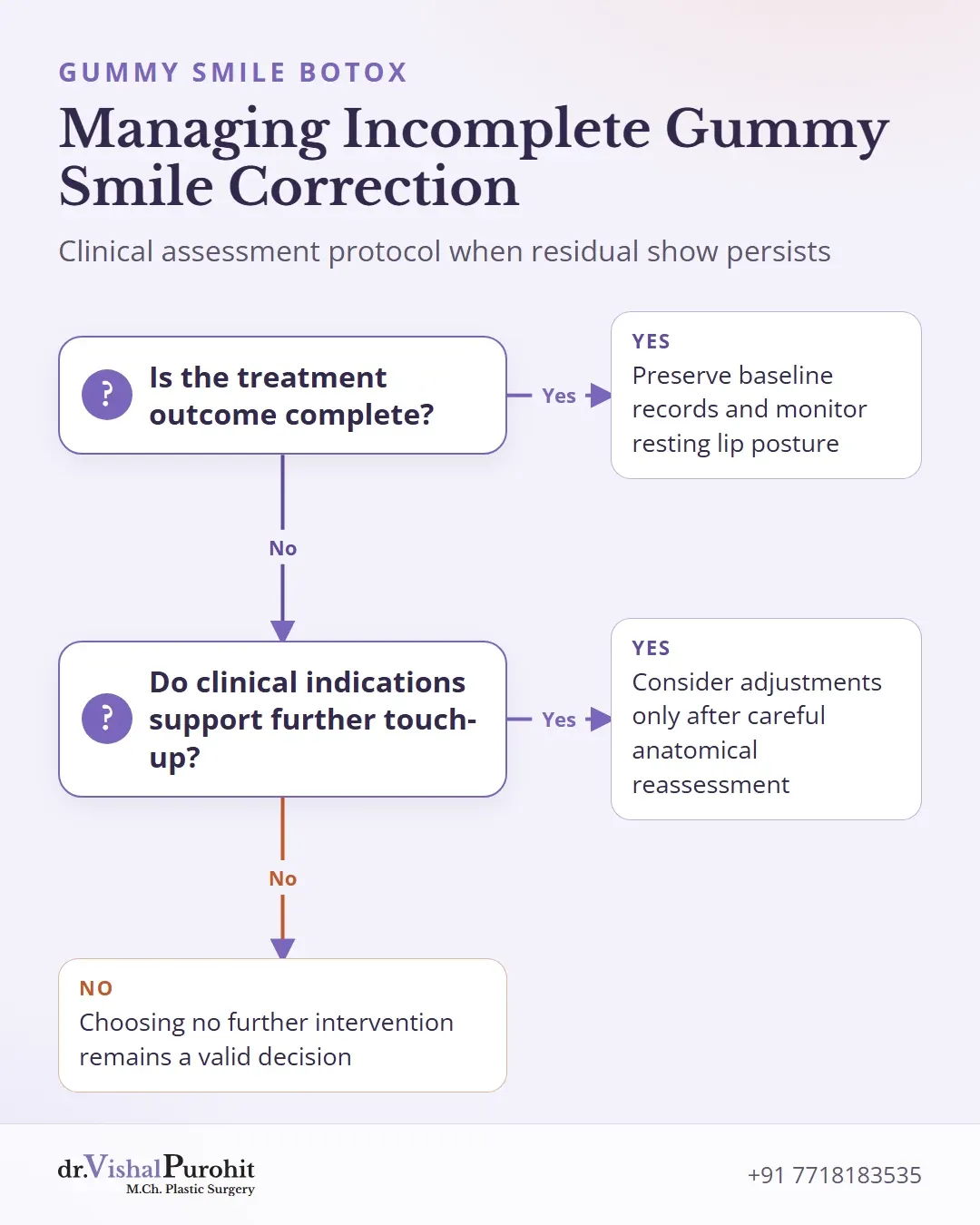
Standardized clinical photographs taken before and after treatment provide an objective record of dynamic smile changes1215. Frontal and profile views of the smile, lips, and gingival contour at rest and during maximum smile document these baseline features and post-treatment responses15. In Dr. Vishal Purohit’s practice, clinical photographs are kept strictly for treatment records and are never displayed publicly.
When an outcome appears incomplete or unsatisfactory, routine automatic top-up injections are not advised. The clinician must first re-evaluate underlying factors, including:
- Contributing anatomical causes and facial characteristics15
- Perioral muscle dynamics and smile patterns7815
- Oral function and movement during speech or animation712
Choosing no further intervention remains a valid clinical decision. If residual gingival display persists, adjustments are considered only after careful reassessment rather than routine administration. Any subsequent touch-up sessions depend on individual clinical indications to minimize adverse effects, while accepting the current state is always an appropriate option78.
Clinical Smile Consultations in Jaipur
Individual anatomical variations in lip movement, muscle strength, and maxillary bone structure mean that treatment outcomes cannot be generalized from trial averages. Those exploring Gummy Smile Botox in Jaipur can arrange a personalized clinical evaluation to determine if muscular hyperactivity causes their gingival display. Review our Gummy Smile Botox FAQs to understand assessment steps, or call or WhatsApp +91 7718183535 to schedule an in-person smile assessment.
This is educational information, not medical advice.