
Smiling involves a dynamic coordination between facial elevator muscles, the upper lip, teeth, and supporting bone structure. When an individual notices substantial gingival visibility, several anatomical factors may contribute, ranging from dynamic muscular pull to soft tissue coverage over the dental enamel.
Understanding these distinct anatomical drivers is an essential first step. For instance, evaluating Short Teeth or Swollen Gums: When to See a Periodontist helps clarify whether dental emergence or localized tissue overgrowth plays a role before considering muscular relaxation.
Gum Show at Rest and in Motion
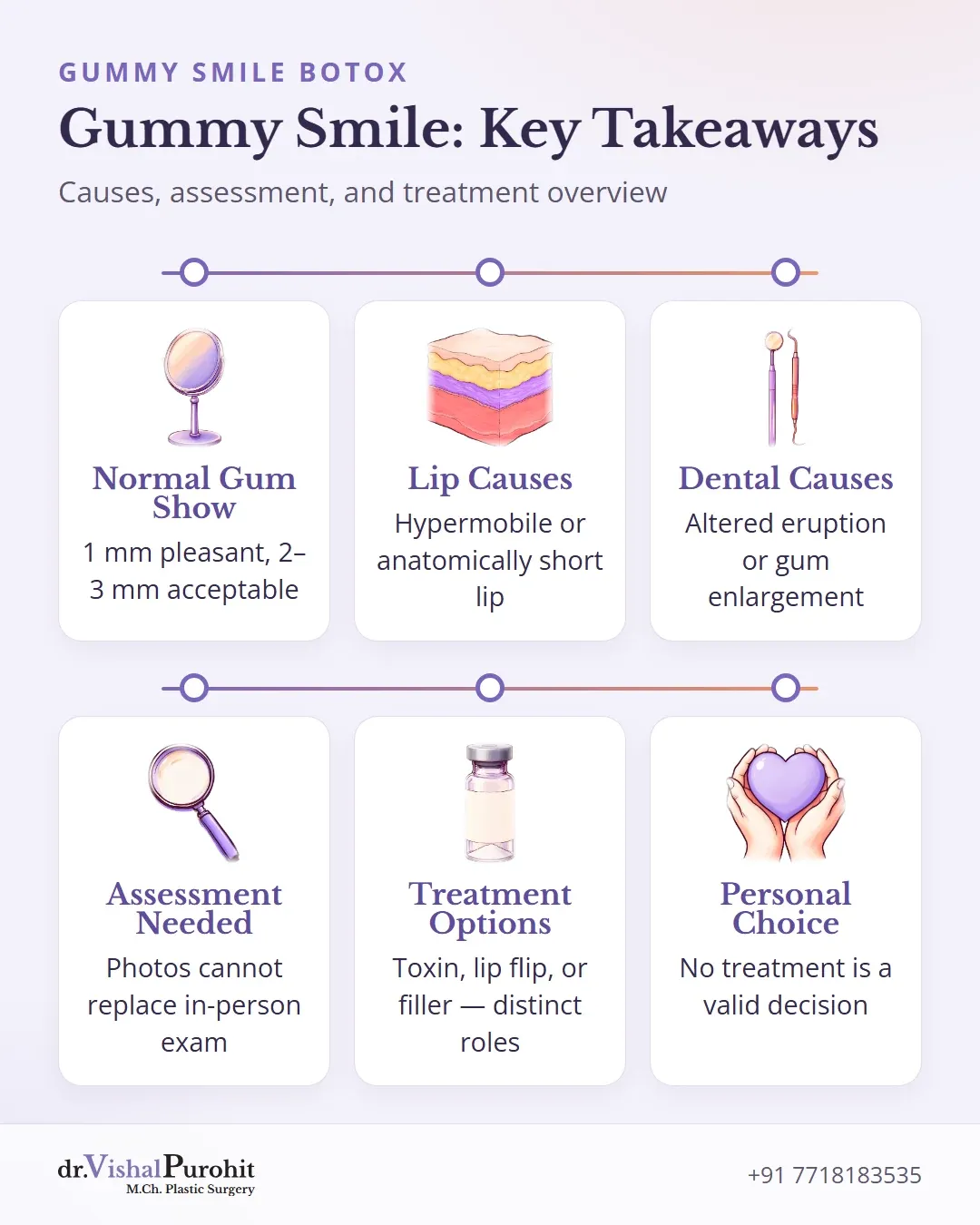
Evaluating excessive gingival display begins with assessing the position of the upper lip both at rest and during facial animation123. Vertical characteristics of facial miniaesthetics influence how much gum tissue is visible when the face is relaxed compared to when smiling1. A comprehensive clinical examination typically observes the lip at rest, during a relaxed conversational smile, and at a full maximal smile2.
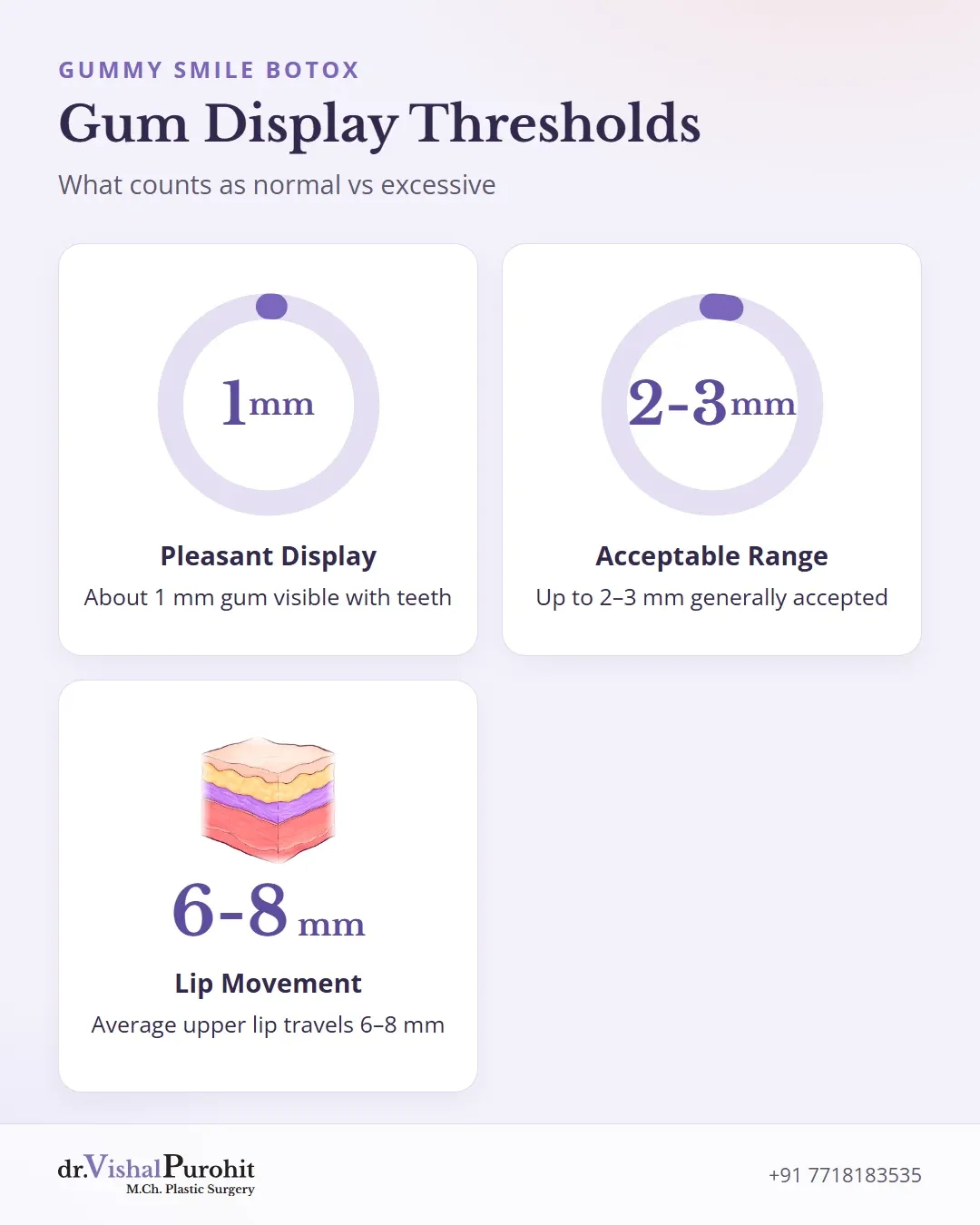
Natural facial aesthetics vary considerably among individuals. While a smile exposing the maxillary teeth with approximately 1 mm of facial gum tissue is often described as pleasant, up to 2 to 3 mm of display is generally found acceptable4. Laypersons often perceive gum visibility as significant only in more pronounced cases1.
Clinical assessment should never enforce a single rigid aesthetic ideal. Determining whether gingival display represents an aesthetic concern requiring intervention is ultimately a personal choice1. Deciding not to pursue any aesthetic treatment remains an entirely valid personal option1. Clinical photographs taken during evaluation serve solely for treatment records and are never displayed publicly.
Lip Length and Hyperactive Elevation
A careful clinical assessment separates the resting length of the upper lip from its dynamic upward movement during a smile56. The average upper lip moves 6 to 8 mm from a resting position to a full smile6.
Key points
- Excessive gum show can stem from either dynamic muscle hypermobility or an anatomically short upper lip.
- The average upper lip travels 6 to 8 mm upward from rest to a full smile.
- Assessing resting lip coverage alongside smile mobility determines whether hyperactive elevation is the primary driver.
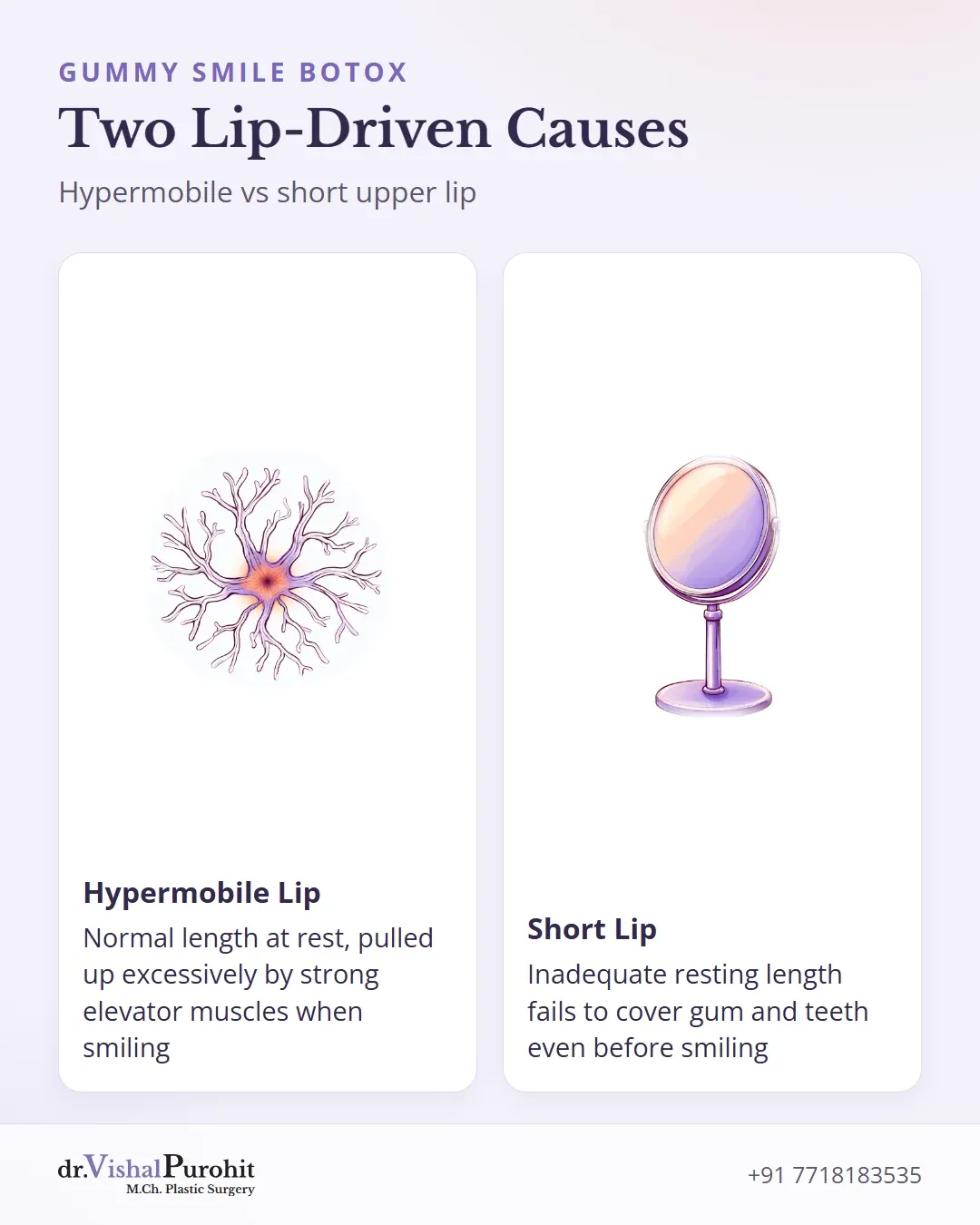
When excessive gum tissue shows, the underlying cause can stem from two distinct lip factors:
- Hypermobile upper lip: The upper lip may have a normal length at rest, but strong elevator muscles pull it excessively upward when smiling56. Muscles involved in this elevation include the levator labii superioris alaeque nasi, levator labii superioris, zygomaticus muscles, and levator anguli oris67. In these presentations, muscle activity is primary, and botulinum toxin can be considered to relax this upward pull67.
- Anatomically short upper lip: A person may have normal lip movement but an upper lip that is anatomically short6. An upper lip with inadequate resting length fails to cover the gum tissue and upper teeth even before smiling5.
Because an anatomically short lip exposes gum tissue without excessive muscle contraction, diagnostic expectations differ from cases driven primarily by dynamic muscle pull56. Evaluating resting lip coverage alongside smile mobility confirms whether muscle hyperactivity is the primary driver56.
Tooth Eruption and Gum Enlargement
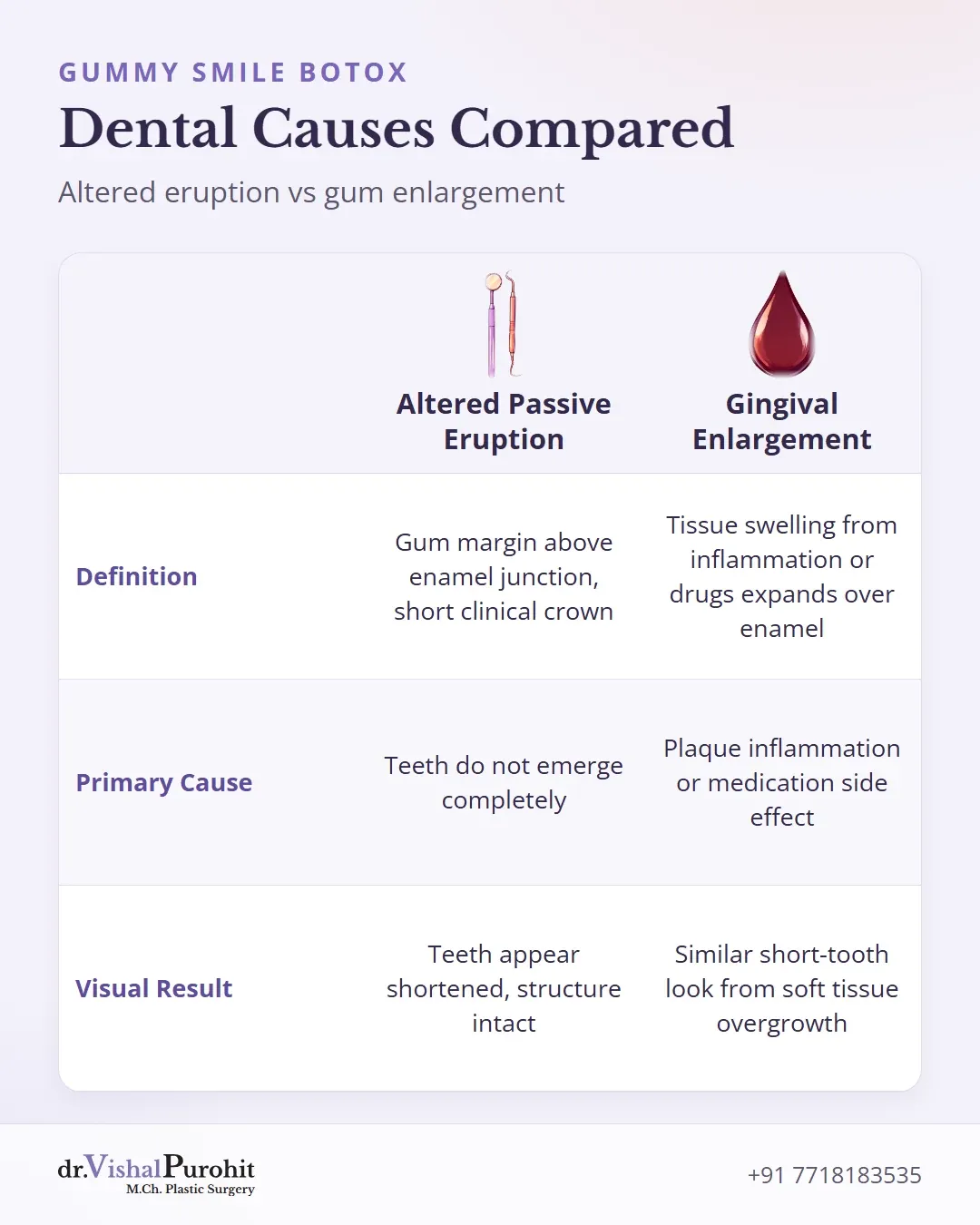
Excessive gingival display can stem from dental and soft tissue factors rather than hyperactive facial muscles8. When teeth do not emerge completely, excess gum tissue covers portions of normal anatomical crowns9. In such cases, the visible tooth appears shortened while the underlying tooth structure remains intact910.
Gingival enlargement produces a similar appearance through changes in the soft tissues themselves. This can arise from localized inflammation or as an adverse effect linked to certain medications811.
Key distinctions include:
- Altered passive eruption, where the gingival margin sits coronal to the cementoenamel junction and leaves an abnormally short clinical crown1012.
- Gingival hypertrophy or hyperplasia, where tissue swelling from plaque-related inflammation or drug-induced overgrowth expands over the enamel81011.
These dental and periodontal conditions require dedicated clinical examination rather than injectable masking812.
Dr. Purohit’s note: In Dr. Vishal Purohit’s practice in Jaipur, dental causes are thoroughly assessed first to verify whether soft tissue overgrowth or eruption issues are responsible for excessive gum visibility.
Mixed Factors and Clinical Examination
Excessive gingival display often stems from several overlapping anatomical elements rather than a single source2. Patients frequently present with a combination of factors, including:
Key points
- Excessive gingival display often involves multiple overlapping anatomical causes rather than a single source.
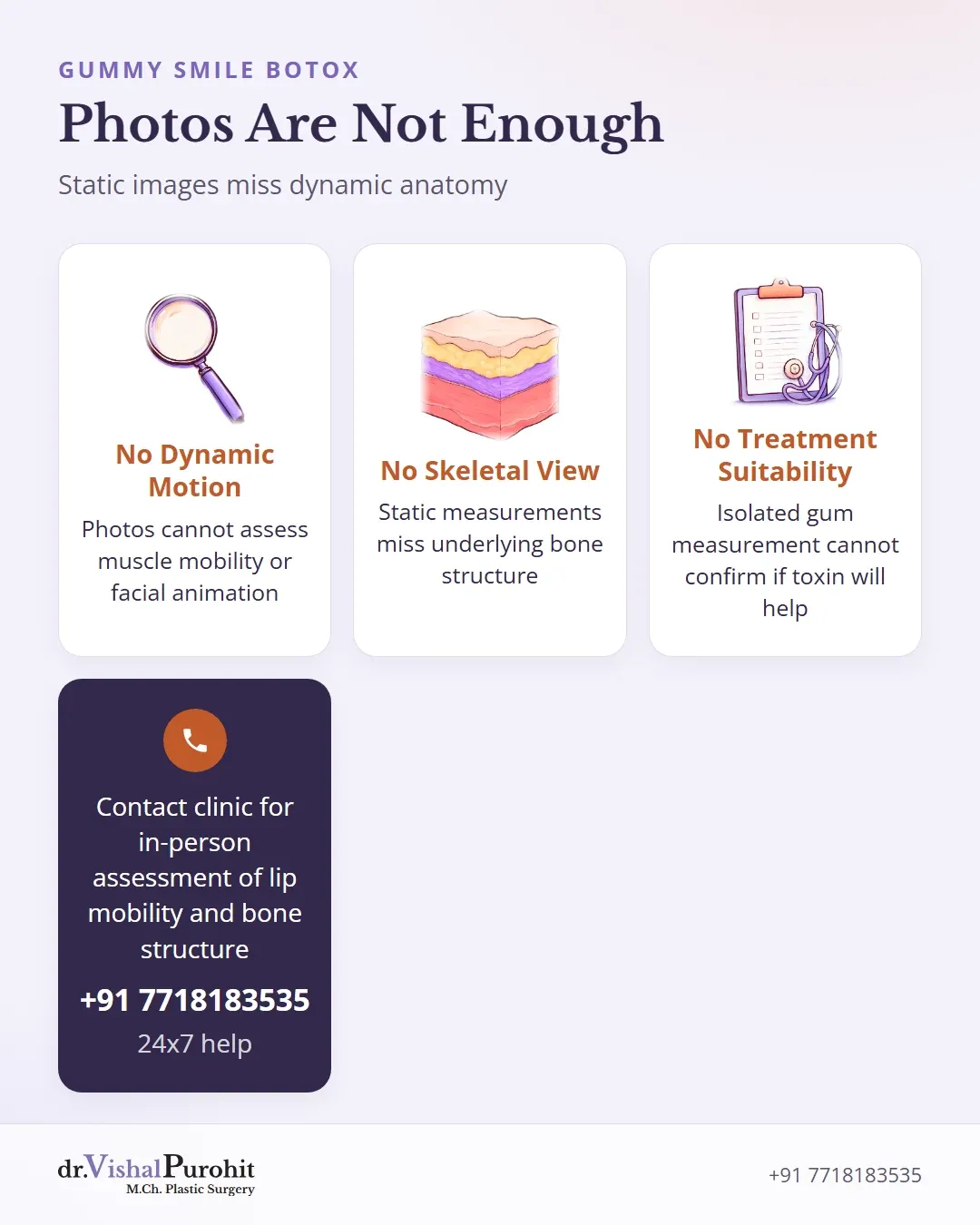
- Photographs and static measurements alone cannot determine treatment suitability or underlying skeletal and dynamic factors.
- A comprehensive in-person clinical assessment is essential to determine whether muscle relaxation can address gum visibility.
- Excessive muscular activity or hypermobility in the upper lip21013
- Skeletal variations, such as vertical maxillary excess21013
- Periodontal or dental conditions, including altered passive eruption or variations in crown height1013
- Variations in lip length, thickness, or volume21014
A simple photograph or an isolated gum measurement cannot establish treatment suitability or uncover underlying secondary causes1314. Photographic records and static measurements merely reflect visible display without assessing dynamic facial movements or underlying bone structure11314.
An in-person clinical assessment is essential to evaluate facial proportions, lip mobility during animation, and dental relationships131415. At his practice in Jaipur, Dr. Vishal Purohit conducts an in-person physical examination to assess these anatomical components. This comprehensive evaluation determines whether muscular hyperactivity contributes to the presentation and whether muscle relaxation with botulinum toxin can address any part of the gum visibility213. Clinical photographs taken during assessment serve solely for treatment records.
Toxin Lip Flip and Lip Filler Differences
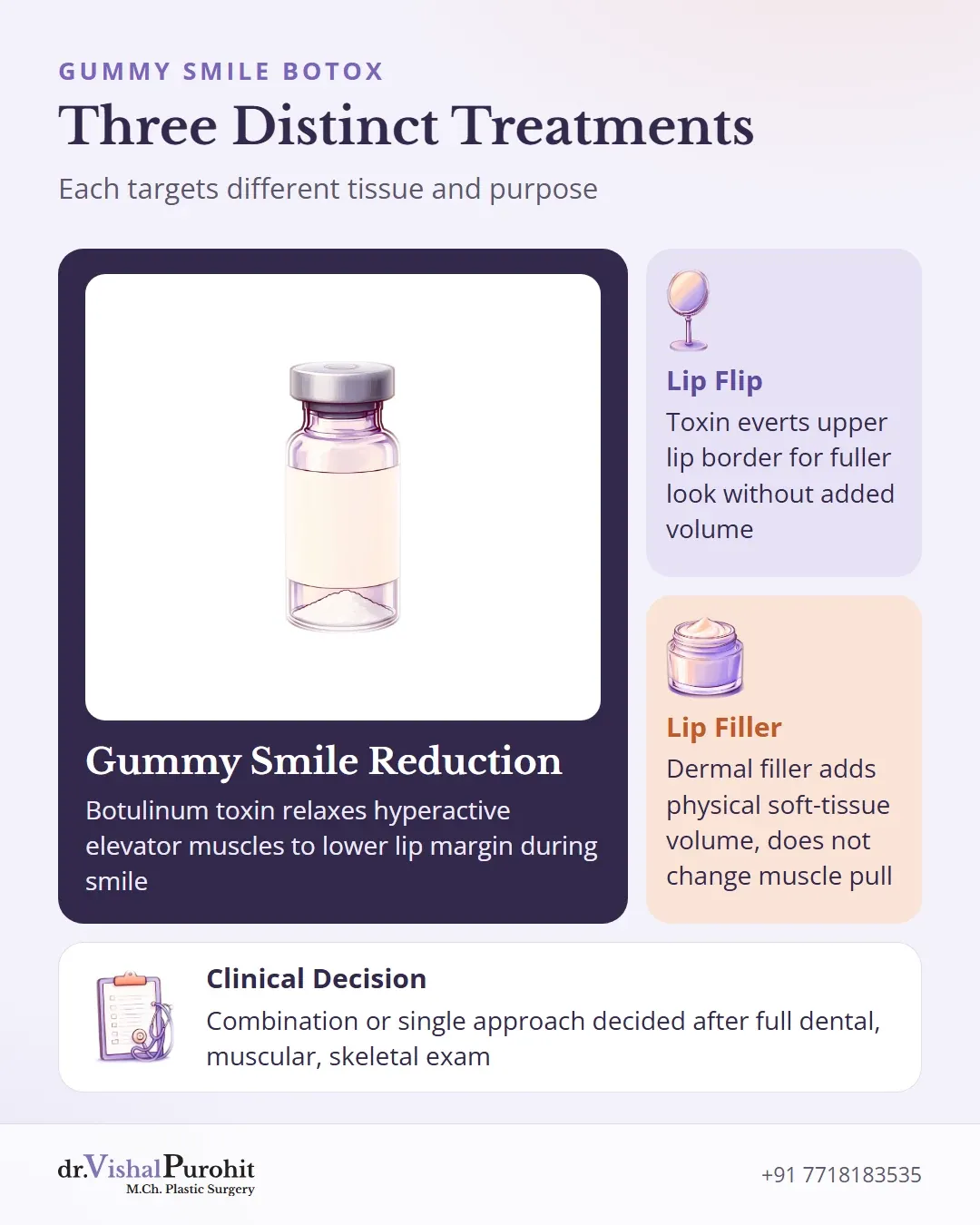
Treating excessive gingival display, enhancing border shape, and expanding lip size involve distinct tissue targets. Each approach serves a different aesthetic and anatomical purpose:
- Gummy smile reduction: Botulinum toxin can relax hyperactive upper lip elevator muscles to lower the lip margin during a smile131617.
- Lip flip: Toxin injections can facilitate eversion of the upper lip border18, making the lip appear fuller without adding physical volume19.
- Lip filler: Dermal fillers physically augment soft-tissue volume rather than altering dynamic muscle pull1718.
Adding filler volume does not diagnose or correct underlying dental proportions, altered passive eruption, or skeletal discrepancies131617. Attempting to conceal excess gum show by augmenting lip volume carries a distinct risk of overfilling the lip17, and evidence supporting dermal filler as an effective treatment to reduce gingival display remains limited.
Whether Dr. Vishal Purohit combines Botox with fillers or uses one approach over another is not a preset routine; it is decided at the consultation following a thorough examination of dental, muscular, and skeletal balance. Choosing no treatment remains a valid option for any patient.
Embracing Natural Variation and Decisions
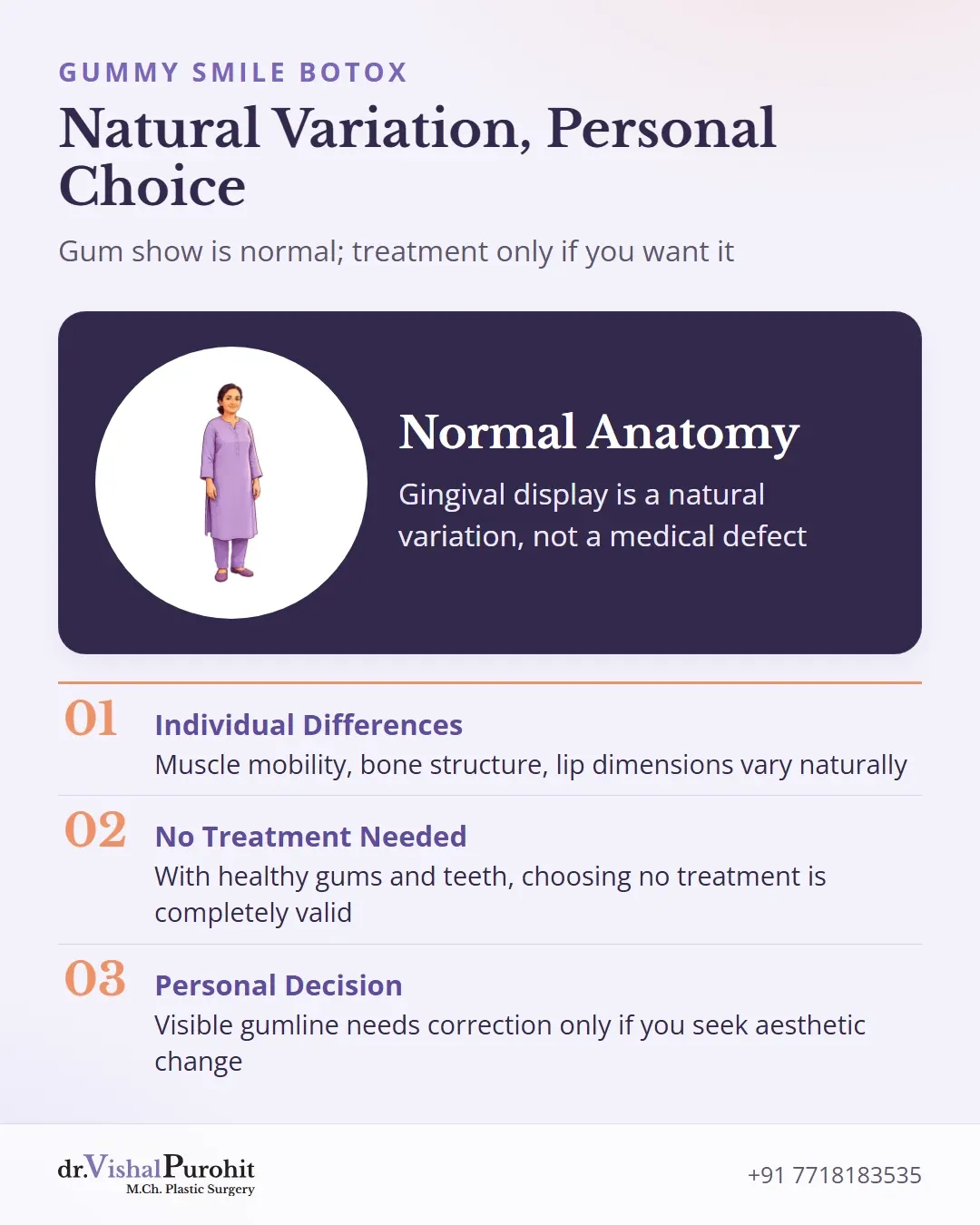
Gingival display when smiling is a natural anatomical variation rather than an inherent medical defect220. Upper facial and perioral anatomy varies naturally across individuals, involving differences in muscle mobility, bony structure, and lip dimensions221. When underlying dental and periodontal health is sound, choosing no treatment is a completely appropriate and valid decision.
A visible gumline does not require correction unless an individual personally seeks aesthetic modification. For those evaluating interventions, a suitable approach cannot be assumed beforehand. Variations in smile mechanics mean that any clinical plan must be determined individually during consultation rather than selected in advance2223.
In his practice in Jaipur, Dr. Vishal Purohit assesses facial dynamics and discusses options directly with patients. Any proposed procedure is decided during the consultation after a clinical evaluation of anatomical factors. Clinical photographs taken during assessment are used exclusively for confidential treatment records and are never displayed publicly.
Clinical Consultation in Jaipur
Determining why a smile shows excess gum requires evaluating lip length, dynamic muscle elevation, and dental proportions. Choosing no procedure is always an entirely valid decision. For those exploring whether muscle relaxation can reduce dynamic gingival display, an in-person assessment reviews facial anatomy and treatment suitability. Learn more about how targeted injections lower upper lip elevation through Gummy Smile Botox in Jaipur, or review common treatment considerations in the Gummy Smile Botox FAQs.
This is educational information, not medical advice.