
Excessive gingival display can stem from jawbone development, dental positioning, or hyperactive lip muscles. Identifying the underlying anatomical cause through Why Does My Smile Show So Much Gum: Causes and Assessment helps clarify why a single treatment cannot address every presentation.
While injectable treatments temporarily limit muscle elevation during smiling, they cannot alter the facial skeleton or tooth alignment. Severe skeletal discrepancies or dental extrusion require specialized structural intervention rather than muscle-relaxing injections alone.
Jaw Growth and Tooth Position
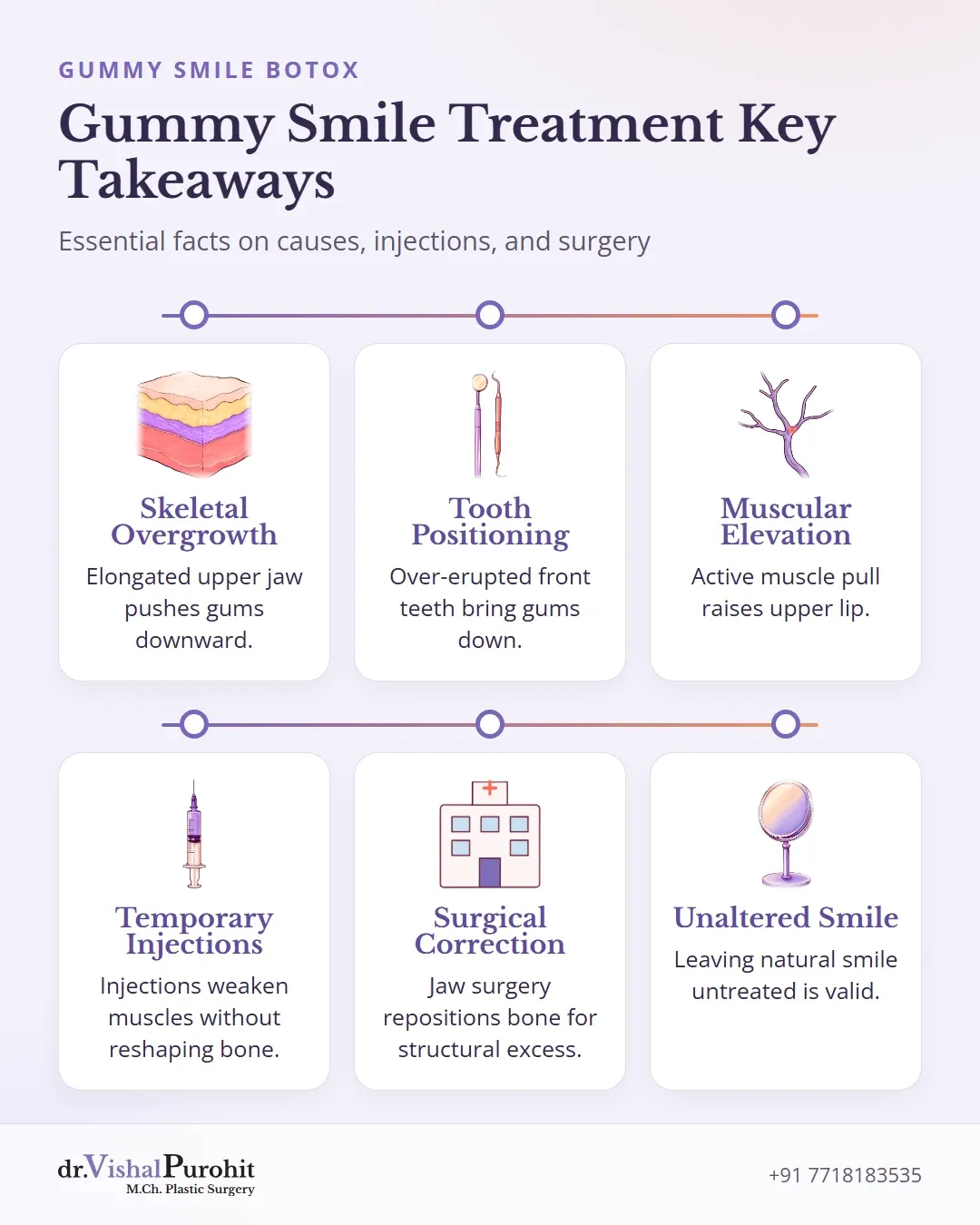
Vertical maxillary excess is a skeletal cause of excessive gingival display involving overgrowth or excessive inferior development of the maxilla12. This elongation of the upper facial skeleton pushes the upper dentition and gingival tissues downward1. As a result, the gums sit lower beneath the upper lip, producing increased gum exposure at rest and during smiling123.
Key points
- Vertical maxillary excess causes downward displacement of the upper teeth and gums due to excessive jawbone growth.
- Over-erupted front teeth can also pull the surrounding alveolar bone and gum tissue downward independently of jaw height.
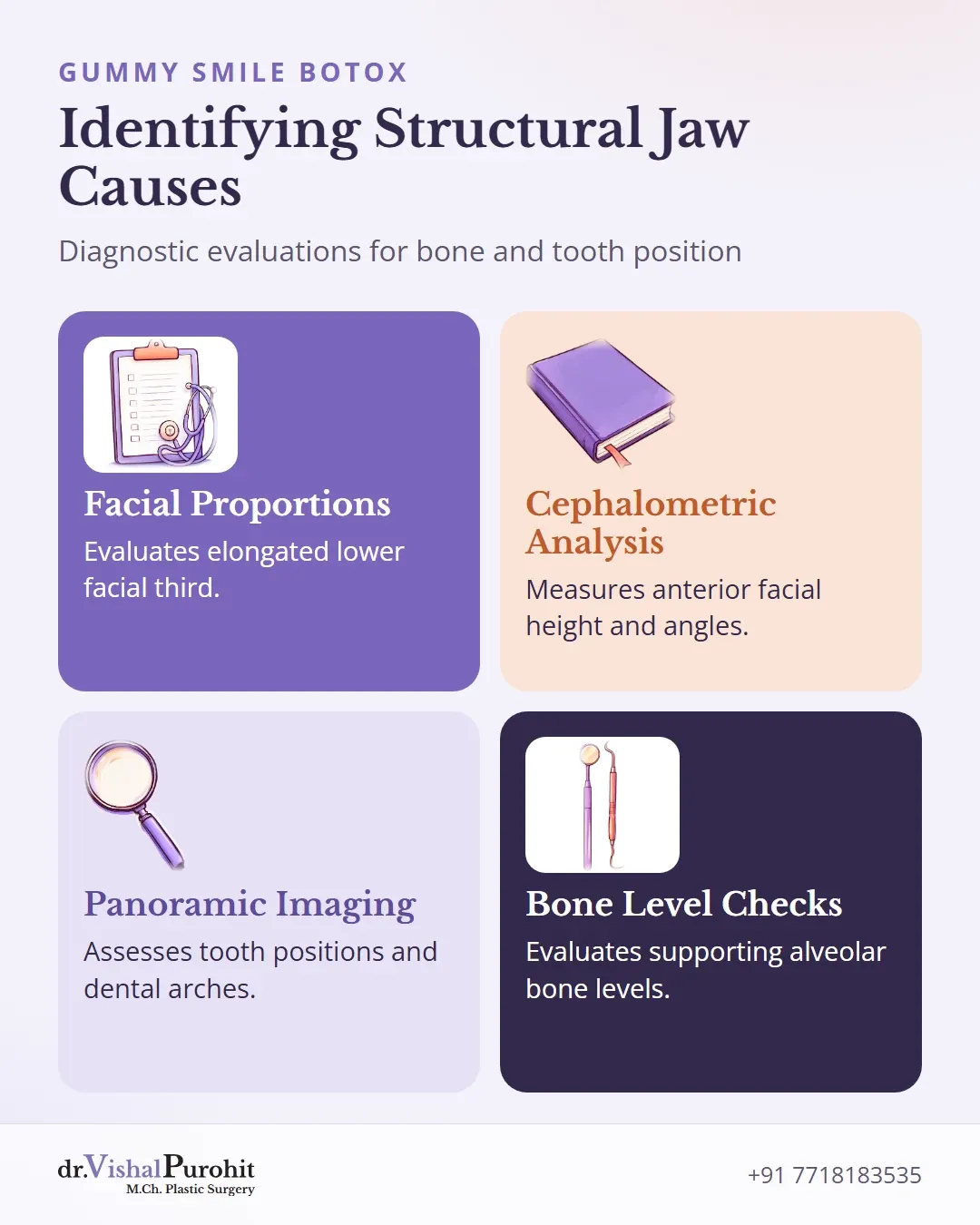
- Accurate diagnosis requires clinical evaluation of facial proportions, cephalometric analysis, and specialized dental imaging.
Dental positioning can also alter gum show independently of jawbone height. When upper front teeth over-erupt, they bring the supporting alveolar bone and surrounding gum tissue downward with them3. This dentoalveolar extrusion increases visible gum tissue relative to the dental plane23. Such over-eruption may stem from genetic patterns or wear on the biting edges over time3.
Because these structural presentations originate in the facial skeleton and dental arches, identifying them relies on formal diagnostic frameworks:
- Clinical assessment of facial proportions, specifically evaluating an elongated lower facial third14.
- Cephalometric analysis to assess skeletal relationships, such as anterior facial height and maxillary plane angles1.
- Orthodontic and dental imaging, including panoramic or cone-beam computed tomography, to evaluate tooth positions and alveolar bone levels1.
Muscular Lip Action with Skeletal Discrepancies
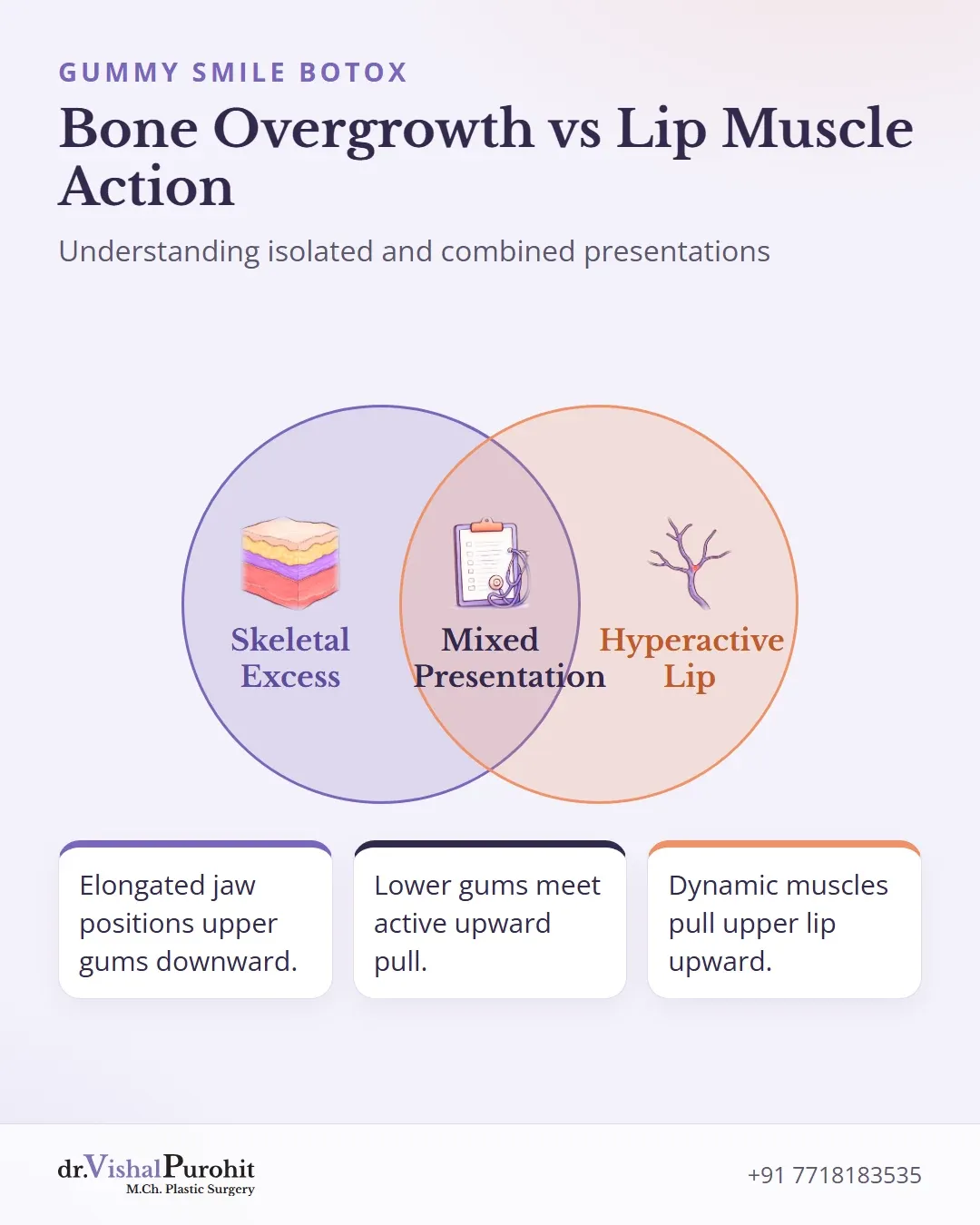
Excessive gum display often stems from combined causes rather than a single issue5. Skeletal prominence, such as vertical maxillary excess where the underlying jaw bone is elongated, frequently coexists with hyperactive upper lip-elevator muscles156. In this mixed presentation, the bony structure positions the upper teeth and gums further downward while active muscle contraction pulls the upper lip upward16.
Injecting botulinum toxin weakens or stops perioral muscle elevation47. While this temporarily limits lip movement during smiling, it cannot reshape bone, alter jaw alignment, or correct underlying dental discrepancies14. Addressing muscle pull alone leaves an underlying malocclusion, deep skeletal disproportion, or bite imbalance completely unchanged146.
A comprehensive clinical assessment distinguishes structural bone requirements from dynamic soft-tissue movement67:
- Skeletal concerns: Vertical maxillary excess involves bone overgrowth and a longer lower face, frequently requiring surgical intervention such as maxillary impaction in moderate to severe discrepancies148.
- Muscular action: Dynamic lip elevation can be treated conservatively with botulinum toxin injections when patients seek temporary cosmetic management or present with minor discrepancies478.
Orthodontic and Maxillofacial Referral Paths
Severe skeletal gum display often benefits from consultation with an orthodontist or oral and maxillofacial surgeon1. When excessive gingival exposure stems from vertical maxillary excess or significant skeletal discrepancies rather than hyperactive muscles alone, structural correction is needed1.
Structural Treatment Approaches
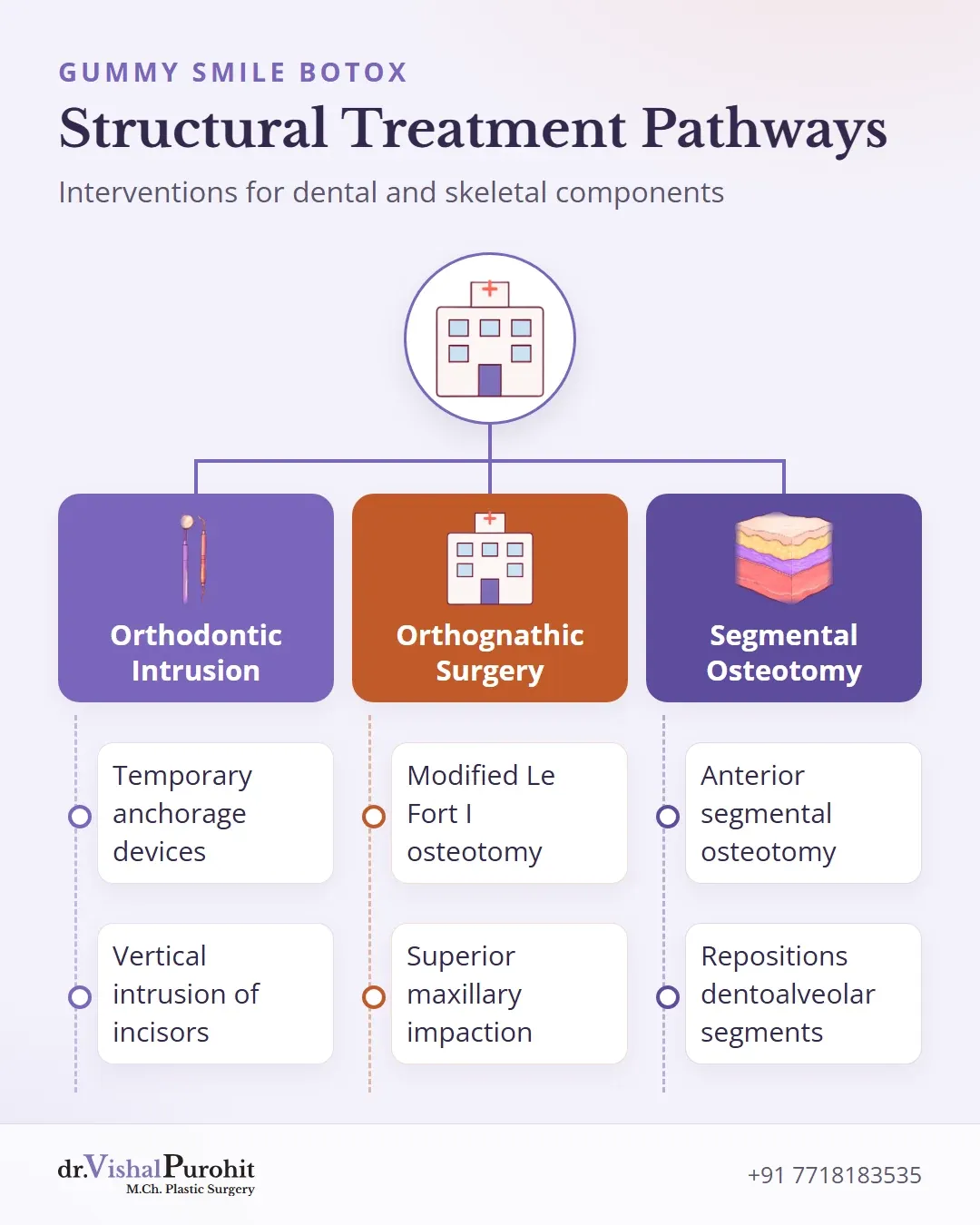
- Orthodontic intrusion using temporary anchorage devices (miniscrews) allows vertical intrusion of incisors without surgery, serving cases with predominantly dental components1.
- Corrective orthognathic surgery, such as a modified Le Fort I osteotomy with superior maxillary impaction, structurally reduces maxillary vertical height1.
- Anterior maxillary segmental osteotomy can be used alongside impaction to address upper lip protrusion and reposition dentoalveolar segments1.
These definitive interventions address functional occlusion alongside facial proportions, improving lip competence and profile balance1. By contrast, botulinum toxin provides only temporary reduction in gingival exposure and does not alter the underlying bone framework1.
Dr. Purohit’s note: Dr. Vishal Purohit in Jaipur assesses whether the gum show comes from the lip muscles or may need a dental or jaw specialist’s opinion.
Camouflage Versus Structural Correction
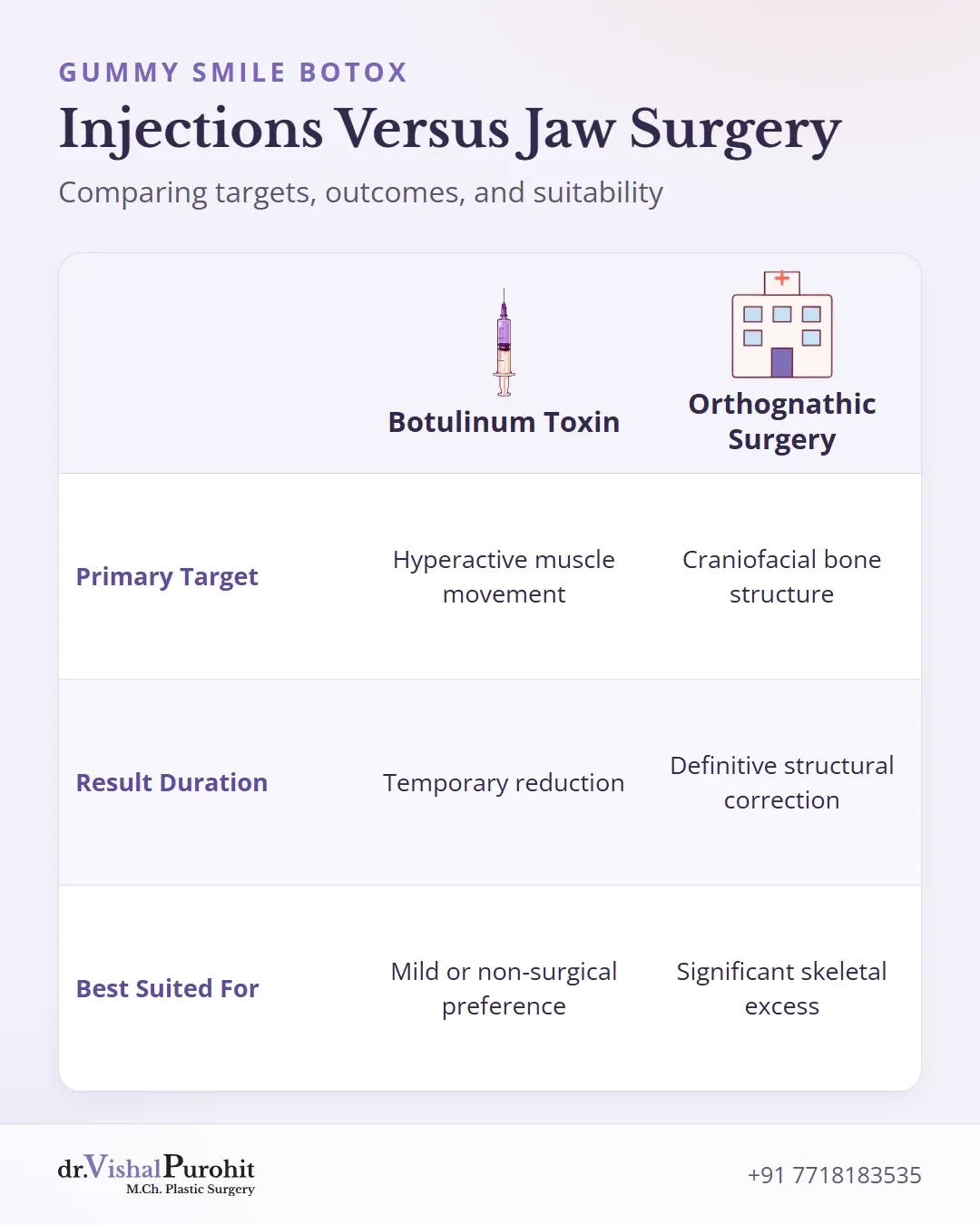
Botulinum toxin provides a non-surgical option that temporarily reduces gingival exposure19. It acts by targeting hyperactive muscle movement rather than altering the underlying facial bones1. In Dr. Vishal Purohit’s practice, Botox is offered as a non-surgical treatment, with anatomical and dental factors evaluated prior to planning care.
When excessive gum display stems from prominent facial bone anatomy or severe skeletal misalignments, injections cannot substitute for structural surgical intervention1.
Key distinctions between these approaches include:
Botulinum Toxin
- Muscle action: addresses excessive lip elevation from muscle hyperactivity1
- Outcome and stability: injections provide temporary reduction without fully resolving the concern in cases involving skeletal discrepancies1
- Scope of application: injections serve as a viable alternative for less severe deformities or those reluctant to undergo invasive operations1
Orthognathic Surgery
Understanding these clear anatomical boundaries prevents unrealistic expectations. Where underlying skeletal excess dominates, botulinum toxin can camouflage mild muscular aspects but cannot replace corrective surgery1.
Weighing Invasiveness and Treatment Options
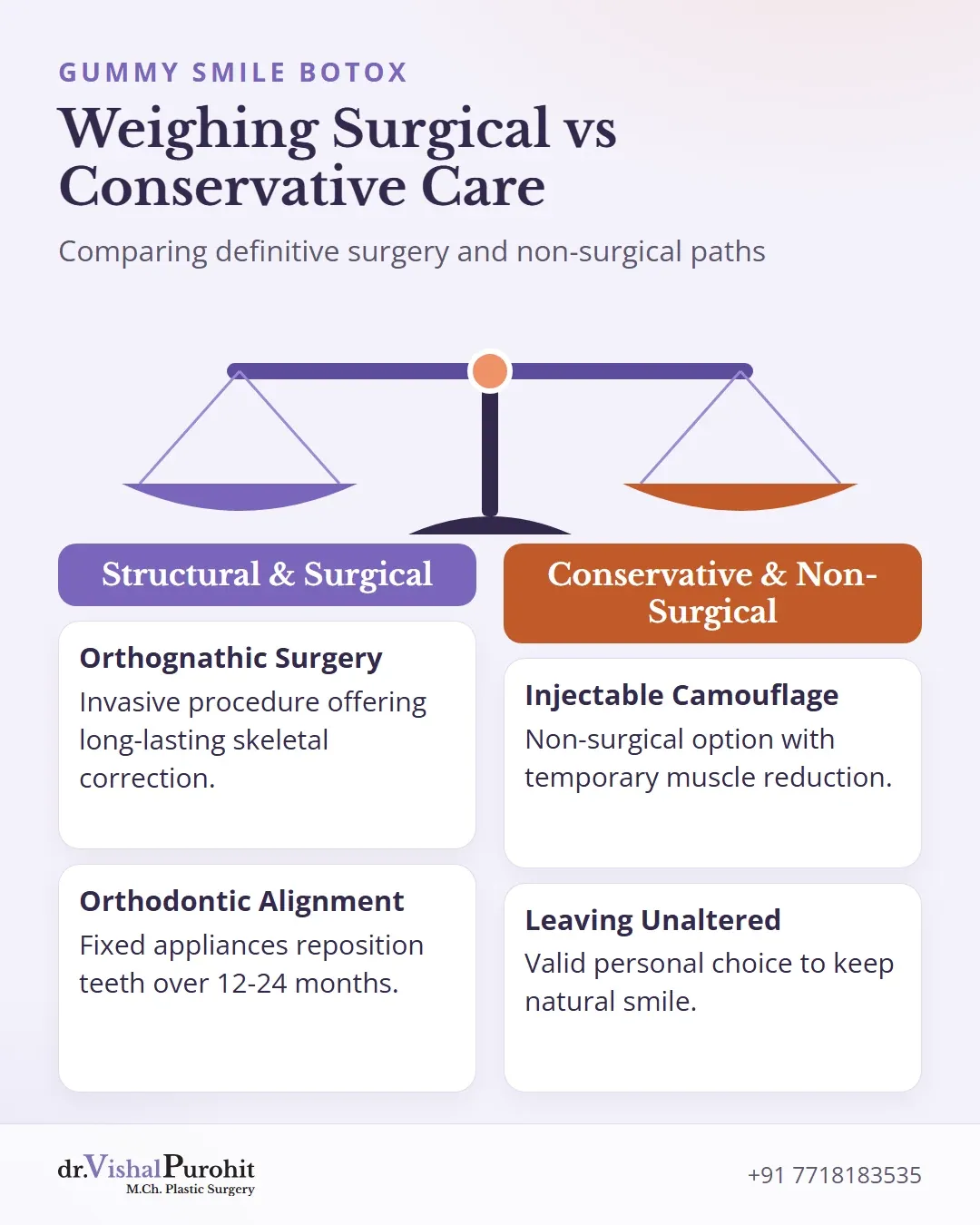
When managing excessive gingival display, individuals can consider several distinct paths depending on their anatomical findings and personal goals:
- Invasive surgical correction: For significant skeletal causes such as vertical maxillary excess, orthognathic surgery repositions the maxilla1. While invasive, it provides long-lasting correction1.
- Orthodontic realignment: Fixed appliances or temporary anchorage devices can reposition teeth over 12 to 24 months to address dental factors1.
- Temporary injectable camouflage: Botulinum toxin injections offer a non-surgical alternative that temporarily reduces gingival visibility, which can assist patients who wish to avoid surgery or manage muscular hyperactivity1. However, the effect remains temporary110.
- Leaving the smile unaltered: Choosing no treatment is an entirely valid option, and no individual is required to alter their natural smile.
No single pathway is universally superior for every individual. In his practice, Dr. Vishal Purohit does not apply a predetermined approach; the choice of treatment is decided at the consultation following a thorough clinical evaluation.
Clinical Evaluation and Treatment Decisions in Jaipur
Managing excessive gingival display requires an accurate distinction between dynamic muscle movement and underlying skeletal discrepancies. While corrective surgery or orthodontics addresses bone structure, injectable care offers a conservative alternative for dynamic lip pull. For those considering non-surgical management, learning about Gummy Smile Botox in Jaipur clarifies available options, while the Gummy Smile Botox FAQs address key practical considerations before arranging an anatomical evaluation.
This is educational information, not medical advice.