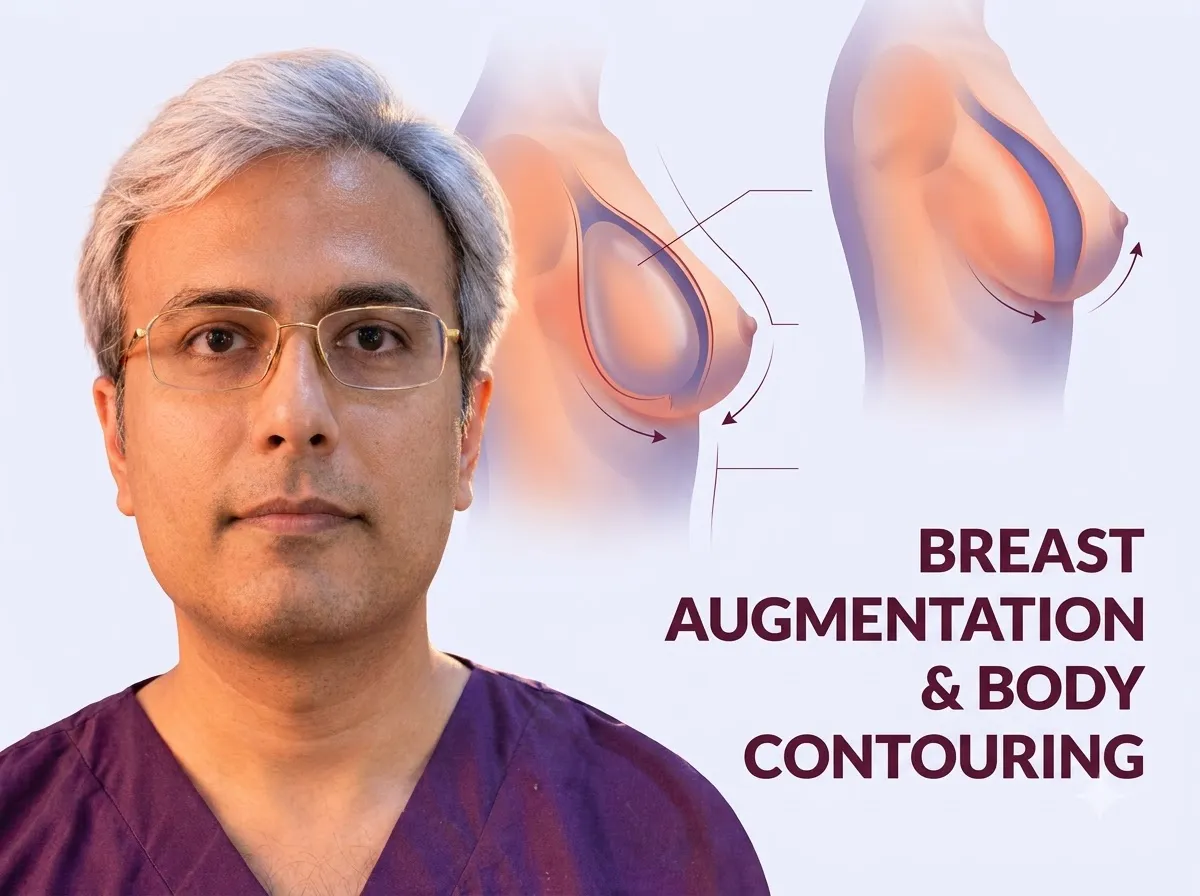
Pregnancy and nursing can alter breast tissue through volume depletion, stretched skin envelopes, or prolonged physical heaviness. Understanding these structural changes helps determine whether an implant, a mastopexy, or tissue reduction is required.
During clinical consultations for a mommy makeover in Jaipur, Dr. Vishal Purohit assesses maternal anatomic changes to tailor breast procedures to individual goals and tissue capacity.
Surgical planning also depends on how different procedures interact. In One Operation or Two Stages: Planning a Mommy Makeover, separating major body contouring areas allows the body to heal without the competing tissue tension of simultaneous operations.
Volume Loss, Droop and Heaviness Are Different Goals
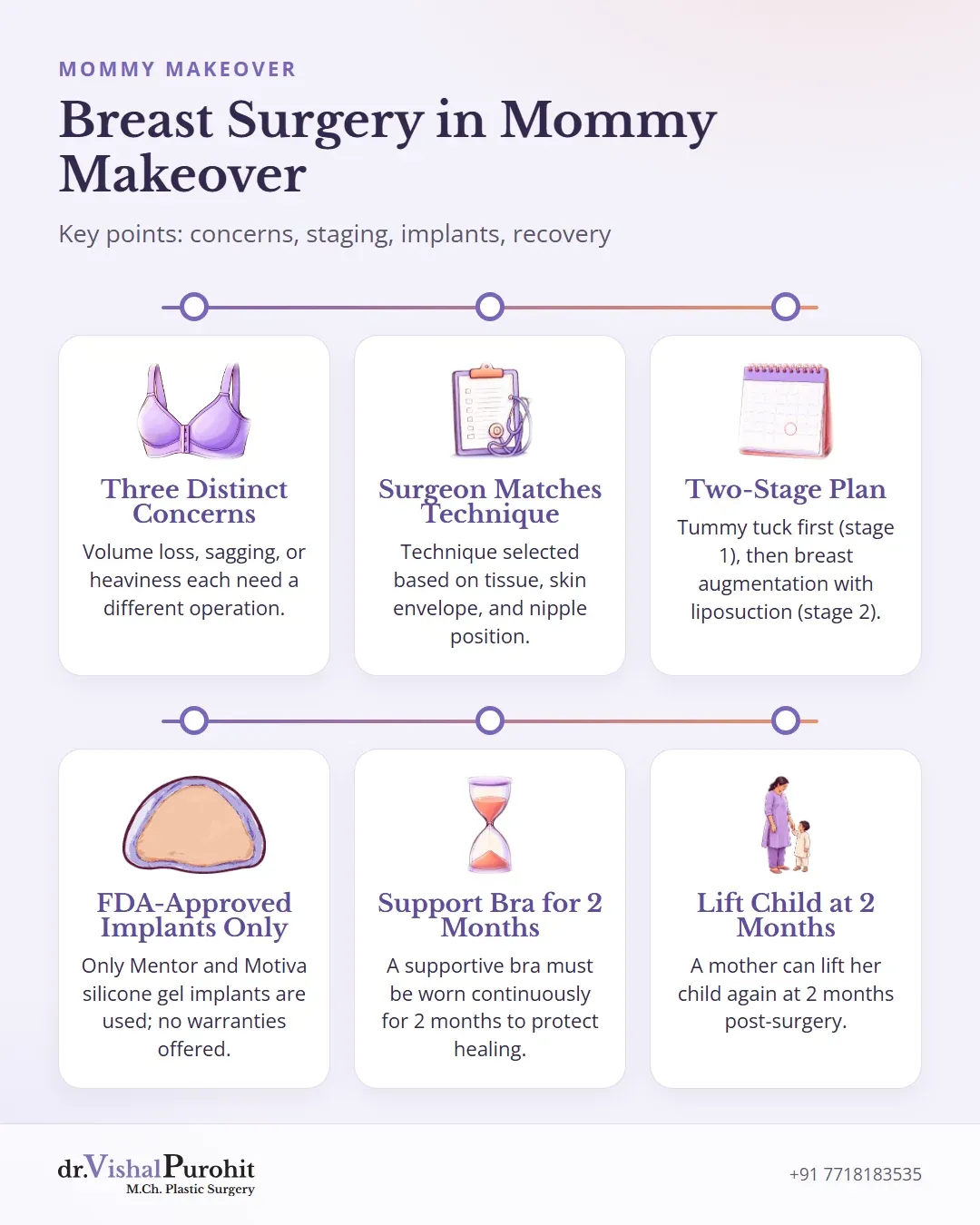
Pregnancy, nursing, and weight shifts affect breast tissues differently. A patient may experience empty upper poles, stretched skin with a low nipple position, or persistent physical strain from enlarged tissue. Because these anatomical concerns stem from distinct causes, each requires a separate surgical technique.
Matching the Surgical Technique to the Concern
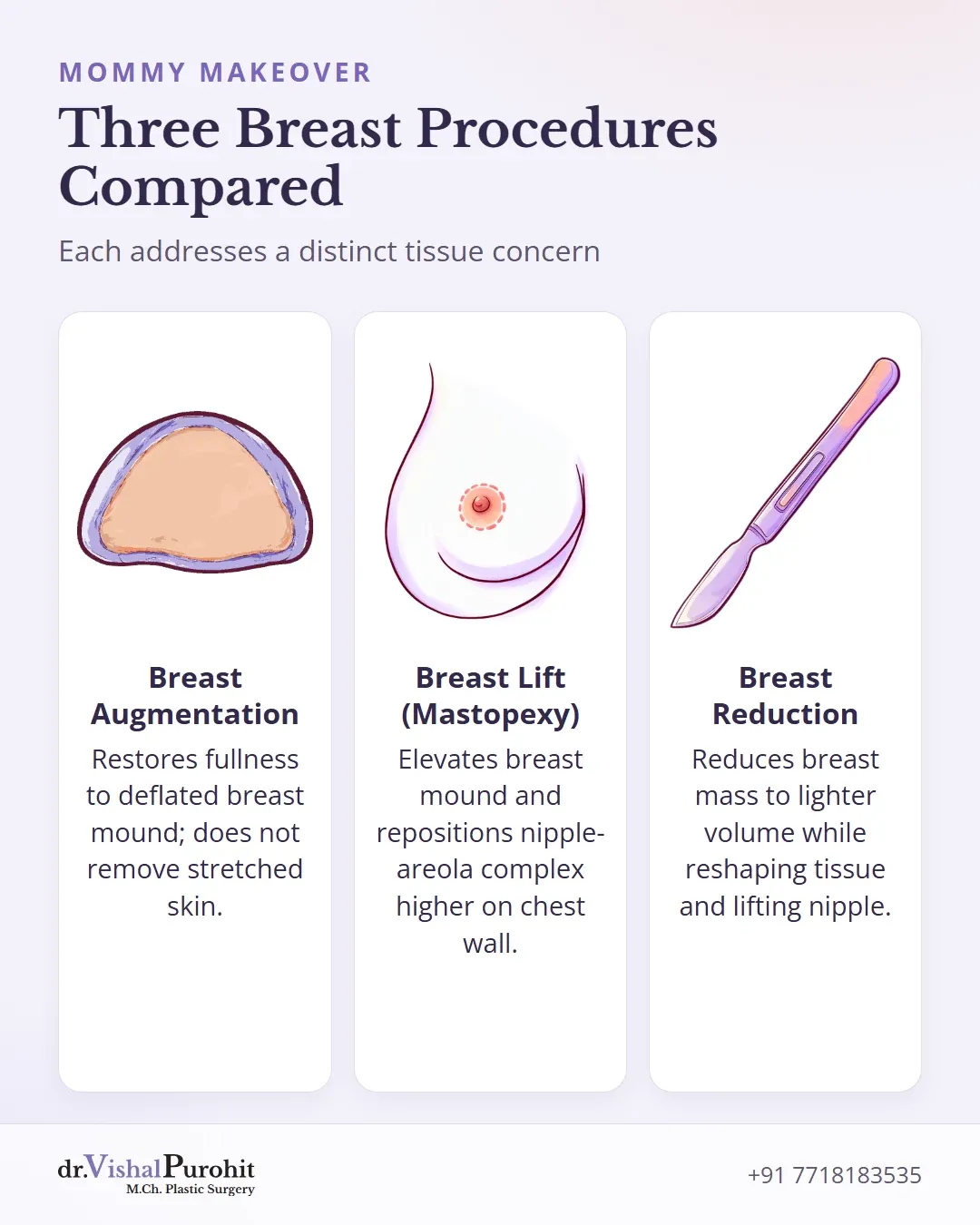
Dr. Vishal Purohit assesses the breast tissue, skin envelope, and nipple position to select the appropriate procedure during a mommy makeover:
- Breast augmentation addresses volume loss. Placing an implant restores fullness to the deflated breast mound, but it does not remove redundant, stretched skin.
- Breast lift (mastopexy) corrects sagging (ptosis). It elevates the breast mound and repositions the nipple-areola complex to a higher point on the chest wall.
- Breast reduction treats excessive tissue and physical heaviness. It reduces breast mass to a lighter volume while reshaping the remaining tissue and lifting the nipple.
Different Goals Require Different Operations
Addressing deflated tissue differs from treating sagging or heavy tissue. An implant alone cannot reliably correct significant skin looseness, and a standard breast lift does not add parenchymal volume.
When marked laxity coexists with volume depletion, combining an implant with a lift introduces competing technical dynamics between expanding tissue and tightening skin1. Managing these opposing surgical goals simultaneously carries high revision rates of up to one in five, which can decrease to under one in ten when the stages are separated1.
Dr. Purohit’s note: Dr. Vishal Purohit offers breast augmentation, breast lift, and breast reduction within a mommy makeover plan.
Why Breast Augmentation and a Tummy Tuck Are Staged
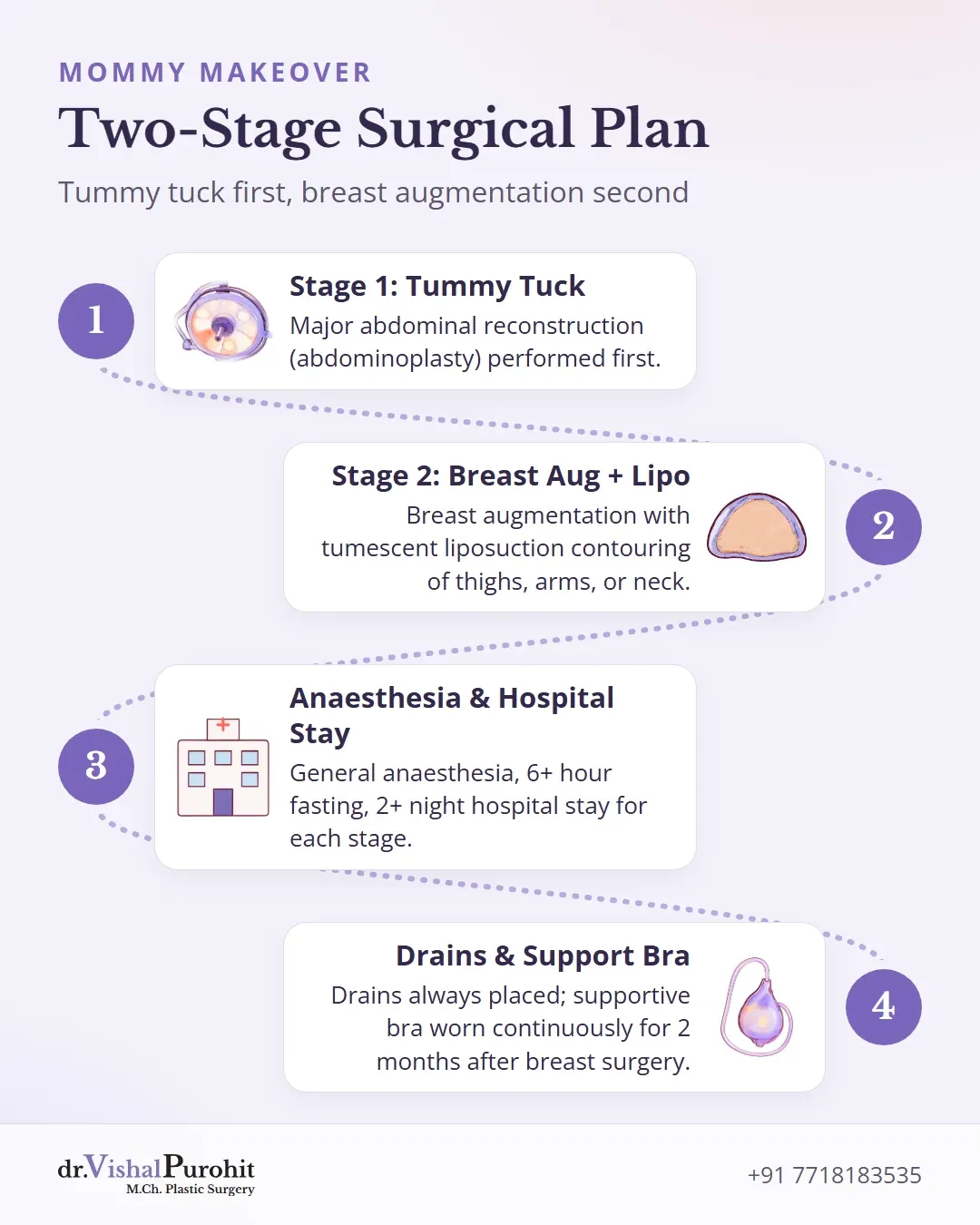
The major abdominal reconstruction, the tummy tuck (abdominoplasty), is carried out first as stage 1. Breast augmentation, alongside tumescent liposuction contouring of areas such as the thighs, arms, or neck, is performed in stage 2.
Key points
- Tummy tuck is performed first as stage 1, followed by breast augmentation and contouring in stage 2.
- Combining major procedures increases overall complication rates and cumulative operative time.
- Staging separates surgical variables to prioritise patient safety and structured recovery.
What the Surgical Literature Shows
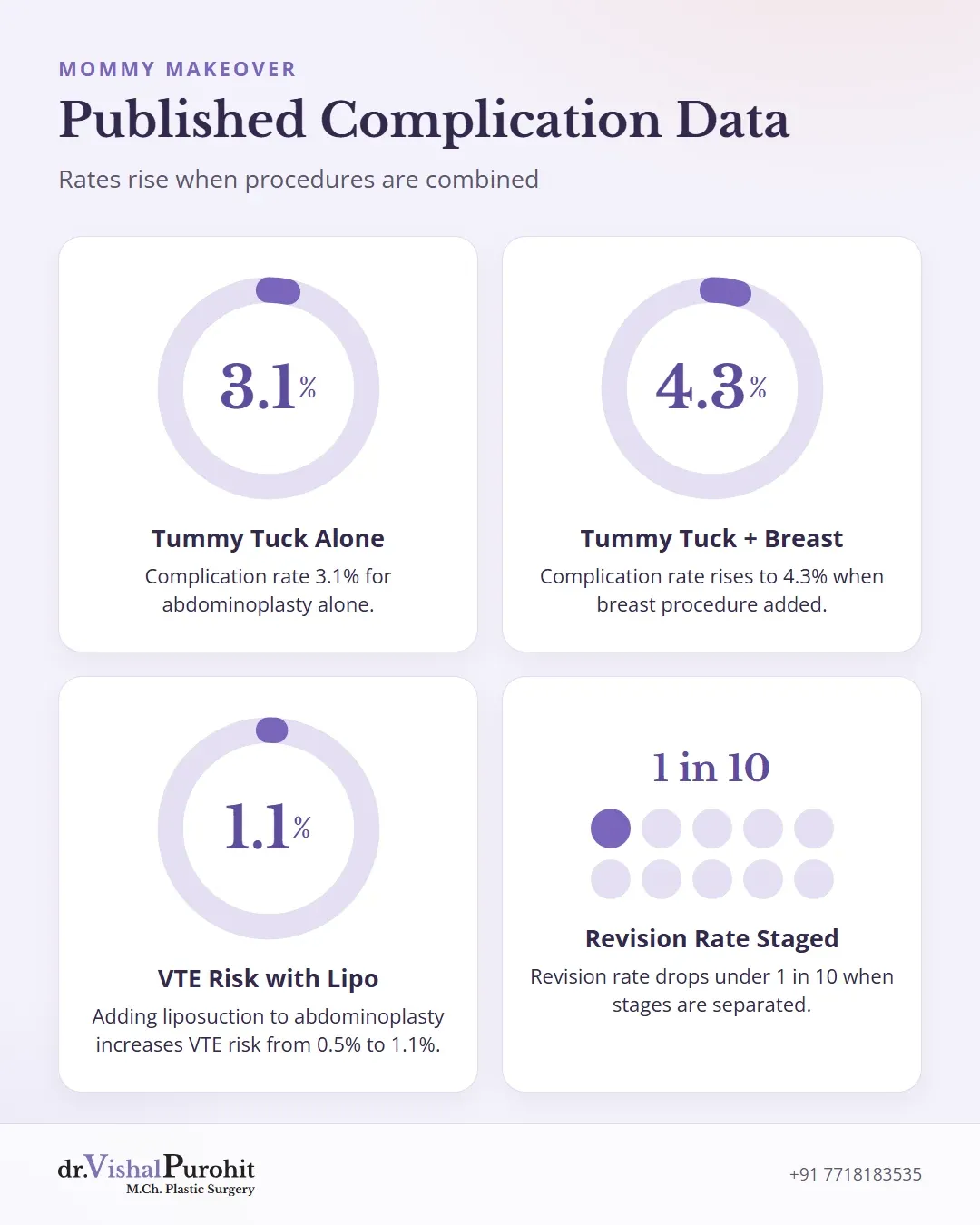
Published plastic surgery literature documents that simultaneous aesthetic procedures are common, with more than half to 75% of tummy tuck patients undergoing combined surgery23. However, combining major operative sites introduces specific surgical considerations:
- Combined surgery can increase overall complication rates, including venous thromboembolism2. In an analysis of procedure combinations, the complication rate rose from 3.1% for tummy tuck alone to 4.3% when combined with a breast procedure, and to 4.6% when combined with both liposuction and a breast procedure4.
- Adding liposuction to an abdominoplasty was found to increase the risk of possible or confirmed venous thromboembolism from 0.5% to 1.1%4.
- Surgical series highlight concerns regarding cumulative operative time, blood loss, fluid replacement, opposite tissue tension, and patient positioning during combined procedures3.
- A complication arising from one surgical site can directly disrupt the recovery and postoperative course of the other3.
While some surgical texts note no absolute contraindication to concurrent operations in selected candidates5, staging separates complex variables. Performing the procedures in two distinct sessions prioritises patient safety and structured tissue recovery at every step.
Breast Augmentation in Dr. Purohit’s Practice
When volume loss after pregnancy and breastfeeding requires correction, breast augmentation restores upper pole fullness and projection. In Dr. Purohit’s practice, this procedure is offered to adult women aged 18 and older.
Surgical Approach and Technique
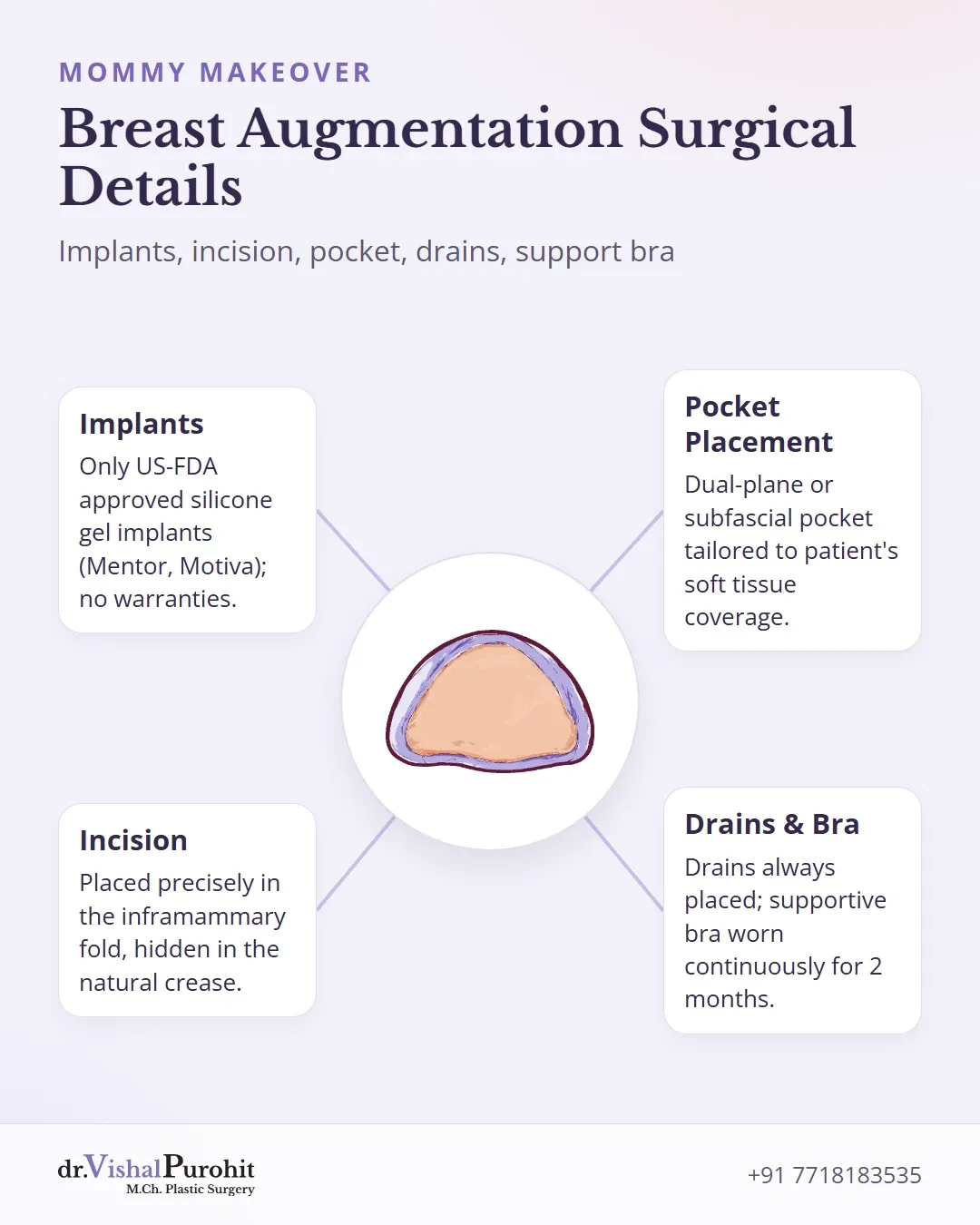
For patients choosing breast augmentation, Dr. Purohit follows specific surgical standards:
- Implants: Only US-FDA approved silicone gel implants, specifically Mentor and Motiva, are selected. No implant warranties are offered.
- Incision: Placed precisely in the inframammary fold, which conceals the scar within the natural crease under the breast.
- Pocket placement: Implants are positioned in either a dual-plane or subfascial pocket, tailored to the patient’s existing soft tissue coverage.
Staging in a Mommy Makeover
Breast augmentation, alongside any targeted tumescent liposuction contouring of the arms, thighs, or neck, is completed as stage 2. All procedures are conducted under general anaesthesia with a mandatory fasting period of at least 6 hours, followed by a hospital stay of two nights or longer. Drains are always placed, and a supportive bra must be worn continuously for 2 months.
Support Bra, Activity and Follow-Up
Following breast surgery within a mommy makeover, proper structural support protects healing tissues. In Dr. Vishal Purohit’s practice, a support bra is always worn for 2 months.
Key points
- A dedicated support bra protects healing tissues and is worn for two months.
- Lifting and strenuous activities resume gradually across two months.
- Structured follow-up reviews monitor recovery from discharge through three months and beyond.
Activity Restrictions and Lifting
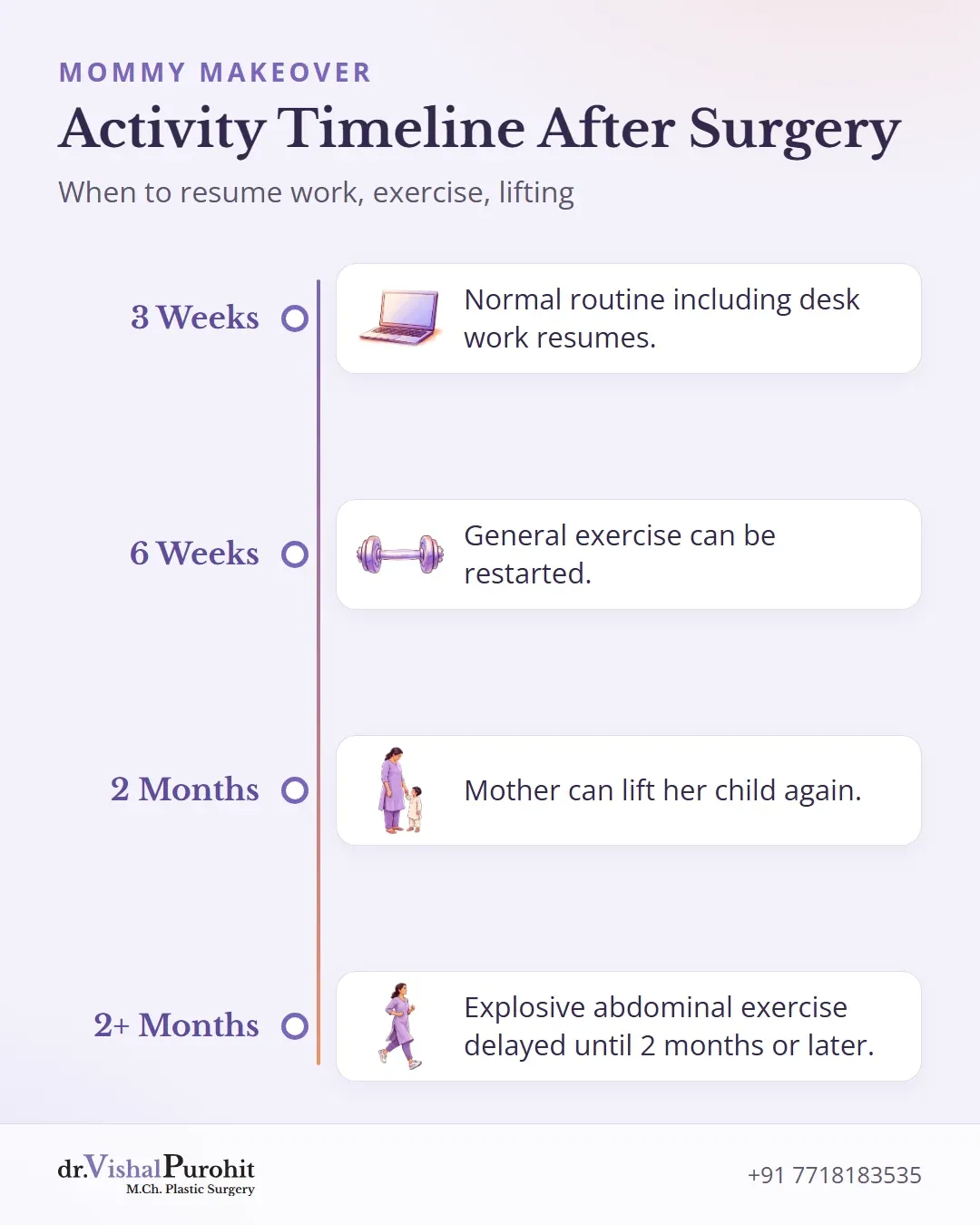
Healing incisions and repositioned tissues require strict protection from physical strain. Dr. Purohit advises patients on the following timeline:
- Normal routine, including desk work, resumes at 3 weeks.
- General exercise can be restarted at 6 weeks.
- A mother can lift her child again at 2 months.
- Explosive abdominal exercise is delayed until 2 months or later.
In the published literature on breast augmentation, patients are often told to avoid heavy lifting or vigorous exertion for several weeks to prevent wound disruption67. For general breast procedures, lifting restrictions are tailored to protect the surgical site during early tissue integration7.
Breast-Specific Follow-Up
Postoperative monitoring ensures incisions heal securely and any breast implants or reshaped contours settle properly. Dr. Purohit schedules structured follow-up visits:
- At discharge
- Day 5
- 1 week
- 2 weeks
- 1 month
- 3 months, then as needed
For any warning sign or unexpected discomfort, patients are advised to contact the surgical team immediately on +91 7718183535. Every unexpected symptom is evaluated promptly to separate urgent surgical concerns from routine healing queries. In-person reviews may be supplemented by video consultations when clinically appropriate, though physical examination remains necessary for assessing wound healing and dressings.
Questions to Ask About the Breast Part of Your Plan
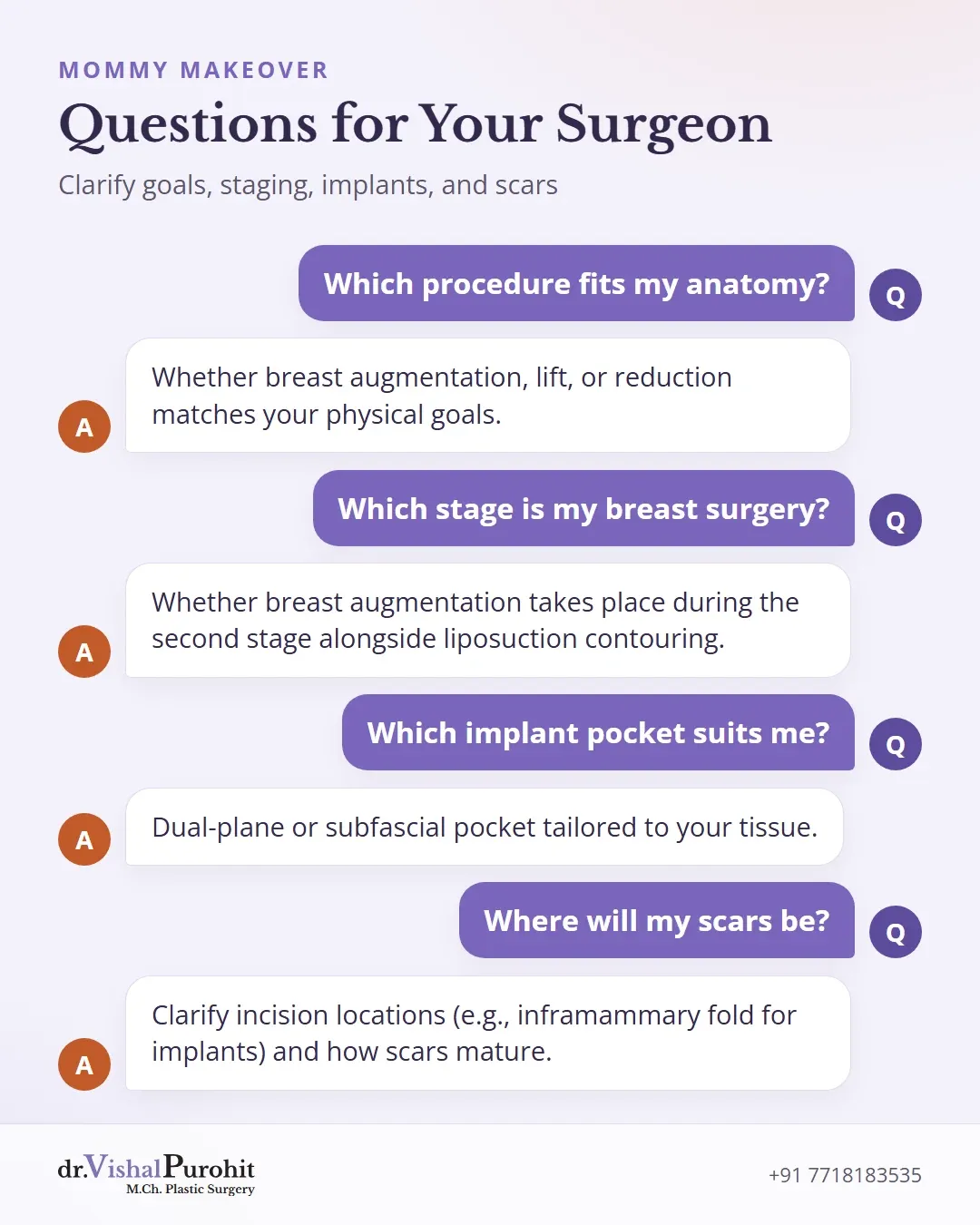
During consultation, discussing each breast component clarifies choices before surgery begins8. Key points to cover with Dr. Vishal Purohit include:
- Which goal and operation fits your anatomy: Whether breast augmentation, a breast lift, or a breast reduction matches your physical goals.
- Which stage the surgery takes: Whether breast augmentation takes place during the second stage alongside liposuction contouring.
- Implants or natural tissue: If augmentation is chosen, whether silicone gel implants placed in a dual-plane or subfascial pocket suit your tissue characteristics9.
- Future breastfeeding plans: Dr. Purohit advises completing childbearing before surgery. While breast augmentation does not interfere with lactation10, mastitis during later nursing can increase the risk of capsular contracture11.
- Resulting scars and incision locations: Clarify where incisions are placed, such as the inframammary fold for implants, and how surgical marks will mature.
Planning Breast Surgery in Jaipur
Selecting the right breast procedure requires a detailed clinical evaluation of your skin envelope, gland volume, and nipple position. To understand how breast procedures integrate into a comprehensive surgical plan, explore mommy makeover in Jaipur or read our mommy makeover FAQs.
This is educational information, not medical advice.