Fat Transfer vs. Breast Implants: Can Autologous Fat Grafting Replace Synthetic Implants for Natural Augmentation?
Yes, fat transfer can replace implants for many women. This works if you have enough donor fat and want a subtle, natural look.
Implants give you a predictable size. Fat grafting uses your own tissue for a soft result. This means no foreign materials in your body.
Finding the best path requires a professional check-up. As an M.Ch. Plastic Surgeon, I look at your body and your goals.
I want to make sure the method fits your vision. Whether you want breast augmentation in Jaipur or a custom plan, the goal is to make you feel beautiful.
This choice is about more than just surgery. It is about your quality of life and how you feel in your skin.
We will prioritize personalized care for you. We can see if fat grafting is the best choice for your body type.
Understanding Tactile Naturalism: The Sensory Difference
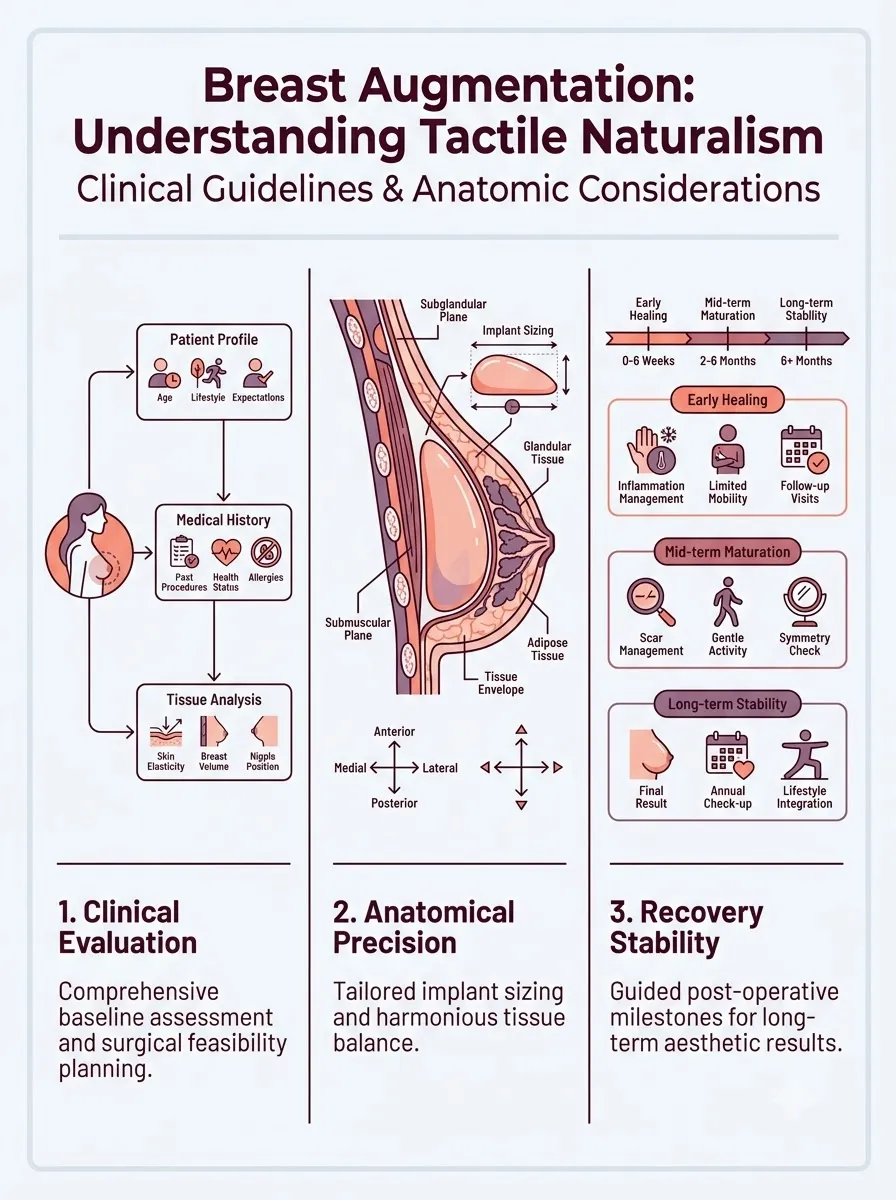
Tactile naturalism is just a fancy way to describe how your breasts feel. When you use autologous fat (your own body fat), it blends well with your breast tissue consistency.
This gives you a soft, organic feel. It mimics a natural breast.
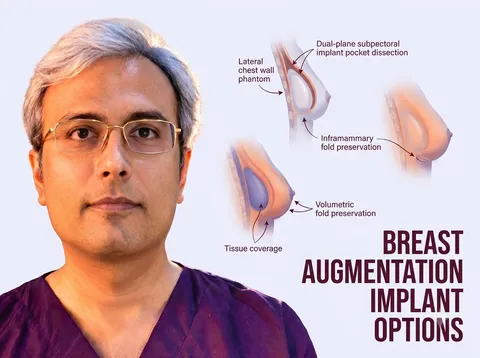
Synthetic implants are different because they are man-made. Some look better than others, but saline implants1.
You might feel or see these wrinkles. This can lead to a “suboptimal aesthetic result” compared to your own tissue.
Fat grafting lets you avoid foreign materials. You get a personal shape that feels like a part of you.
This helps you feel more confident. You will feel more comfortable in your own skin.
The Prerequisites for Fat Transfer: Donor Site Requirements
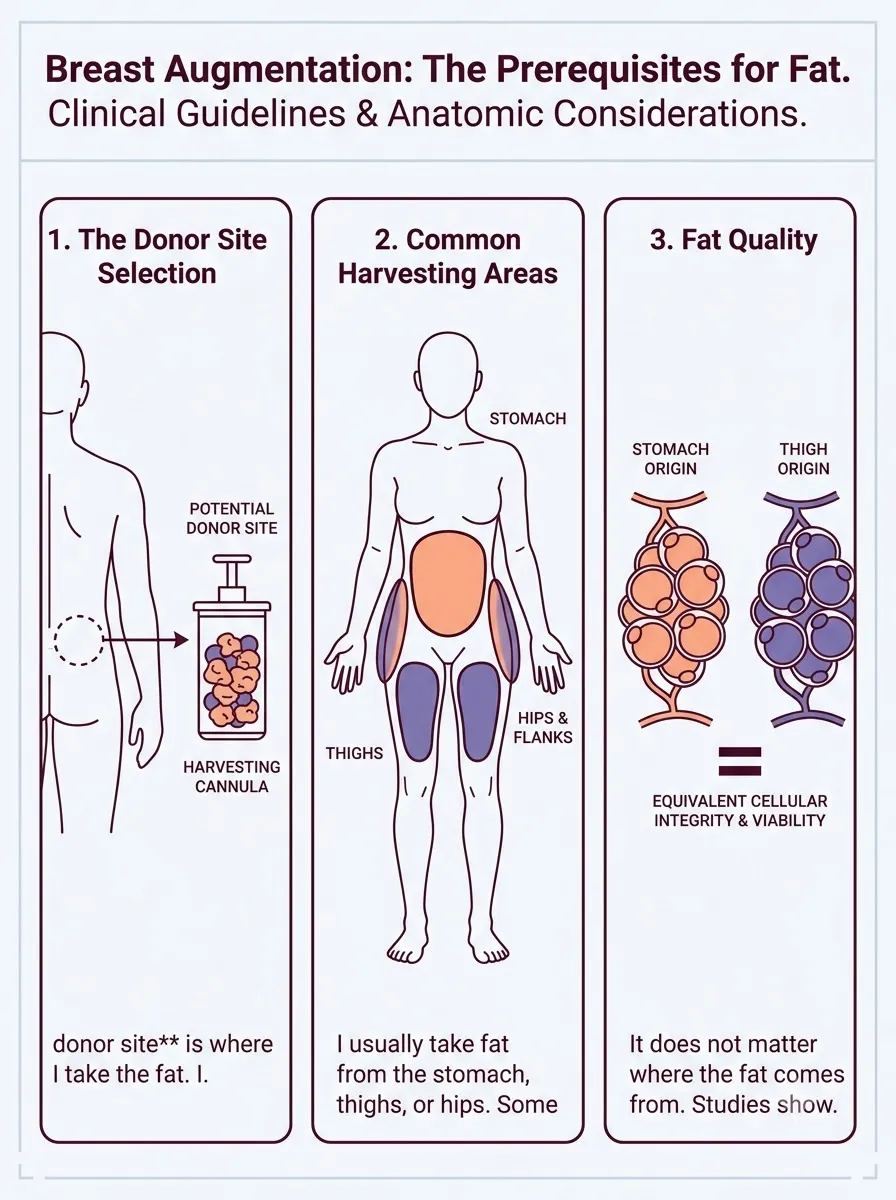
To see if this method is right for me, you need enough stored fat. Your body fat percentage shows if you are a good candidate.
I use liposuction to collect this fat. I gently vacuum fat from one body part to use in another.
Here are the key details about the process:
- Donor Site Selection: The donor site is where I take the fat. I choose this area based on your body shape.
- Common Harvesting Areas: I usually take fat from the stomach, thighs, or hips. Some surgeons prefer to harvest fat “only in the posterior areas of the body” to avoid2.
- Fat Quality: It does not matter where the fat comes from. Studies show that “fat graft survival does not depend on the harvesting area” regardless of site3.
- Surgical Precision: I use a closed system to keep the fat pure. I work hard to avoid “creating asymmetries or irregularities at the donor sites” during the process.
Longevity and Volume: Retention Rate vs. Reabsorption Risk

Your choice depends on how you want your volume to look over time. Implants give you a permanent volume that stays the same.
Still, these synthetic shells can wear out. You may eventually need to replace my breast augmentation implants.
Fat transfer uses your own biology. Your body must accept the tissue for fat graft survival.
Some fat will disappear naturally. This happens because it is “difficult for the entire fat graft to survive the adverse events of liquefaction and resorption” during healing4. This is called reabsorption risk.
The volume retention rate is different for everyone. Some people keep more fat than others.
Clinical data shows that “observed volume retention rates still have achieved only 40-80%” for fat grafts.
| Feature | Fat Transfer (Autologous) | Breast Implants (Synthetic) |
|---|---|---|
| Volume Stability | Variable; some fat is absorbed by the body. | Constant; size remains the same. |
| Retention Rate | Typically “achieved only 40-80%” retention. | High; provides permanent volume. |
| Long-term Risk | Reabsorption risk (volume loss). | Structural failure or need for replacement. |
| Result Nature | Natural tissue that evolves with your body. | Foreign object with a fixed shape. |
| Adjustment | Can add more fat in later sessions. | Requires a new surgery to change size. |
Surgical Synergy: Combining Body Contouring with Augmentation
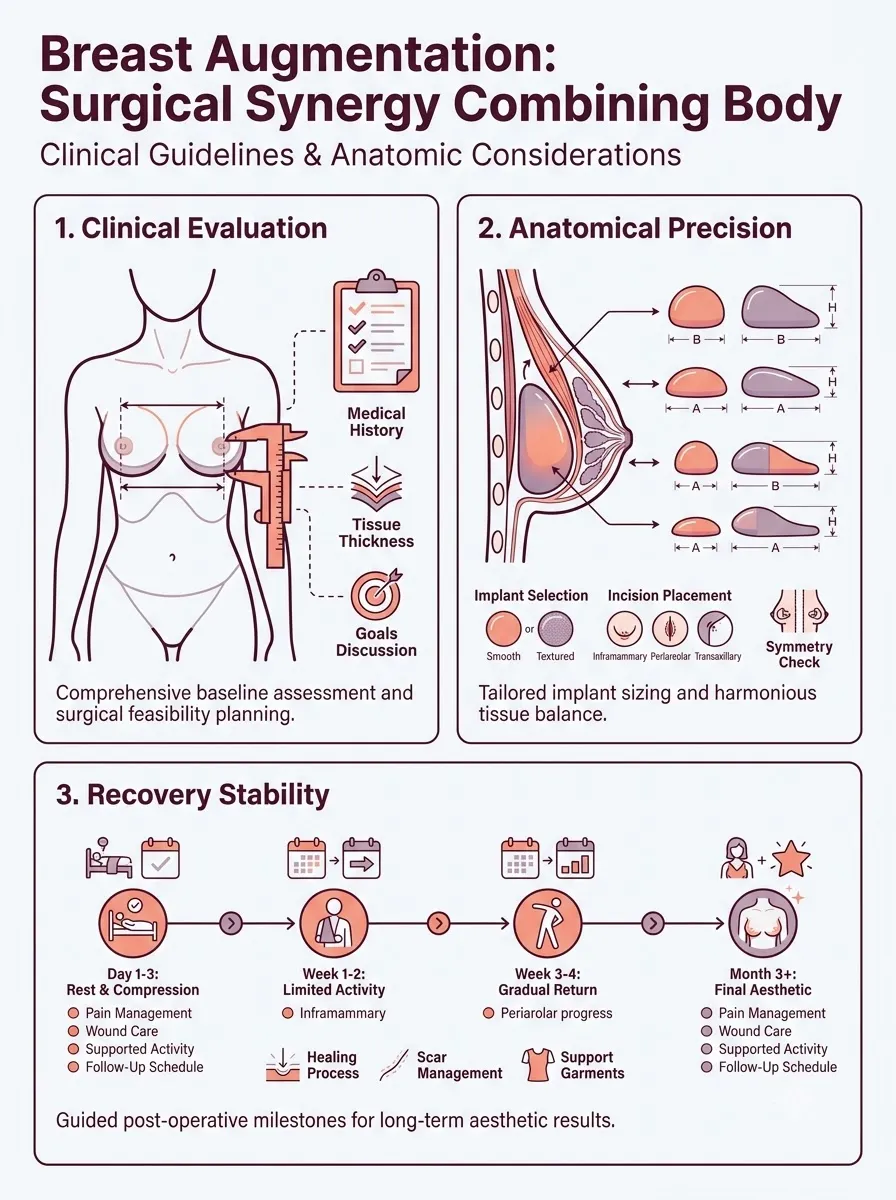
Many patients pick simultaneous procedures. This lets you improve several areas of your body at the same time.
This creates a surgical synergy. We remove fat from stubborn spots to make your breasts larger.
This is a type of body contouring. It helps you reshape your overall silhouette.
We use liposuction to collect fat from donor areas. This method works very well.
One study notes that “patient satisfaction is high, not only with the augmentation result but also with the concomitant liposuction” during the process.
You can get a slimmer waist or thighs. At the same time, you gain a fuller chest.
Integrated Liposuction and Grafting
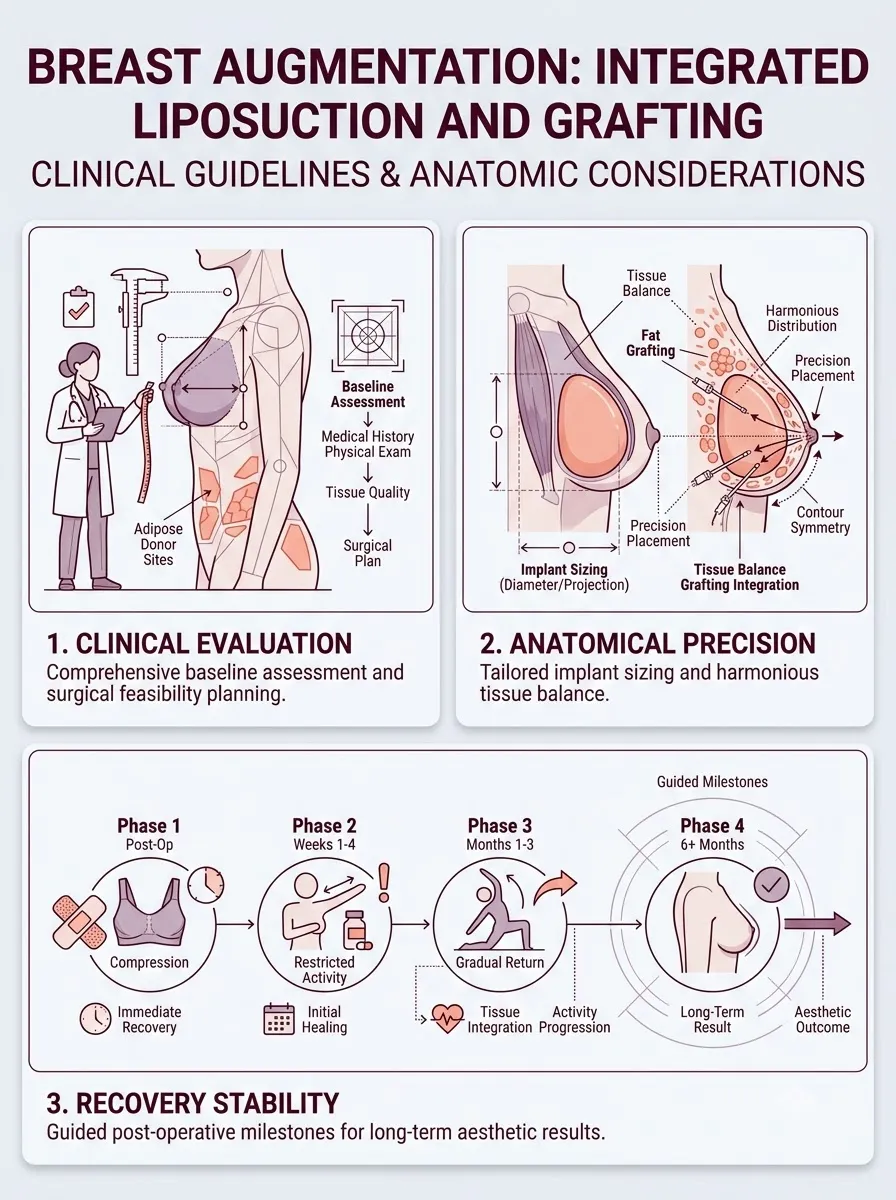
We use abdominal liposuction to take fat from your stomach. We also use thigh liposuction to get tissue from your legs.
These are common spots to find donor fat. In many cases, fat was “aspirated from the anterior and inside of the thigh, abdomen, and/or waist” during harvesting5.
Volume transfer happens in a few steps. First, we collect the fat using low pressure.
Next, we clean the fat to remove oil and fluids. This gets the tissue ready for your breasts.
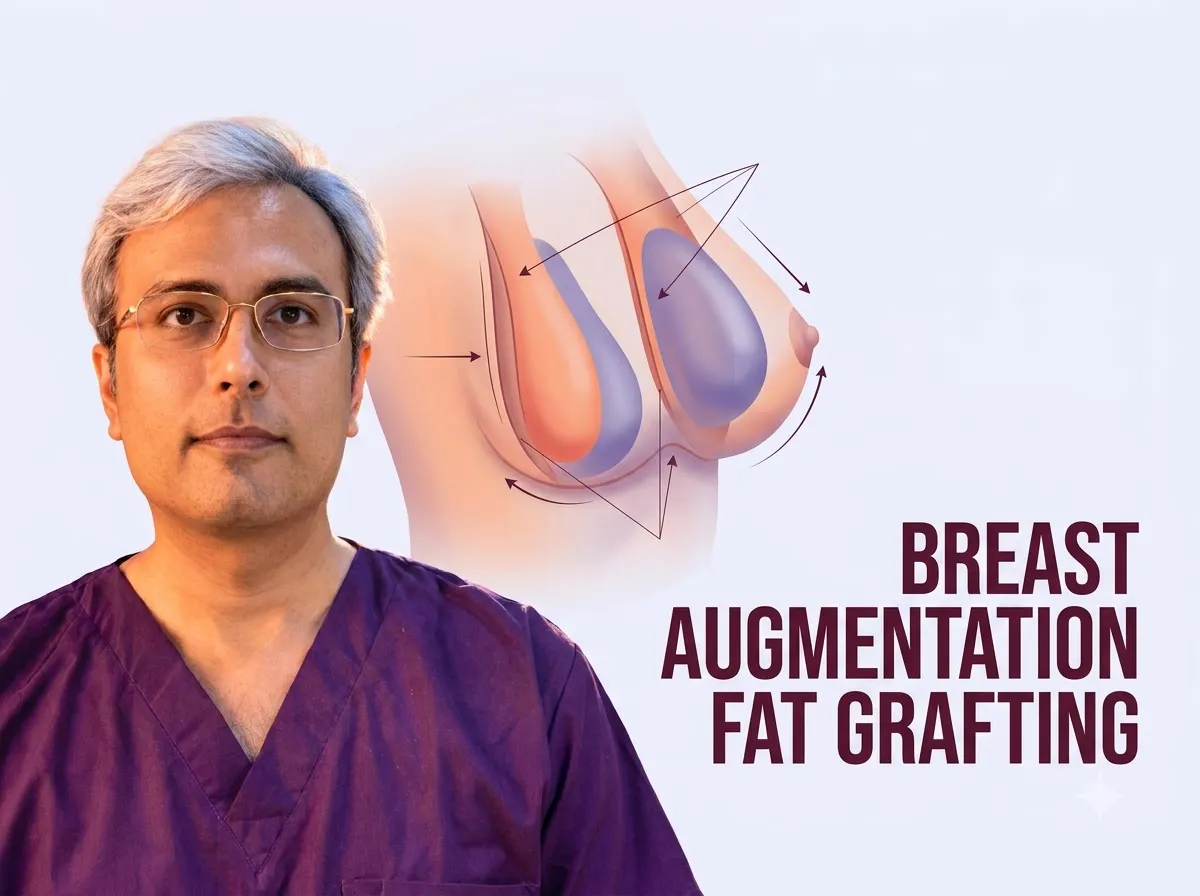
We inject the fat into different layers of the breast. This includes the skin, the gland, and the muscle.
For example, fat is placed in “subcutaneous, intraglandular and subglandular pectoralis major planes” to maximize fill volume6. This layering makes the shape look soft and natural.
Recovery and Healing Comparison
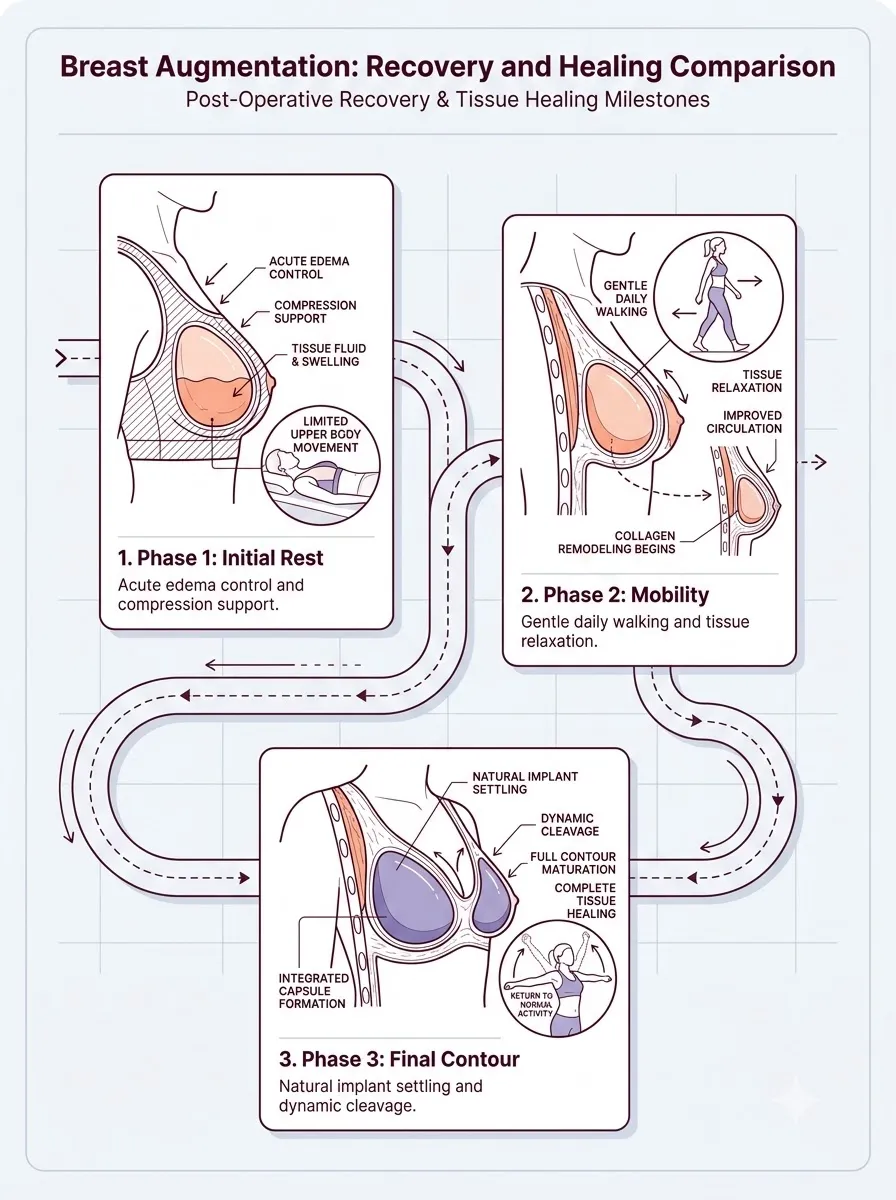
Healing from fat transfer is not the same as healing from implants. You have to care for two areas: your breasts and the donor sites.
Your post-operative care focuses on gentle movement. You should start walking the evening of the surgery7 to help your body heal.
Surgical downtime depends on the method you choose. Implants often have a harder start to recovery.
Some implant patients may need “a bandeau, tape, or implant displacement massage” to keep things in place (“The patient should be counseled, as appropriate, regarding postoperative activity limitations, support garments, and the possible need for a bandeau, tape, or implant displacement massage”). Fat transfer feels more like recovering from liposuction.
Your overall healing time depends on how active you are. Most people can “resume intense physical activity 4 to 6 weeks postoperatively” if they heal well (“Patients usually can resume intense physical activity 4 to 6 weeks postoperatively, if healing is satisfactory”).
Check this recovery timeline after breast augmentation for more details. It will help you plan your return to work and the gym.
If significant skin laxity or sagging is present, evaluate whether you need a breast lift vs breast implants.
Frequently Asked Questions
Can autologous fat transfer completely replace silicone breast implants?
Autologous fat transfer (composite breast augmentation) can replace implants for women desiring a modest, natural 0.5 to 1 cup size increase, but cannot achieve significant 2 to 3 cup size enlargements or dramatic upper-pole projection, explains Dr. Vishal Purohit in Jaipur. Fat transfer uses your own liposuctioned adipose cells harvested from the abdomen or thighs. As an M.Ch plastic surgeon, Dr. Purohit recommends fat grafting for subtle, 100% natural enhancements.
How much transferred fat survives permanently in the breasts?
Typically, 60% to 70% of transferred living fat cells establish microvascular blood supply and survive permanently, while the remaining 30% to 40% is naturally reabsorbed over 3 months, documented by Dr. Vishal Purohit in Jaipur. Surviving fat cells fluctuate naturally with your overall body weight. Dr. Purohit uses multi-plane micro-droplet injection techniques to maximize graft survival and prevent oil cysts.
Does breast fat transfer interfere with future mammograms or cancer detection?
Modern micro-fat grafting performed by experienced surgeons like Dr. Vishal Purohit in Jaipur does not interfere with mammograms because micro-droplet injection prevents large calcifications that mimic malignancy. Digital mammographers and breast MRI specialists easily differentiate benign liponecrotic cysts from breast lesions. As an M.Ch. plastic surgeon, Dr. Purohit ensures safe, oncologically sound graft placement.
What are the advantages of combining breast implants with fat grafting (hybrid augmentation)?
Hybrid breast augmentation combines cohesive silicone implants with autologous micro-fat grafting to soften implant edges, conceal rippling in thin patients, and create an ultra-natural cleavage transition, performed by Dr. Vishal Purohit in Jaipur. The implant provides stable projection while the fat graft provides warm, soft tissue padding. Dr. Purohit customizes hybrid procedures for slender women seeking optimal natural aesthetics.