Breast Lift vs. Breast Augmentation: Choosing the Right Procedure for Your Body Goals
Do you want more volume, a higher position, or both? These two surgeries solve very different problems.
Breast augmentation adds size and fullness. It uses implants or fat transfer to make breasts larger.
A breast lift (mastopexy) focuses on shape. It removes extra skin to move the breast tissue higher on your chest.
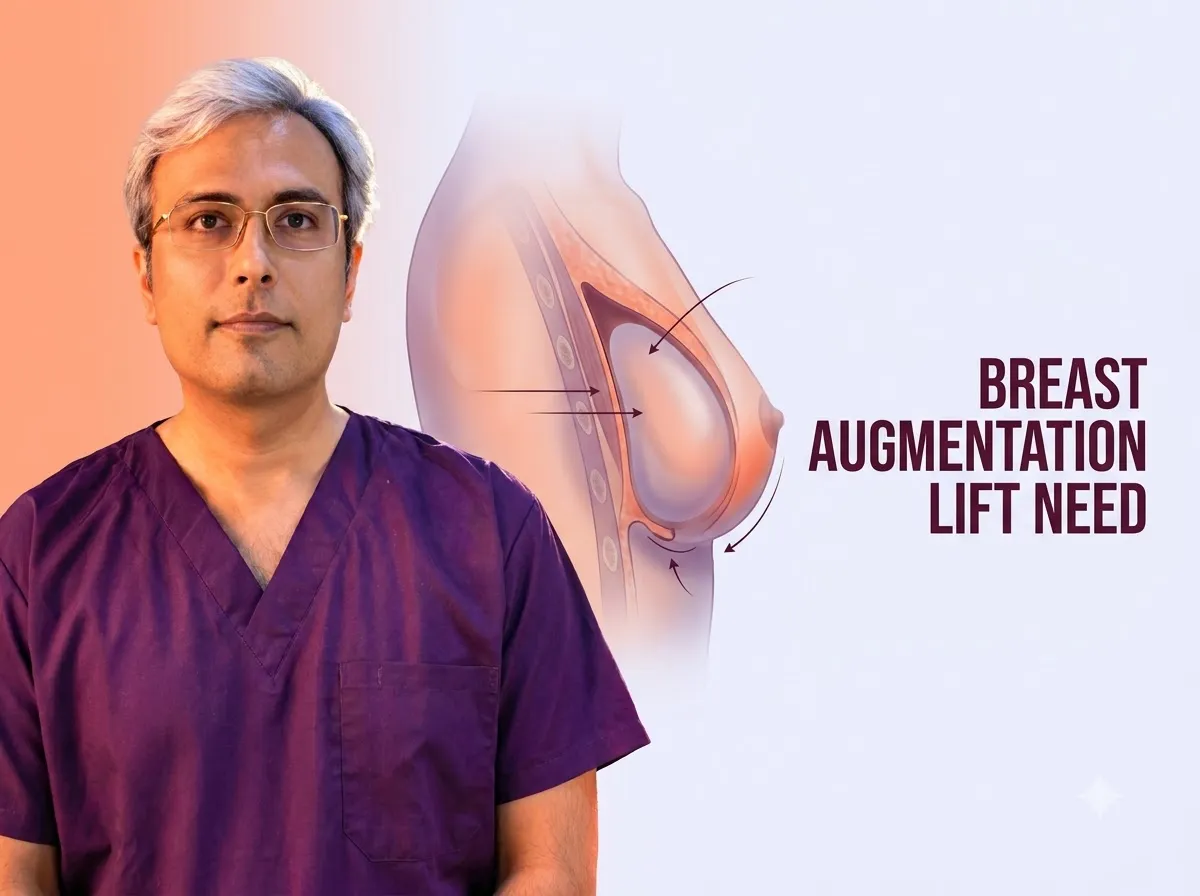
Many people need a personalized plan. If you have sagging and lost volume, an “augmented lift” might be best.
This combination restores both your shape and size. It helps you get a natural look that fits your goals.
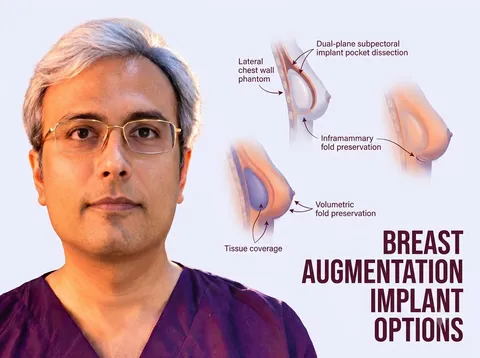
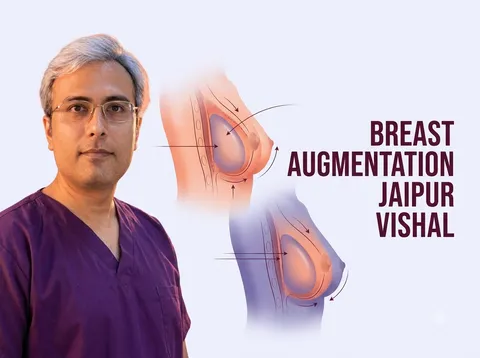
If you are exploring your options, talk to a pro. Consulting a specialist in breast augmentation in Jaipur can help you regain your confidence.
Use this quick chart to help you decide:
| Feature | Breast Augmentation | Breast Lift (Mastopexy) |
|---|---|---|
| Primary Goal | Increase Volume/Size | Improve Position/Shape |
| Addresses | Small breasts or asymmetry | Sagging (Ptosis) or excess skin |
| Method | Implants or Fat Grafting | Skin excision and tissue repositioning |
| Key Result | Fuller, larger breasts | Perky, lifted breasts |
Understanding the Primary Surgical Objectives
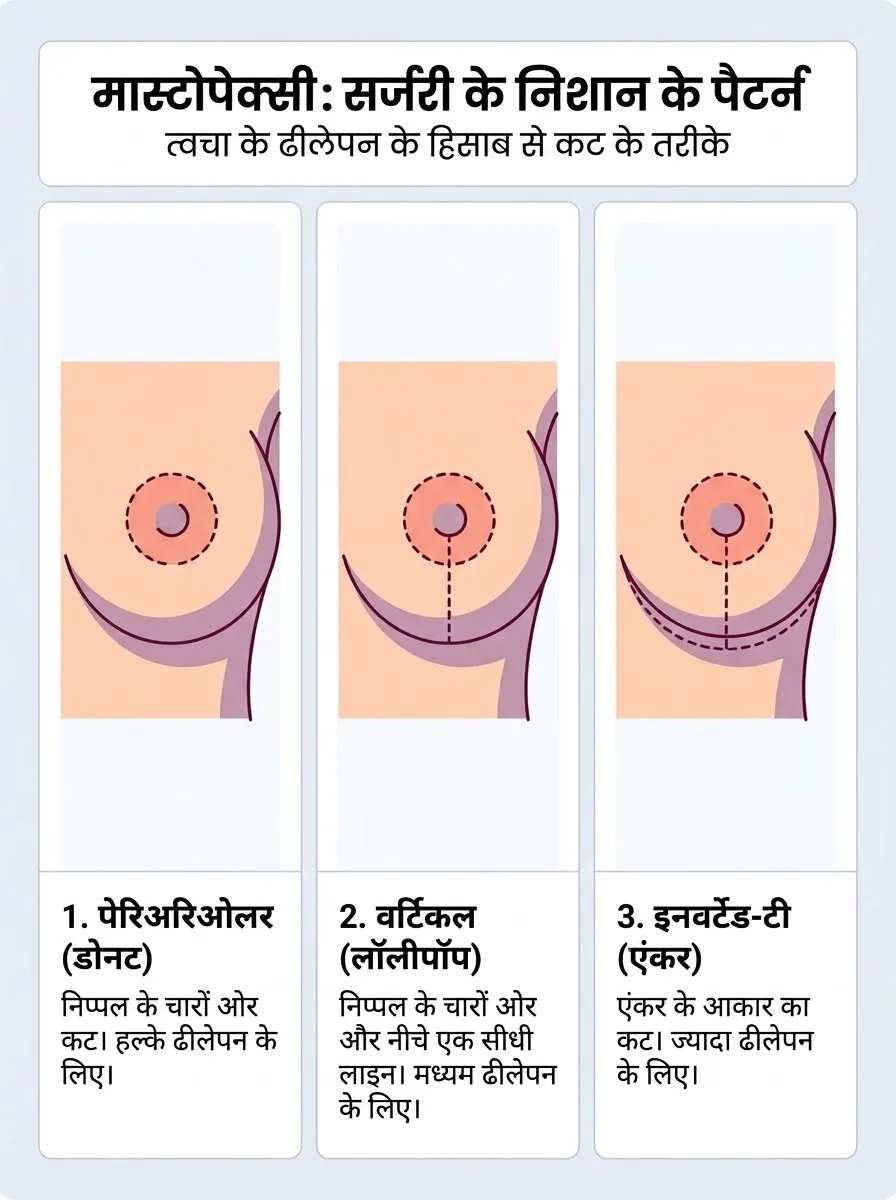
The main difference between these surgeries is the goal. Breast augmentation focuses on volume increase. This means adding mass to change your breast size and enhance your shape.
A breast lift, or mastopexy, fixes position correction. It is the best choice for sagging breasts with stretched skin. The goal is to create a “tightened skin envelope” and an “appropriately positioned nippleareola complex” for a better look1.
One adds size, while the other fixes the drop. Decide if you want a fuller chest or a firmer, higher look. Your surgeon will use your “breast dimensions, chest wall contour, subcutaneous fat and breast tissue densities” to plan your surgery.
Analyzing Breast Ptosis Grade: When a Lift is Mandatory
Surgeons check your breast ptosis grade to choose between implants or a lift. This grade measures sagging. It looks at your nipple position compared to the inframammary fold, which is the crease under your breast.
- Grade 1 (Mild Sagging): Your nipple is at or just below the fold. Here, breast augmentation may reasonably correct2 “hypoplasia with minimal ptosis or pseudoptosis” to add fullness.
- Grade 2 (Moderate Sagging): Your nipple is below the fold but not at the bottom. A combined plan can “improve moderate ptosis cases” when tissue hangs below the fold.
- Grade 3 (Severe Sagging): Your nipple is far below the fold and points down. You usually need a lift to move the nipple back up.
- Grade 4 (Extreme Sagging): Your nipple is at the lowest point of the breast. For these patients, “it is not possible to obtain the requested form without implant support” for Grade 4 ptosis3 if you want a full restoration.
The Role of Tissue Volume and Skin Elasticity
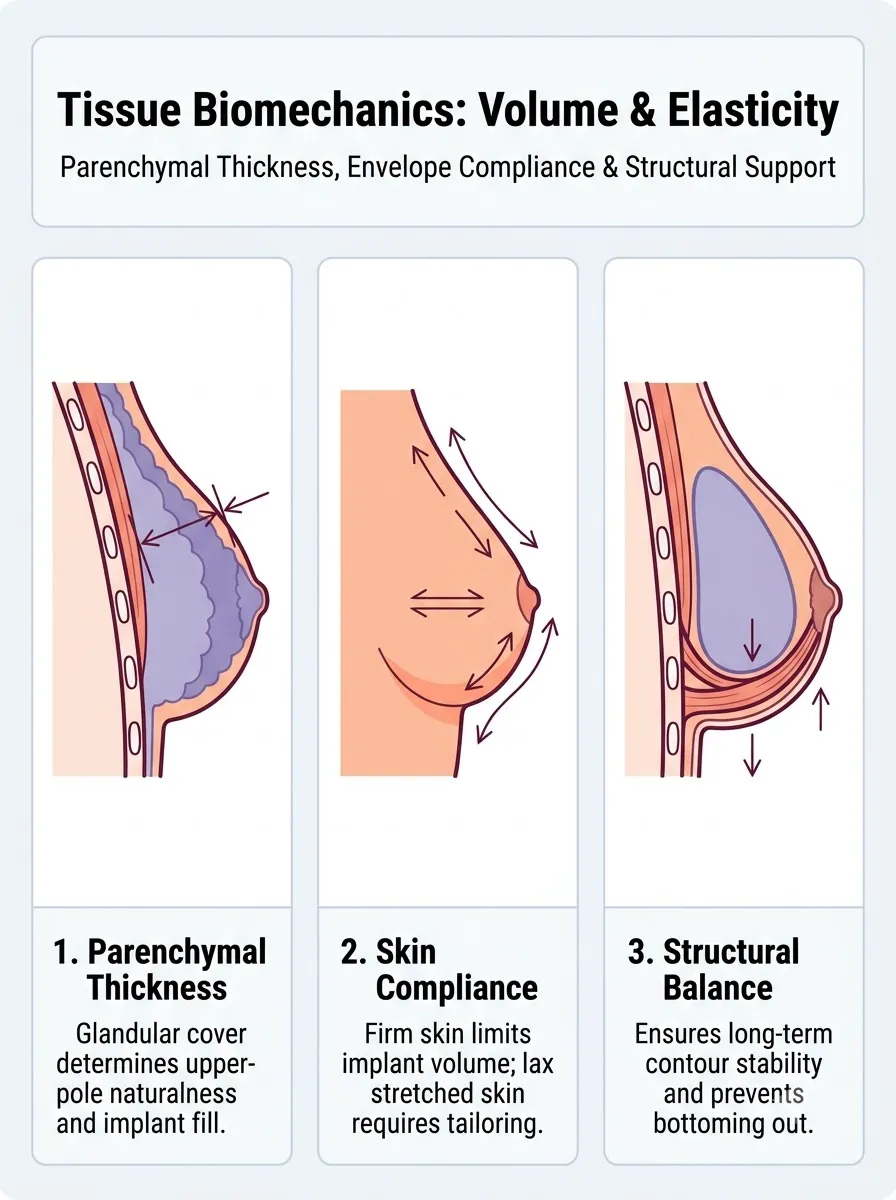
Your natural tissue decides how an implant fits. Surgeons check your breast parenchyma, which is the breast’s functional gland tissue.
If your breast parenchyma “contribution to stretched envelope fill is less than 20 percent,” you may need a larger implant.
Skin elasticity is how well your skin bounces back. This also plays a big role.
If your skin is tight, you have a “very tight envelope” that limits size. If your skin is loose, you have a “markedly compliant envelope” that can hold more volume.
Your own tissue provides structural support to prevent problems. When there is “no excess skin,” implants usually look natural.
Some breasts are “atrophied after breast feeding.” In these cases, there is often excess skin that needs to be filled or removed for the best shape.
The Combined Approach: Augmentation-Mastopexy
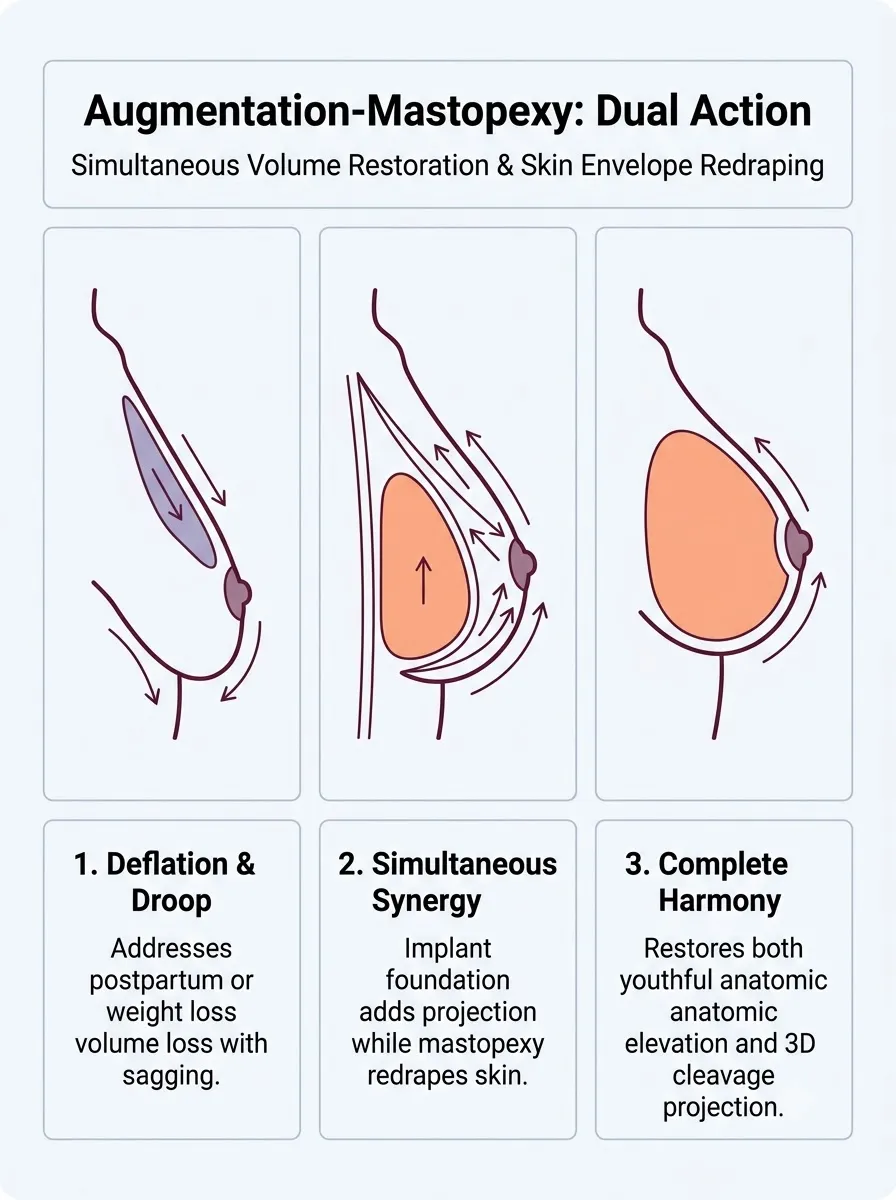
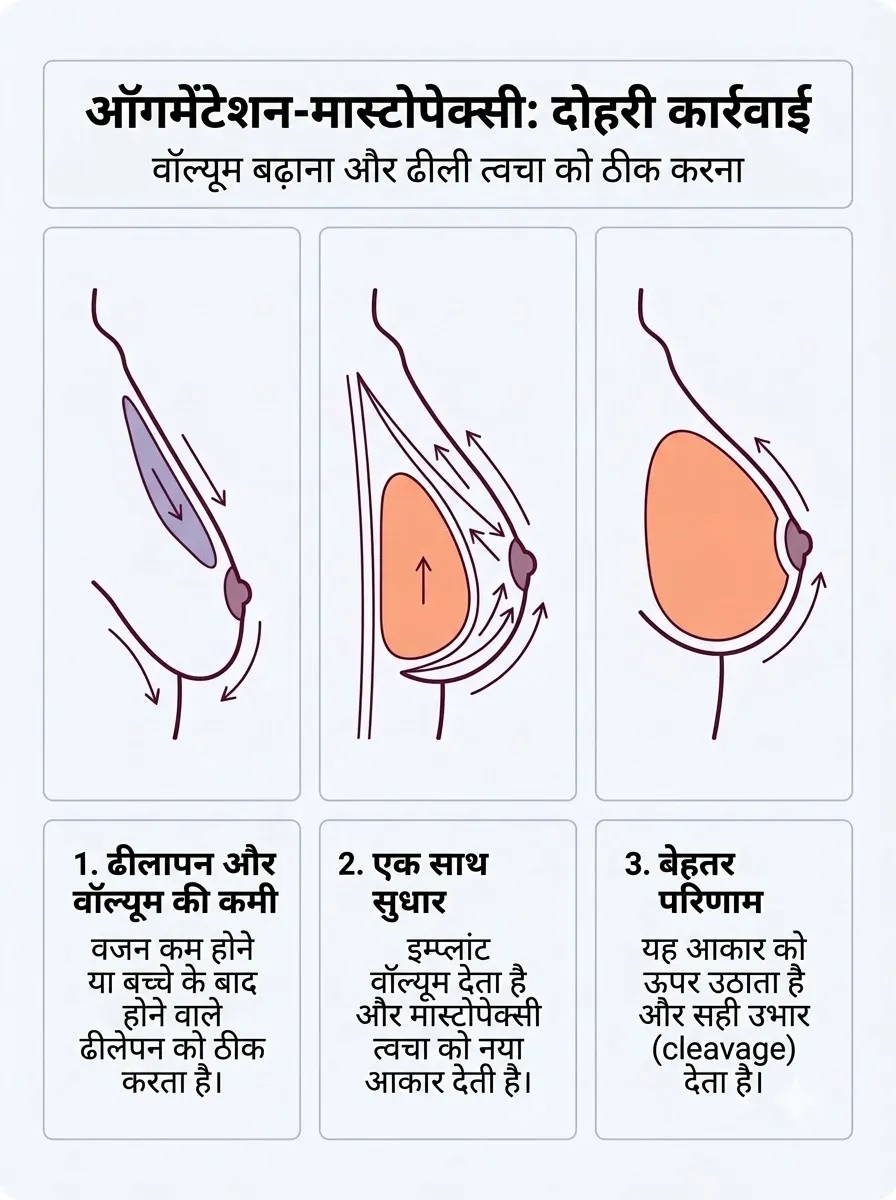
One surgery might not be enough for your goals. Combining Breast Augmentation with a lift is a combined procedure called an augmentation-mastopexy.
This lets your doctor completely reshape your breasts.
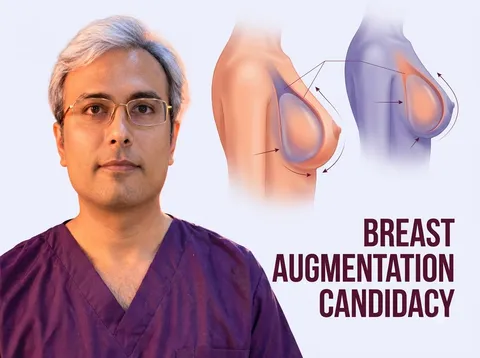
You might be a great candidate for simultaneous lift and implants if you have:
- Mild to Moderate Sagging: This is a “safe and reliable procedure for single-stage correction” of the hypoplastic breast4.
- Specific Skin Tension: You are a good fit if you have a “tight inferior pole of the breast” with limited horizontal laxity.
- Volume Loss and Drooping: You want more fullness. You also want to move your nipple higher for a youthful look.
- Varying Anatomy: You have unique “skin laxity, parenchyma distribution, breast dimensions, and nipple position” that require a tailored plan5.
Comparing Surgical Incision Patterns and Scarring
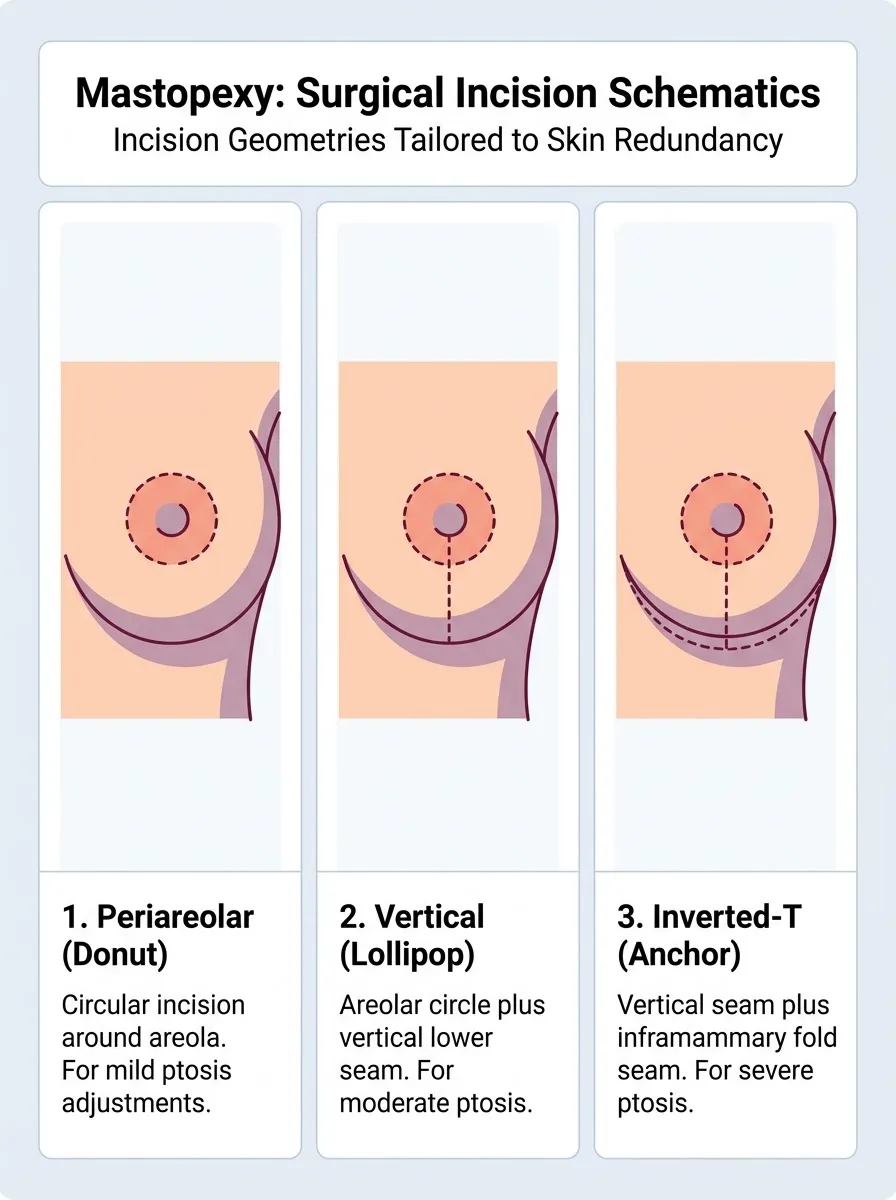
Your choice depends on the size and shape you want. Your incision sites change based on the method. Some scars hide in creases, while others are easier to see.
| Feature | Breast Augmentation (Implants Only) | Breast Lift (Mastopexy) | Combined Augmentation-Lift |
|---|---|---|---|
| Common Incision Patterns | Submammary incision (under the breast fold) or periareolar (around the nipple). | Periareolar, vertical incision, or anchor scar (T-shaped). | A mix of lift and implant incision patterns6. |
| Scar Visibility | Low. The submammary incision “provides superior cosmesis” by “hiding the scar in a natural crease.” | Moderate to High. These scars are longer to remove extra skin. | Moderate. You need scars to move the nipple and add volume. |
| Recovery Risks | Low risk of skin pulling. Some periareolar cases may see “hypertrophic scars or keloids” if tissue is stressed7. | Healing takes longer because more skin is removed. | Moderate. You must ensure the nipple keeps its blood flow. |
| Aesthetic Goal | Adds volume and fullness. | Lifts sagging tissue to a better spot. | Gives you both volume and a youthful lift. |
Compare implant enhancement with autologous tissue in our clinical review on fat transfer vs breast implants.
Frequently Asked Questions
How do I know whether I need a breast lift, breast implants, or both?
If you have lost upper-pole fullness but your nipples remain positioned above the lower breast fold, breast implants alone suffice; if your nipples point downward below the crease, a breast lift (mastopexy) is necessary, diagnosed by Dr. Vishal Purohit in Jaipur. When both volume loss and significant skin sagging coexist, an augmentation-mastopexy combines both solutions. As an M.Ch plastic surgeon, Dr. Purohit establishes precise anatomical candidacy during consultation.
Can breast implants alone lift sagging breasts?
Breast implants alone cannot effectively lift moderate-to-severe breast ptosis, as placing an implant into a lax skin envelope causes an unnatural ‘double-bubble’ or ‘snoopy-nose’ deformity, explains Dr. Vishal Purohit in Jaipur. Implants add volume but cannot reposition descended nipple-areola complexes. Dr. Purohit performs skin tailoring and glandular repositioning whenever the nipple sits below the inframammary fold.
What are the advantages of combining a breast lift with implants (augmentation-mastopexy)?
Combining mastopexy with cohesive silicone implants allows Dr. Vishal Purohit in Jaipur to simultaneously elevate the breast apex, reduce enlarged areolas, and restore youthful upper-pole cleavage in a single 2.5-hour operation. Patients undergo a single recovery period of 10 to 14 days rather than staged surgeries. Dr. Purohit utilizes dual-plane techniques to ensure stable implant support beneath lifted tissue.
How do recovery times compare between an isolated lift and combined surgery?
Recovery from an isolated breast augmentation takes 5 to 7 days, whereas a breast lift or combined augmentation-mastopexy requires 10 to 14 days of rest before resuming desk work under Dr. Vishal Purohit’s care in Jaipur. Patients wear specialized compression support bras for 4 to 6 weeks. As an M.Ch. plastic surgeon, Dr. Purohit ensures safe, monitored recovery milestones for both procedures.