In short
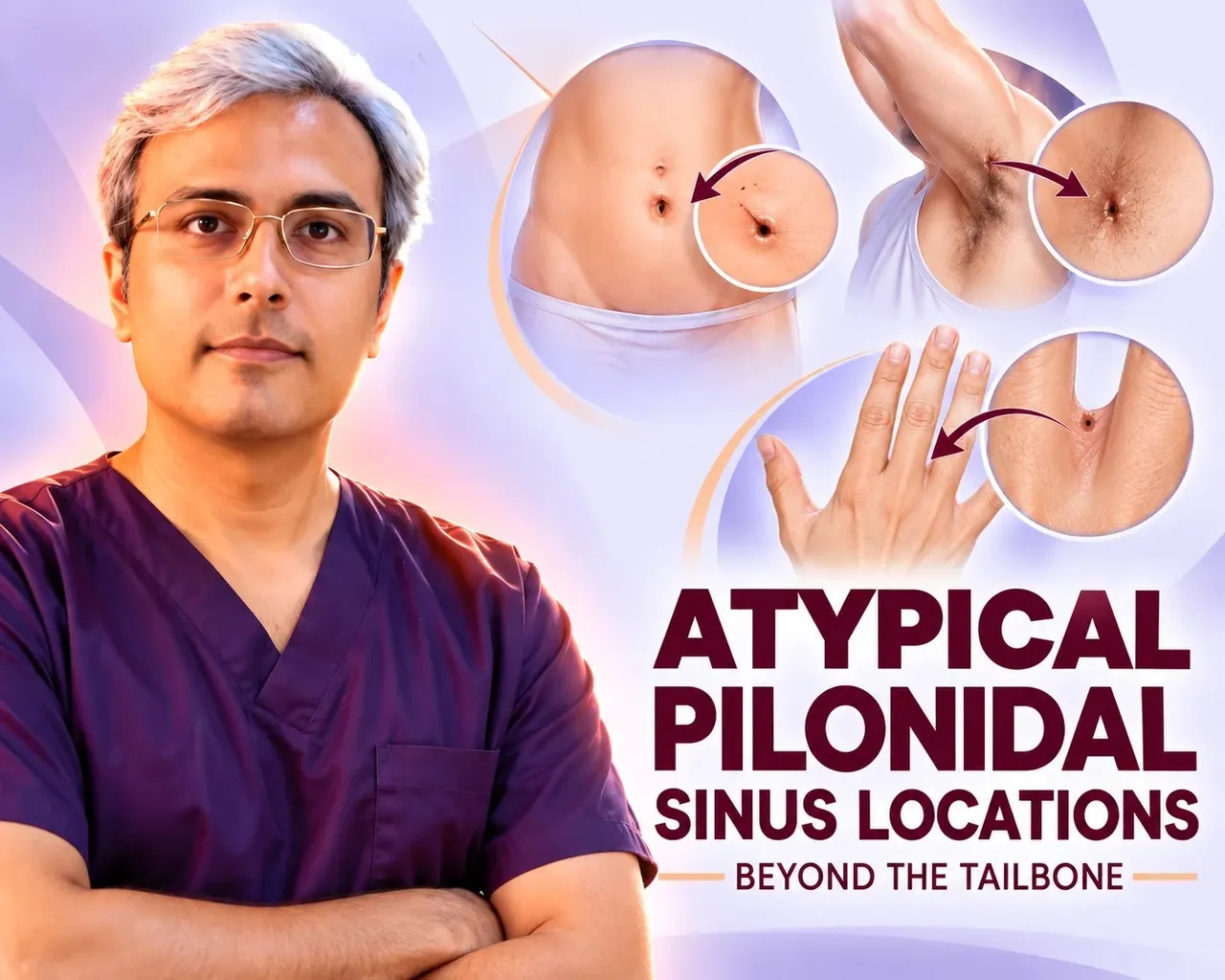
- Most cases sit at the tailbone, but navel, chest-fold, armpit, groin-crease, and finger-web sites occur.
- The cause is the same everywhere: trapped hair in a skin fold, plus friction and moisture.
- Wrong naming in odd sites runs for months — correct mapping, then full tract removal, breaks the cycle.
Why disease shows away from the tailbone
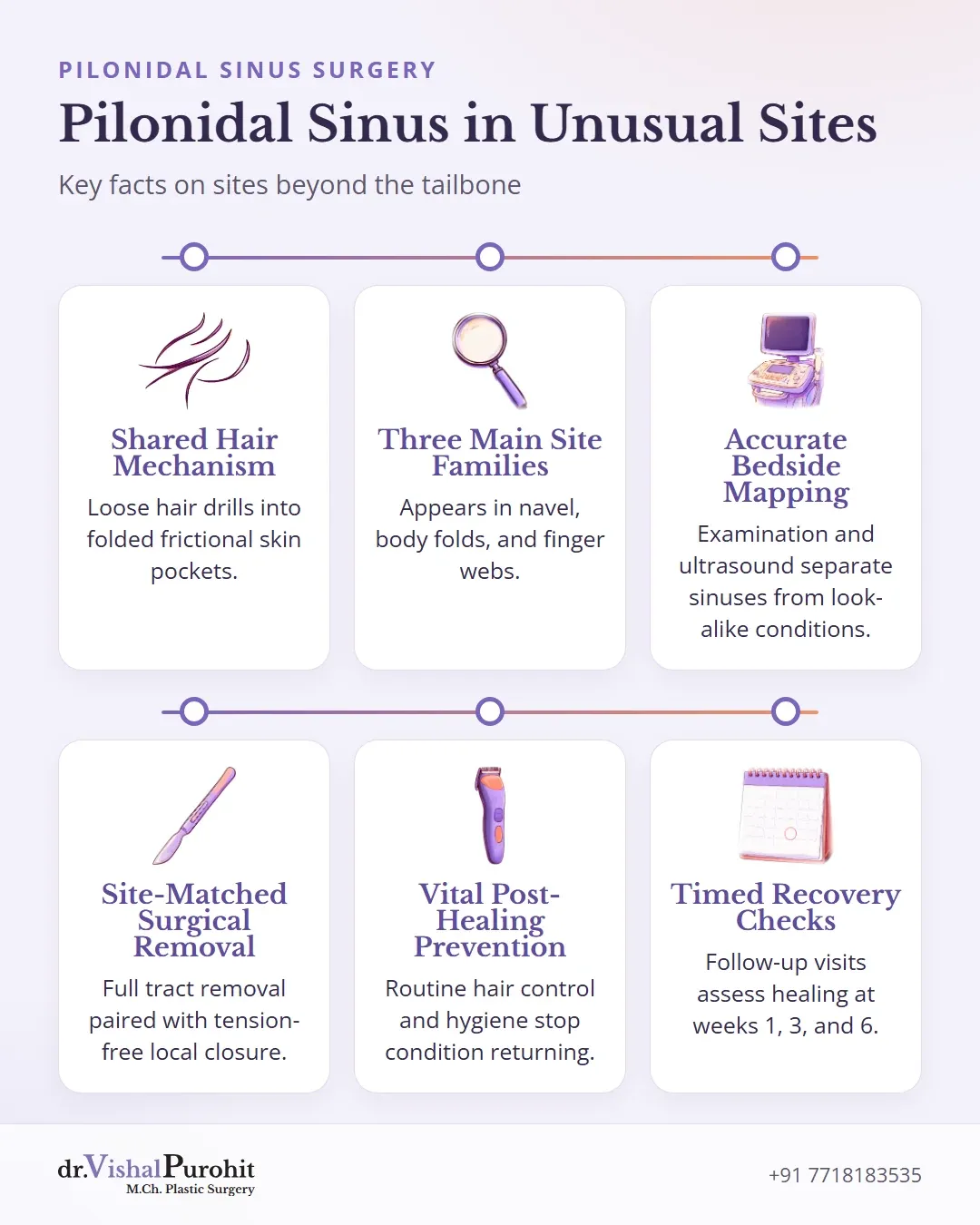
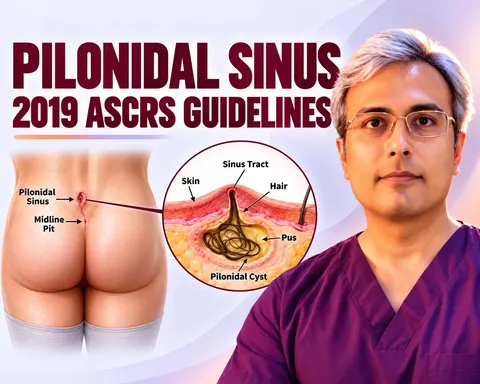
Pilonidal disease is not tailbone tissue gone wrong. It is loose hair drilling into any warm, folded, frictional pocket. The natal cleft is simply the commonest such pocket.
As a plastic surgeon treating complex presentations, Dr. Vishal Purohit provides flap reconstruction and tailored pilonidal sinus surgery in Jaipur for recurrent and uncommon manifestations of the condition.
Three site families result:
- Navel (periumbilical) sinus — the best documented of the rare sites
- Upper-body folds — chest fold, armpit, groin crease
- Work-related hand sinus — other people’s hair in barbers’ finger webs
Many patients first hear wrong labels — myths versus facts explains the commonest mix-ups — and only a fold-aware examination sets the record straight.
Navel sinus: the commonest odd site
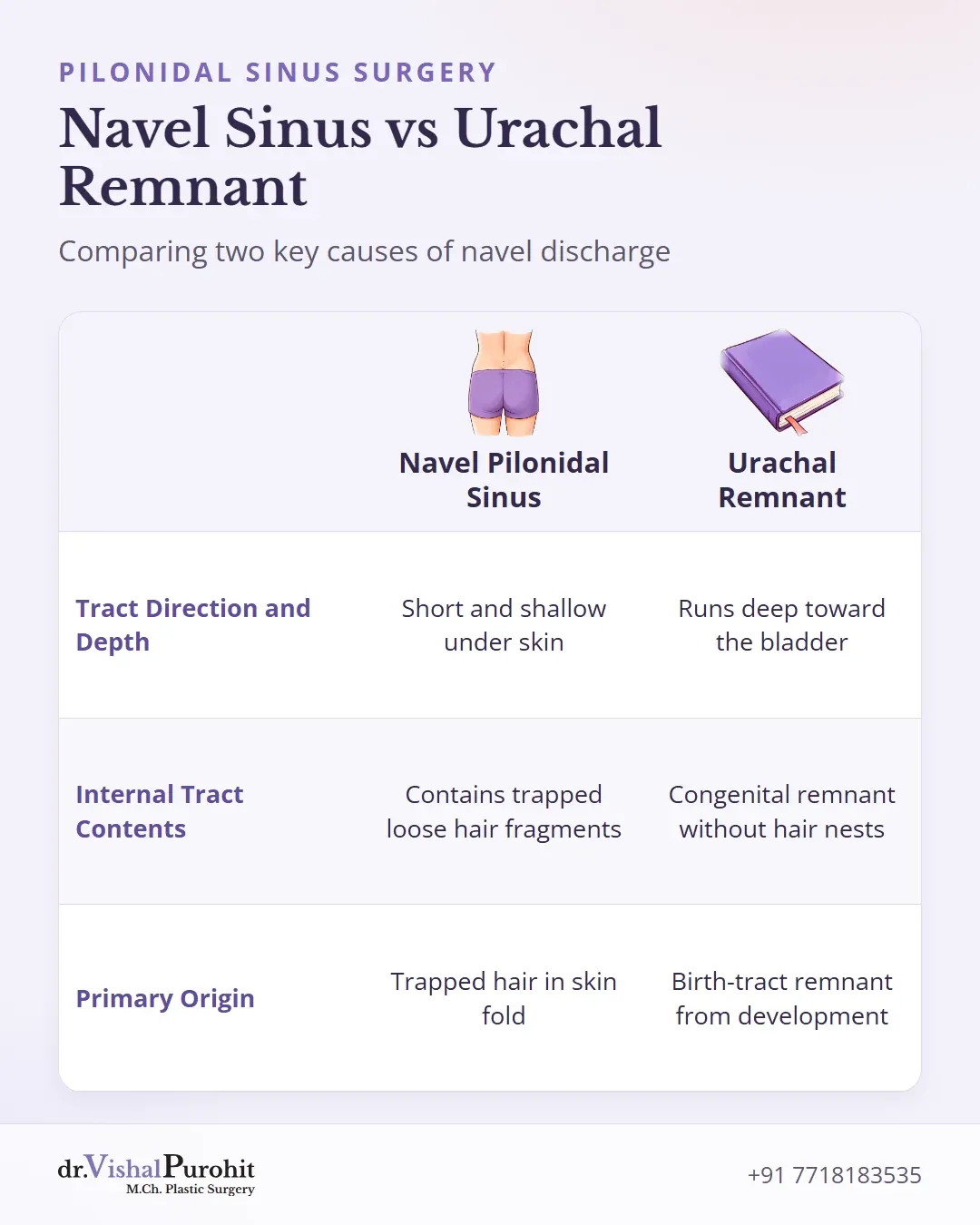
The navel is a small cleft of its own. Deep, tight pits trap hair and lint; friction and sweat do the rest. A weeping, tender, sometimes smelly navel with a firm cord below it is the classic picture.
Clues that point to the navel:
- Depth and tightness — deeper, tighter pits trap more
- Hair or a pit inside the pit — a near-certain sign
- Firm cord below the navel — a shallow tract running under the skin
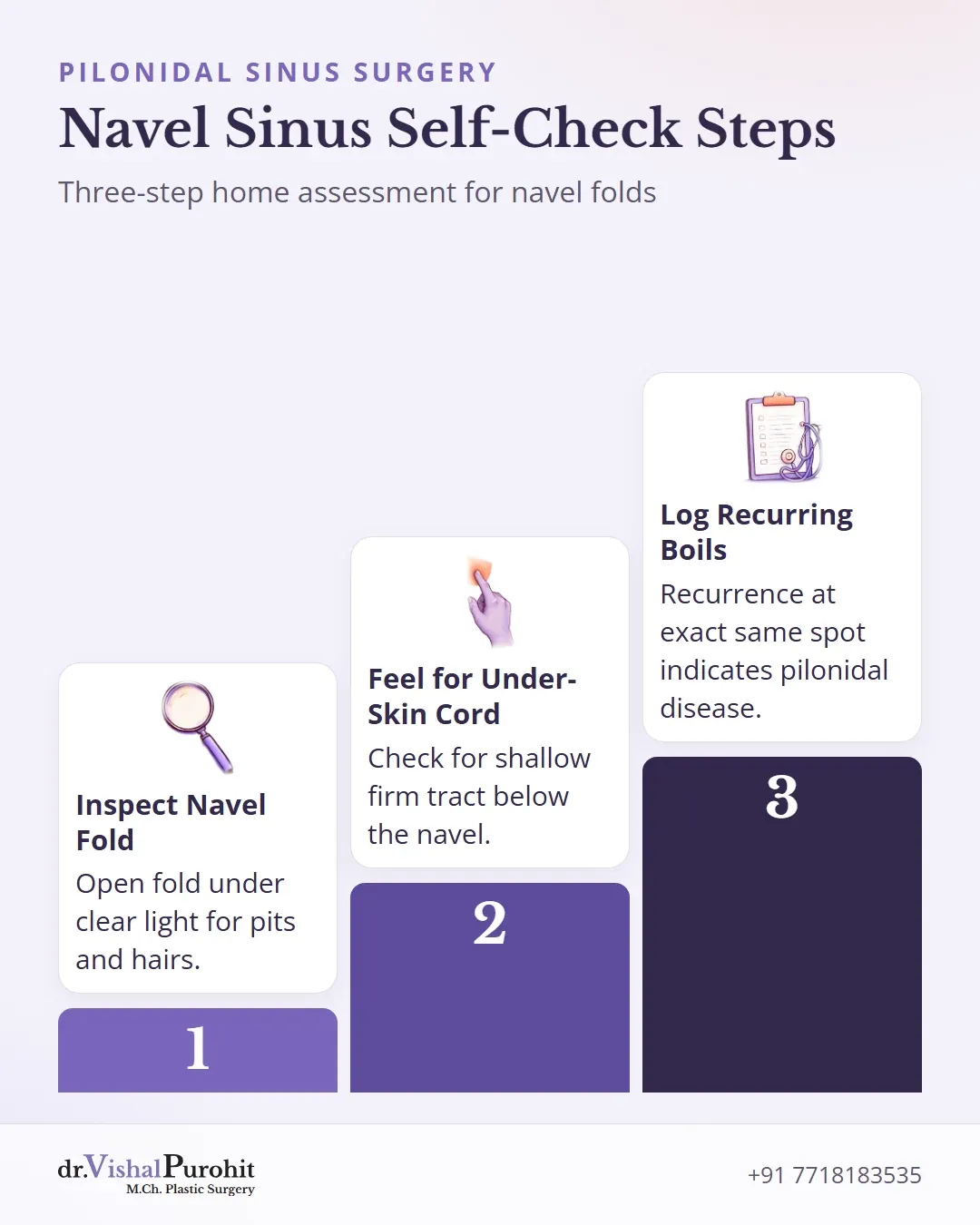
The main look-alike is a urachal remnant (a birth-tract remnant running deep toward the bladder). Examination plus ultrasound tells them apart: pilonidal tracts are short, shallow, and hair-bearing. A home self-check runs in three steps:
- Open the fold in good light — look for pits and peeking hairs
- Feel for the cord — a shallow tract under the skin
- Log repeat boils — return to the same point signals a pilonidal root
Chest-fold, armpit, and groin forms
Any fold that traps hair can host the same disease: between the breasts, the armpit, the groin crease. The signs repeat — pits in the fold line, hair-bearing discharge, boils at one fixed point — but each site borrows the wrong name first: hidradenitis, infected cyst, or ingrown hair.
Treatment follows the fold, not the label. Narrow disease is removed locally; wide or repeat fold disease gets flap-style planning with tension-free closure matched to local skin. Healing must outlast the same friction that created the sinus, which is why closure shape matters as much as removal.
Aftercare is fold-specific too. The area stays dry, friction drops with softer fabrics and weight control where relevant, and hair is kept clear once the skin seals. Because folds re-trap hair easily, a short hair-control routine after healing does more for these sites than any dressing choice during healing.
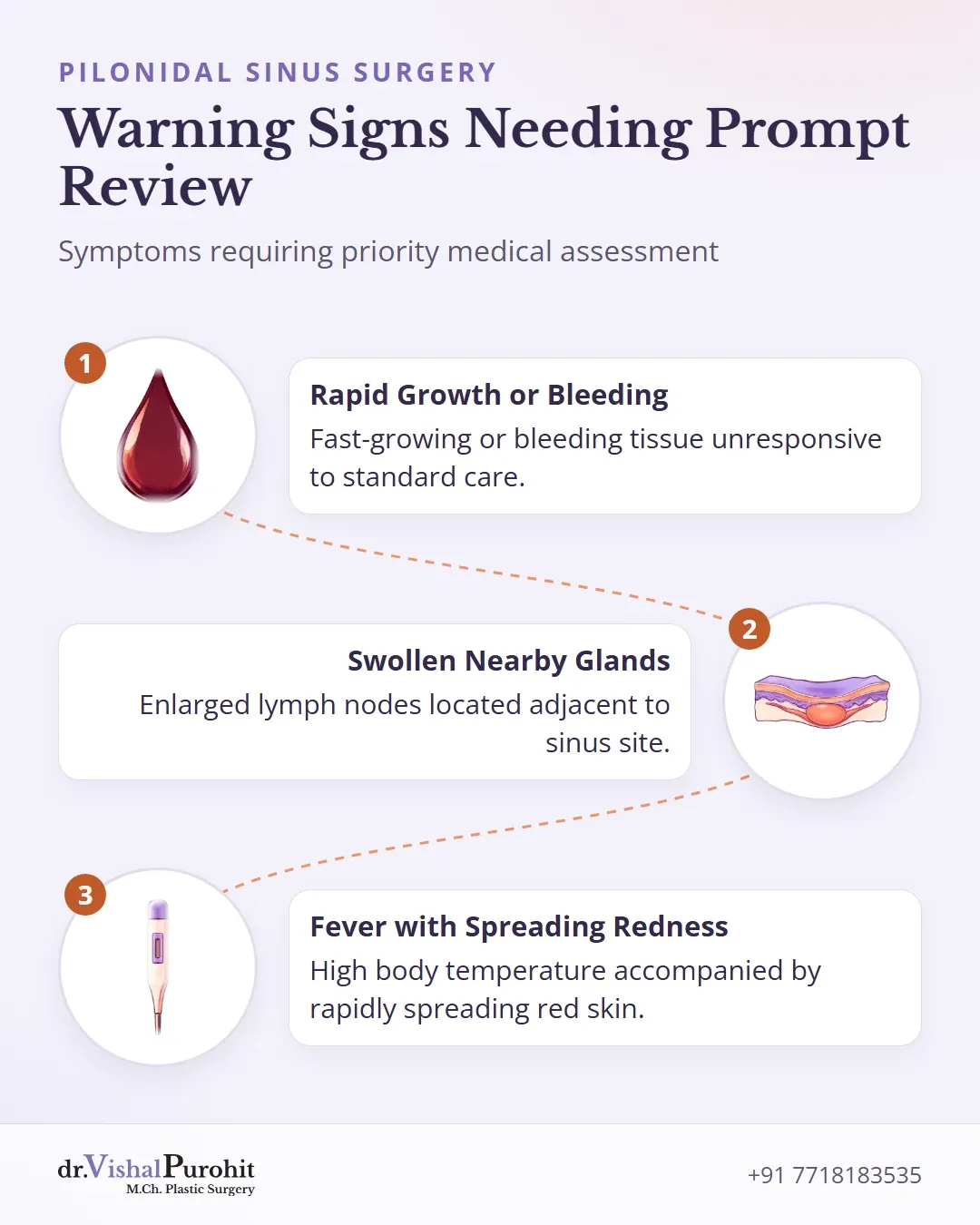
Get prompt review for these
- Fast-growing or bleeding tissue that ignores basic care
- Swollen glands near the sinus
- Fever with fast-spreading redness (possible spreading infection)
The barber’s hand sinus: an occupational special
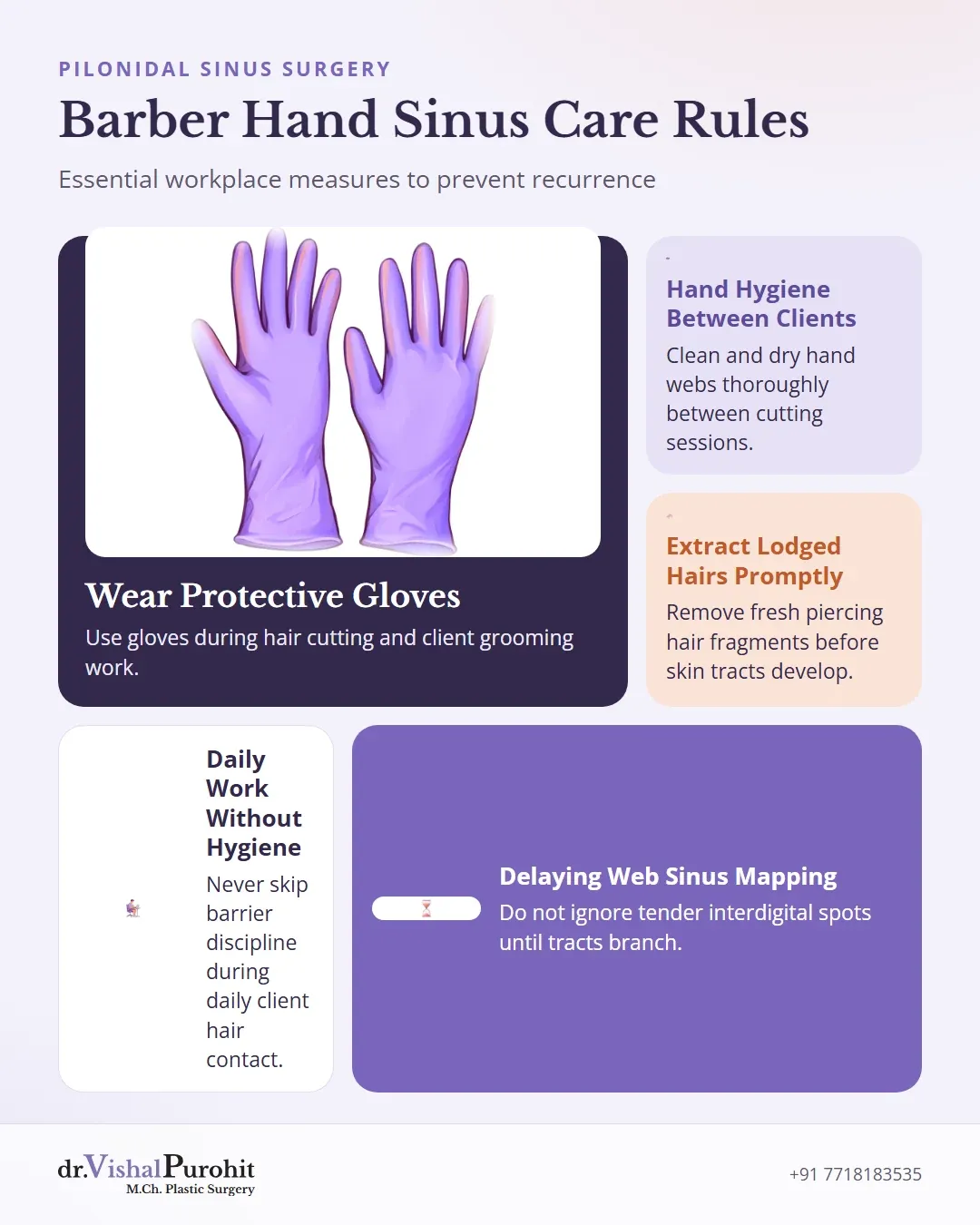
Barbers and groomers develop sinuses in finger webs — not from their own hair but from clients’ cut hairs piercing the skin. It is the one pilonidal site where the hair belongs to someone else.
Removal alone fails without trade discipline: gloves, hand hygiene between clients, and prompt extraction of new lodged hairs. Daily contact without aftercare makes return almost certain, so the prevention talk is part of the cure. What pilonidal disease is covers the shared hair-trapping mechanism across all sites.
Early hand sinuses are small and easily missed — a tender speck between the fingers that flares after busy cutting days. Barbers who notice this pattern should seek mapping before the tract branches, because a single straight tract removes cleanly while a branched one needs wider surgery and longer time off tools.
Key figures from published series
- A Dufourmentel flap series for tailbone pilonidal disease reports a 20% rate (Journal of the Royal Medical Services); small Limberg (n=2) and Z-plasty (n=18, reported rate 90%) reports are small-sample technique notes in the source brief.
- These figures describe tailbone flap operations and do not transfer to navel, fold, or hand treatment, which is planned per site.
What Dr. Vishal Purohit does in Jaipur
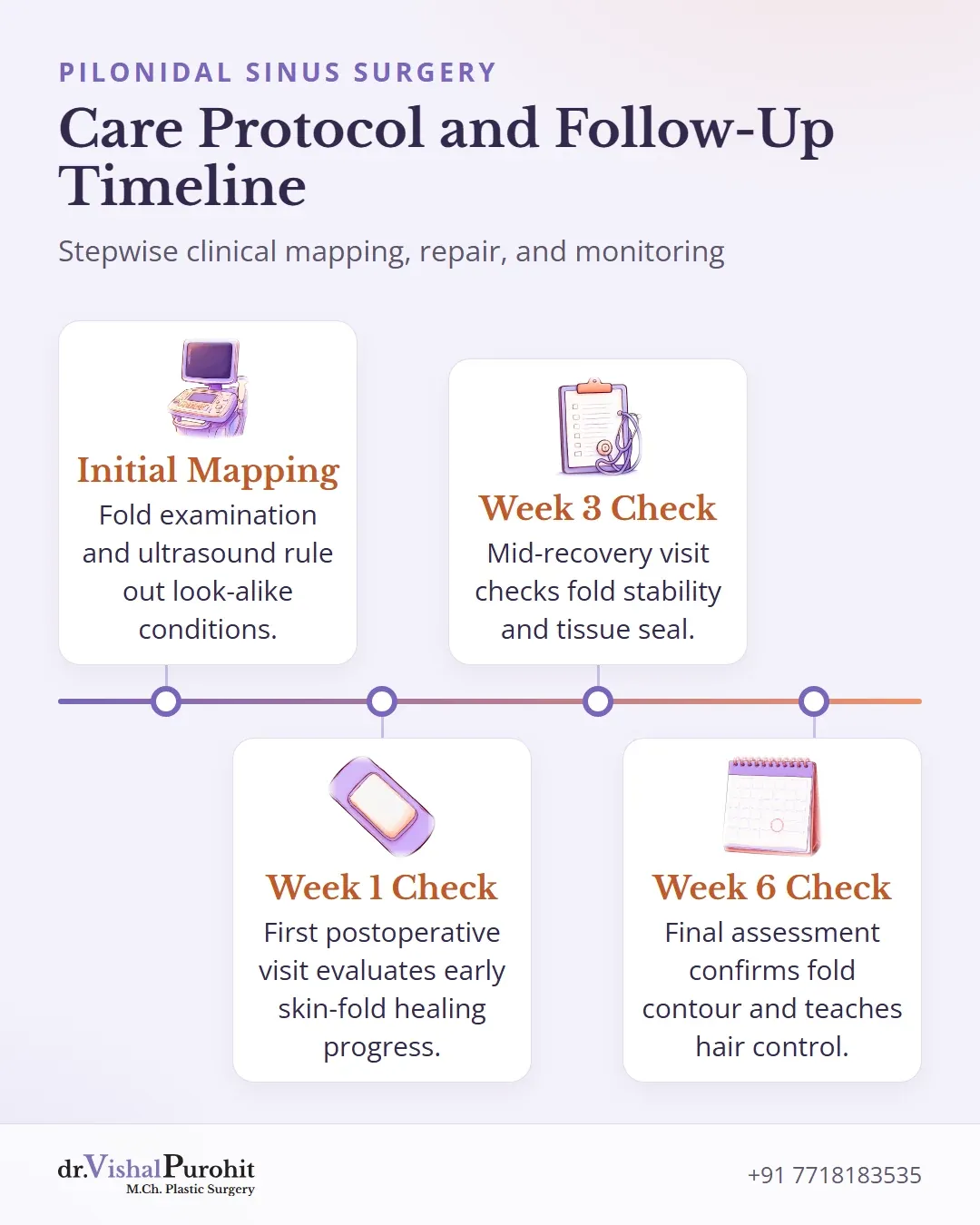
Dr. Vishal Purohit, an M.Ch plastic surgeon, maps atypical sinuses in Jaipur with fold-aware examination and ultrasound — separating pilonidal tracts from urachal remnants, hidradenitis, and cysts before any cut.
Narrow disease is removed locally; wide or repeat fold disease gets flap-style closure matched to the fold, with hair control taught after healing. Odd lesions that grow fast, bleed, or carry swollen glands are biopsied first, not assumed pilonidal. The clinic performs Limberg and Karydakis flaps plus abscess drainage only.
Navel cases get a shaped repair that keeps the dip shallow and cleanable, since a deep tight pit would simply re-trap hair. Follow-up runs at weeks 1, 3, and 6, the same rhythm as tailbone flap care, with each visit checking the fold rather than just the scar line.
This is educational information, not medical advice.