
A wide or boxy lower face can arise from multiple anatomical layers, including masseter muscle bulk, lateral bone flaring, or overlying adipose tissue. Because muscle-relaxing injections target only muscle thickness rather than flared bone or soft tissue, a thorough assessment is necessary before considering Repeat Masseter Botox: Muscle Recovery and Jaw Bone Evidence.
Visual inspection alone cannot distinguish between these different anatomical structures. A careful physical examination at rest and during active jaw clenching helps determine whether lower facial width stems from enlarged masseter muscles, prominent bone contour, parotid salivary gland enlargement, or soft tissue distribution.
Locating the Source of Lower Face Width
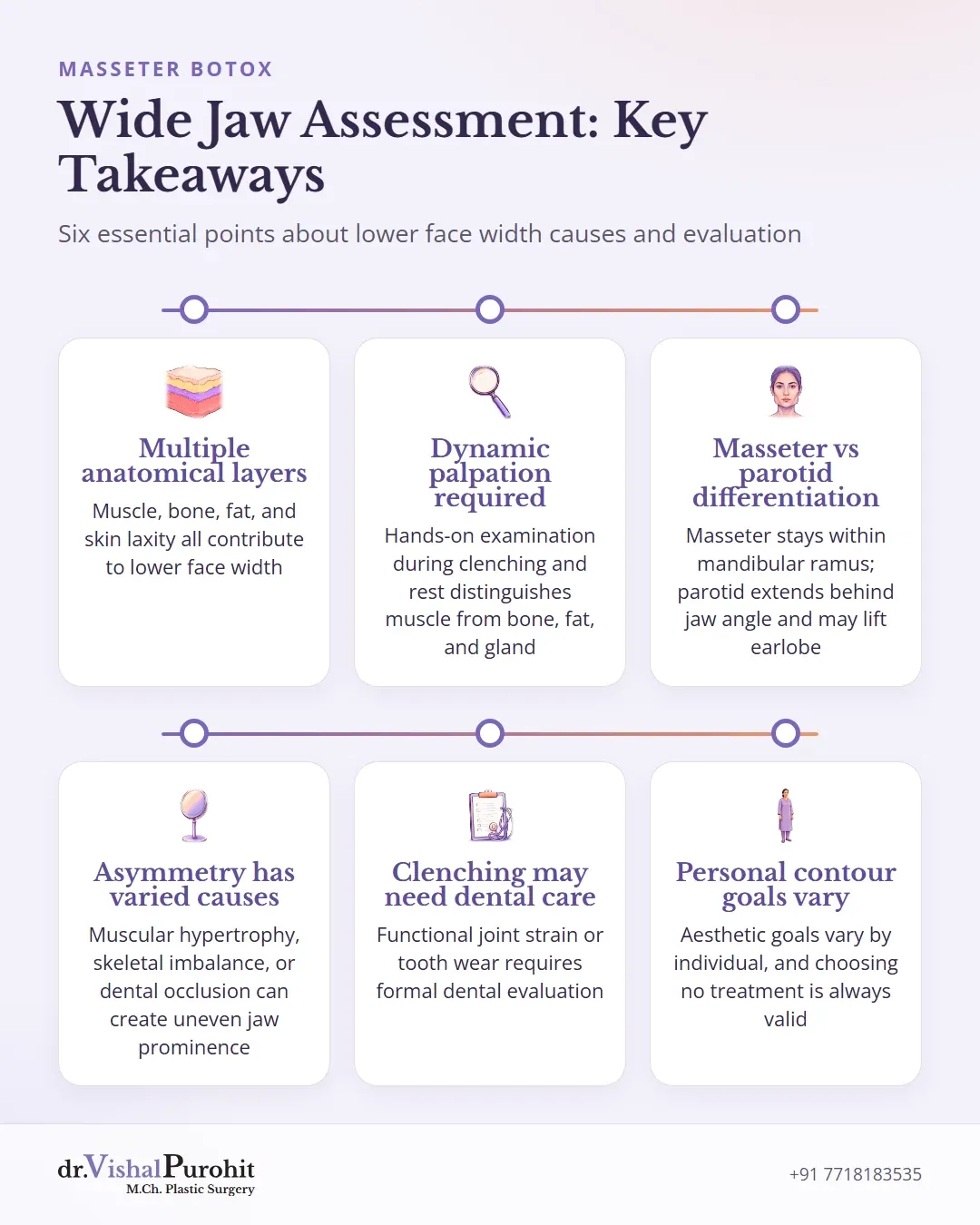
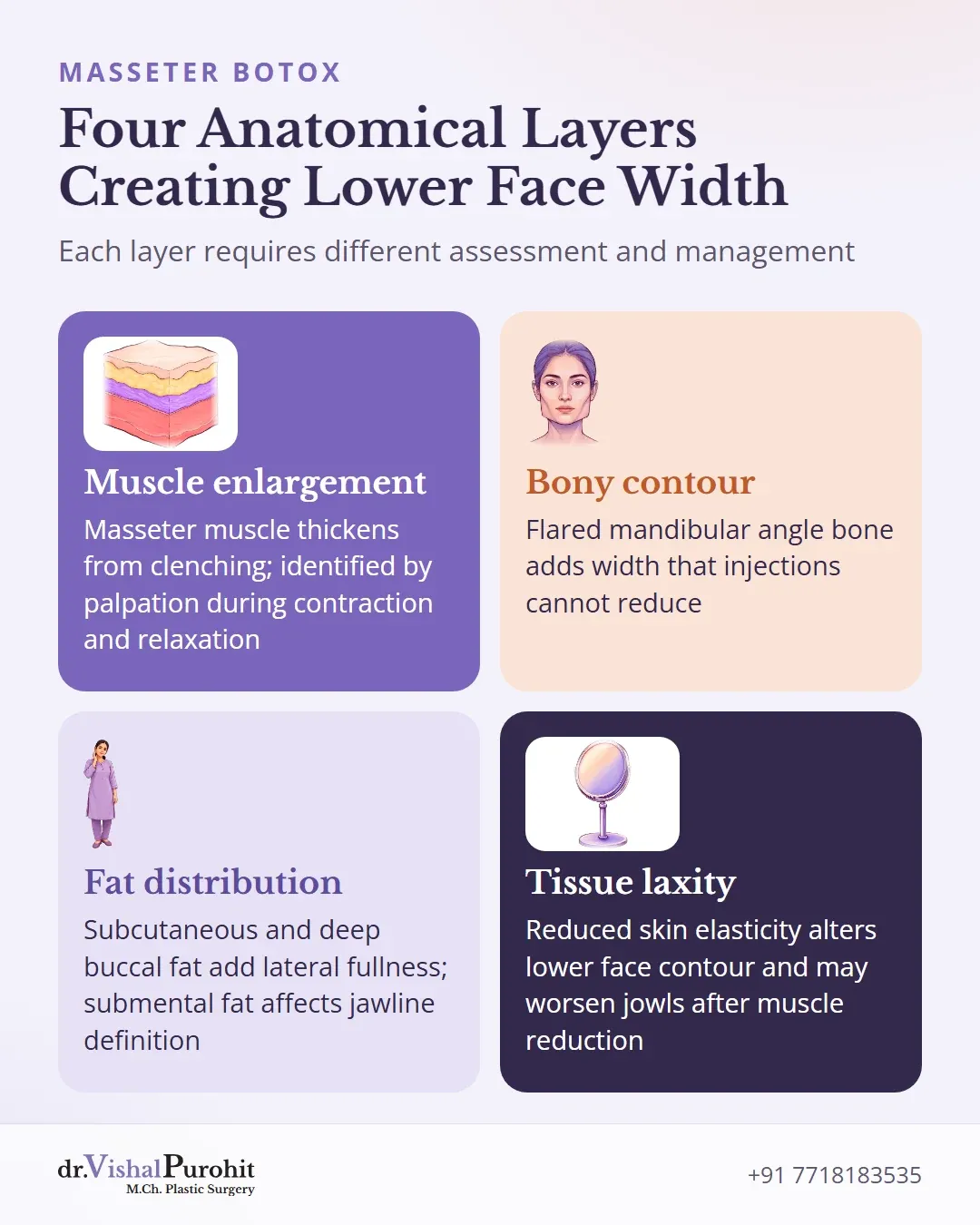
A wide or square appearance of the lower face can arise from multiple anatomical layers1. Determining whether fullness comes from muscle bulk, underlying bone structure, or overlying soft tissue is essential for planning care12.
Dr. Purohit’s note: Dr. Vishal Purohit assesses facial structure in Jaipur to identify the primary causes of lower face width.
- Muscle enlargement: The masseter muscle elevates the mandible during chewing and can enlarge from clenching3. Palpation during both jaw clenching and relaxation identifies muscle bulk12.
- Bony contour: Lateral flaring of the mandibular angle or overall bony prominence can create lower face width12.
- Fat distribution: Subcutaneous adipose tissue and deep deposits, such as buccal fat extending near the cheek, contribute to lateral fullness124. Submental fullness along the neck area also impacts jawline definition5.
- Tissue laxity: Reduced skin elasticity alters the lower face contour15.
Muscle-relaxing injections target only masseter thickness3. They cannot reduce flared bone or remove adipose tissue12. Furthermore, administering neurotoxin to patients with poor tissue tone may worsen the appearance of jowls for up to 2 months1.
Physical Examination at Rest and Clenching
A physical assessment of the lower face requires direct manual examination during both relaxation and active contraction1. While inspection can reveal a wide or boxy facial appearance1, visual assessment alone cannot determine what causes the width.
Key points
- Direct manual examination during relaxation and clenching is essential to assess lower facial width.
- Dynamic palpation distinguishes muscle enlargement from prominent bone, fat, or parotid tissue.
- Static photographs record surface appearance but cannot measure muscle contraction or separate tissue layers.
Why Dynamic Palpation Is Essential
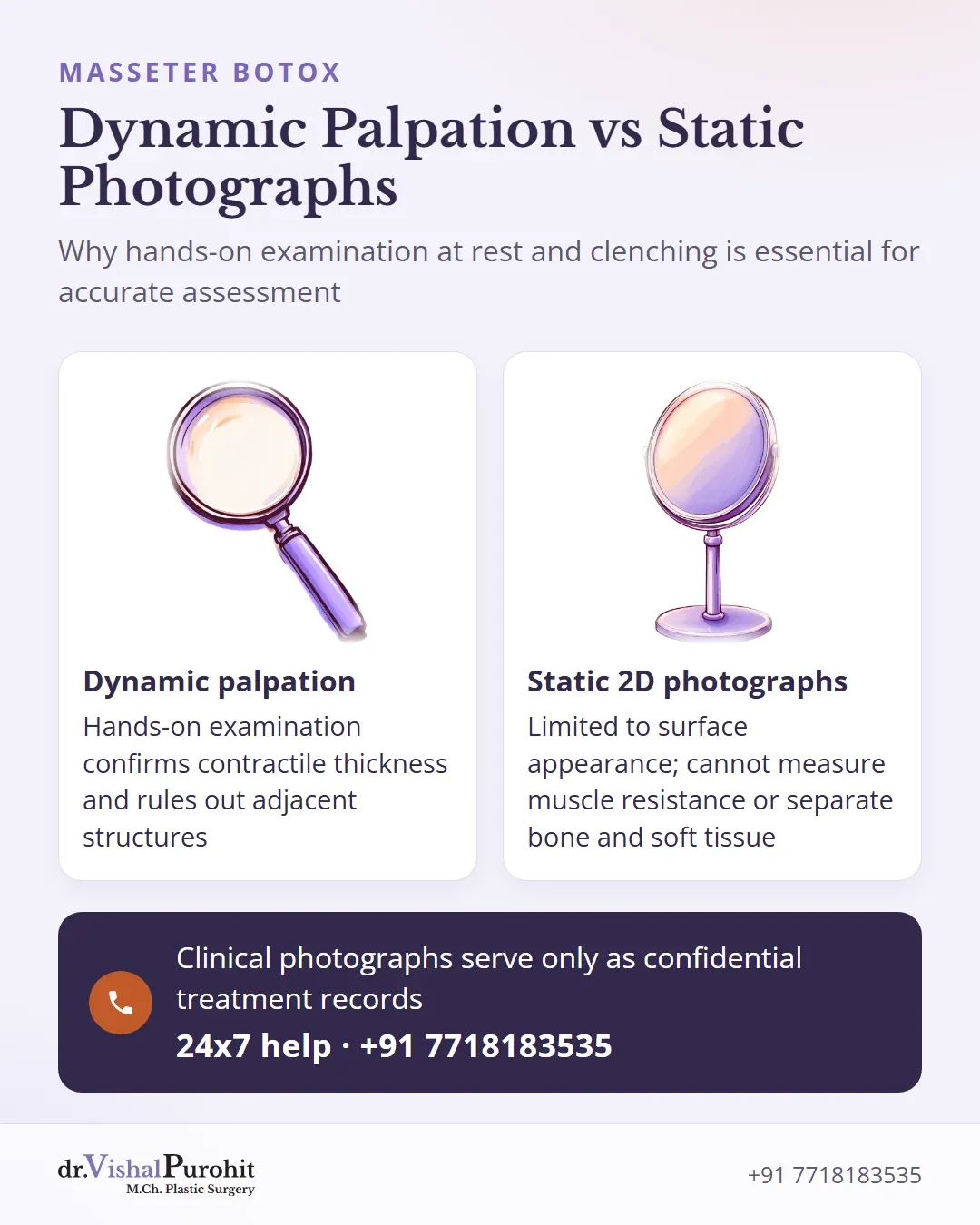
To evaluate masseter muscle bulk accurately, manual palpation must be performed while the patient clenches their teeth and when the jaw rests16. This hands-on assessment helps distinguish true muscular enlargement from other anatomical contributors:
- Muscle bulk: Active contraction confirms masseter function and highlights contractile thickness167.
- Adjacent tissues: Palpation helps rule out prominent bony contours, thick adipose tissue, or parotid enlargement1.
Limitations of Static 2D Photographs
Static two-dimensional photographs are restricted to recording surface appearance1. They cannot measure the active contractile resistance of muscle fibers8 or separate masseter volume from overlying soft tissue and the mandibular bone1. Consequently, Dr. Vishal Purohit conducts dynamic physical examination during rest and clenching to determine whether muscle enlargement is present before planning treatment. Clinical photographs taken at the clinic serve solely as confidential treatment records and are never published or shared publicly.
Masseter Bulk Versus Parotid Salivary Gland
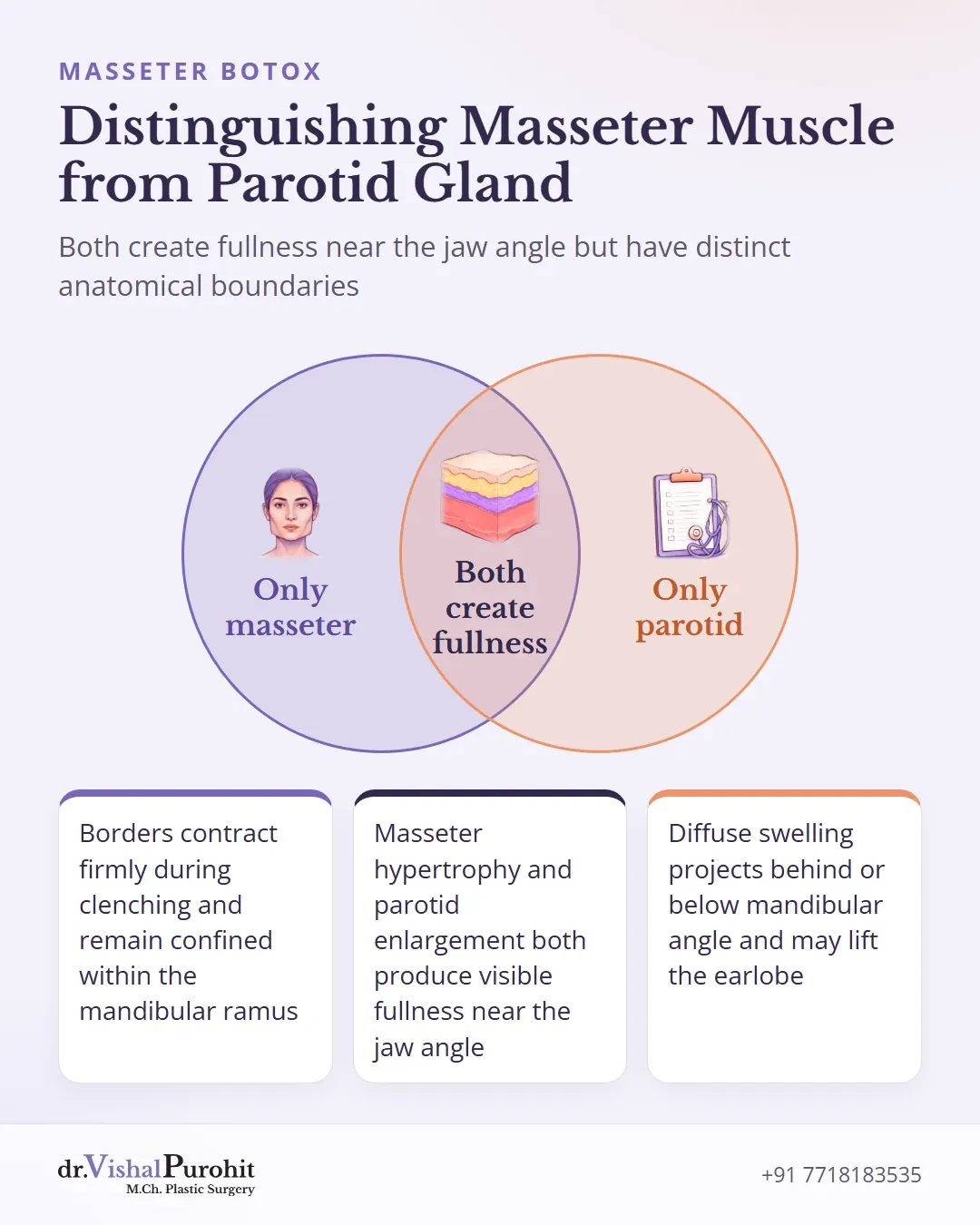
Careful anatomical assessment separates masseter muscle fullness from parotid salivary gland enlargement before lower face slimming injections.
During physical examination, clenching the teeth defines the borders of the masseter muscle9. True masseter muscle bulk remains confined within the boundaries of the mandibular ramus9. In contrast, the parotid salivary gland sits on the posterior border of the mandibular angle10. Parotid fullness typically presents as a diffuse swelling that extends posteriorly and inferiorly beyond the edges of the mandibular angle, and it may lift the earlobe9. When a lower facial contour appears bulky and extends below the angle, parotid involvement may be present10.
Making an accurate distinction prevents mistaking non-muscular gland tissue for muscle volume:
Masseter Muscle Bulk
- Prominent masseter borders contract firmly during clenching within the mandibular ramus9
Asymmetry and Unilateral Jaw Prominence
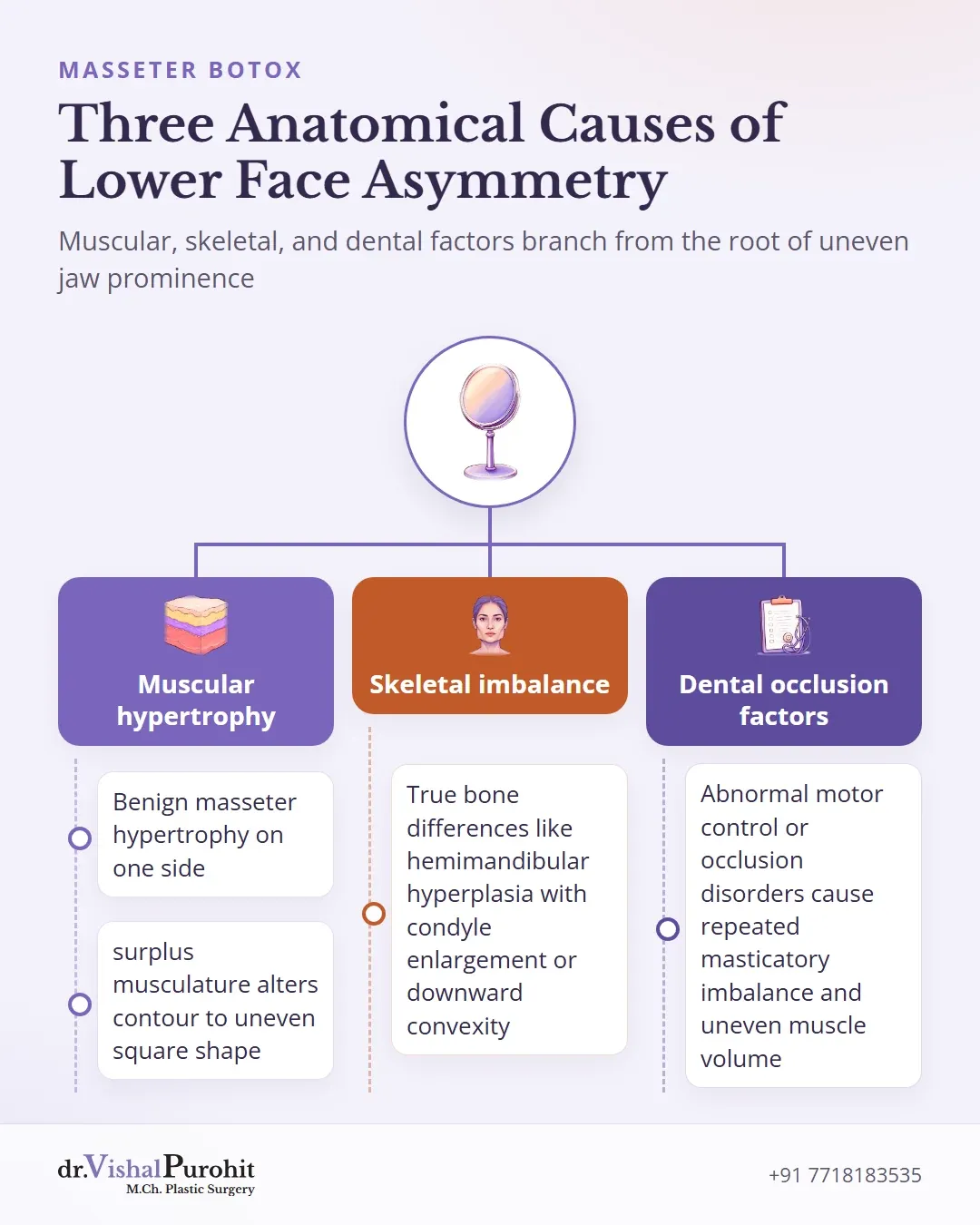
A wide lower face may present unevenly, with one side appearing noticeably fuller or wider than the other1314. Differentiating between various anatomical causes is necessary before considering treatment1516.
Anatomical Causes of Lower Face Asymmetry
- Muscular fullness: Benign masseter muscle hypertrophy can occur on one side alone1314. This involves a surplus of masseter musculature17, which may alter the lower facial contour into an uneven, square shape1314.
- Skeletal imbalance: True bone differences, such as hemimandibular hyperplasia, involve enlargement of the condyle or downward convexity of the lower border, which are distinguishable radiologically from muscular surplus17.
- Dental and occlusion factors: Abnormal motor control or dental occlusion disorders can prompt repeated masticatory imbalance, potentially contributing to uneven muscular volume1316.
Patient Assessment and Expectations
During clinical assessment, patients must report their symptom history, including when the asymmetry first began, any chewing difficulties or weakness, and whether local pain is present141516.
While masseter reduction can soften unilateral muscle prominence1415, complete or absolute symmetry cannot be promised or expected, as underlying bone structure, dental alignment, and muscle response naturally vary between sides151617.
Teeth Clenching and Dental Pathway Boundaries
Teeth clenching and chronic grinding can lead to enlargement of the masseter muscle, altering the lower face into a wider, boxy shape113. While botulinum toxin temporarily reduces muscle activity by inhibiting acetylcholine release at neuromuscular junctions18, aesthetic contouring of the lower jaw remains distinct from managing functional dental conditions1.
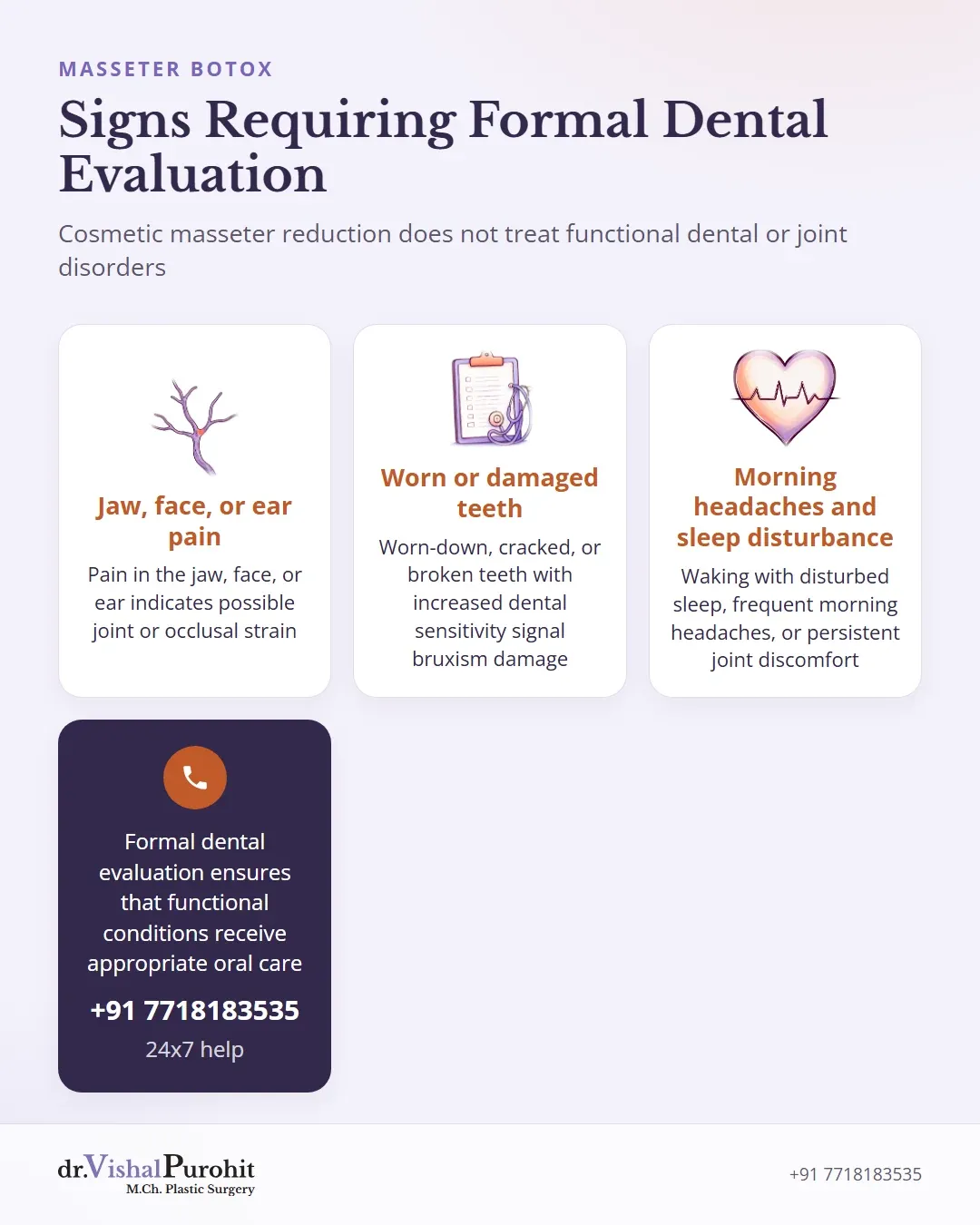
Cosmetic masseter reduction addresses facial width, but it is not a functional cure for underlying dental disorders or temporomandibular joint issues1. Patients experiencing functional oral symptoms require formal dental assessment rather than purely aesthetic contouring19.
A dental evaluation is necessary if symptoms indicate underlying joint or occlusal strain:
- Pain in the jaw, face, or ear19.
- Worn-down, cracked, or broken teeth, along with increased dental sensitivity19.
- Waking with disturbed sleep, frequent morning headaches, or persistent joint discomfort19.
In his practice in Jaipur, Dr. Vishal Purohit assesses lower facial fullness to distinguish muscular bulk from other anatomical factors during the consultation. When marked tooth wear, joint clicking, or structural jaw pain is present, formal dental evaluation ensures that functional conditions receive appropriate oral care19.
Individualized Contour Goals and Choosing No Treatment
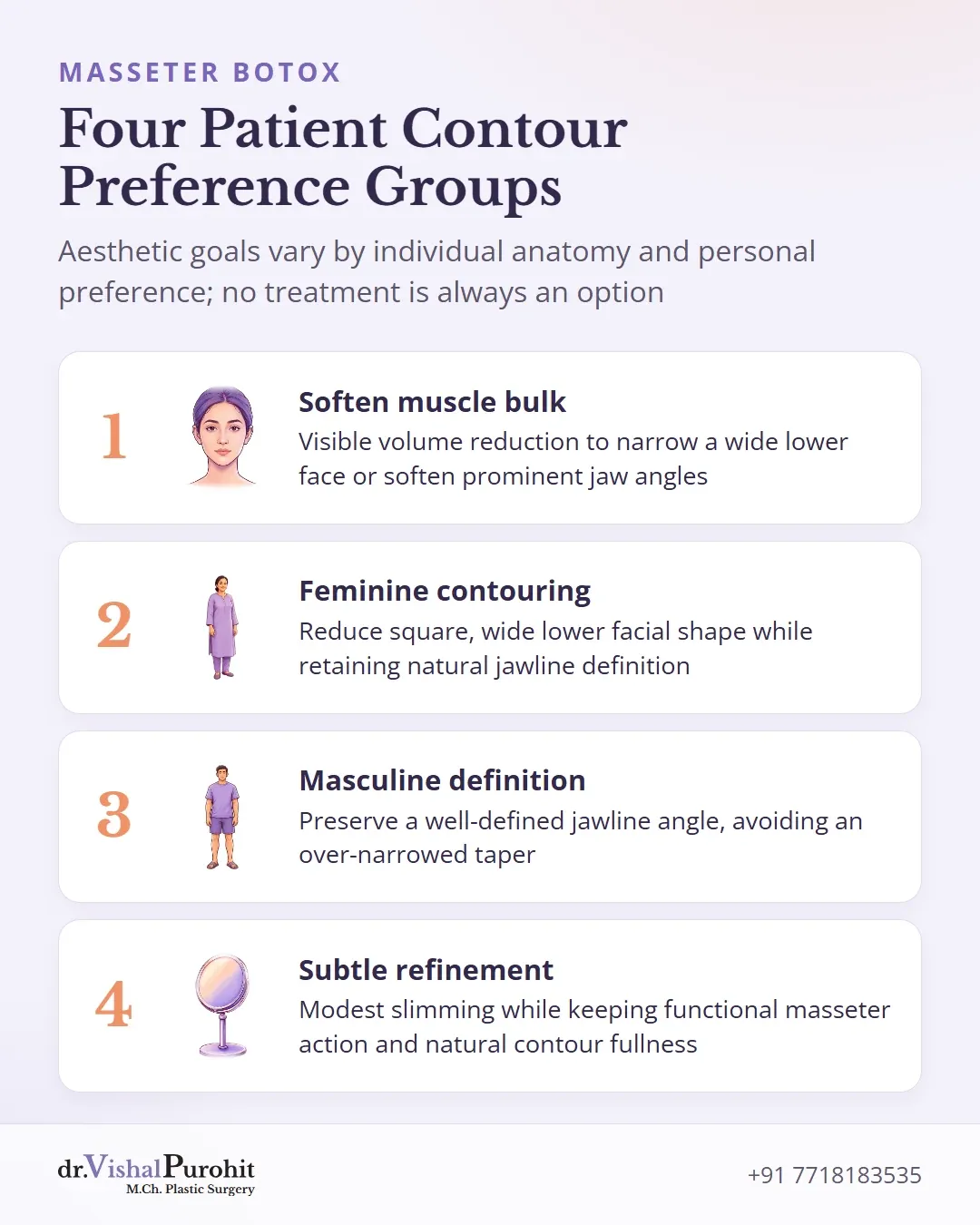
Lower facial contouring goals vary significantly based on individual anatomy and personal preferences. Rather than pursuing an artificial, exaggerated taper, aesthetic treatment aims to soften bulky mandibular angles while preserving structural harmony20.
Aesthetic Goals Across Patient Groups
Expectations often depend on personal contour preferences across different groups:
- Softening muscle bulk: For many individuals, the objective is visible volume reduction to narrow a wide lower face or soften prominent jaw angles20.
- Feminine contouring: Patients seeking a softer appearance may aim to reduce a square, wide lower facial shape while retaining natural jawline definition2122.
- Masculine definition: Preserving a well-defined jawline angle is often preferred, avoiding an over-narrowed taper21.
- Subtle refinement: Some patients prefer modest slimming while intentionally keeping functional masseter action and natural contour fullness22.
Choosing No Treatment
Undergoing cosmetic intervention is entirely optional, and choosing no treatment remains a valid choice for any patient. Because suitability and individual anatomical needs vary, whether treatment is undertaken or declined is decided at the consultation with Dr. Purohit.
Consultation for Lower Face Contouring in Jaipur
Understanding whether lower facial width arises from bone, fat, or enlarged muscle helps guide personal aesthetic choices. Dr. Vishal Purohit conducts dynamic physical examinations to determine individual anatomical suitability. To learn more about treatment details and candidacy, explore Masseter Botox in Jaipur or review Masseter Botox FAQs. Undergoing contouring is completely optional, and choosing no treatment remains a valid choice for any patient. Consultations can be scheduled by phone or WhatsApp at +91 7718183535.
This is educational information, not medical advice.