
Cosmetic masseter injections temporarily relax the primary chewing muscle to taper lower facial contours. Tracking physical recovery remains central to long-term safety, as explored in Chewing Changes, Smile Asymmetry and Risks After Masseter Botox.
While rodent studies describe bone changes under high dosing, clinical human evidence demonstrates minimal structural impact at therapeutic amounts, emphasizing the value of periodic reassessment before further intervention.
Targeted Muscle Thinning Versus Functional Impairment
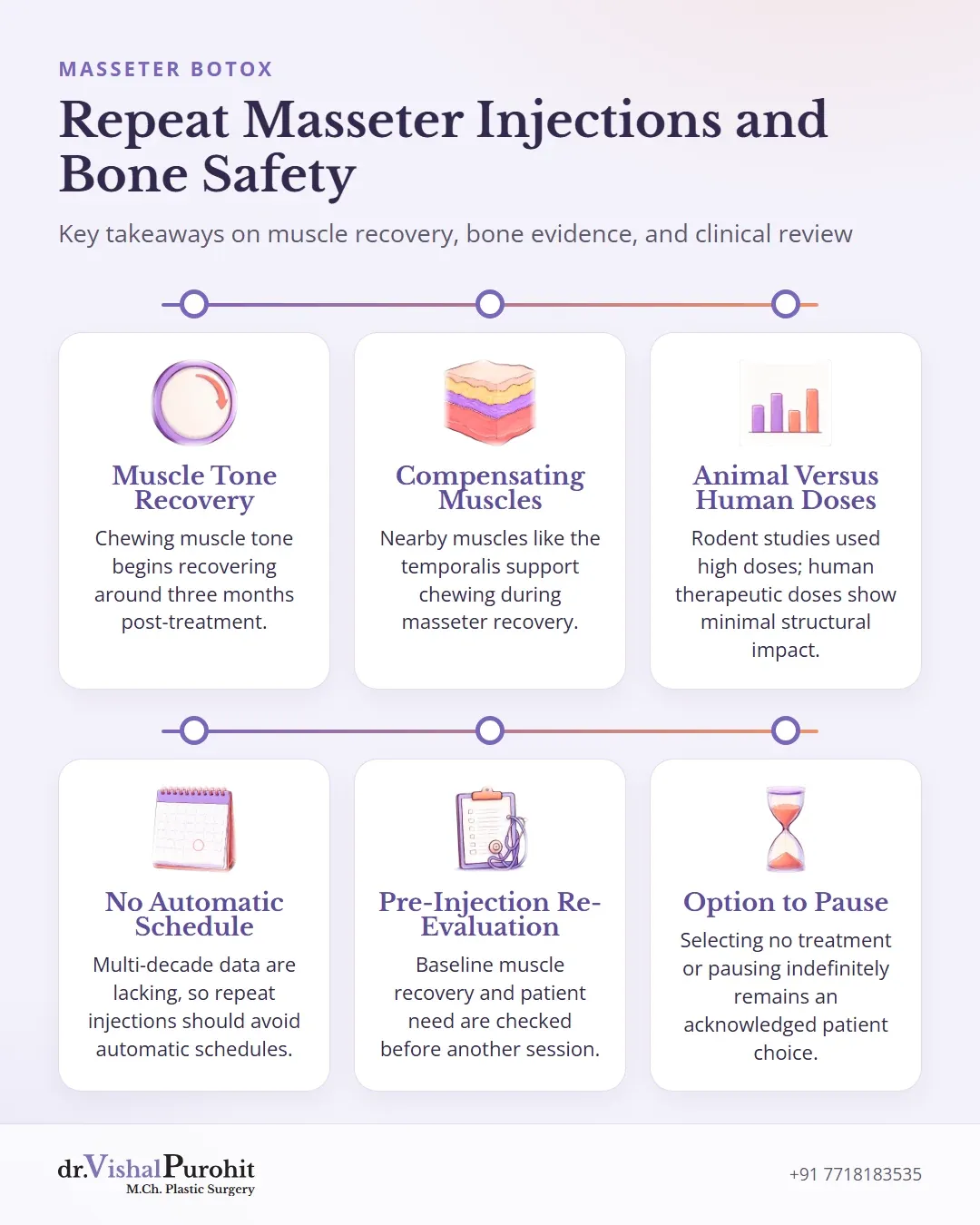
Cosmetic injection of Botox into the masseter aims to reduce muscle bulk through chemical denervation and disuse atrophy, tapering the lower jawline1. Because the masseter functions primarily as a masticatory muscle rather than an expressive one2, limiting its contractions produces desired thinning over several weeks2.
However, reducing muscle activity can lead to unintended functional changes. Reported adverse effects include:
Chewing & Bite Changes
Nearby muscles, including the temporalis and pterygoids, help compensate for decreased masseteric function during mastication2.
Clinical evaluation tracks both functional strength and volume changes over time7. Muscle tone begins recovering approximately three months after treatment, whereas volume reduction often persists longer4. Recovery of muscle contraction and biting strength is checked before repeat injections are considered.
Animal Skeletal Studies Versus Clinical Human Findings
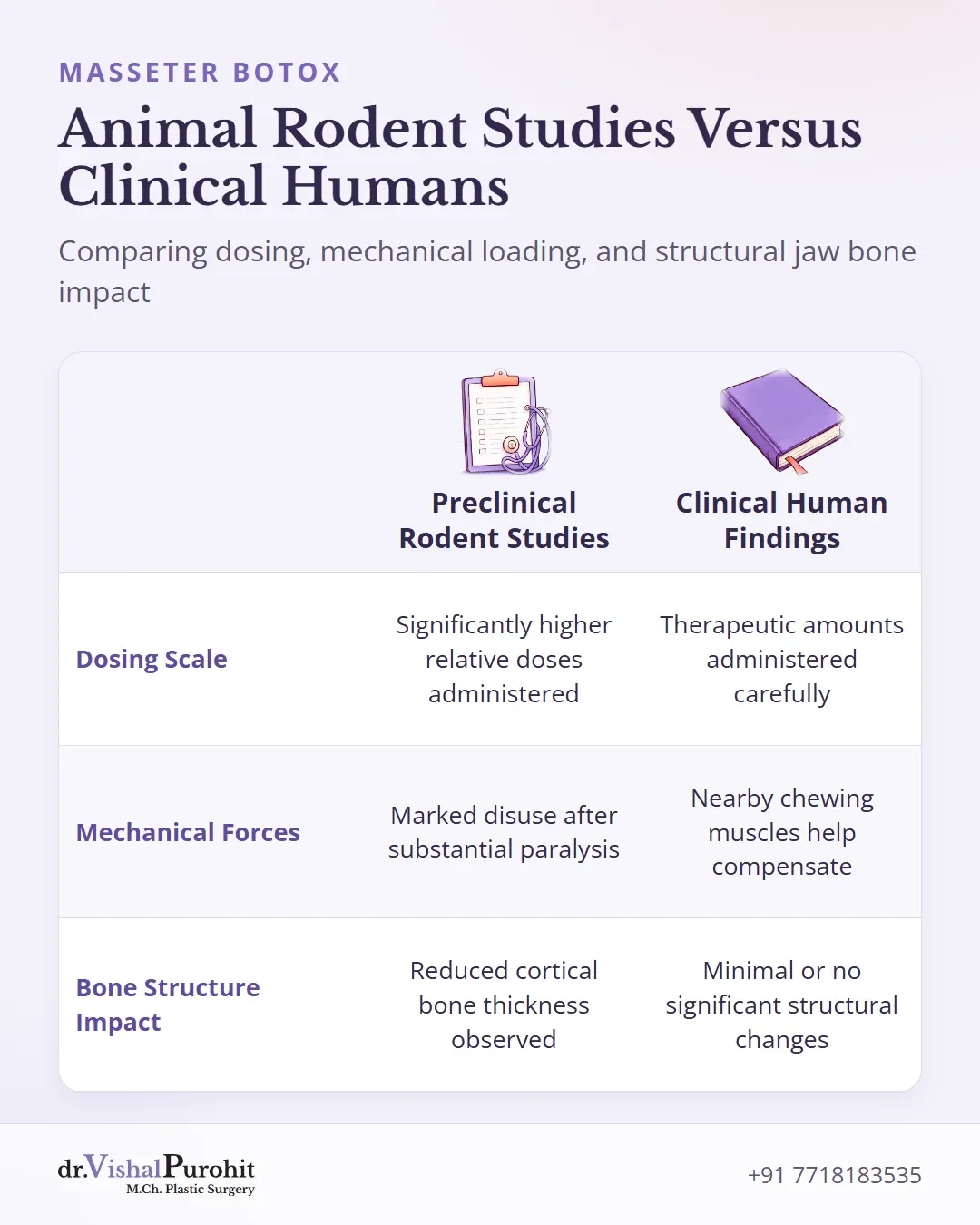
Preclinical animal experiments have evaluated the skeletal impact of botulinum toxin type A injections into masticatory muscles8. In rodents, research demonstrates reduced cortical bone thickness in specific regions such as the angular process, condyle, and alveolar bone due to induced muscle atrophy and the subsequent interruption of normal bone remodeling8. These animal changes were observed within 3 to 12 months following injection8.
Key points
- Animal experiments show cortical bone thinning after high-dose botulinum toxin injections into masticatory muscles.
- Animal findings cannot be directly applied to humans due to significant differences in dosing scale and mechanical disuse.
- Standard therapeutic doses in human clinical practice show minimal or no significant impact on mandibular bone.
However, animal study outcomes cannot be directly extrapolated to human cosmetic treatment8. Fundamental differences exist:
- Dosing scale: Animal research utilizes significantly higher doses of botulinum toxin relative to muscle mass than the therapeutic amounts administered in clinical practice8.
- Mechanical loading: Cortical bone thinning in rodents stems from marked disuse and decreased mechanical forces across the bone after substantial paralysis8.
In human studies, therapeutic doses used for masseter muscle hypertrophy appear to have minimal or no clinically significant impact on mandibular bone density or microarchitecture8. While preclinical models demonstrate bone structure deterioration under heavy doses, clinical evidence remains insufficient to establish definitive long-term skeletal risks in humans, supporting the clinical rationale for dose restraint over time89.
One-Year Placebo-Controlled Human Bone Evidence
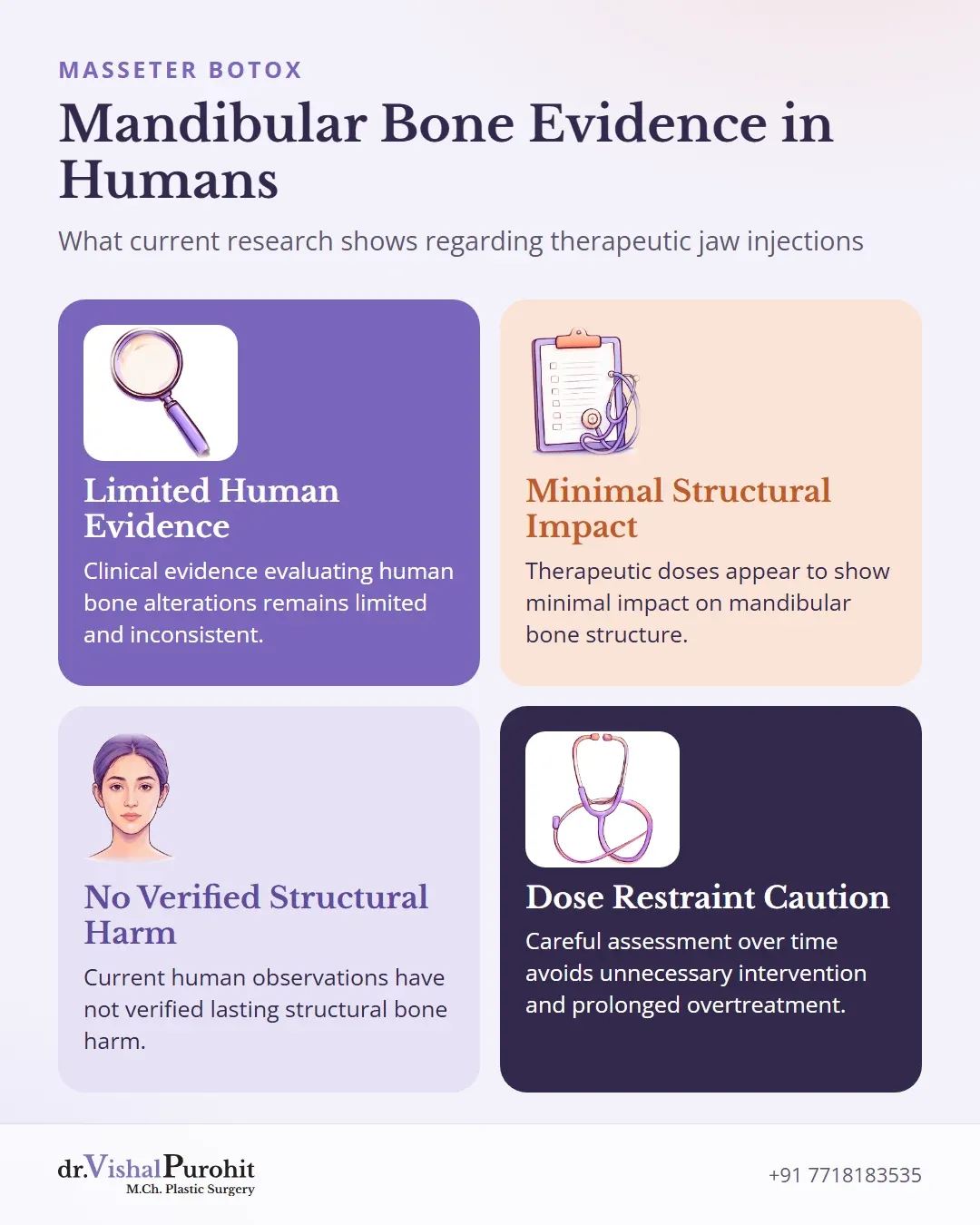
Animal studies using high doses relative to muscle mass have raised concerns regarding mandibular bone changes, including reduced cortical thickness or localized bone quality loss8. In humans, clinical evidence evaluating bone alterations remains limited and inconsistent38.
Therapeutic doses evaluated in human reviews appear to show minimal or no clinically significant impact on mandibular structure, yet definitive clinical conclusions have not been established8. While repeated injections for aesthetic facial contouring or bruxism continue to be investigated, current human observations have not verified lasting structural bone harm38.
Dr. Purohit’s note: At his practice in Jaipur, Dr. Vishal Purohit approaches masseter Botox with anatomical precision and evidence-based planning. Any aesthetic or functional questions regarding lower jaw contouring are addressed personally during the consultation.
Because research recommends caution with prolonged or repeated treatments, he assesses each individual carefully over time to avoid unnecessary intervention89.
Limits of Follow-Up and Multi-Year Safety Gaps
Published clinical evidence on repeated Botox injections into the masseter muscle relies largely on short- and medium-term assessments1011. Existing studies do not provide multi-decade data, leaving open questions regarding long-term outcomes and the potential for lasting structural changes12. Long-term follow-up in the available studies is short, so rare late effects cannot be ruled out13.
Because evidence across multiple decades remains unavailable, routine repeat injections should not follow an automatic schedule. Repeated weakening of a chewing muscle can also lead to functional or morphological changes in adjacent muscles such as the temporalis9.
In his practice in Jaipur, Dr. Vishal Purohit advises re-evaluating baseline muscle recovery and patient need prior to every new injection session.
Pre-Injection Re-Evaluation
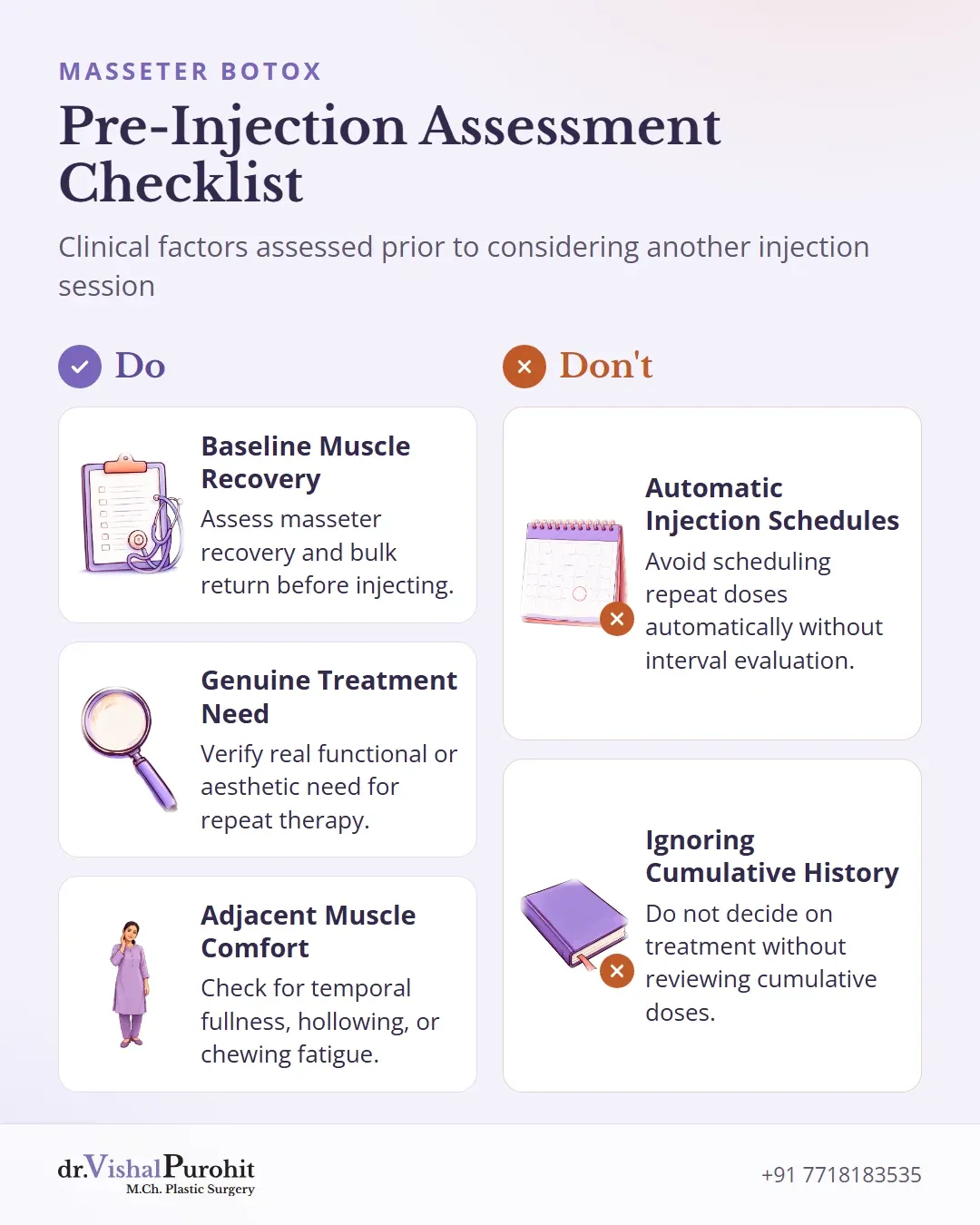
At each review, clinical assessment focuses on:
- The degree of baseline masseter muscle recovery and return of bulk.
- Whether a real functional or aesthetic need for repeat treatment exists.
- The presence of compensatory temporal fullness, hollowing, or chewing discomfort9.
- Cumulative treatment history before deciding whether further intervention is warranted9.
Shared Clinical Decisions and Periodic Reassessment
Long-term treatment planning requires clear discussions between the injector and the patient regarding expectations, cumulative benefits, and uncertainties1415. Aesthetic injectables can support self-perception and quality of life in well-selected adults, though benefits remain context-dependent and evidence is heterogeneous14.
Key Consultation Principles

A balanced consultation addresses several long-term considerations:
- Treatment plans are established collaboratively, reviewing what botulinum toxin can and cannot achieve alone15.
- Informed consent requires reviewing potential risks, treatment limits, and uncertainties, recognizing that medical practice carries no absolute guarantees1516.
- Selecting no treatment remains an acknowledged alternative16, and patients maintain the autonomy to pause or discontinue injections indefinitely.
In clinical practice, an initial consultation allows for individualized assessment and mutual alignment before proceeding with care1517. Specific protocols regarding ongoing treatment intervals, review visits, and indefinite pauses in therapy are not confirmed in advance and are decided at the consultation by Dr. Vishal Purohit.
Clinical Masseter Evaluation and Consultation in Jaipur
Planning long-term aesthetic injectables requires individualized care and clear discussions regarding muscle recovery. To learn about procedure details or candidacy, review Masseter Botox in Jaipur or read Masseter Botox FAQs. Contact Dr. Vishal Purohit, M.Ch. plastic surgeon, via WhatsApp or phone at +91 7718183535 for a personal consultation.
This is educational information, not medical advice.