
Facial expressions naturally create folds between the nose and the corners of the mouth during smiling or laughing. Over time, diminishing structural support and descending midface fat pads can cause these creases to deepen and remain visible even while the face is resting.
Clinical evaluation determines whether injectable treatment suits the underlying anatomy or if creases also extend downward as seen with Marionette Lines: When Can Dermal Fillers Help?. Choosing no treatment is always a valid choice.
Normal Expression and Ageing Changes
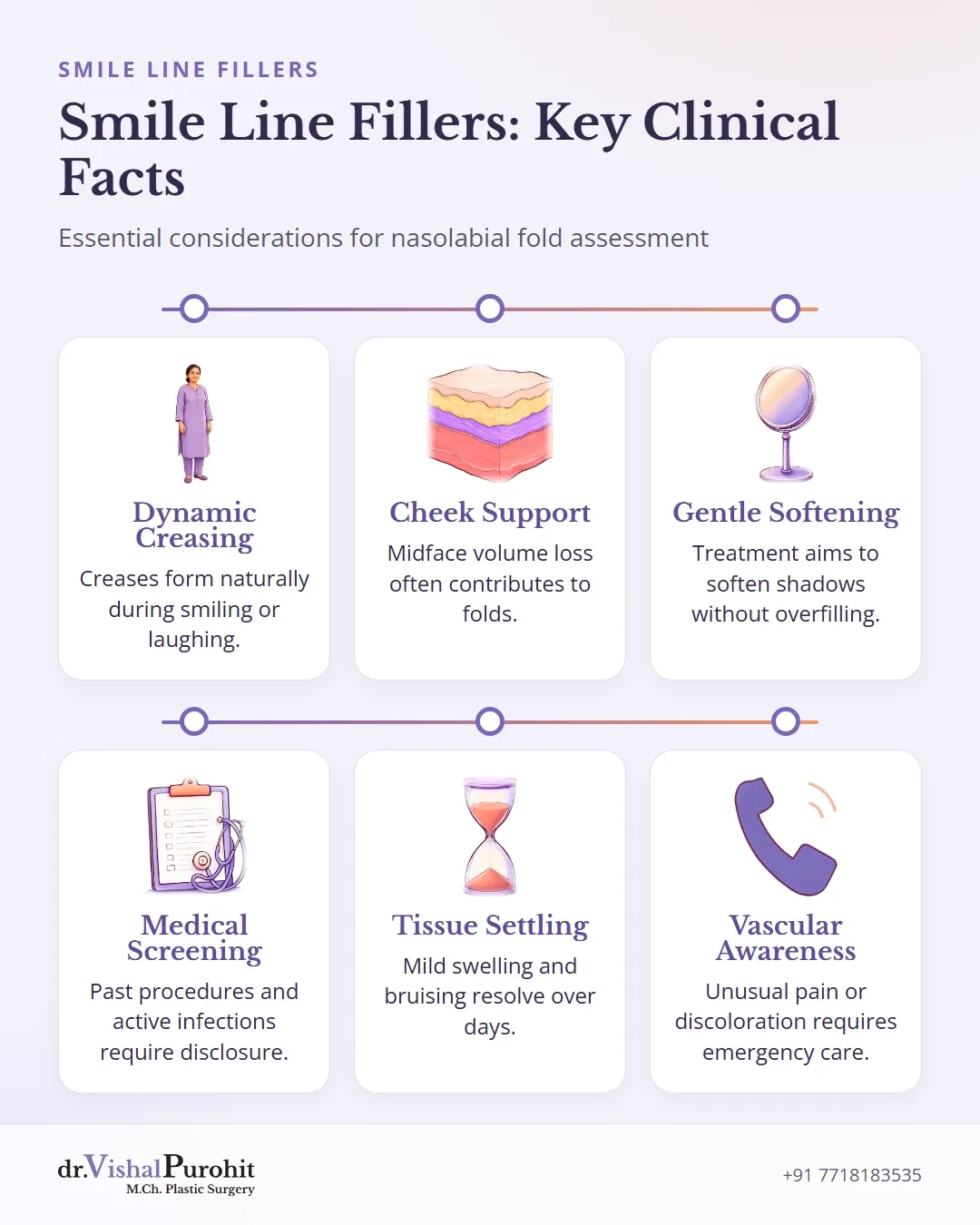
Facial movement naturally forms creases around the mouth during smiling or laughing12. This dynamic creasing is a normal part of facial animation, and choosing no treatment is always a valid choice.
With time, anatomical changes cause these creases to become visible even when the face is at rest3. The skin loses subcutaneous fullness and elasticity as collagen, hyaluronic acid, and elastin diminish34. Unsupported skin settles into deeper folds1.
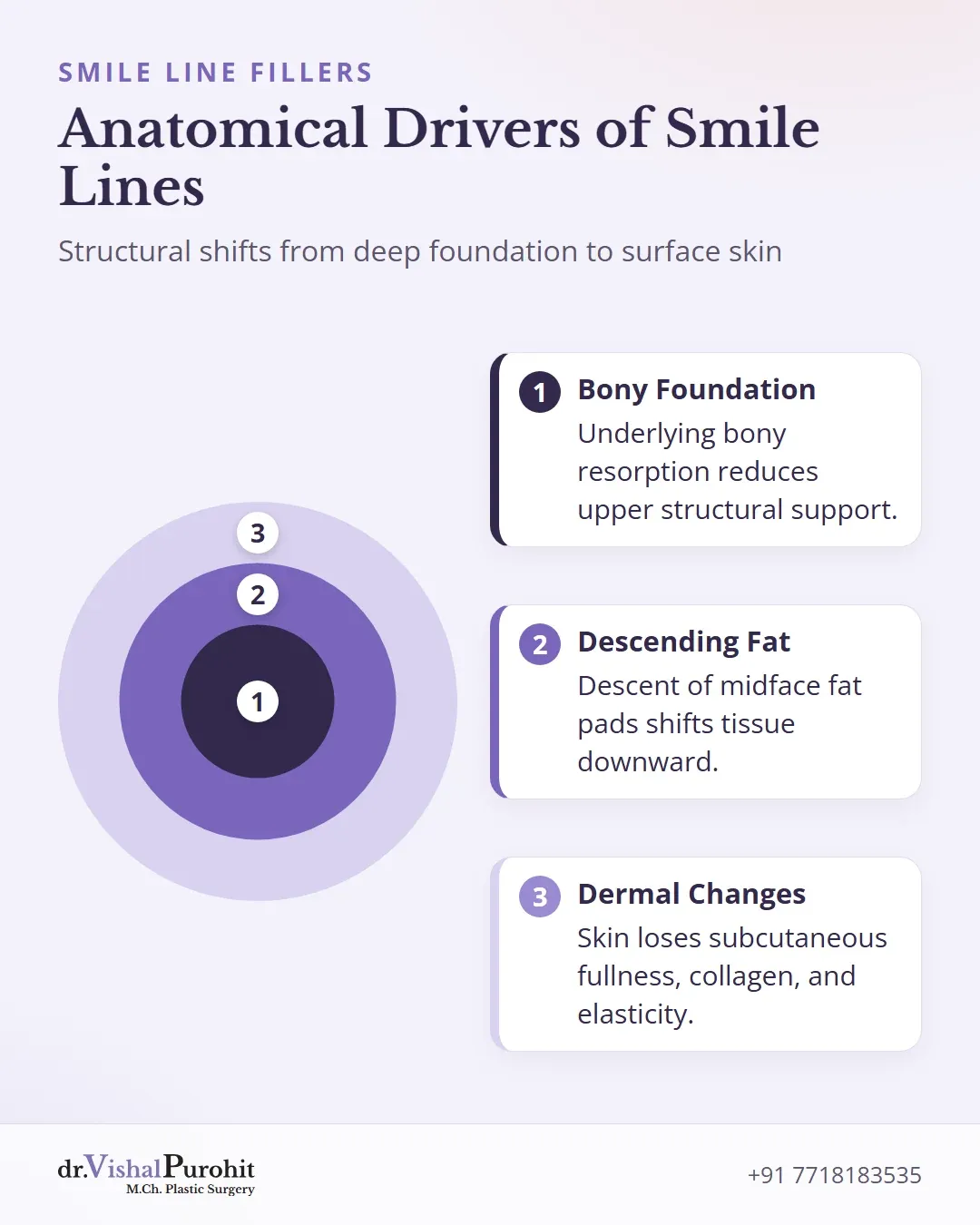
At the same time, structural changes accelerate fold depth:
- Descent of midface fat pads and subcutaneous tissue shifts tissue downward3.
- Volume loss across the malar and cheek areas, combined with underlying bony resorption, reduces upper structural support235.
These midface shifts mean nasolabial folds are often secondary to broader volume changes2.
Dr. Purohit’s note: Rather than pursuing an artificial fold-free appearance, Dr. Vishal Purohit prioritises a full face assessment in his practice.
Evaluating the entire facial architecture determines whether treating adjacent volume loss softens the folds more naturally than directly filling the crease alone24.
Evaluating Cheek Support and Deep Shadows
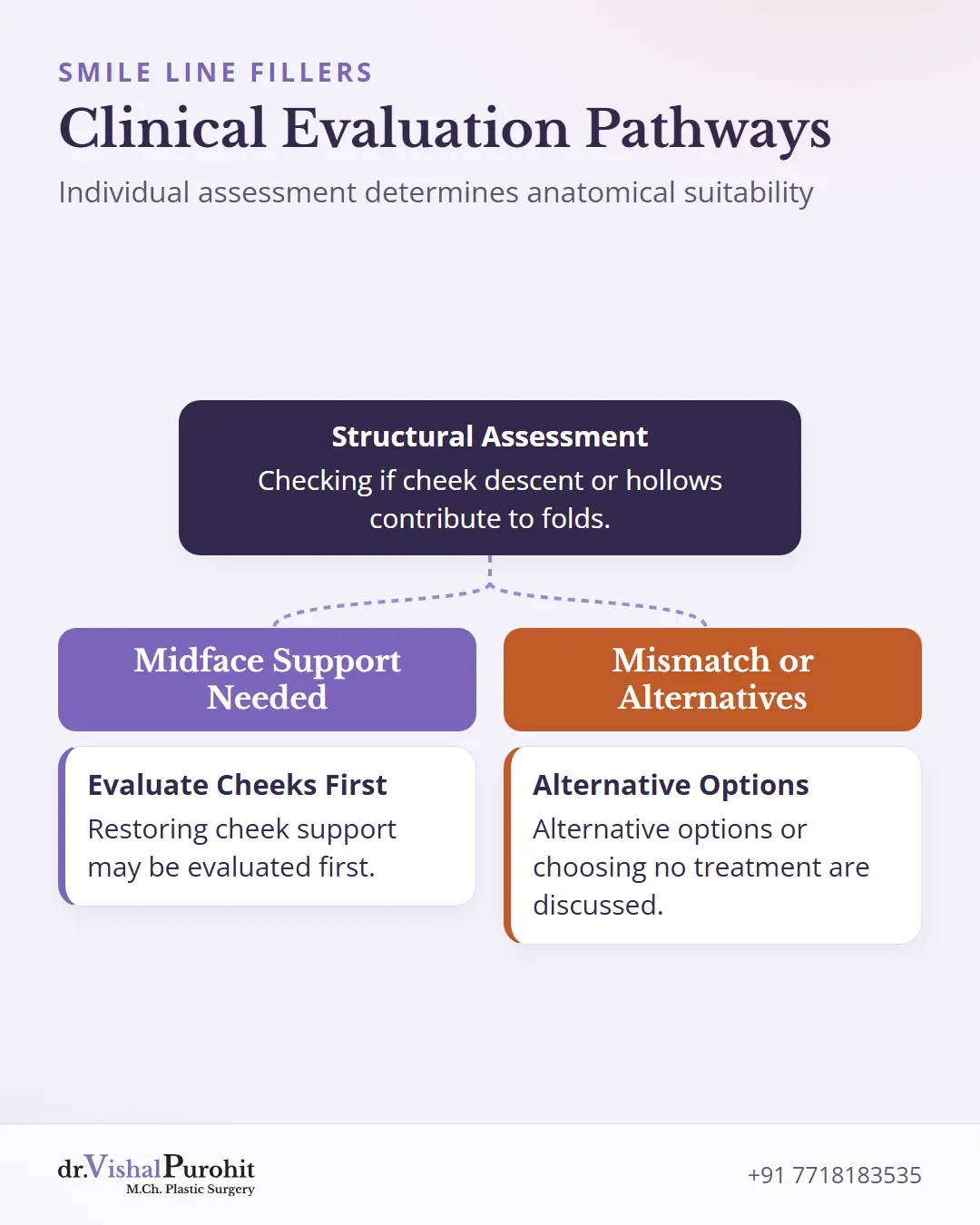
A thorough consultation checks whether cheek descent or skeletal hollows near the nostril base contribute to the fold. Age-related skeletal changes in the maxilla and pyriform aperture can reduce deep structural foundation and alter the vectors along which overlying soft tissues descend6. In addition, facial fat compartments undergo region-specific shifts where some deflate and others descend6.
Key points
- Midface changes stem from both skeletal remodeling and shifting fat compartments.
- Restoring cheek volume may soften folds but does not always eliminate the need for direct treatment.
- Treatment decisions depend on an individual structural evaluation.
When examining midface volume loss, adding volume to the cheeks may soften the crease, but it does not assure an indirect lift or eliminate the need for direct fold treatment7. Furthermore, fine surface lines require different consideration than deep structural hollows, as dermal creases may persist even after midfacial volume is restored8.
At the consultation, Dr. Vishal Purohit assesses the structural anatomy to determine if dermal fillers suit the specific fold pattern:
- If midface flattening contributes to the fold, restoring cheek support may be evaluated first79.
- When volume loss does not match the clinical problem, alternative options or choosing no treatment are discussed.
Decisions on whether to treat or leave folds alone are determined individually during clinical examination.
Realistic Softening Without Overfilling
Nasolabial folds are natural facial contours that form part of normal facial expression10. The clinical objective of dermal filler treatment is gentle softening of deep shadows, rather than attempting to completely flatten or remove normal facial movement.
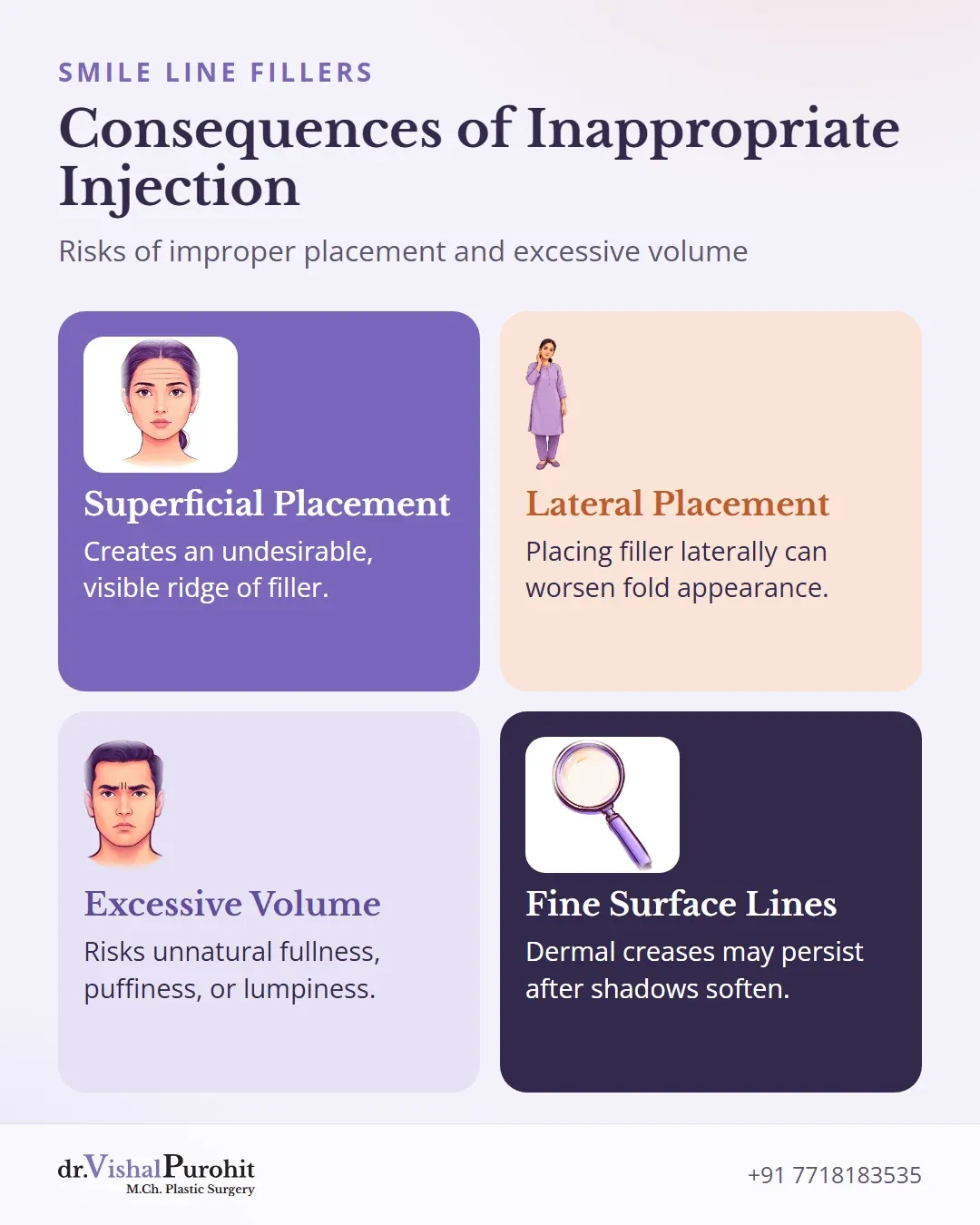
Over-correcting the fold or placing filler incorrectly can lead to complications:
- Treating inappropriately or placing product too superficially can create an undesirable, visible ridge of filler that does not readily compress1112.
- Treating lateral to the nasolabial fold can exacerbate the appearance of the fold rather than improving it1112.
- Injecting excessive volume risks creating an unnatural fullness, puffiness, or lumpiness around the mouth.
Dermal fillers add volume beneath contours, but fine surface lines along the skin may persist even after the deeper shadow softens13. Extremely deep folds may also not achieve full correction from injectable implants alone14.
Dr. Purohit evaluates facial dynamics, fold depth, and tissue contours during the in-person consultation in Jaipur. The choice of product, injection technique, and treatment plan are decided at the consultation based on each patient’s anatomy.
Medical History and Preparation Details

Before smile line filler treatment, a thorough medical history screening is essential15. Patients should inform the surgeon about past filler procedures, as unnamed or undisclosed products can affect subsequent management15.
Ongoing skin conditions or active infections near the planned treatment site, such as herpes simplex virus (HSV) or impetigo, mean the procedure must be postponed16. Patients should also report poor healing tendencies, keloid scarring, or bleeding disorders16.
A complete list of current medications and supplements must be disclosed during assessment17. Patients must never stop or adjust prescribed medications on their own.
Dental procedures and structural changes in the upper jaw can alter local tissue support and infection risks around the mouth. How these factors affect treatment timing and preparation is not confirmed as a standard protocol and is decided at the consultation.
Early Swelling and Result Review
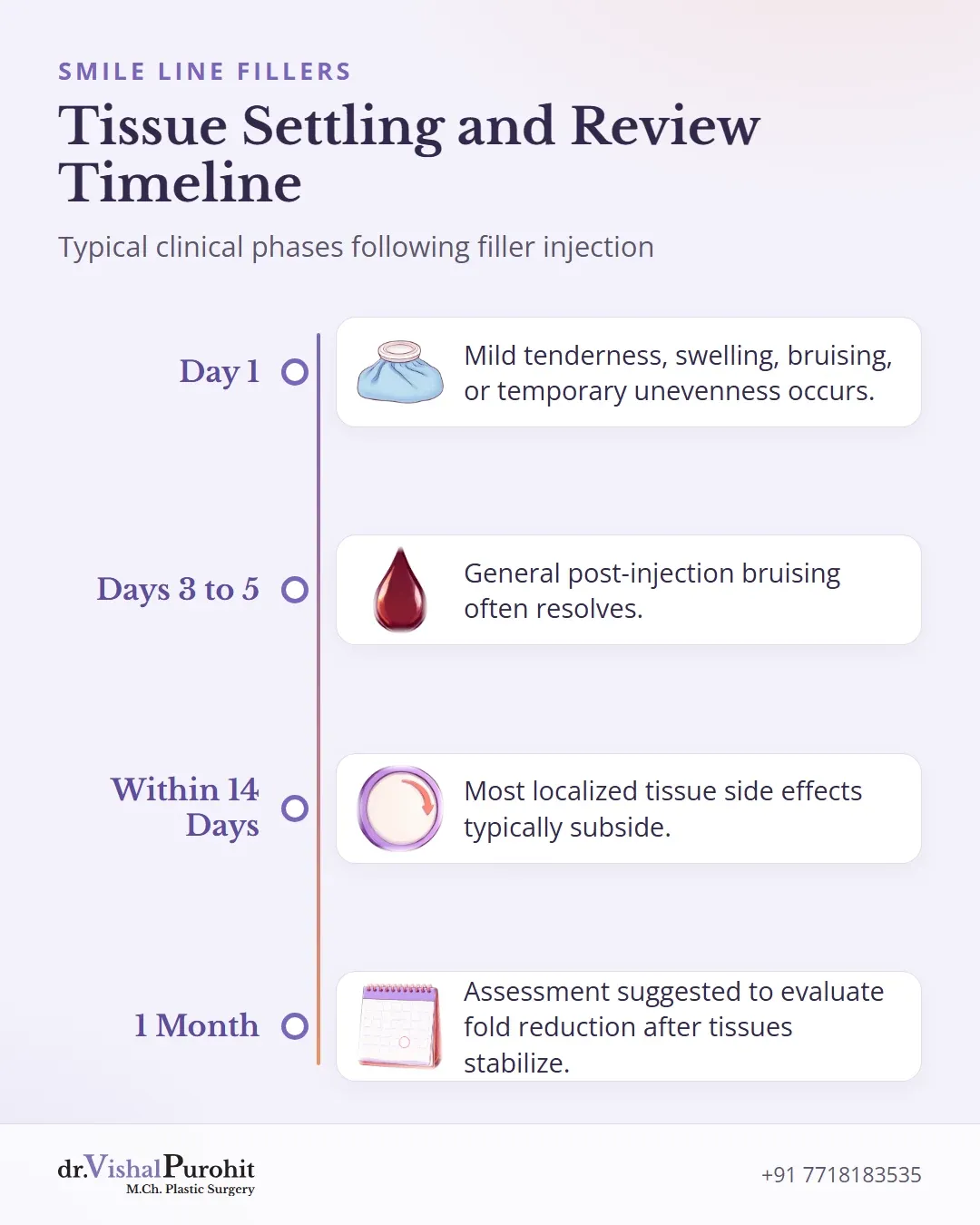
Following dermal filler injections to soften nasolabial folds, early tissue responses are common. The presence of mild tenderness, swelling, bruising, or temporary unevenness on the first day does not signify a failed procedure1819. Most localized side effects typically subside within 14 days19, while general post-injection bruising often resolves within 3 to 5 days20.
Key points
- Mild swelling, tenderness, and bruising are normal early reactions that usually resolve within 3 to 14 days.
- Final results should only be judged after tissues settle, with assessment typically around one month post-treatment.
- Any sudden severe pain, vision changes, or skin discoloration requires immediate emergency evaluation.
Settling of the filler and tissues takes time. In general clinical literature, an assessment to evaluate fold reduction and document any residual erythema, swelling, or tenderness is suggested at approximately one month after treatment19. Judging the final aesthetic effect should wait until the swelling settles and tissues stabilize.
For Dr. Vishal Purohit’s patients in Jaipur, specific review visit timing is not fixed in advance; the follow-up schedule and any assessment review are decided at the consultation.
Emergency symptoms require immediate attention rather than waiting for scheduled follow-up:
- Sudden, severe pain
- Skin turning pale, white, grey, blue, or mottled
- Changes in vision, such as blurriness or vision loss
- Facial or throat swelling with difficulty breathing
- Spreading redness accompanied by fever
Important Risks and Urgent Warning Signs

While minor bruising and swelling are common after injections2122, placing dermal filler near facial blood vessels carries serious risks2324. Inadvertent injection into an artery or vascular compression can obstruct blood flow, leading to localized skin necrosis or devastating ocular complications232425.
Retrograde flow of filler into the ophthalmic circulation can cause vision impairment or irreversible blindness within 60 to 90 minutes2426.
Red-Flag Symptoms
Certain warning signs indicate vascular compromise and require emergency medical care at once:
- Vision change, blurred vision, double vision, or loss of sight24
- Sudden, severe, or disproportionate pain around the treated area or eye2426
- Skin blanching, duskiness, or a mottled, reticular discoloration2324
Hyaluronic acid (HA) filler can often be dissolved using hyaluronidase injections2326. However, it is never fully reversible, and reversal does not eliminate the risk of tissue damage once ischemia develops2324. Prompt medical assessment by a qualified doctor is critical if any unusual symptoms arise after treatment.
Consultation for Smile Line Assessment in Jaipur
Deciding whether dermal fillers suit your facial anatomy requires an individualized clinical examination. You can learn more about clinical approaches to Smile Line Fillers in Jaipur or review common patient concerns in the Smile Line Fillers FAQs. A thorough evaluation ensures dynamic facial expressions remain balanced and natural.
This is educational information, not medical advice.