
A Botox lip flip selectively relaxes superficial fibers of the orbicularis oris muscle to roll the upper lip gently outward. Because this circular muscle maintains the mouth seal for eating and phonation, targeted relaxation creates a narrow balance between aesthetic shape and oral competence.
Patients considering treatment can review Lip Flip Screening: Health History and When to Postpone before scheduling an elective procedure. Understanding how fine motor changes influence daily routines helps individuals make informed decisions regarding their vocal and dietary demands.
Muscle Relaxation and Oral Seal
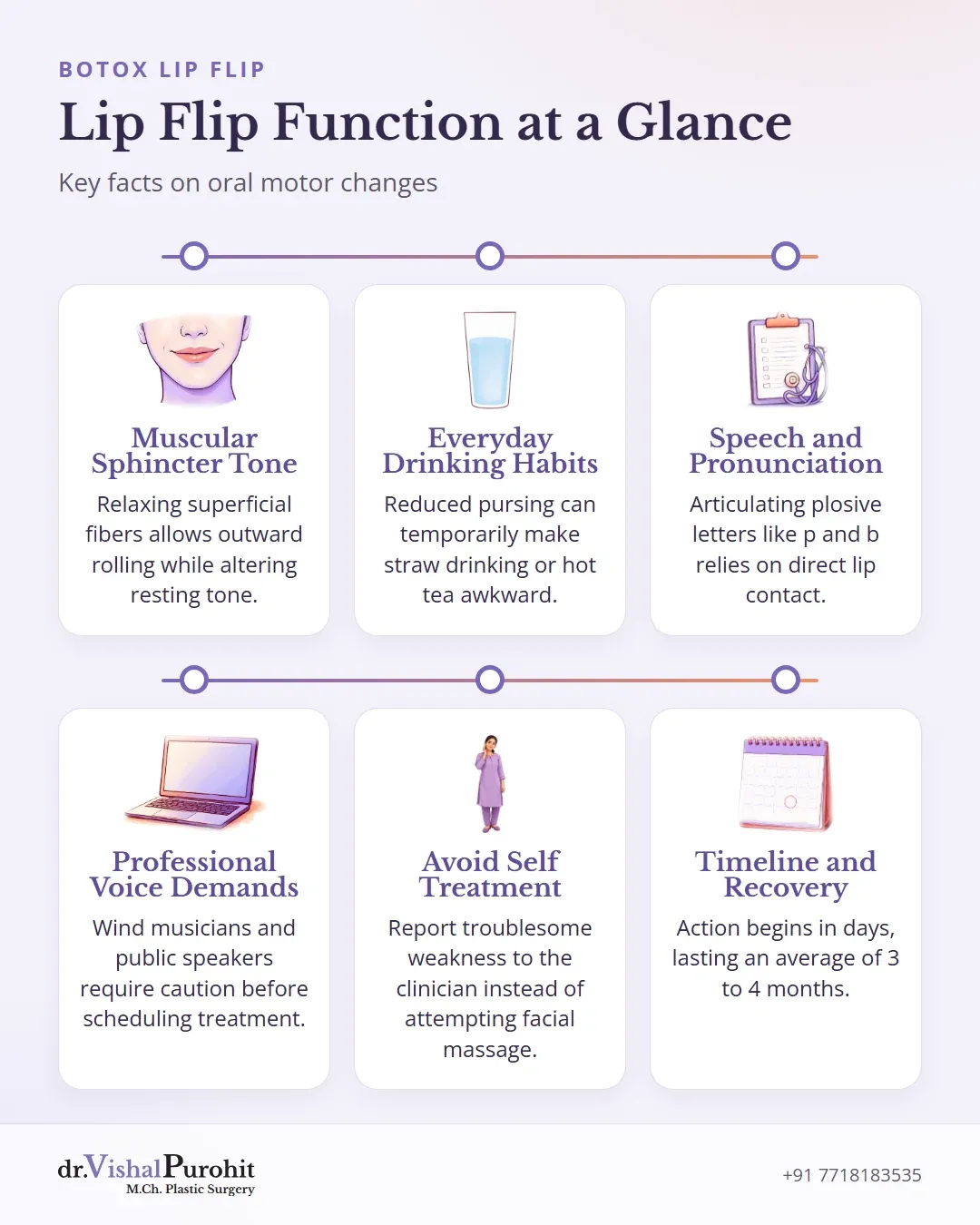
The lips function as a muscular sphincter that assists in phonation, mastication, and speech1. The orbicularis oris muscle provides closure of the lips and maintains the oral seal23. In a Botox lip flip, targeted relaxation reduces inward muscular tension to allow outward rolling of the upper lip vermilion4.
Biomechanics of Sphincter Tone
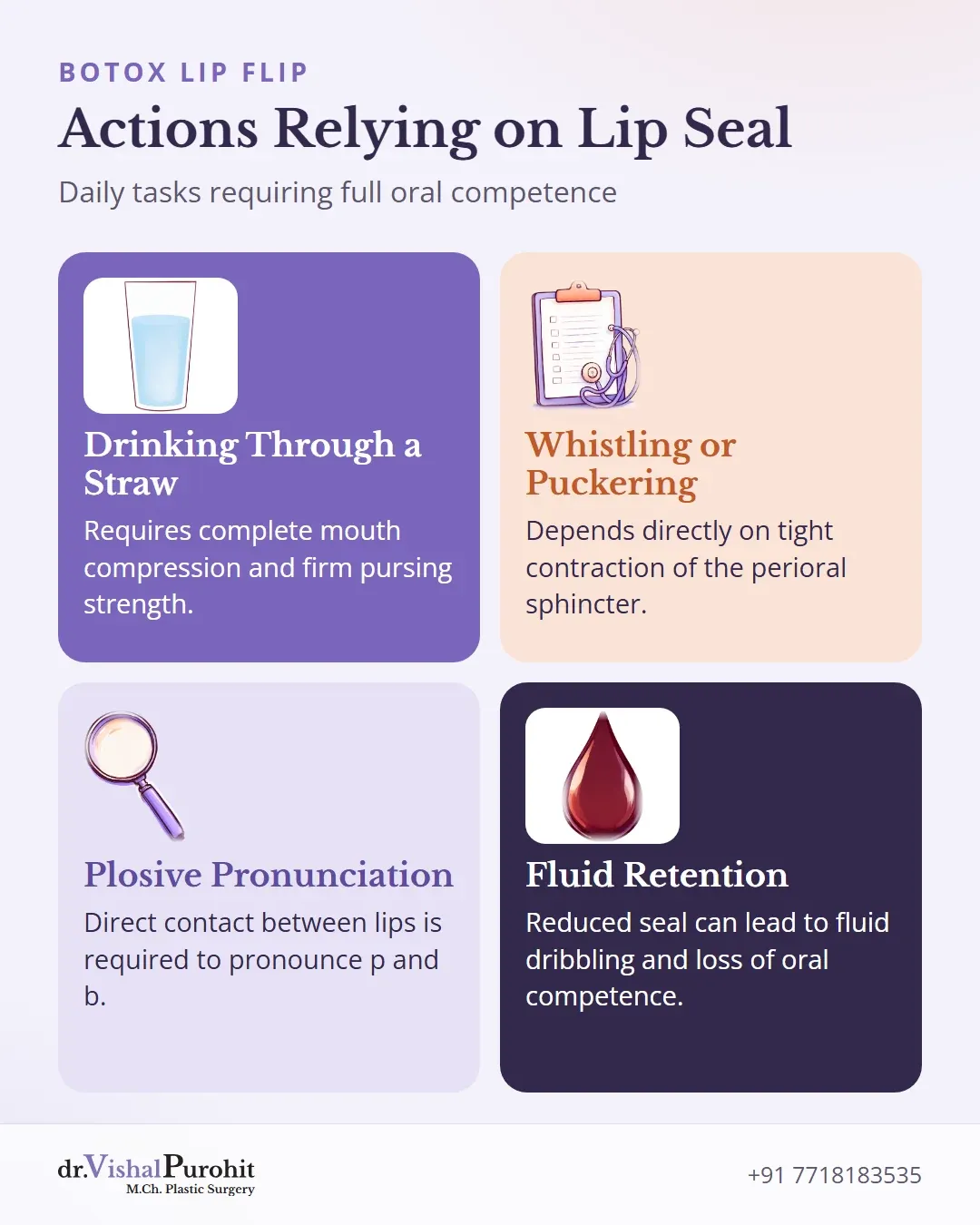
Slight weakening of the superficial fibers of the orbicularis oris alters the resting tone of this circular sphincter5. Because the perioral sphincter has a narrow therapeutic window, excessive weakness can quickly compromise everyday mouth compression2. When the muscle’s contractile tone is reduced, patients may notice changes during tasks requiring complete oral competence2:
- Drinking through a straw23
- Whistling or lip puckering23
- Articulation of specific phonetic sounds, particularly the letters “p” and “b”3
Dr. Purohit’s note: Dr. Vishal Purohit assesses perioral muscle dynamics during the consultation to plan treatment conservatively.
Preserving functional muscle properties is essential, particularly for public speakers who require precise lip control3. Any unexpected speech, swallowing, or breathing difficulty after a toxin injection requires immediate emergency medical attention.
Spoon Use Dribbling and Sound Production
Treating the orbicularis oris muscle creates a narrow margin between aesthetic relaxation and motor weakness2. Because oral competence, lip seal, kissing, whistling, straw use, and speech articulation rely on balanced orbicularis function, unintended weakness can cause temporary functional difficulties2.
Eating and Drinking Changes
Over-injection or poor distribution of toxin into the upper lip sphincter impairs muscle seal26. This can compromise eating, drinking, and oral competence67.
- Reduced lip seal can lead to fluid dribbling and loss of oral competence26.
- Handling liquids and food intake may be affected when the perioral sphincter becomes dysfunctional27.
Speech Articulation Alterations
Weakening the upper lip musculature alters fine motor actions required for speech27. Excessive relaxation initially produces difficulties with plosive sounds before progressing to broader speech changes6. Patients may experience subtle alterations in precision sound production and articulation until muscle control normalizes26.
Singing Wind Instruments and Public Speaking
Occupational demands require thorough discussion before scheduling a Botox lip flip. Patients who rely on precise perioral motor control must weigh how subtle neuromuscular changes may affect daily vocal or instrumental performance.
Botulinum toxin use in the perioral area warrants caution for professional wind musicians or others where subtle alterations in fine muscular activity have a significant impact8. Activities that depend on finely balanced orbicularis function include:
Subtle shifts in embouchure control or plosive pronunciation can disrupt professional output. Dr. Vishal Purohit assesses occupational considerations during consultation to determine whether elective perioral treatment aligns with an individual’s vocal or musical schedule. Full disclosure of upcoming performances, demanding public speaking, or brass and woodwind rehearsals ensures informed decisions.
Reporting Weakness Rather Than Self-Treating
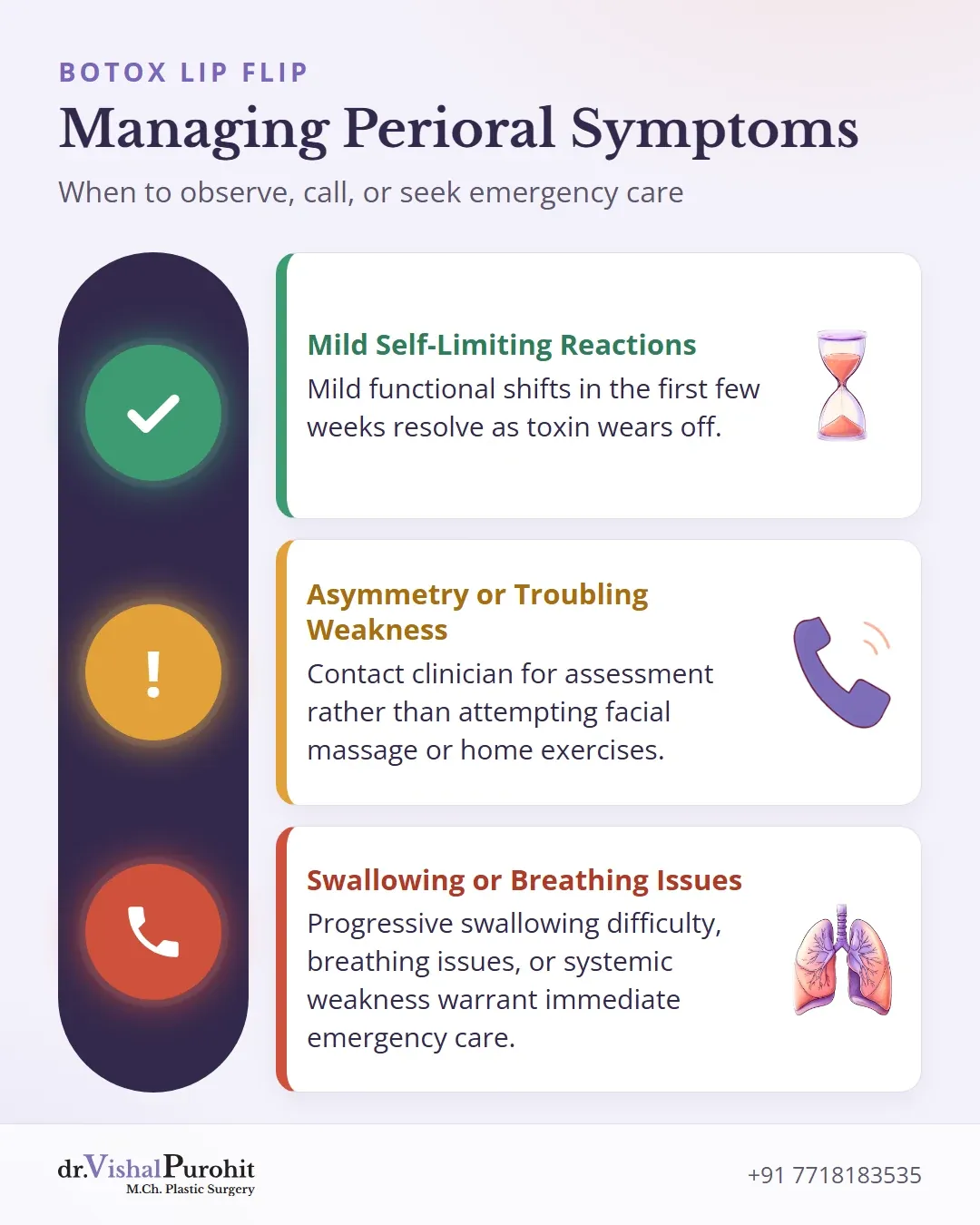
Most complications following botulinum neurotoxin therapies tend to be mild and self-limiting, commonly appearing within the first few weeks9. When unwanted perioral muscle weakness, asymmetrical oral tone, or functional difficulties occur, patients should contact the treating clinician immediately rather than attempting home remedies, vigorous facial manipulation, or self-treatment910.
At his practice in Jaipur, Dr. Vishal Purohit advises patients to report any troublesome functional changes promptly for professional review. A clinical assessment allows the practitioner to evaluate the degree of functional impairment accurately and document findings for treatment records9.
Clinicians provide reassurance and supportive guidance, monitoring the patient while the temporary effect gradually resolves as the neurotoxin wears off9. Attempting self-manipulation or facial exercises is unnecessary and may complicate recovery11.
Any progressive breathing issues, difficulty swallowing, or systemic weakness require immediate emergency medical care rather than routine observation1213. For standard localized concerns, patients can coordinate follow-up assessment by calling +91 7718183535.
Why Normal Function Cannot Be Promised
Every individual presents with unique facial anatomy and muscle responsiveness. Because botulinum toxin type A alters muscular contraction, clinicians cannot promise complete absence of functional alteration or offer a rigid recovery timetable. Temporary weakness of adjacent muscles can occur from toxin diffusion14.
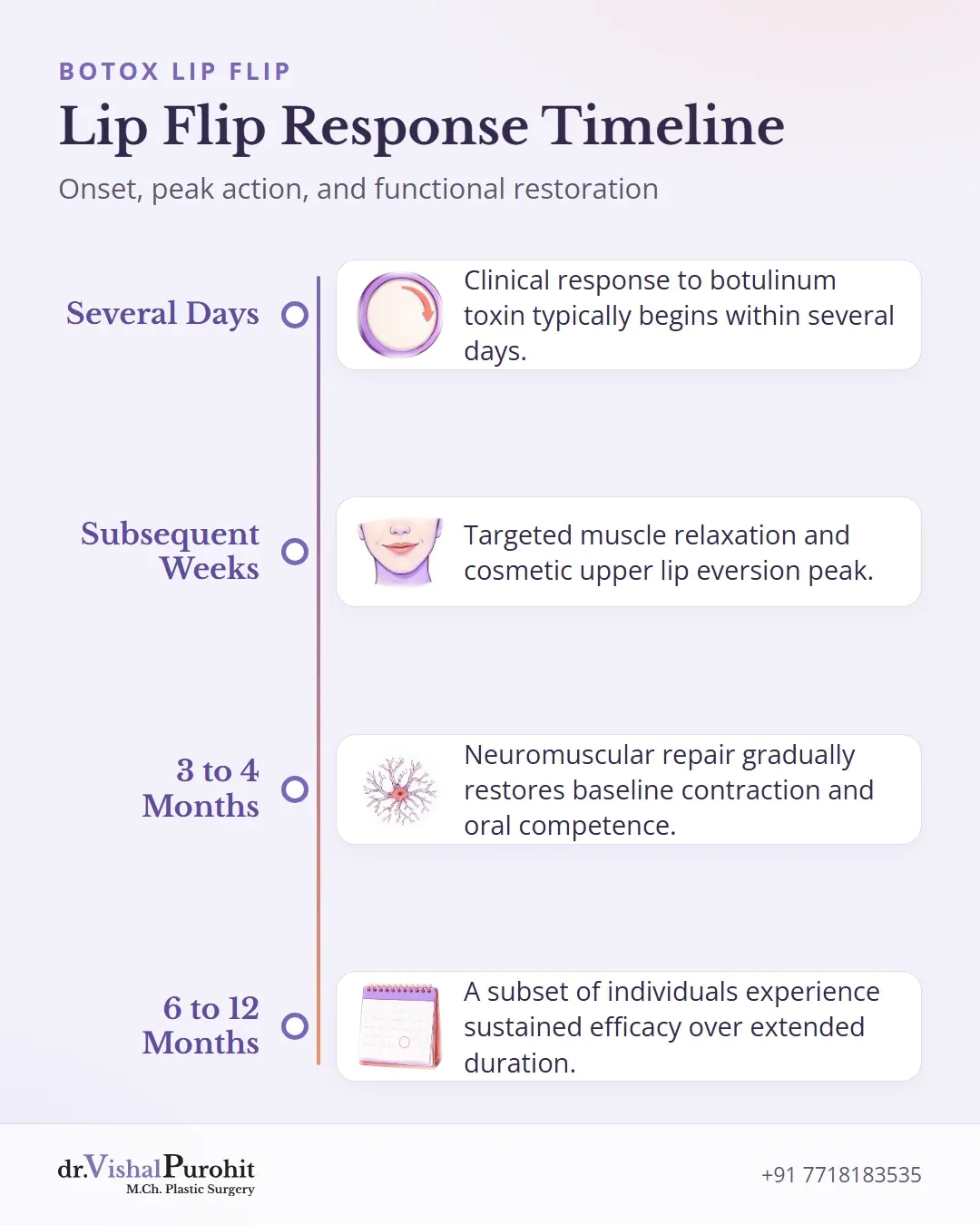
The clinical response to botulinum toxin type A typically begins within several days, peaks over subsequent weeks, and lasts an average of 3 to 4 months before neuromuscular repair gradually restores function151617. However, individual duration varies widely, with some people experiencing sustained efficacy for 6 to 12 months18.
For prospective patients, several essential considerations guide decision-making:
Individual variation
Sensitivity to neurotoxin varies across individuals, making exact functional adjustments unpredictable.
Treatment is elective
Choosing no treatment remains an entirely valid personal option.
Personalised evaluation
Specific treatment expectations, functional risks, and follow-up planning in Dr. Vishal Purohit’s practice are decided at the consultation.
Daily Habits Chai Dal and Bilabial Sounds
A Botox lip flip targets the orbicularis oris muscle to achieve subtle lip eversion19. Because the orbicularis oris provides oral competence and direct closure of the lips220, weakening superficial muscle fibers can alter normal pursing mechanics20.
Key points
- Relaxing the orbicularis oris can temporarily affect oral competence and lip pursing mechanics.
- Daily activities like sipping hot drinks, eating soupy foods, and pronouncing bilabial sounds may feel altered.
- These mild functional changes are transient, usually resolving within one to two weeks.
Practical Routines and Speech
During ordinary meals, fine motor control of the upper lip keeps food and liquids in the oral cavity220. Mildly reduced pursing can lead to minor functional changes:
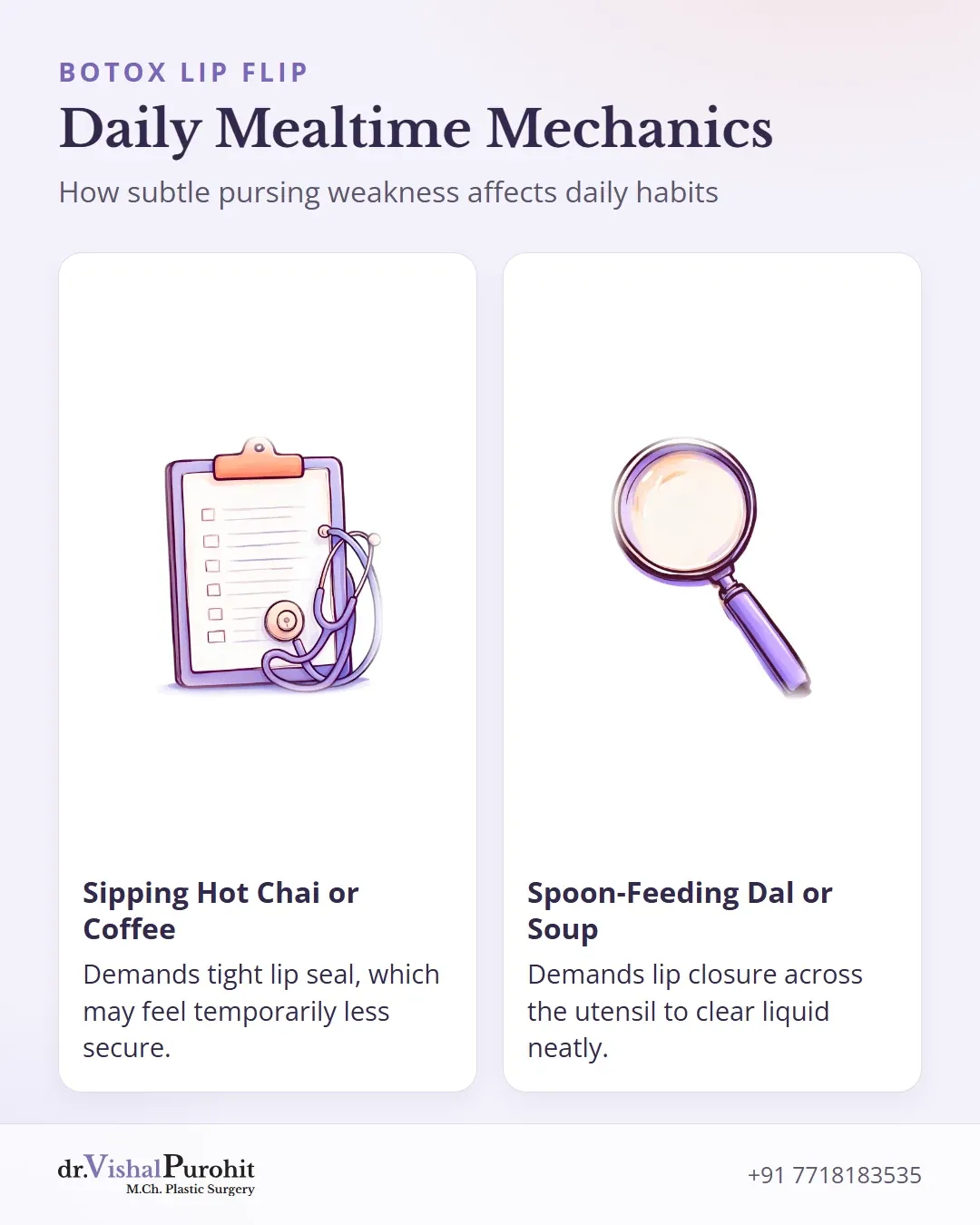
- Sipping hot liquids like chai or coffee requires a tight lip seal, which may feel temporarily less secure2.
- Spoon-feeding broths, dal, or soup demands lip closure across the utensil to clear liquid neatly220.
- Clear pronunciation of bilabial consonants—such as pa, pha, ba, bha, and ma—relies on direct labial contact220.
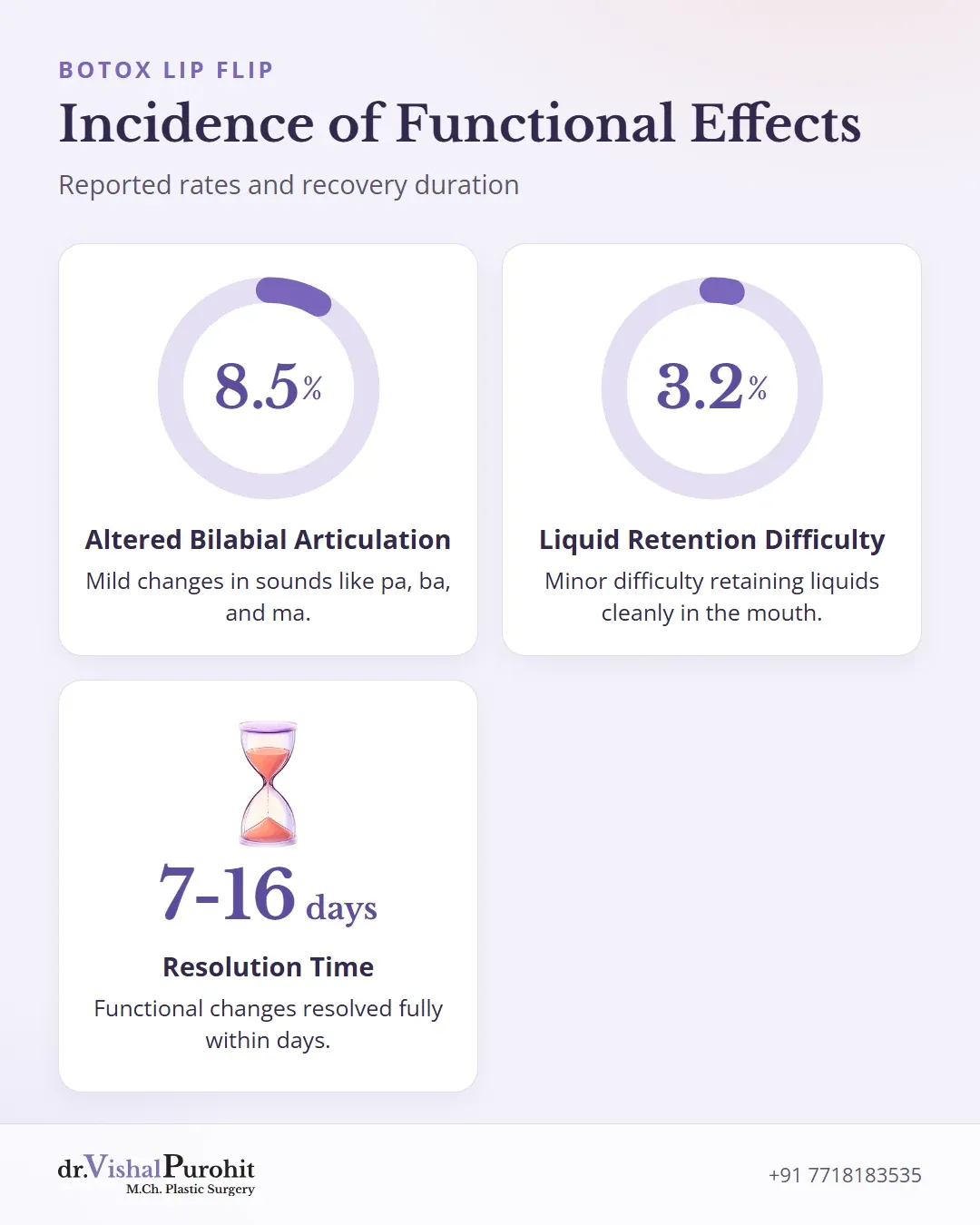
In published reports, transient functional effects such as altered bilabial articulation occurred in 8.5% of cases, while temporary difficulty with liquid retention was noted in 3.2%21. These events lasted an average of 7 to 16 days before resolving fully21. Any genuine difficulty speaking, swallowing, or breathing warrants immediate emergency care13.
Perioral Assessment and Care in Jaipur
Planning an elective procedure near the mouth requires careful attention to daily speech and eating habits. Those interested in subtle perioral adjustment can review the Botox Lip Flip in Jaipur treatment overview to learn about anatomical evaluation. For additional answers on muscle responsiveness, individual variability, and everyday functional questions, consult the detailed Botox Lip Flip FAQs.
This is educational information, not medical advice.