Correcting Breast Asymmetry and Tubular Breast Shape via Augmentation
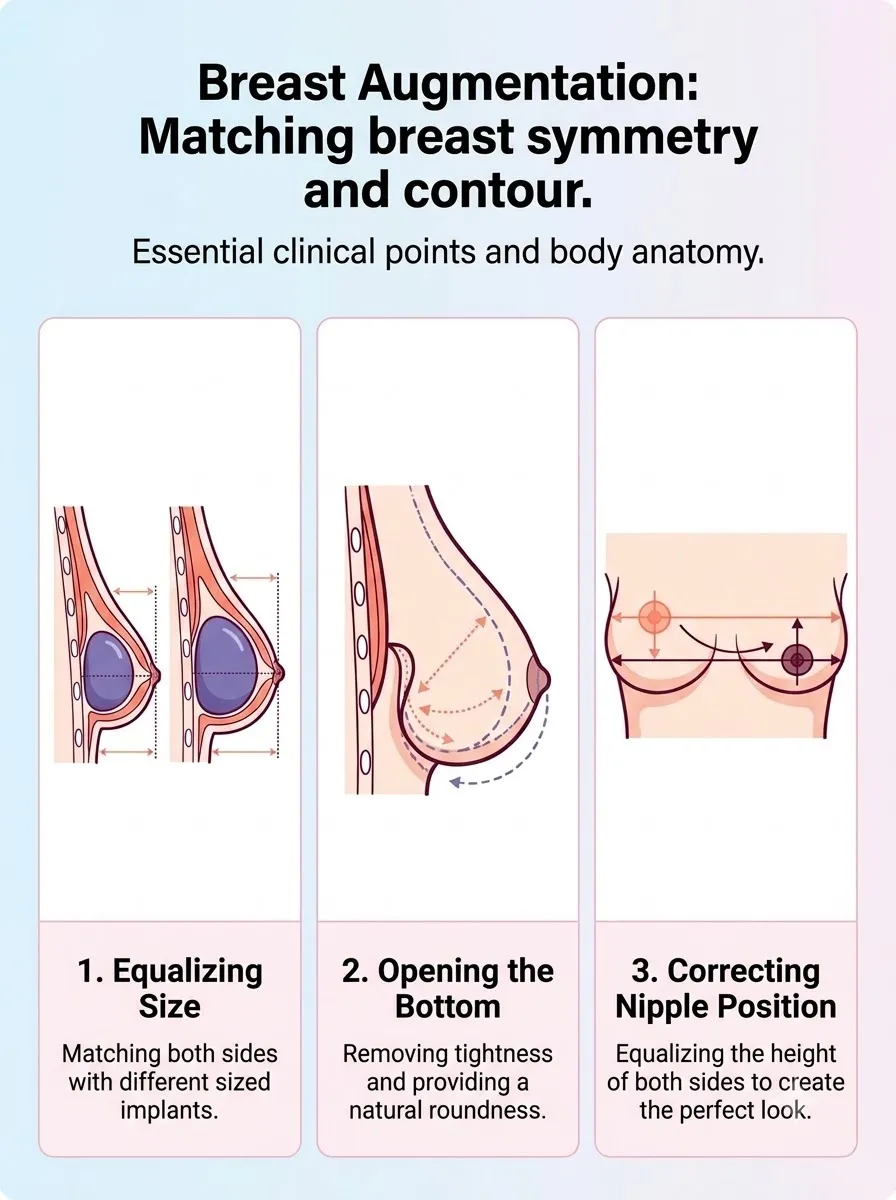
Can breast augmentation fix asymmetry or tubular breast shapes? Yes, it is a great solution. However, each problem needs a different surgical method.
Asymmetry usually requires balancing different implant sizes. Tubular breasts have a narrow base and tight tissue. These need special techniques to create a natural, rounded look.
At Kalpana Aesthetics, Dr. Vishal Purohit (M.Ch. Plastic Surgery) uses expert skills to fix these issues. He creates a personal plan for every patient.
He helps you move past the frustration of uneven shapes. His goal is to give you a look that feels right for your body.
You need a qualified specialist for the most natural results. This is true whether you have a birth defect or just want balance.
Explore our breast augmentation in Jaipur today. See how a custom plan can boost your confidence and quality of life.
Correcting Breast Asymmetry with Augmentation
Most people have some breast symmetry differences. This is very common and normal.
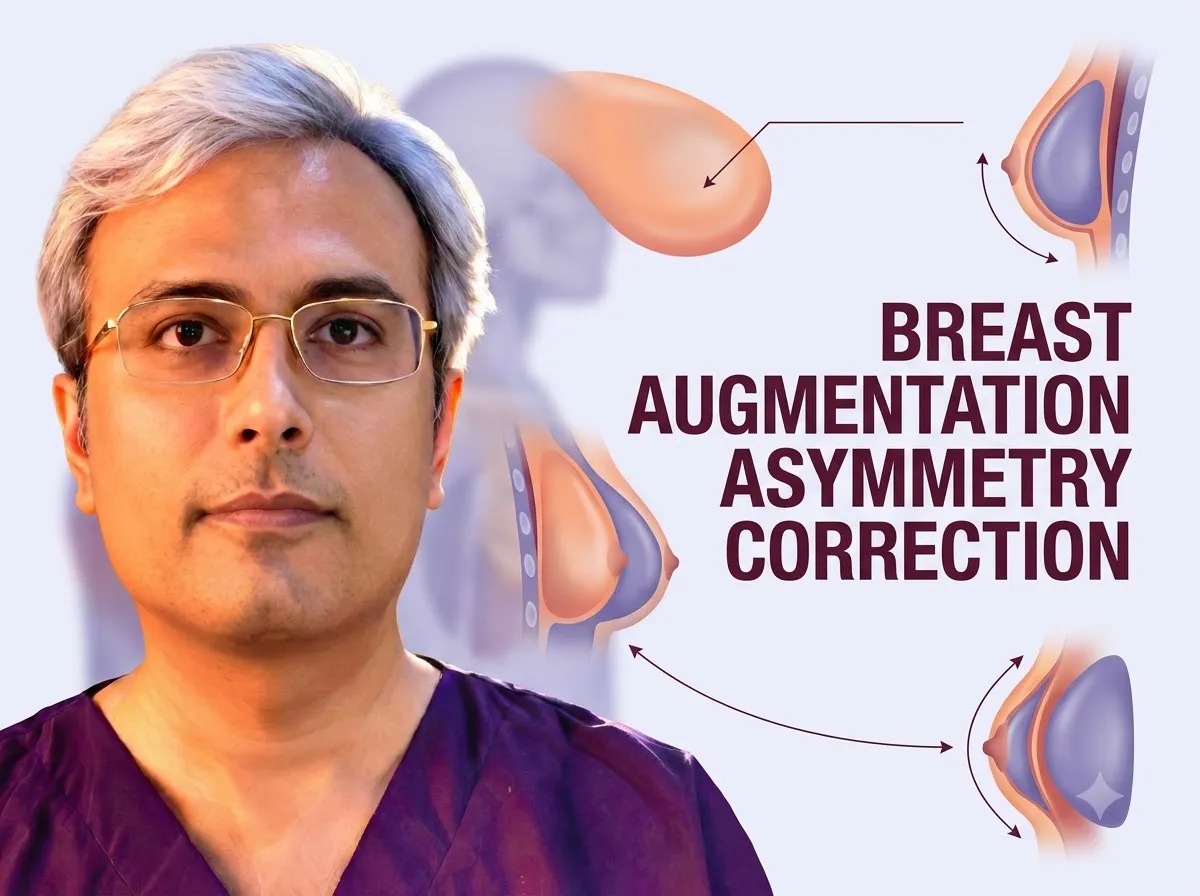
To fix this, surgeons use an implant volume differential. This means using two different sizes to make your chest look even.
The goal is anatomical balance. This means your breasts look the same size and shape.
Your surgeon will measure the volume difference on each side. Then, they pick implants that match your body.
Using asymmetric implants1 helps you get a balanced look.
This method makes both breasts look natural together. It removes the stress of unevenness and brings back your confidence.
Determining Implant Volume Differentials
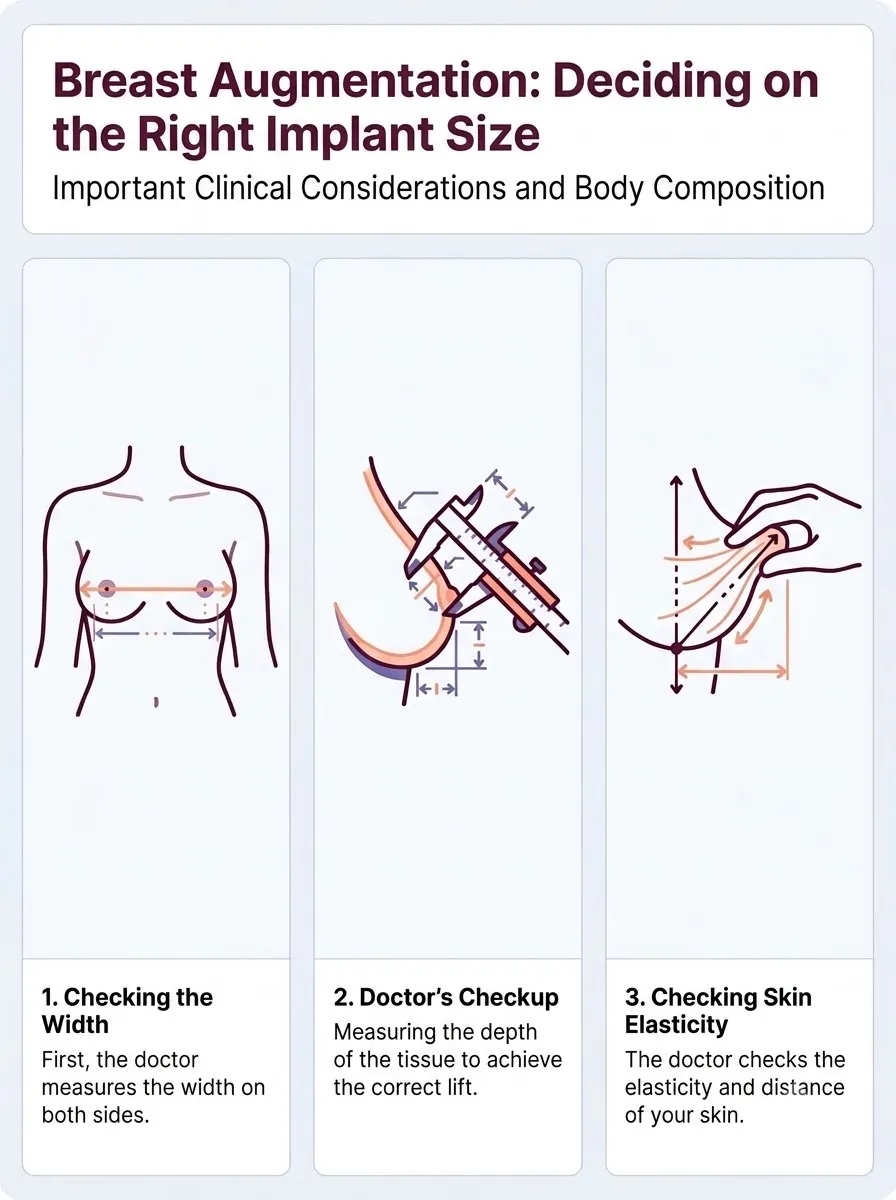
Getting the right balance takes a scientific approach. Your surgeon uses differential sizing to make sure both sides look equal.
Here is how they find the exact implant volumes:
- Base Width Assessment: First, the surgeon measures the base width of each breast. This breast base width2 helps pick the first size.
- Tissue Analysis: The doctor takes a precise measurement of your breast tissue volume. This ensures the implants fit your natural shape.
- Skin and Fold Testing: Your surgeon checks your skin’s stretch and the distance to the breast fold. These test results (“volume is added or subtracted from the starting implant volume”) help fine-tune the size.
- Final Dimension Selection: The surgeon picks the width, height, and projection for each side. This is a key part of choosing your breast look to match your goals.
Addressing Tubular Breast Shape (Tuberous Breast Deformity)
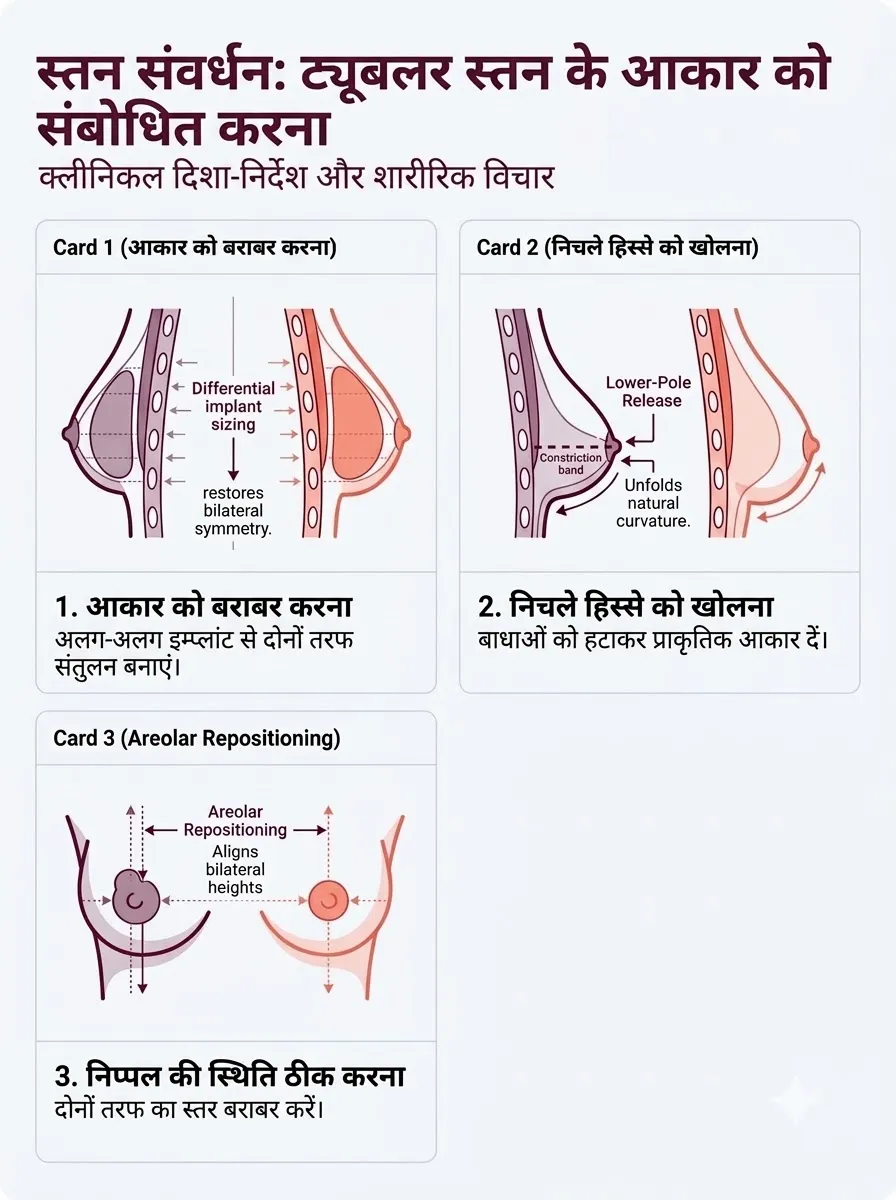
A tubular breast shape happens when a breast doesn’t grow fully. This is also called a tuberous breast3. It often has a narrow base and a large areola.
The breast parenchyma, or breast tissue, is often trapped in these cases. This is caused by a constrictive band. This is a tight ring of tissue that squeezes the breast.
This pressure pushes the tissue forward into the nipple. This creates a cylindrical projection4.
Simple implants might not fix this shape. If a surgeon doesn’t fix the tight tissue first, it can cause a “Snoopy nose” deformity (“Augmentation of the breast without correction of the herniated areolar complex may lead to a more recognizable abnormality”).
Your surgeon must release the tight bands to unfold the breast. This helps you get a natural look.
Combination Procedures for Optimal Correction
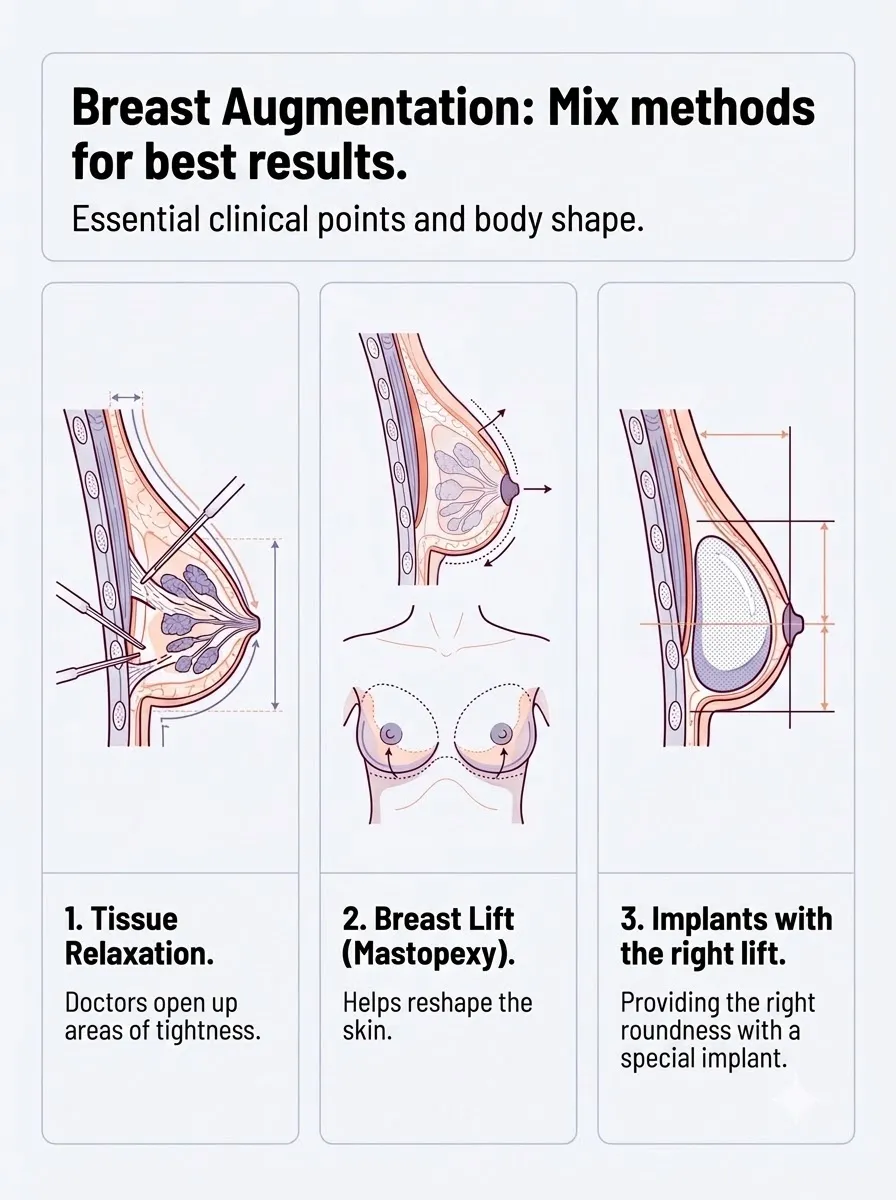
To fix a tubular shape, a combination surgery is often your best bet. Using only implants can make the breast look narrow or unnatural.
Your surgeon uses these combined methods to give you a balanced look:
- Surgical Release: First, the doctor performs a surgical release. They cut tight tissue bands to unfold the breast and widen the base.
- Breast Lift (Mastopexy): A breast lift (mastopexy) helps reshape your skin. This mastopexy-augmentation (“seek to create youthful, beautiful appearing breasts”) makes sure the skin fits the new volume perfectly.
- Projecting Implants: Some breasts have a constricted lower pole5. Your surgeon will pick an implant that pushes forward more. This fills empty space and lifts the nipple.
- Skin Envelope Adjustment: The surgeon removes extra skin around the areola. This gets rid of the “tubular” look and creates a rounder shape.
Clinical Assessment: Determining Your Anatomical Suitability
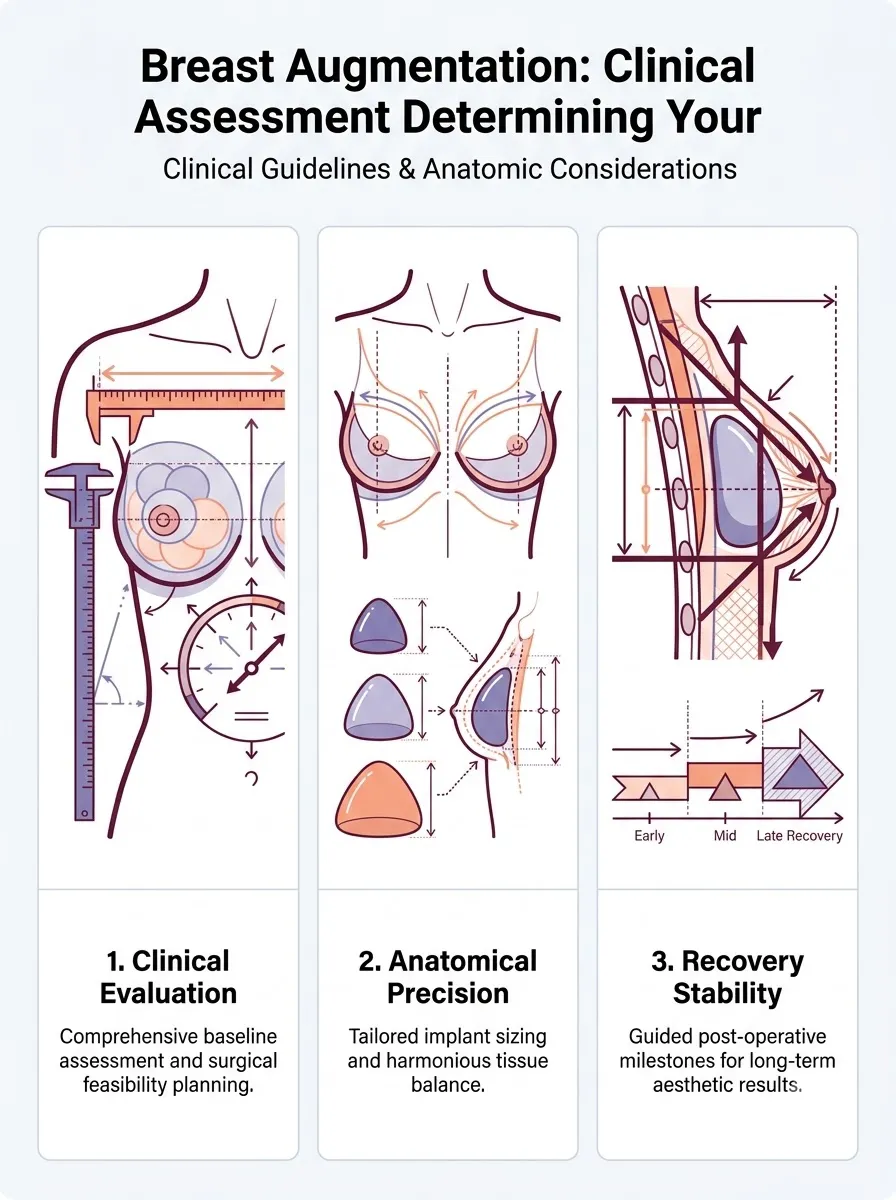
Your surgeon uses a candidate assessment to see if you are a good candidate for breast augmentation. They study your body to find the best path to your confidence.
During the Kalpana Aesthetics clinical evaluation, your doctor checks a few key things.
| Assessment Factor | What the Surgeon Checks | Why It Matters for Your Results |
|---|---|---|
| Skin Elasticity | How well your skin stretches and bounces back. | It ensures the skin can hold an implant without looking too tight or thin. |
| Tissue Support | The strength of the existing tissue support and ligaments. | This helps your breasts stay in a natural position and stops sagging. |
| Base Width | The diameter of the breast root. | This helps the doctor pick the right implant size for a balanced look. |
| Nipple Position | The angle and height of the nipple. | This shows if you need a lift along with the augmentation. |
| Symmetry Gap | The size difference between the left and right sides. | The surgeon can use different implant sizes to make both sides match. |
Frequently Asked Questions
Can breast augmentation successfully correct natural breast asymmetry?
Yes, breast augmentation corrects volume and shape asymmetry by utilizing different-sized cohesive silicone implants (e.g., 275cc on one side and 325cc on the other) or combining one-sided mastopexy, expertly performed by Dr. Vishal Purohit in Jaipur. Careful pre-operative volume matching balances cup size and projection. As an M.Ch plastic surgeon, Dr. Purohit creates harmonious, natural bilateral symmetry tailored to chest wall anatomy.
How is a tubular or tuberous breast deformity surgically corrected?
Correcting tubular breasts requires releasing the restrictive lower-pole fibrous ring, scoring the constricted parenchymal base, performing radial tissue glandular scoring, and expanding the lower pole with an anatomically projected implant by Dr. Vishal Purohit in Jaipur. Simple implant insertion without releasing the constriction fails to correct the shape. Dr. Purohit’s reconstructive mastery transforms constricted buds into rounded, natural breasts.
Can enlarged or puffy areolas associated with tubular breasts be reduced?
Yes, areolar herniation and enlargement common in tuberous breasts are corrected through a circumareolar ‘donut’ skin excision that resizes the areola to a proportional 38 to 42 mm diameter during surgery with Dr. Vishal Purohit in Jaipur. Permanent purse-string suturing prevents the areola from re-expanding. As an M.Ch. plastic surgeon, Dr. Purohit ensures delicate, tension-free periareolar healing.
What is the recovery time following tubular breast correction surgery?
Initial recovery requires 7 to 10 days before resuming desk duties, with full lower-pole tissue expansion and implant drop settling over 3 to 6 months under Dr. Vishal Purohit’s care in Jaipur. A specialized support bra must be worn day and night for the first month. Dr. Purohit conducts regular follow-up evaluations to ensure optimal aesthetic transformation.
Summary of Corrections Fixing asymmetry is usually about volume. The surgeon uses different sized implants to balance both sides.
Tubular breast correction is about shape. It requires widening the base and reshaping the skin to fix the tight anatomy.
Ready to regain your confidence? Book a personalized consultation with Dr. Vishal Purohit at Jaipur Hospital to find the right plan for your body.
If you would like to discuss your condition or book a consultation, contact Dr. Vishal Purohit in Jaipur at +91-7718183535. Our specialist team is here to guide you through every step of your care. For the full picture, explore our complete guide to breast augmentation in Jaipur or learn more about our surgical suite for breast augmentation in Jaipur.