
Surgical Solutions for Refractory Radiation Wounds & Soft Tissue Necrosis
Therapeutic radiation delivered during cancer therapy saves lives but induces severe long-term microvascular endarteritis obliterans, marked by progressive tissue ischemia, dense collagen fibrosis, and impaired cellular turnover. When minor trauma or necrosis occurs within irradiated fields, the tissues lack the capillary density and fibroblast vitality required for spontaneous healing.
Principles of Radiation Wound Salvage
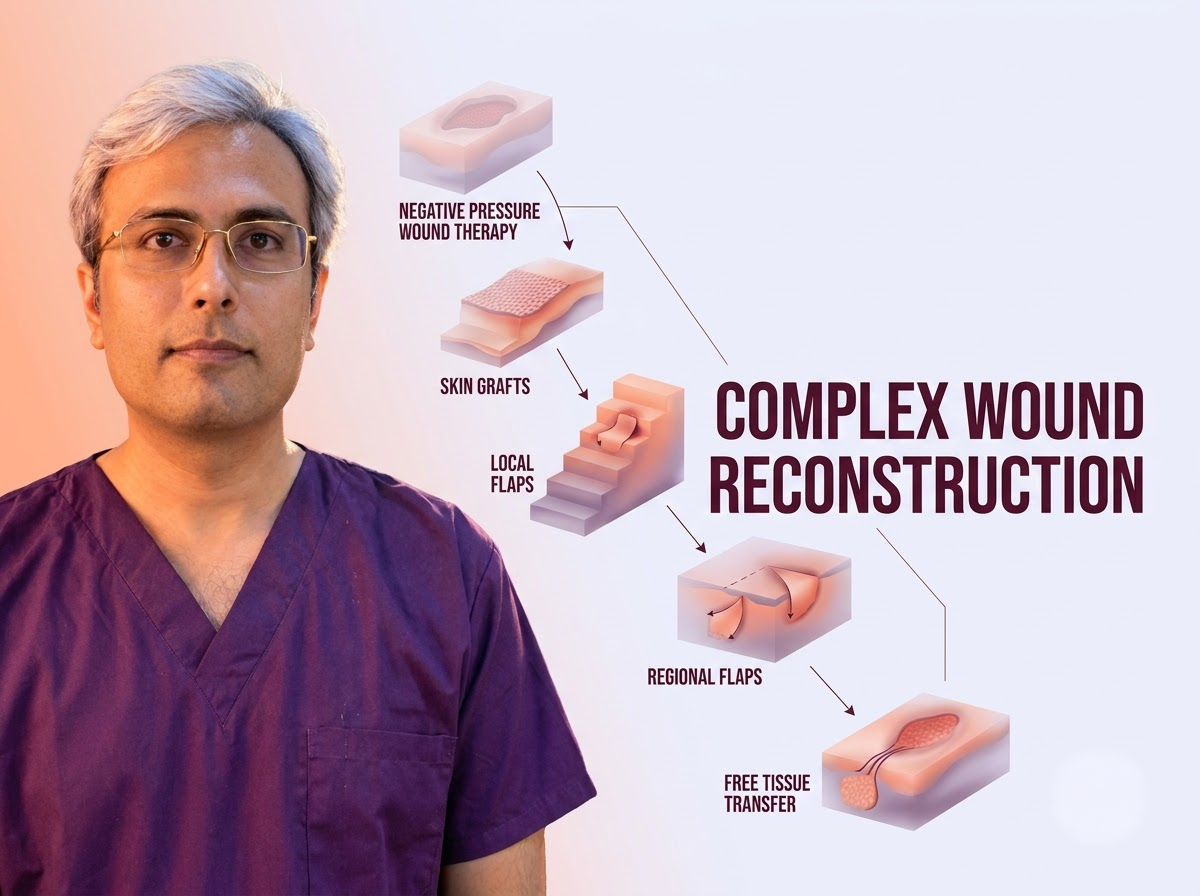
Conservative dressings and skin grafts uniformly fail in irradiated tissue because the underlying wound bed cannot support angiogenesis. Reconstructive flap surgery follows strict oncoplastic principles:
- Wide Excision to Healthy Margins: Meticulous excision of all ulcerated, hypovascular, and fibrotic tissue until soft, normally bleeding margins outside the radiation field are reached.
- Importing Non-Irradiated Vascularized Tissue: Bringing robust, pedicled or free tissue from outside the radiation portal (such as the Latissimus Dorsi muscle, Pectoralis Major, or distant perforator flaps).
- Regenerative Angiogenesis: The healthy vascular network delivers active growth factors, capillary sprouts, and oxygen, reversing localized hypoxia and sealing exposed skeletal structures.
Chest Wall, Neck, and Pelvic Reconstruction
Whether treating post-radiation chest wall ulceration after breast cancer treatment or irradiated cervical fistulae following head and neck radiotherapy, specialized flap transposition restores durable functional barriers and eliminates chronic wound pain.