
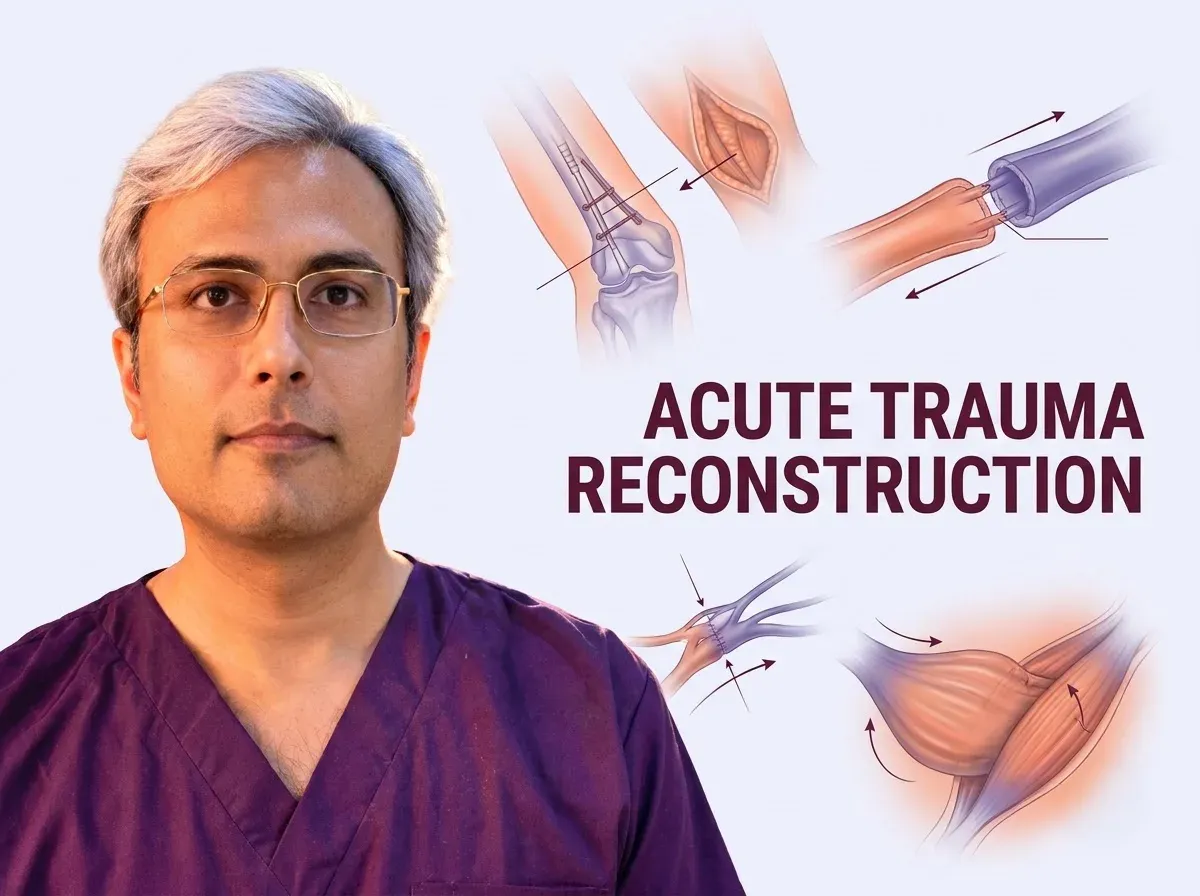

Comprehensive Care for Traumatic Degloving Injuries & Morel-Lavallée Lesions
High-energy shearing trauma—common in motorcycle accidents, vehicular pedestrian impacts, and industrial machinery mishaps—rips the skin and subcutaneous fat away from the underlying deep investing fascia. When the overlying skin remains intact, this is called a Morel-Lavallée lesion; when the skin is torn open, it represents an open degloving injury. Both conditions severely compromise cutaneous perforating blood vessels, leading to extensive tissue necrosis, massive dead space seromas, and severe secondary infections.
Morel-Lavallée Lesion Protocol
Closed degloving lesions frequently develop a chronic fibrous pseudocapsule that perpetuates fluid accumulation over the hip, thigh, or lower back. Treatment options include:
- Acute Lesions: Percutaneous drainage under ultrasound guidance combined with high-grade compression therapy or sclerodesis (using doxycycline or talc).
- Chronic Encapsulated Lesions: Open surgical excision of the non-absorptive fibrous pseudocapsule and internal progressive tension 'quilting' sutures to obliterate the dead space permanently.
Management of Open Degloving Trauma
In open degloving injuries, avulsed skin that appears viable initially often contains microvascular thrombosis. Dr. Vishal Purohit evaluates skin capillary bleeding, meticulously defats the avulsed skin to convert it into a full-thickness or split-thickness skin graft, and re-applies it over the clean fascial bed with negative pressure wound therapy (NPWT/VAC), successfully salvaging irreplaceable autologous skin.