
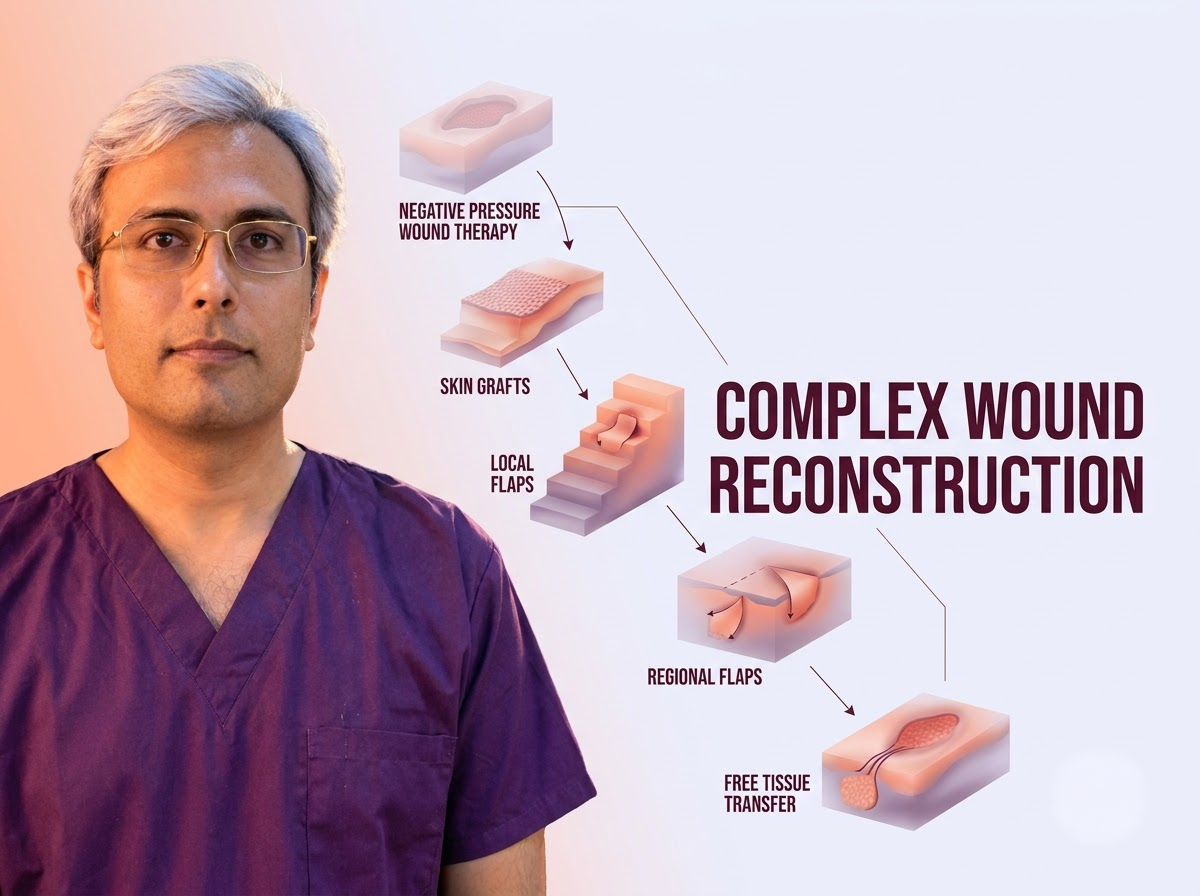

Definitive Reconstruction for Chronic Bone Infection & Dead Space
Chronic osteomyelitis occurs when bacteria lodge deep within necrotic bone (sequestrum), surrounded by an avascular reactive shell (involucrum) that oral and systemic antibiotics cannot penetrate. Traditional orthopedic curettage without soft-tissue reconstruction frequently fails because the rigid bony defect fills with hematoma, providing a breeding ground for recurrent infection.
The Plastic Reconstructive Solution: Vascularized Muscle Flaps
Plastic and reconstructive surgery fundamentally resolves chronic osteomyelitis through a two-stage or synchronized single-stage protocol:
- Radical Sequestrectomy & Saucerization: Complete excision of all necrotic, unvascularized bone until healthy bleeding cortical margins ('paprika sign') are exposed.
- Obliteration of Dead Space: Transposing a richly vascularized local muscle flap (such as the medial gastrocnemius for proximal tibia, soleus for mid-tibia, or free gracilis for distal defects) directly into the rigid bony cavity.
- Biological Antibiotic Delivery: The transferred muscle delivers arterial concentrations of systemic antibiotics, oxygen, and humoral immune cells directly into the previously ischemic bone bed.
Long-Term Limb Salvage and Function
By transforming an avascular infected cavity into an actively vascularized biological unit, reconstructive flap coverage halts draining sinus tracts, fosters solid bony consolidation, and spares patients from repeated hospitalizations or below-knee amputations.