
Midface hollowing develops as deep fat deflates and underlying facial bone resorbs over time. Many individuals consider whether non-surgical intervention can restore lost midface contours and support adjacent areas.
While dermal fillers replenish depleted volume, they cannot lift stretched skin or reposition descended deeper tissues. Learning what treatments can achieve helps patients make balanced decisions.
Hollowing Versus True Skin Laxity
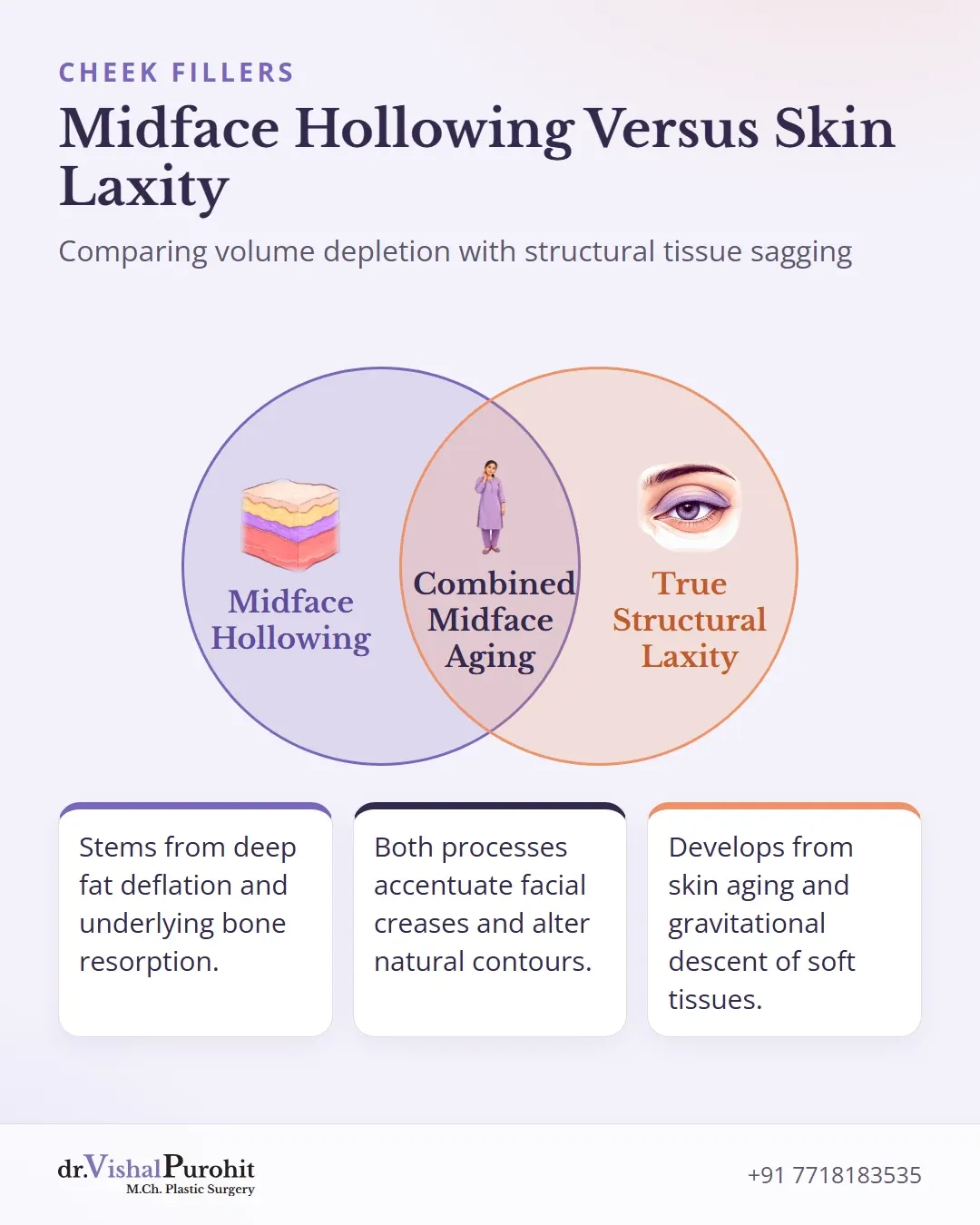
Midface aging involves distinct anatomical processes that require different management strategies. Midface volume loss and flattening stem from deep fat deflation alongside bone resorption123. In contrast, true structural laxity develops from skin aging, decreased tissue elasticity, and the gravitational descent of soft tissues, such as the malar fat pad1245.
These structural differences determine what non-surgical treatments can achieve:
Hyaluronic Acid Dermal Filler
Choosing observation without undergoing any aesthetic treatment remains a completely valid option for every individual.
Dr. Purohit’s note: During an initial consultation in Jaipur, Dr. Vishal Purohit assesses whether flattening reflects localized volume depletion, descent, or redundant skin.
Support and Contour Expectations
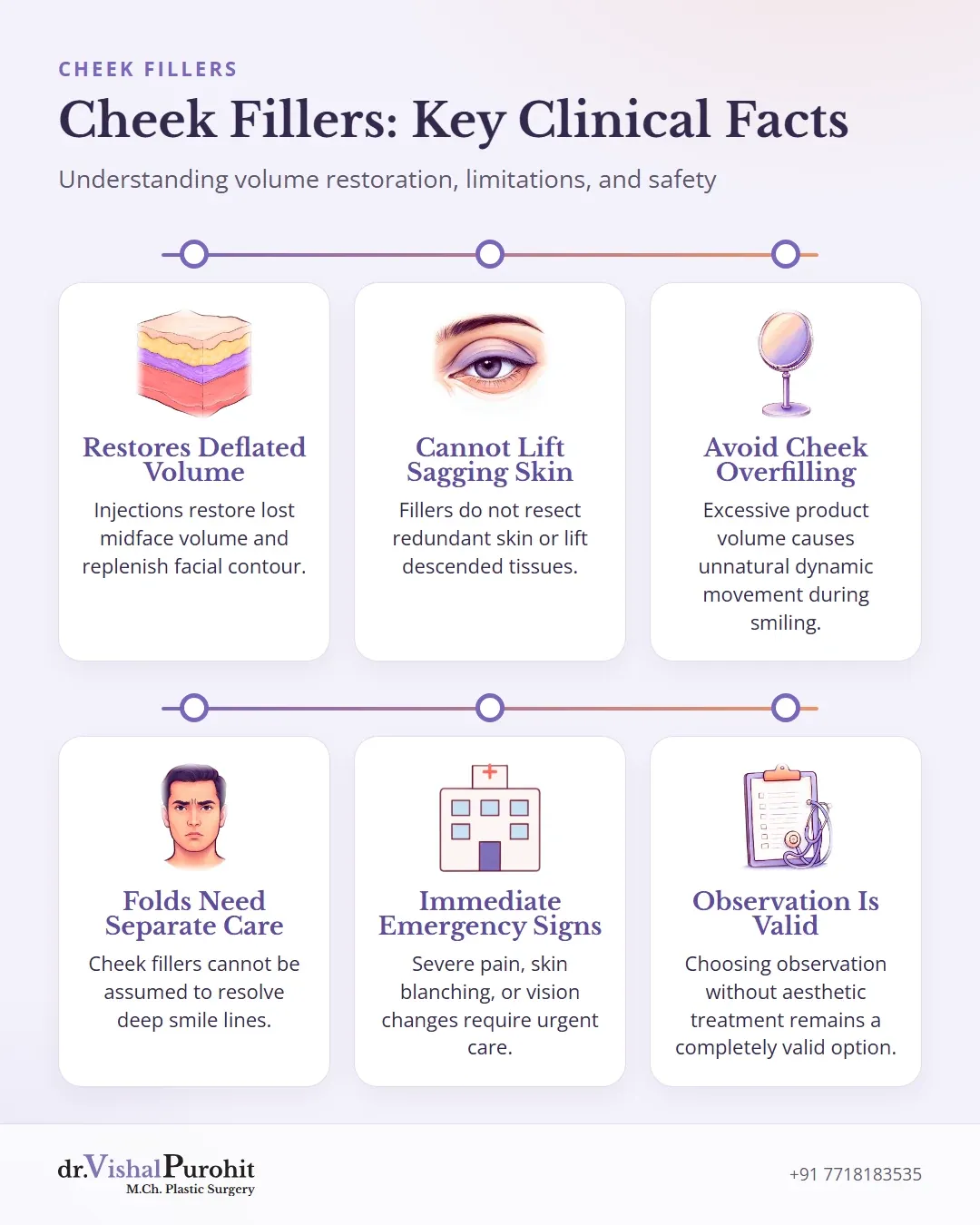
When considering cheek fillers, patients often weigh subtle cheekbone definition against anterior midface fullness. Restoring midface volume can help soften an aged appearance and improve adjacent areas such as prominent nasolabial folds17. Treatment in the cheekbone region may also influence the appearance of the tear trough and mid-third of the face89.
Achieving balanced support across both frontal and profile views requires careful evaluation of natural anatomy:
- Profile and forward-leaning assessments help clarify the relationship between the lower eyelid, cheek projection, and surrounding facial contours9.
- Natural facial asymmetry is common and must be factored into the treatment strategy.
- Facial contours must be evaluated both in static repose and during dynamic smiling expressions.
Overtreatment of the cheekbone area should be avoided8. If the cheekbones appear slightly overly full at rest, dynamic movement during animation can result in an unnatural or exaggerated appearance8.
The specific approach to balancing anterior projection with lateral cheekbone contour, as well as the instruments and methods selected for individual facial proportions, is not predetermined and is decided at the consultation.
Cheek Volume and Adjacent Facial Folds
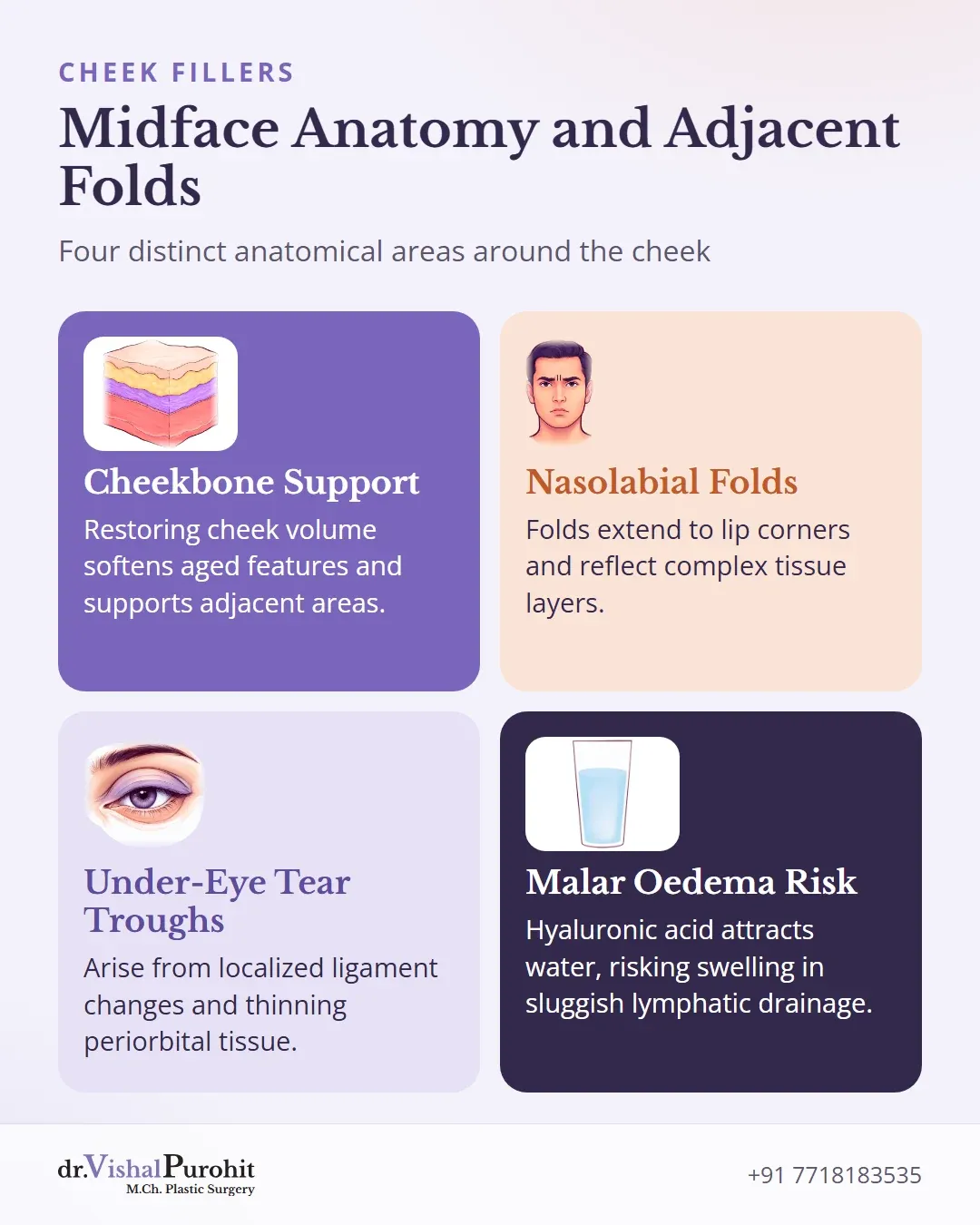
Midface aging involves concurrent structural changes, including bone resorption and fat atrophy, that accentuate nearby facial creases110. While restoring midface support can sometimes improve the appearance of adjacent regions101112, cheek hollows, under-eye tear troughs, and deep nasolabial folds remain distinct anatomical concerns110.
Dermal filler injected into the cheeks cannot be assumed to resolve lower-eyelid shadowing or deep smile lines:
- Nasolabial folds extend from the nasal alae toward the lip corners and reflect complex tissue interactions from skin to bone11314. Direct treatment of these folds is often considered separately1314.
- Under-eye tear troughs arise from localized ligament changes and thinning periorbital tissue1015.
- Hyaluronic acid naturally attracts water, which can worsen fluid retention in areas predisposed to poor lymphatic drainage1516.
Careful screening for baseline malar oedema and existing infraorbital puffiness is necessary before treatment to help prevent prolonged swelling or lymphatic compression16. Whether midface dermal filler, localized fold treatment, or another intervention is appropriate for a patient’s anatomy is not confirmed in advance; it is decided at the consultation.
Overfilling and Natural Facial Proportions
Injecting excessive product or placing it inappropriately distorts natural midface contours, leading to facial overfill syndrome, commonly referred to as pillow face17. This complication can produce disproportionate midfacial fullness, an unnatural smile, and a bloated or puffy appearance17. It frequently stems from excessive product volume, aggressive intervention without respecting underlying anatomy, or repeated injections without adequate clinical reassessment17.
Evaluating Post-Treatment Irregularities

Post-injection changes require structured medical review rather than immediate re-treatment:
- Early asymmetry is most commonly caused by asymmetric soft-tissue swelling18.
- Transient swelling, tenderness, and bruising represent expected post-injection events19.
- Comparing the area with how it looked before treatment helps separate asymmetry, early swelling or persistent lumps from the face’s own shape.
Automatic repeat injection must be avoided, as layering further filler over unresolved tissue expansion risks compounding distortion.
Considerations on Dissolving Filler
Hyaluronic acid dermal filler can often be dissolved using the enzyme hyaluronidase1720. However, the reversal process is never considered fully reversible or entirely free of risk. Re-administration requires dedicated clinical evaluation17, and any intervention must be decided at the consultation.
Urgent Warning Signs and Complications
Dermal filler injections carry inherent medical risks, and no cosmetic procedure is completely without risk1921. While cheek injections sit lateral to central facial structures, severe vascular complications remain possible if product enters branches of the facial or infraorbital vessels222324.
Key points
- Cheek dermal fillers carry risks of severe vascular complications if product enters facial vessels.
- Normal effects like mild swelling or bruising resolve in two weeks, but arterial compromise demands immediate medical attention.
- Sudden severe pain, skin color changes, or any vision changes require emergency care.
Routine post-injection effects such as mild bruising, swelling, erythema, and localized tenderness are expected and typically resolve gradually within two weeks1921. In contrast, vascular compromise occurs when filler obstructs or compresses an artery, reducing blood flow to facial tissues2425.
Medical Emergencies Requiring Immediate Attention
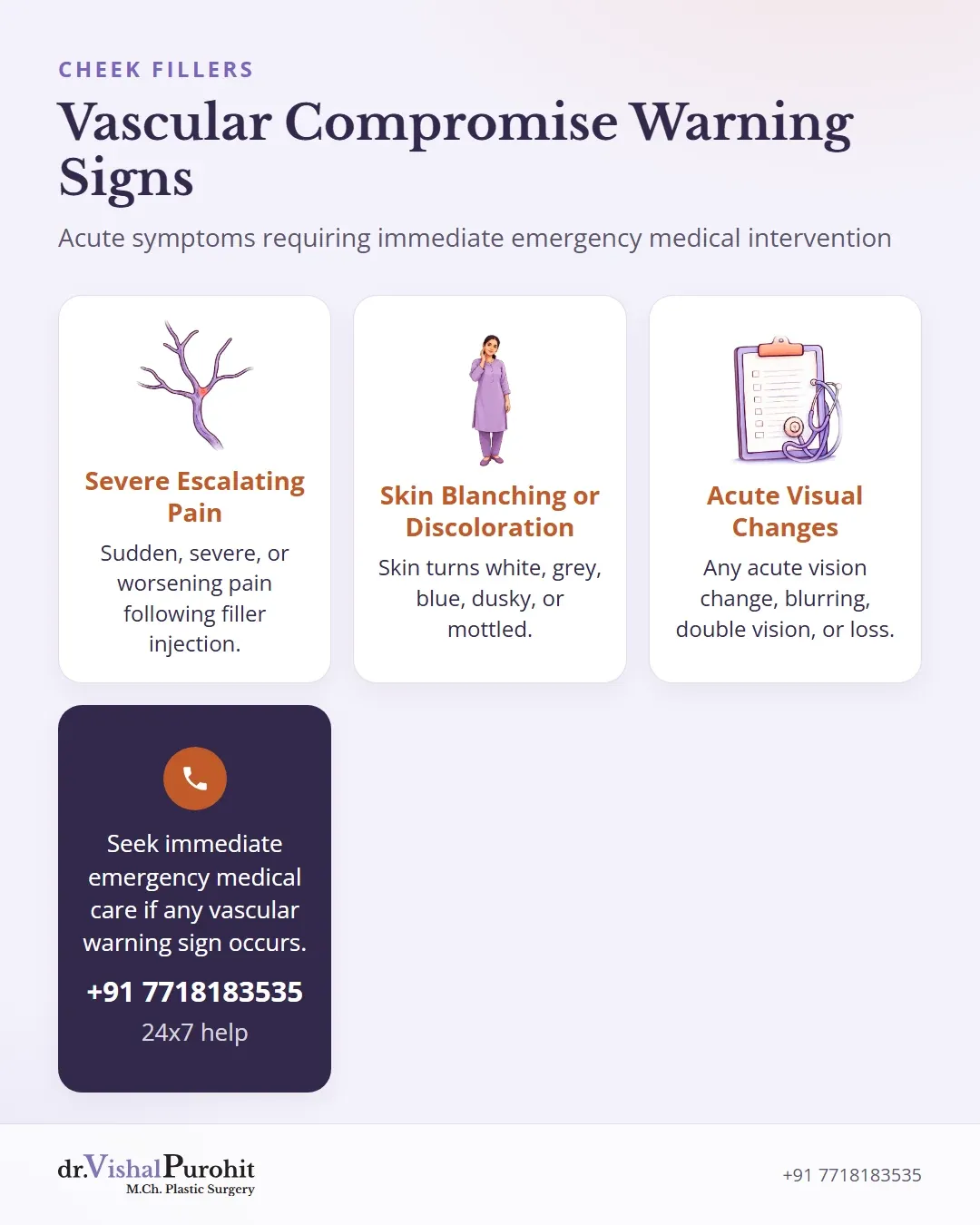
Certain acute symptoms indicate severe vascular occlusion or impending tissue damage2325. A patient must seek immediate emergency medical care if any of the following occur:
- Sudden, severe, or worsening pain25
- Skin blanching, dusky discoloration, or turning white, grey, blue, or mottled242526
- Any acute change in vision, blurring, double vision, or visual loss232527
When an intravascular injection involves hyaluronic acid filler, prompt intervention with hyaluronidase is required232728. Vision loss from vascular occlusion is an acute emergency where intervention must be rapid, though visual recovery remains poor23.
When Surgery or Other Options Fit
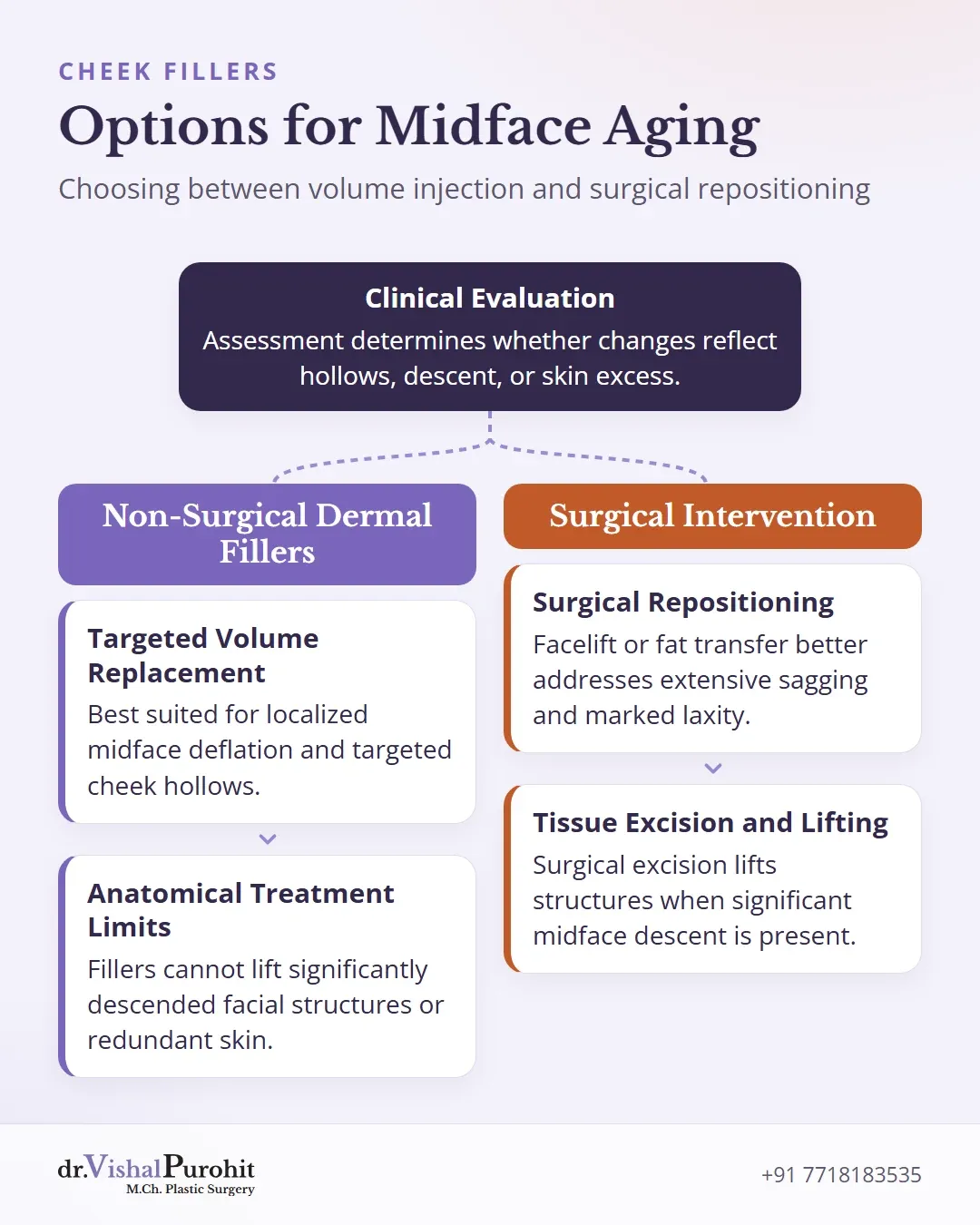
Dermal fillers provide minimally invasive volume restoration, but they have distinct anatomical limits2930. When facial changes involve significant skin excess, heavy jowling, or extensive soft-tissue descent, repeated injections of dermal filler cannot properly lift the tissues31. In these situations, surgical procedures such as a facelift or autologous fat grafting are more appropriate options to achieve balanced rejuvenation293132.
A detailed evaluation helps determine the most appropriate approach based on individual anatomical findings and goals:
- Non-surgical volume replacement: Suitable for targeted hollows and localized midface deflation2930.
- Surgical repositioning or fat transfer: Better suited for extensive tissue sagging, prominent laxity, or larger-volume restoration293132.
- Conservative observation: Choosing no treatment remains a valid and reasonable choice for any patient.
Reviewing long-term goals during assessment clarifies whether non-surgical restoration, surgery, or simply observing changes is the right path. Whether surgical repositioning, autologous fat grafting, or non-surgical filler treatment is suitable in a given case is not confirmed beforehand and is decided at the consultation.
Cheek Volume Consultations in Jaipur
Understanding facial anatomy helps clarify what non-surgical volume replacement can achieve. While dermal fillers replenish localized midface deflation, surgical interventions better address extensive tissue descent and marked laxity. For tailored assessment, explore Cheek Fillers in Jaipur to learn about treatment options. Patients can also review Cheek Fillers FAQs to understand common clinical considerations and practical expectations before scheduling an individual evaluation.
This is educational information, not medical advice.