
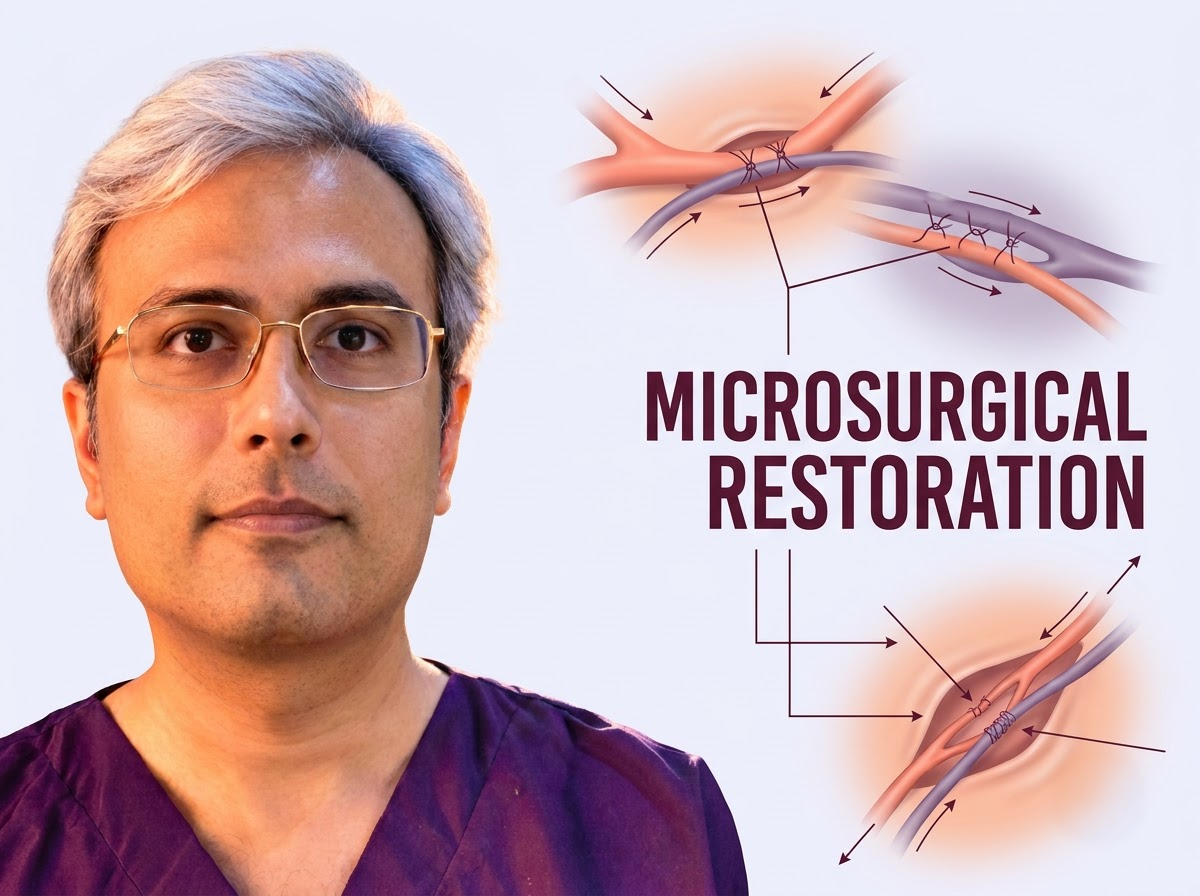

Supermicrosurgical Vascularized Lymph Node Transfer (VLNT) for Chronic Lymphedema
Secondary lymphedema is a chronic, progressive, and debilitating condition that arises when lymphatic channels and lymph node basins are surgically removed or irradiated during cancer treatments (such as axillary node dissection for breast cancer or pelvic node clearance for gynecological/urological cancers). The interrupted lymphatic return causes severe limb swelling, dense fibroadipose tissue accumulation, frequent life-threatening bacterial cellulitis attacks, and devastating functional impairment.
How Vascularized Lymph Node Transfer (VLNT) Works
Dr. Vishal Purohit performs state-of-the-art Vascularized Lymph Node Transfer (VLNT) utilizing supermicrosurgical techniques:
- Harvesting Healthy Donor Nodes: A cluster of healthy, vascularized lymph nodes is harvested from an anatomical site with redundant lymphatic drainage (such as the supraclavicular basin or gastroepiploic omentum) along with its feeding artery and vein, strictly avoiding donor-site lymphedema via reverse lymphatic mapping.
- Microvascular Transplantation: The lymph node packet is transferred to the affected limb (either proximal axilla/groin or distal wrist/ankle) and revascularized under 20x–30x magnification to local recipient blood vessels.
- The 'Lymphatic Pump' Mechanism: The transferred lymph nodes function like biological sponges and vacuum pumps: they absorb interstitial lymph fluid through high hydrostatic and oncotic pressure gradients and shunt it directly into the venous microcirculation, while simultaneously releasing vascular endothelial growth factor-C (VEGF-C) to stimulate spontaneous new lymphatic channel growth (lymphangiogenesis).
Dramatically Reducing Swelling and Cellulitis
VLNT typically reduces excess limb circumference by 40% to 60%, softens rigid brawny tissues, and virtually eliminates recurrent cellulitis episodes.