
Supermicrosurgical Breakthroughs for Lymphedema
Secondary lymphedema is a chronic, progressive condition that frequently develops following breast cancer surgery (axillary node dissection) or gynecologic/pelvic cancer therapies. When lymphatic pathways are damaged or removed, clear lymphatic fluid cannot drain back into the circulation, accumulating in the arm or leg, causing heavy swelling, recurrent skin infections (cellulitis), and skin hardening.
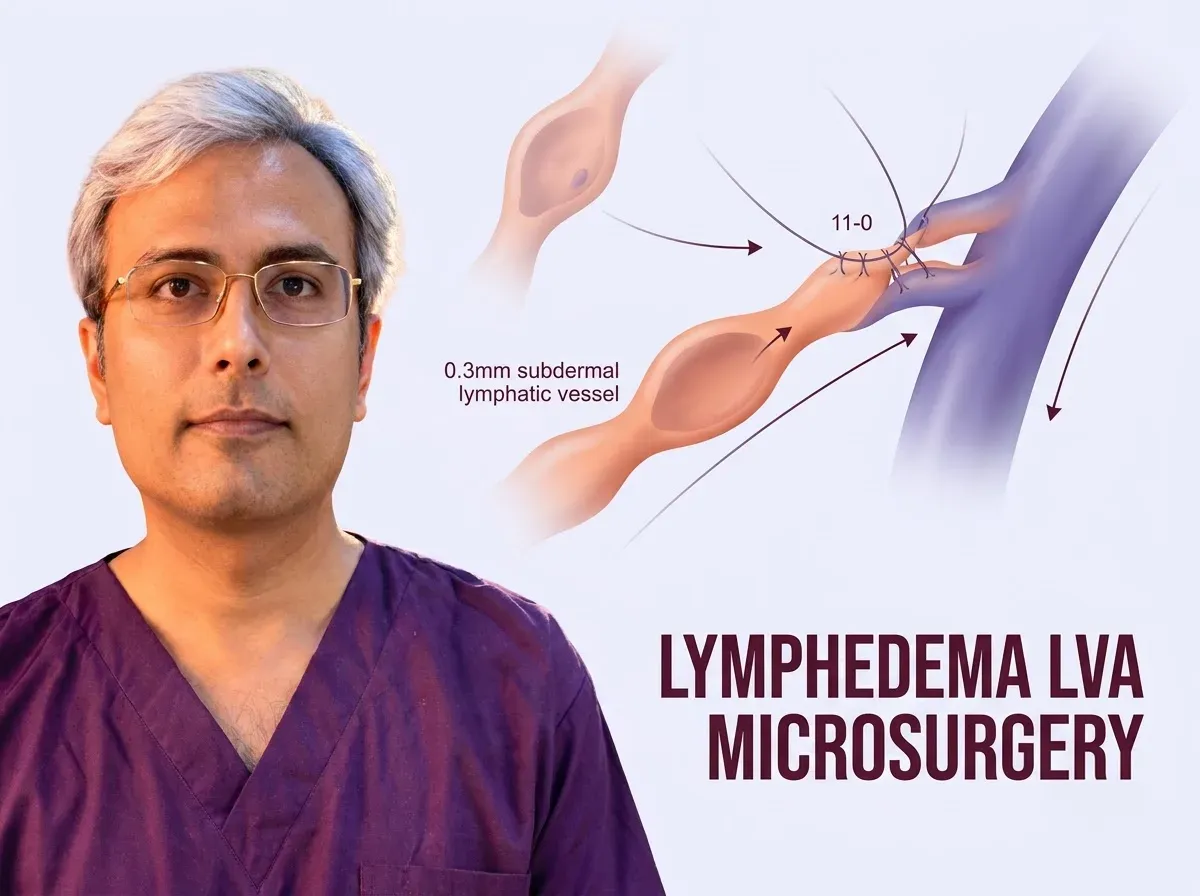
Dr. Vishal Purohit offers cutting-edge supermicrosurgical Lymphovenous Anastomosis (LVA) at Jaipur Hospital. Using surgical microscopes with up to 40x magnification, we connect tiny functioning lymphatic vessels (0.3 to 0.8 mm in diameter) directly to adjacent subdermal venules, creating a biological bypass that routes trapped lymphatic fluid into the normal bloodstream.
Advanced Lymphedema Reconstructive Modalities
1. Lymphovenous Anastomosis (LVA)
Performed through multiple tiny 2 cm incisions on the swollen arm or leg. Because it works within the skin layer, recovery is swift with minimal discomfort.
2. Vascularized Lymph Node Transfer (VLNT)
For late-stage lymphedema where lymphatic vessels are scarred, transferring healthy lymph nodes (with their blood supply) into the limb acts as an internal biological pump.
3. Real-Time ICG Lymphography Mapping
Before surgery, we inject Indocyanine Green (ICG) dye and visualize your lymphatic channels using high-resolution infrared cameras, identifying exactly which channels are functional and best suited for bypass.