
One of the most common and complex questions I hear comes from adolescents or the parents of teenage boys: “Do we have to wait for surgery?” It’s a question that balances physical maturity against psychological well-being.
My approach to Gynecomastia Surgery is never based on a single number. It’s based on your individual health, the stability of the condition, and its impact on your life.
Observation Period Confirms Permanence Need
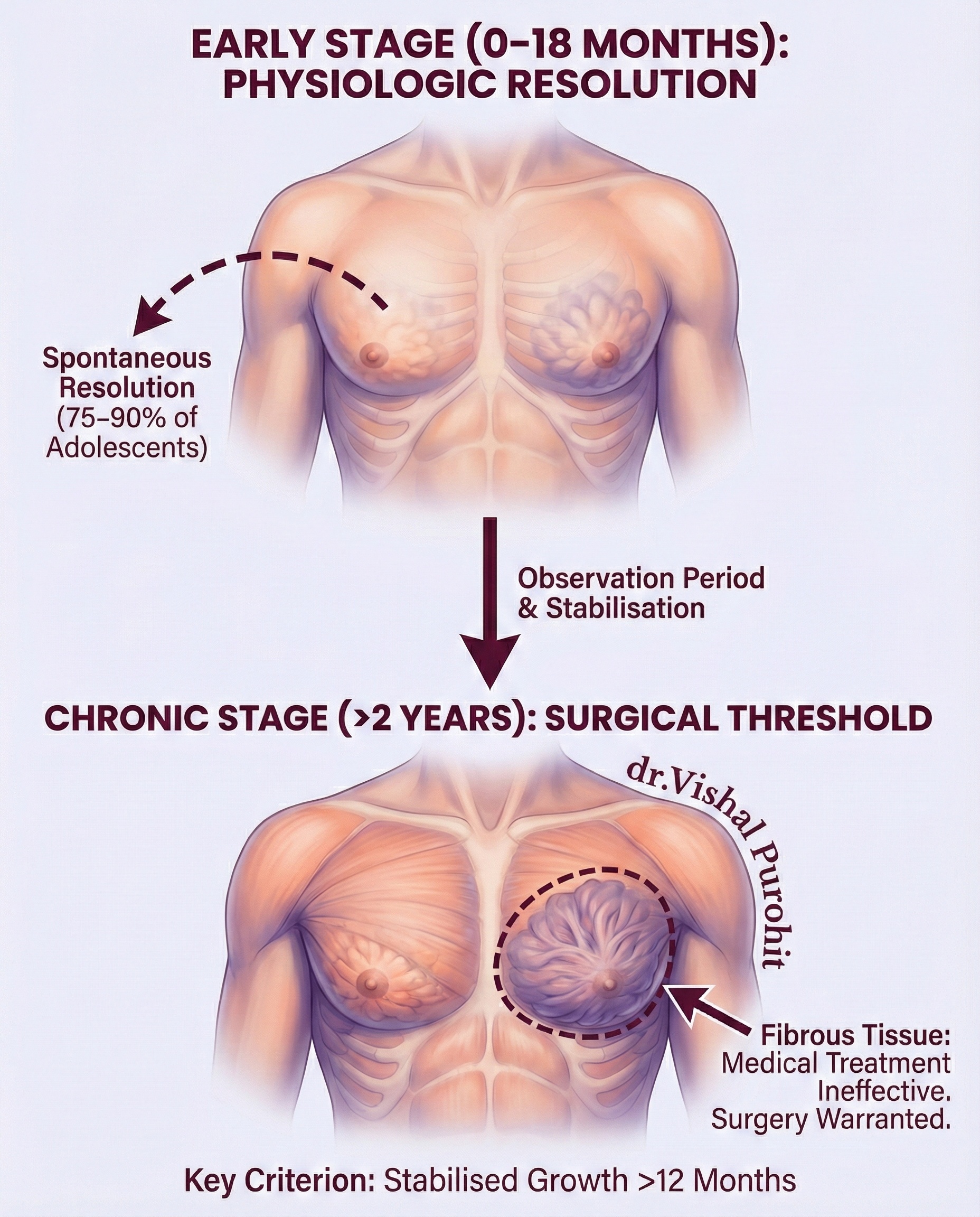
Gynecomastia surgery is successfully performed on adolescents and adult men alike. The core decision on when to proceed with male breast reduction is based on the stabilisation of the breast growth, not a fixed chronological age.
This principle involves a period of observation to confirm that the enlargement is permanent and will not resolve spontaneously.
Natural Resolution Window Closes After Two Years
The necessity for surgery is often determined by observing how long the condition persists, especially during the turbulent hormonal changes of adolescence.
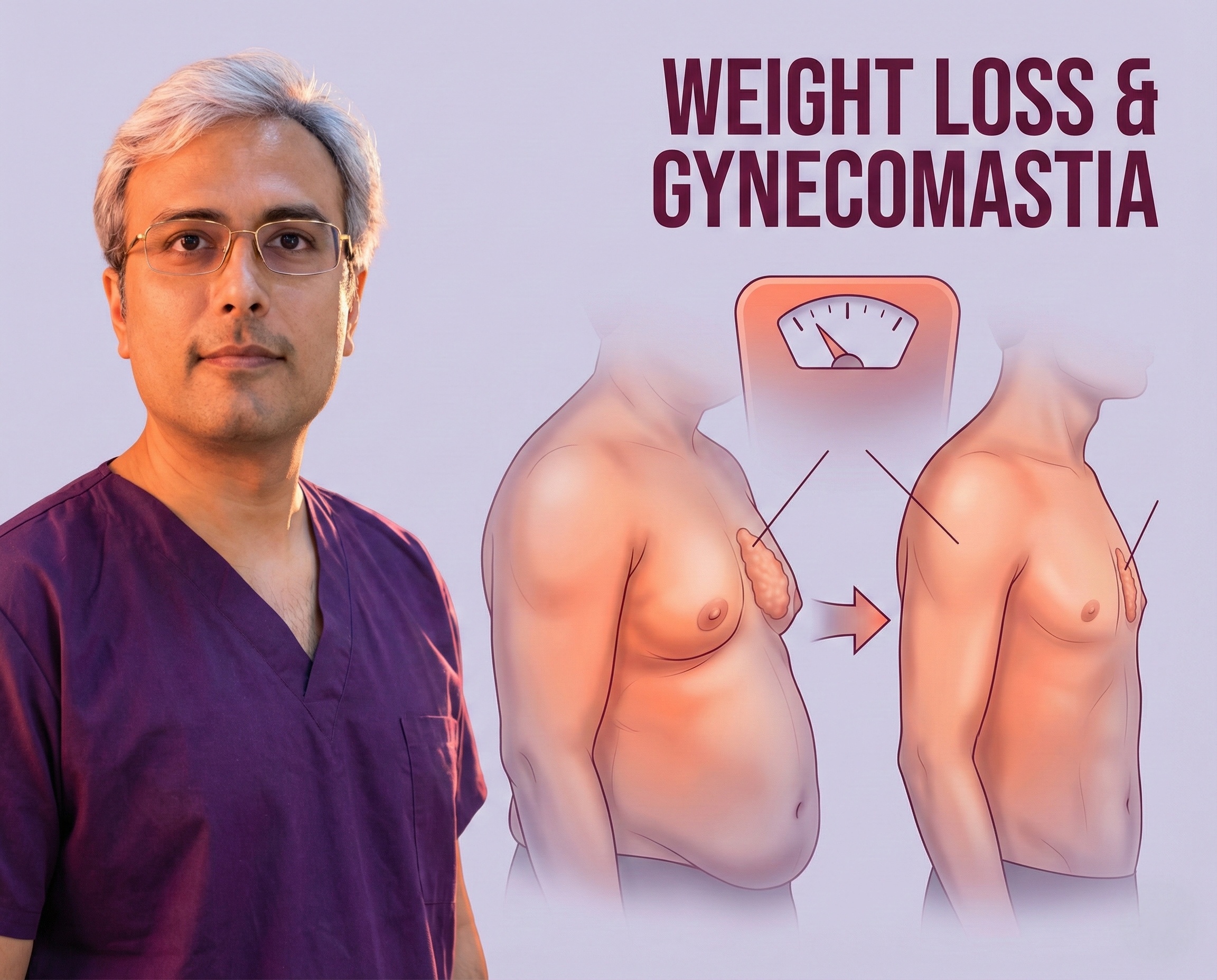
- Physiologic Resolution: Pubertal gynecomastia, which occurs in adolescent males, resolves spontaneously within 1 to 3 years in 75–90% of adolescents. In more than 75% of cases, the condition goes away on its own in 18 months.
- Treatment Threshold: If the condition does not resolve within two years, treatment is warranted. By this point, the tissue has often become chronic and fibrous, which is why medical treatment is often ineffective after this period.
- Stability is Key: Stabilised breast growth, or growth that has persisted for more than twelve months, is one of the key criteria for an ideal candidate for surgery.
Surgical Timing Aligns with Maturity and Psychological Distress
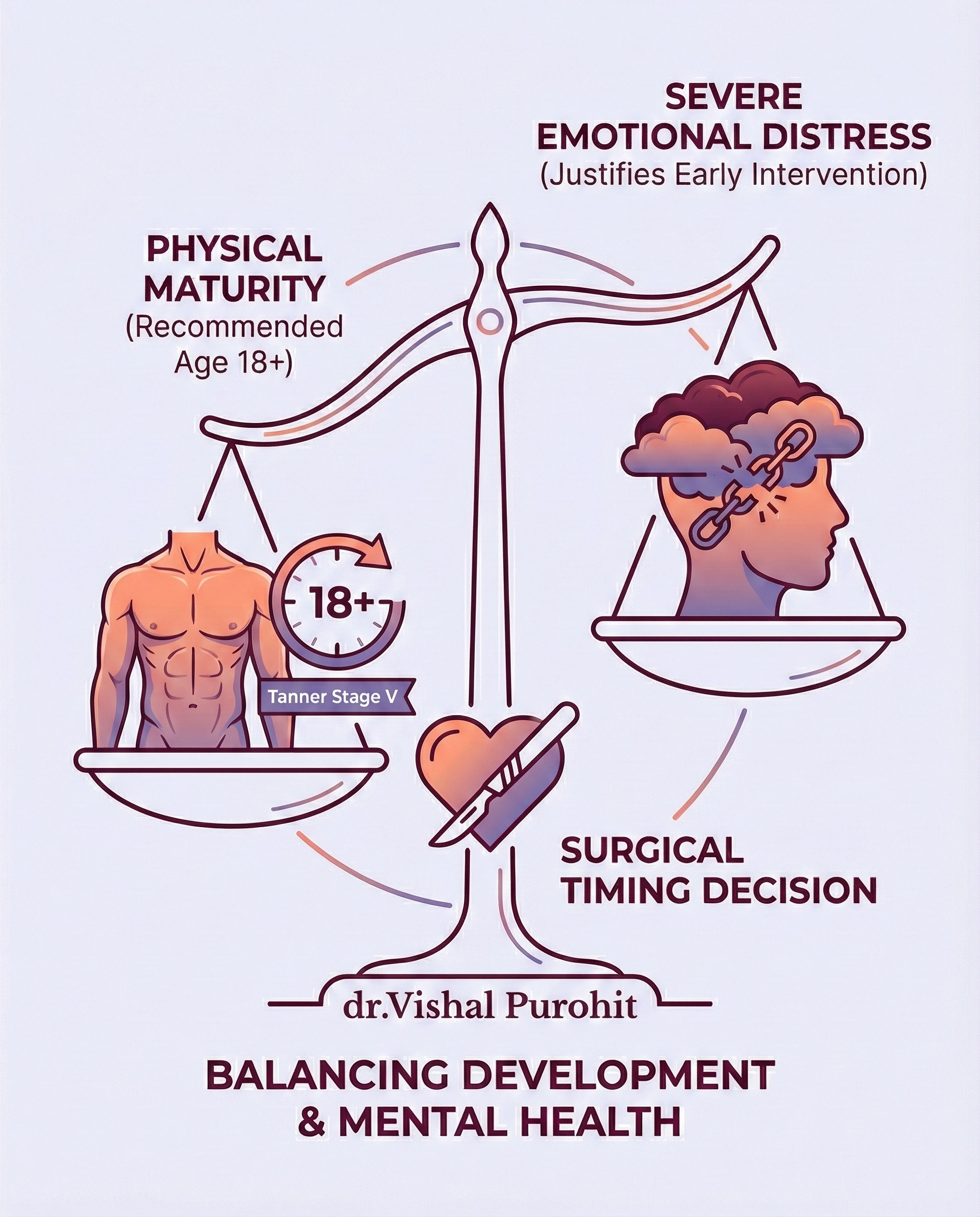
The decision to proceed with surgery is based on balancing physical maturity and emotional health. While surgery is possible for patients over 16, there are important factors to consider.
Age 18 Is Recommended for Maximum Physical Development
While surgery is possible for patients over 16, a majority of surgeons in Jaipur suggest that individuals should wait until they attain the age of 18 years old before considering surgery.
Why? By this age, the human body is likely to have developed to its maximum potential. From a medical perspective, it is recommended that surgery be postponed until puberty is completed (Tanner scale Stage V). This waiting period minimises the chance that any residual hormonal fluctuations could impact the long-term permanent results of the procedure.
It is important to distinguish between pubertal changes and other causes of gynecomastia before deciding on a surgical plan.
Severe Emotional Distress Justifies Earlier Intervention
This is the critical exception. The need to wait must be balanced against the significant mental health implications of persistent male breast enlargement.
Gynecomastia is associated with significant psychological distress, social stigma, and dysphoria. If the condition causes embarrassment, pain, or tenderness, surgery is warranted. The procedure is performed to alleviate this distress and is one of the most profound psychological benefits of male breast reduction.
For many young men, the condition is so severe that they avoid going outside, playing sports, or swimming. When the psychological impact of the enlarged breasts outweighs the risk of operating before full physical maturity, earlier surgical intervention is a justifiable and compassionate treatment.
Frequently Asked Questions
What is the ideal age for Gynecomastia Surgery?
The ideal age for gynecomastia surgery is when the condition has become stable (persisting for more than one to two years) and is causing significant emotional distress or physical discomfort to the patient.
Deciding the perfect time means balancing the potential for natural resolution against the risk of permanent tissue changes. While many cases in adolescence resolve, definitive surgery is indicated once the condition is clearly persistent. The key threshold is usually after 12 to 24 months because after this time, the glandular tissue often undergoes an irreversible process of fibrosis. This process means that once the tissue is hardened, surgical removal becomes the only permanent option.
I often tell my patients that emotional readiness is the true marker of the “ideal age.” Studies show that delaying surgery unnecessarily can worsen psychological issues like shame and social withdrawal. By acting once the condition is clearly stable and persistent, we ensure we treat the physical problem permanently, before the emotional burden becomes too deep.
If your breast enlargement has lasted for more than one year and is negatively impacting your self-confidence, please book a private consultation. We can assess your tissue composition and plan a safe path to a flat chest.
Can gynecomastia surgery be done in the teenage years — and when is it justified before adulthood?
Yes, gynecomastia surgery can be safely performed during the teenage years, but it is justified only if the condition persists beyond the usual resolution period (typically two to three years) or if it causes severe psychological distress.
Since gynecomastia is common in adolescents, observation is the usual first step because 75% to 90% of cases resolve spontaneously within approximately two years of onset. However, delaying too long is unnecessary if the breast enlargement persists beyond this natural window, or if it causes deep emotional problems. Surgical intervention is justified when the persistence lasts longer than three years or if the patient experiences severe psychosocial distress, such as social withdrawal, lowered self-esteem, or refusal to participate in normal peer activities.
For young men, their self-perception and body image are developing rapidly. Delaying surgery when a persistent condition is interfering with social activities—like swimming or going to the gym—is detrimental. Surgical correction provides a quick and visible solution that removes the source of embarrassment, allowing them to participate fully in life and thrive unburdened by shame.
If the condition is persistent and actively causing psychological distress or limiting daily life, please schedule a confidential consultation immediately so we can assess surgical readiness.
How long should one wait before deciding on surgery to ensure gynecomastia won’t resolve naturally?
For adolescents with pubertal onset, you should wait approximately one to three years to confidently confirm that the condition will not subside naturally.
The majority of pubertal gynecomastia typically subsides within two years. However, after the onset, glandular tissue tends to become dense and fibrotic after 12 months or longer. Once this irreversible process of fibrosis occurs, the enlarged tissue will no longer respond to medical (hormonal) treatment, making surgery the only definitive solution. For this reason, some recommend seeking professional help once the condition persists past 12 months.
We must strike a balance between patience and intervention. While observing for spontaneous resolution is sensible, delaying past the point of fibrosis means you are waiting for a change that medically and physiologically is very unlikely to occur. Early consultation helps us determine if the tissue has reached that fibrosis stage so we can proceed with a permanent fix without undue delay.
If the enlargement has been present for over a year and the tissue feels rubbery or firm (a sign of fibrosis), consult with us immediately.
What factors — physical and psychological — influence the best timing for gynecomastia surgery?
The best timing for surgery is jointly determined by physical stability (the condition must be persistent and established) and the degree of psychological distress and functional impairment it causes you.
The most critical physical factor is the duration of the breast tissue enlargement. If the condition persists for more than 12 to 24 months, the glandular tissue usually becomes irreversibly fibrotic and medically untreatable. Surgery is thus ideally planned before the tissue changes become chronic and irreversible.
The psychological factor is equally crucial. Intervention is justified when the condition causes shame, social withdrawal, anxiety, or refusal to participate in activities that require the removal of the shirt. Addressing these problems early can enhance postoperative satisfaction and overall quality of life.
We must prioritise your emotional well-being. Although we perform meticulous physical examinations and wait for stability, the surgical decision often hinges on whether the condition is severely compromising your happiness or normal social functioning. Surgical correction in adolescents and young men can lead to demonstrable improvements in self-esteem.
If your confidence or social life is significantly impacted, reach out today. We consider your quality of life an urgent indicator for necessary intervention.
Is there an upper age limit for gynecomastia surgery, or can adults of any age undergo the procedure?
There is no established upper age limit for gynecomastia surgery; adults of virtually any age can safely undergo the procedure, provided they are in good overall medical health.
Gynecomastia commonly occurs in older men, with the overall prevalence of palpable breast tissue increasing to over 60% in the seventh decade of life. For adults of any age, the primary consideration for surgery is general fitness and ensuring that all underlying pathological causes (like tumours or liver failure) are thoroughly ruled out, particularly in older patients, where the incidence of underlying conditions is much higher.
My focus remains entirely on safety and surgical readiness. If you are medically stable and healthy enough to undergo a procedure, age should not prevent you from achieving a more confident self-image. The procedure is effective because, once the fibrous tissue develops, surgery is the only permanent means of removal.
If you are an older adult considering this procedure, coordinate with your primary care physician and consult with a plastic surgeon to ensure your overall health supports a safe and comfortable recovery.
Your Consultation in Jaipur
Whether you are an adult seeking correction or a parent navigating adolescent gynecomastia, my priority is both physical maturity and psychological well-being. The only way to know the right time is to have a full diagnostic assessment.
To receive a comprehensive, compassionate assessment tailored to your unique timeline and needs, I invite you to schedule a consultation.
To book your personalised, confidential consultation, please reach out to my team at Kalpana Aesthetics.
- Call or WhatsApp: 7718183535
- Visit Us: Kalpana Aesthetics, 2nd Floor, Jaipur Hospital, Mahaveer Nagar, Tonk Road, Jaipur
Disclaimer: The information provided on this webpage is for educational purposes only and does not constitute medical advice. The appropriate timing for gynecomastia surgery is a complex medical decision that varies for each individual. Please consult with a qualified, board-certified plastic surgeon to evaluate your specific case, including physical and psychological factors.




 English
  Hindi
Hindi