Blepharoplasty is eyelid surgery. It removes or repositions the excess skin, muscle and fat that collect around the eyes with age, and it can be done on the upper lids, the lower lids, or both. For many patients the goal is appearance — a less tired, less heavy look...
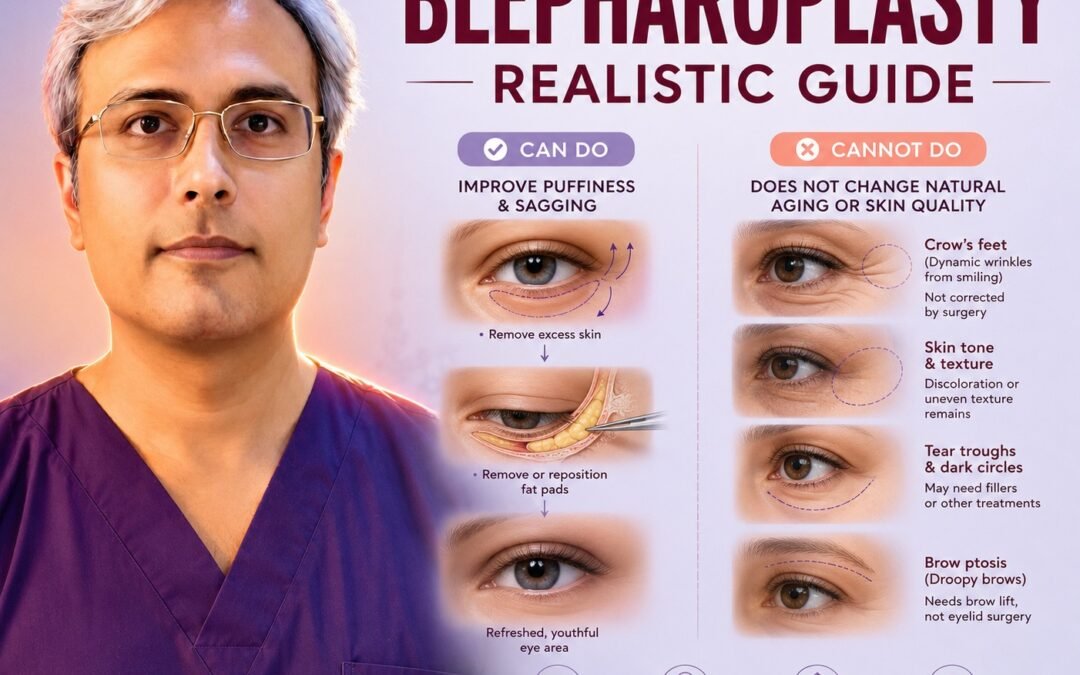
Most articles about eyelid surgery tell you what it achieves. Far fewer tell you where it stops. That second half matters more, because almost every disappointed patient I meet was disappointed by a gap between what they expected and what the operation was ever able...
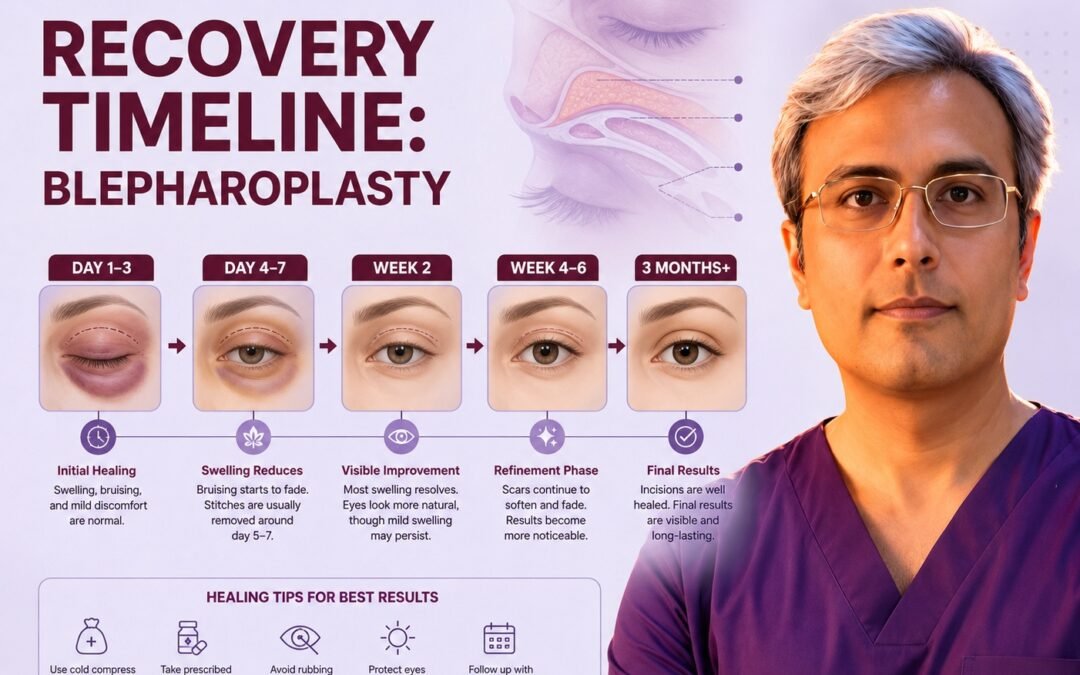
Most discomfort after blepharoplasty peaks in the first 48–72 hours and is managed with cold compresses, head elevation, lubricating drops and simple paracetamol. Avoid aspirin and ibuprofen unless your surgeon says otherwise. Contact your surgeon urgently for...
Most people are presentable in public around ten to fourteen days after eyelid surgery. But that figure hides a lot of variation, and it is not the same answer as “when will my eyes look finished.” Swelling settles in stages, and the last few percent of...
Most people heal from eyelid surgery without any drama. Swelling, bruising, watering, and a gritty feeling are all part of the normal process, and they settle on a predictable schedule. But a small number of problems are genuinely time-critical — and one of them can...




 English
  Hindi
Hindi