
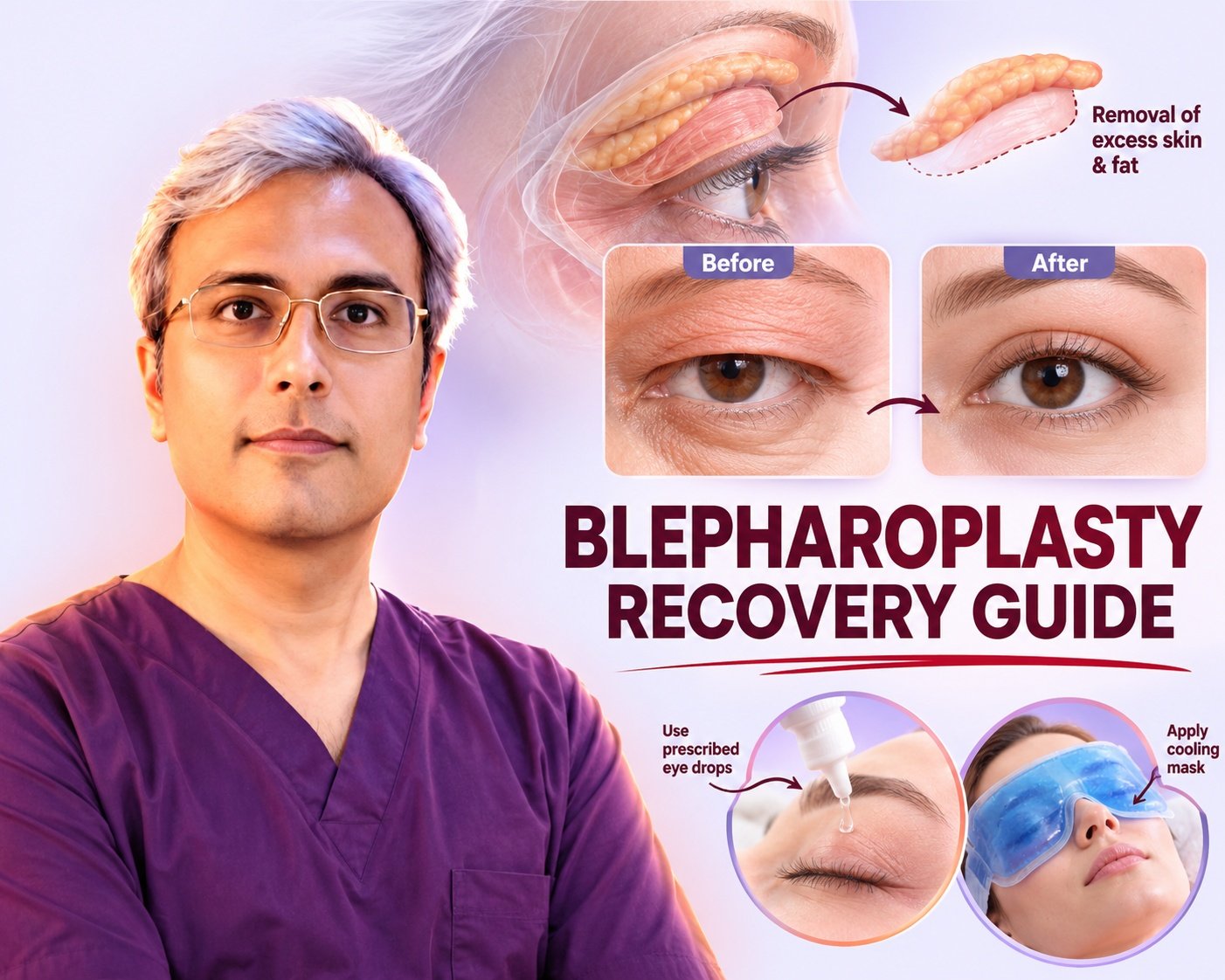
The first seven days after eyelid surgery are the ones patients ask about most, and they follow a fairly predictable pattern. This guide covers what is normal, what you should be doing each day to stay comfortable, and — most importantly — the small number of signs that mean you should contact us urgently rather than wait.
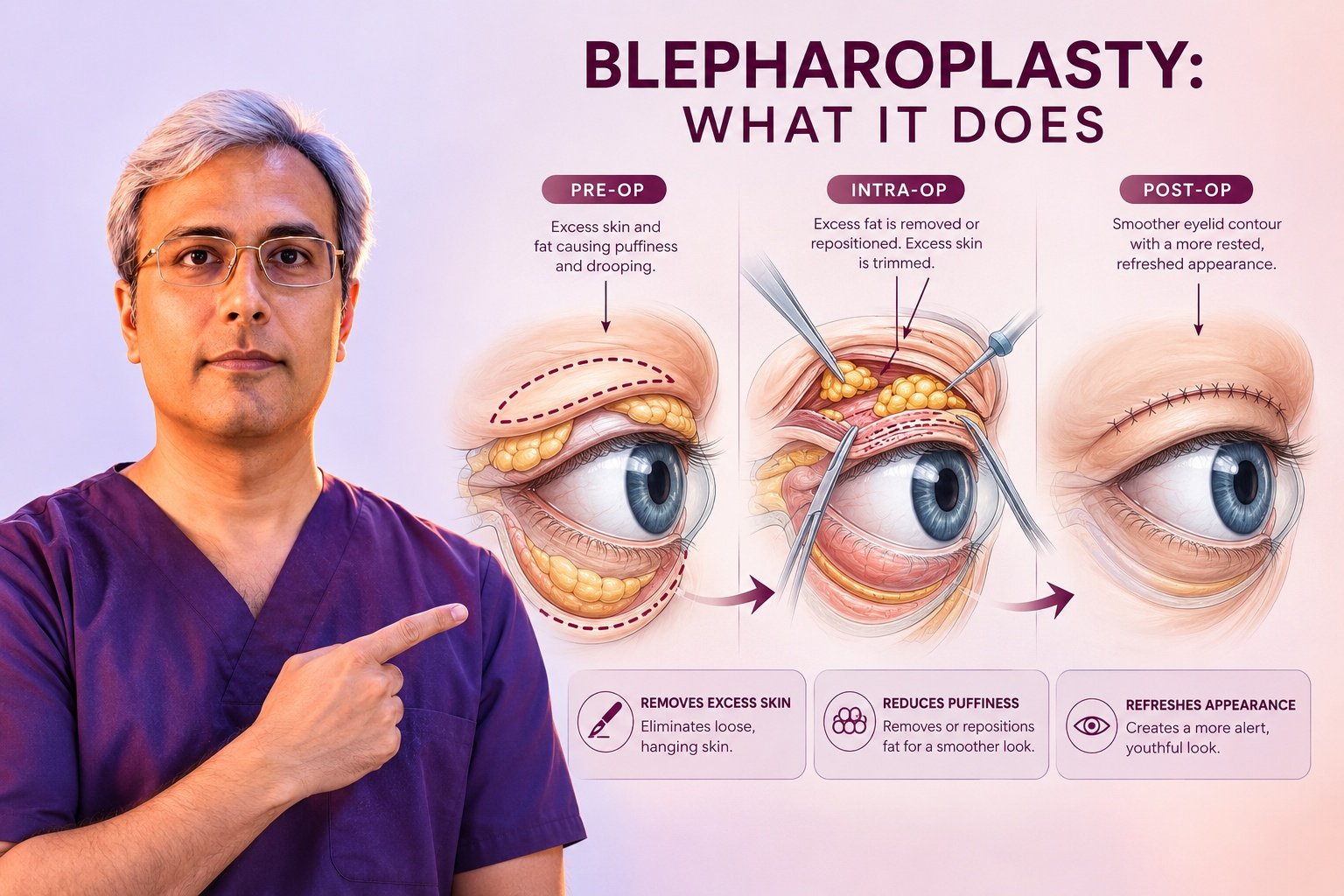
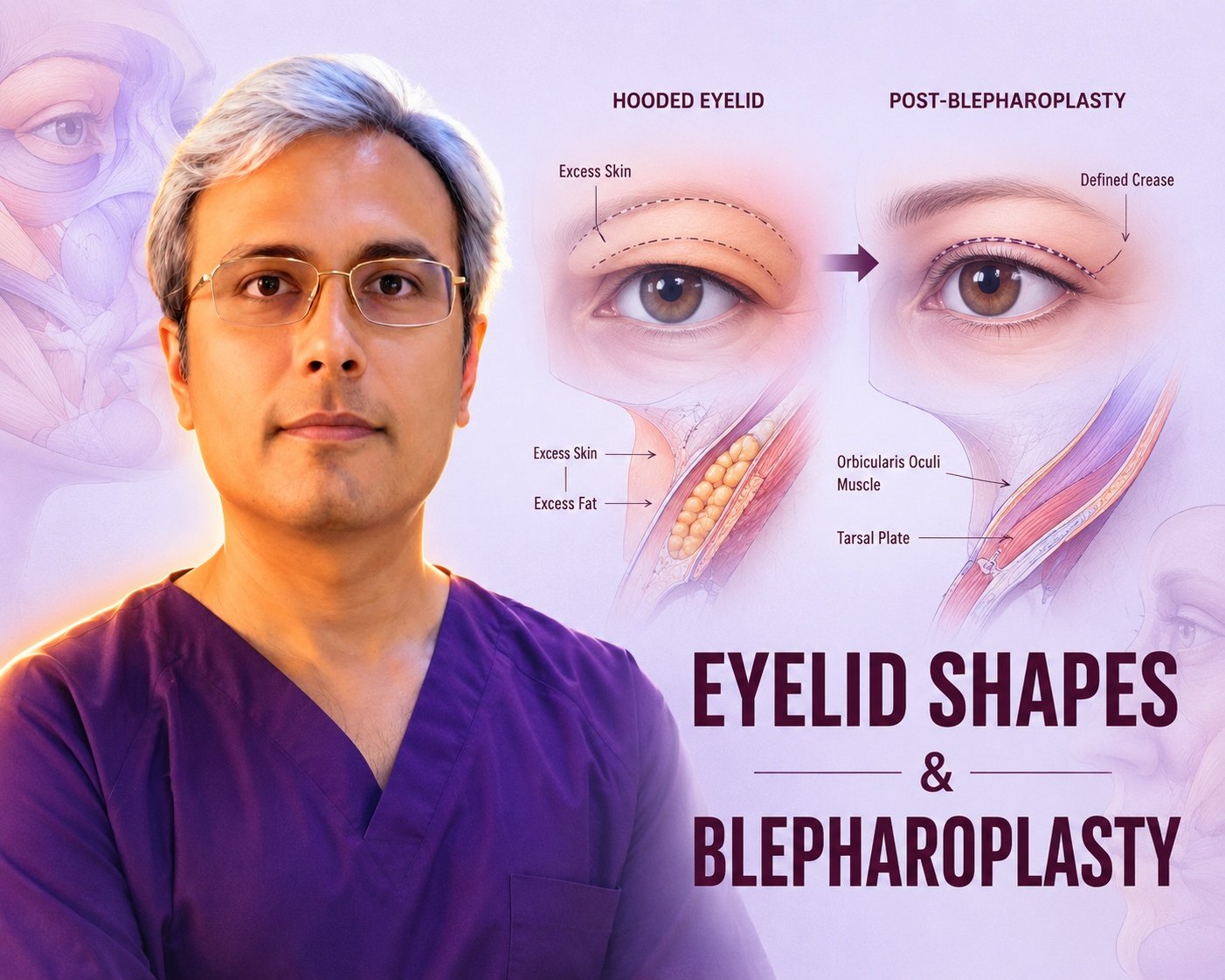
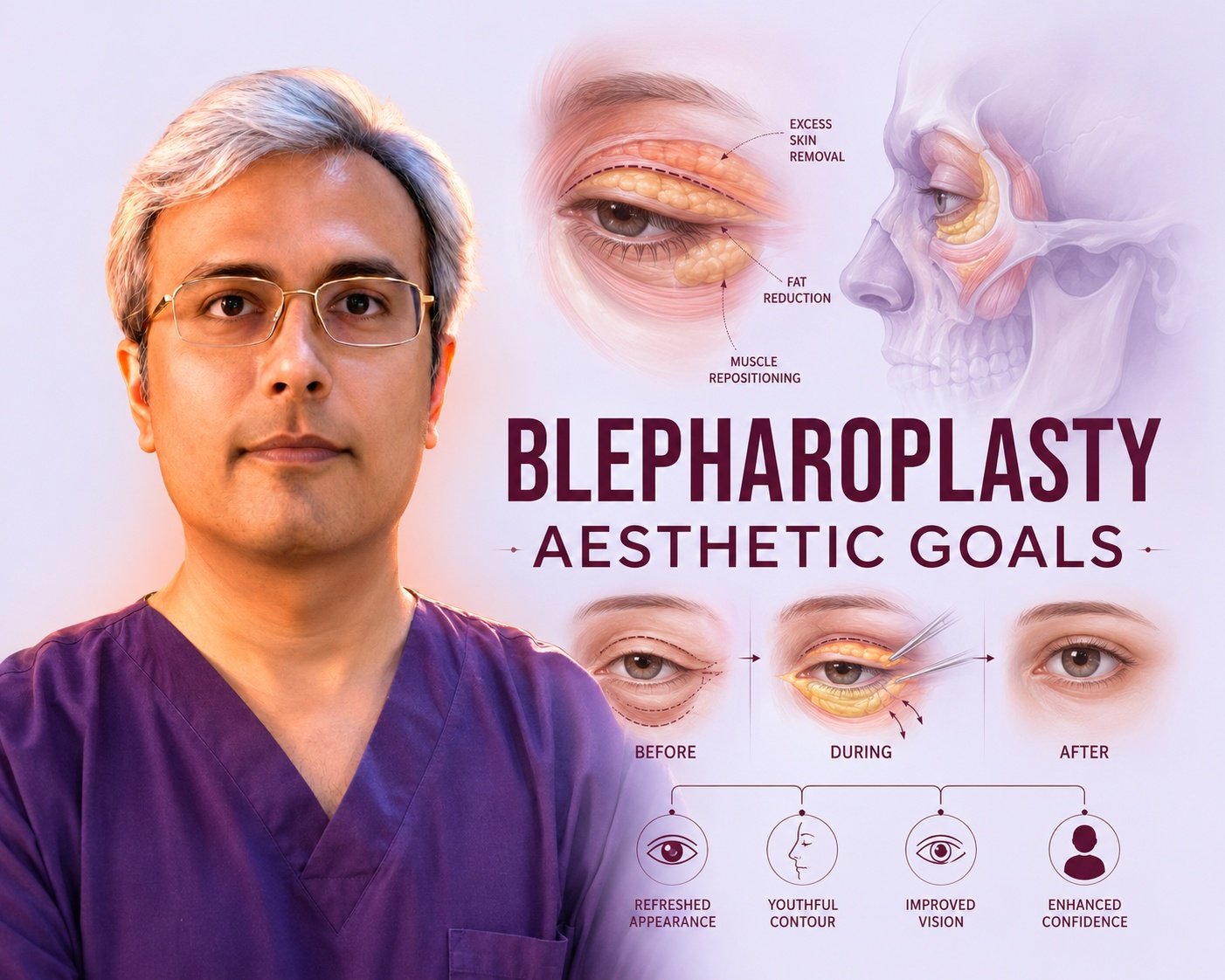
For the wider picture, including how the procedure itself is planned and performed, read our complete guide to blepharoplasty.
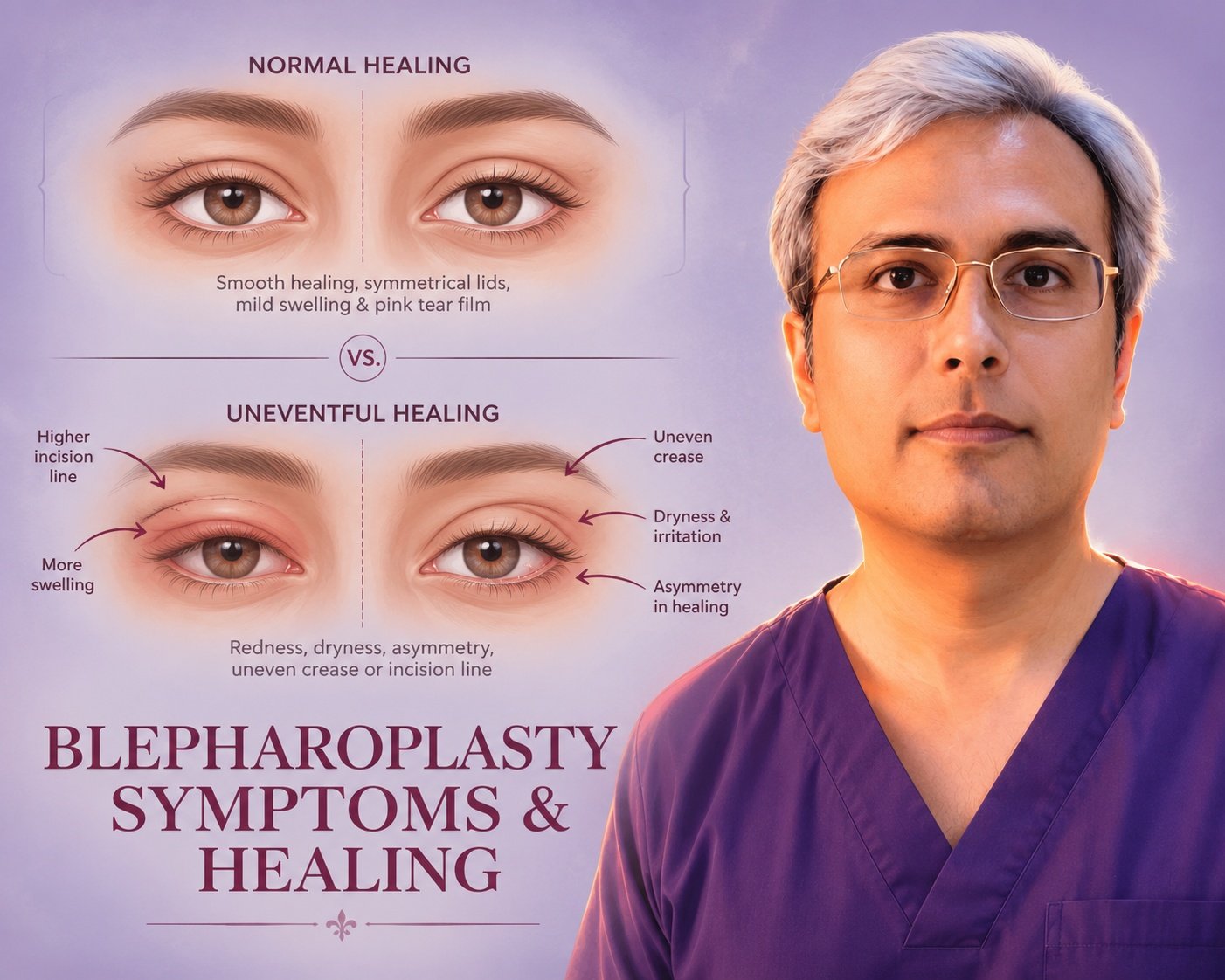
What Swelling and Bruising Actually Look Like
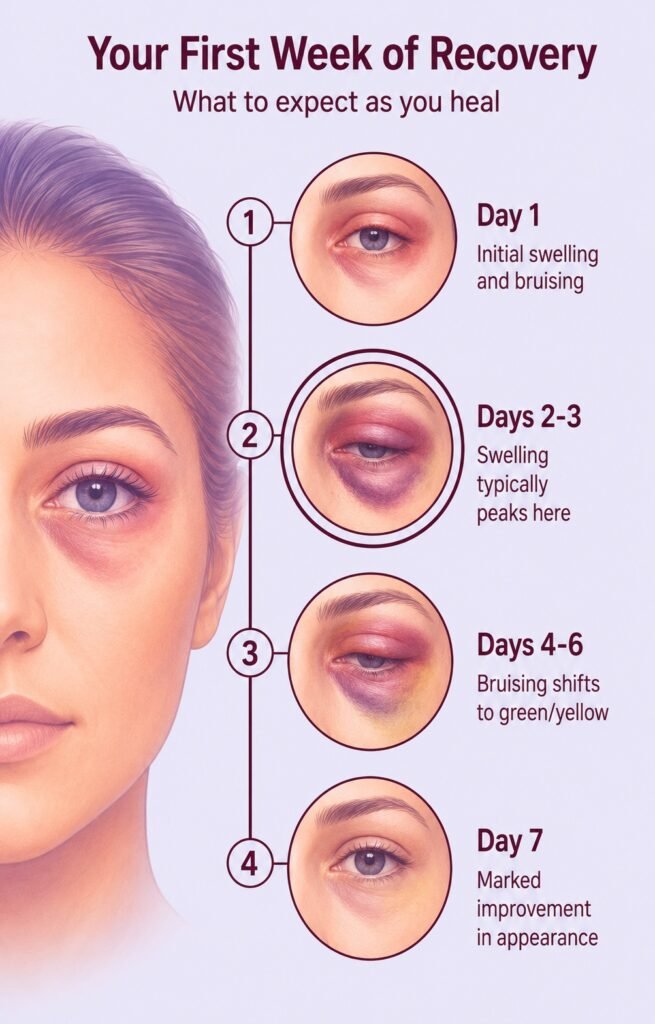
Swelling and bruising are expected, not complications. They are part of the normal inflammatory phase of healing, and their pattern is reassuringly consistent from patient to patient.
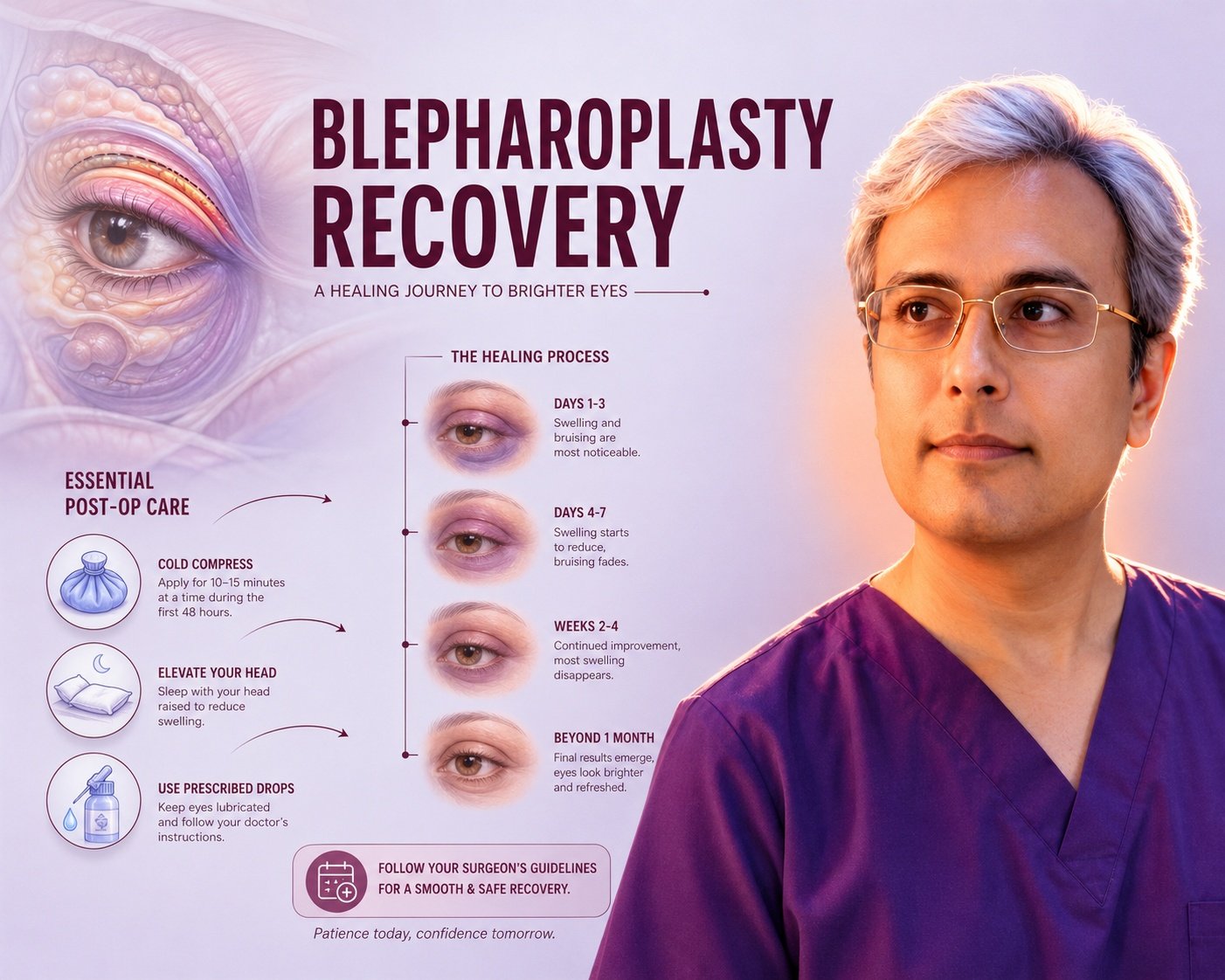
Swelling typically peaks somewhere between 48 and 72 hours after surgery, which means day two or three often looks worse than day one. This surprises people who assume recovery is a straight line downwards. It isn’t, and the turn usually comes on day three or four, with a marked improvement by day seven.
Bruising moves through the familiar colour sequence — purple and blue in the first few days, then green and yellow as your body reabsorbs the blood — and it often drifts downwards onto the cheek under the pull of gravity before it fades. This is normal and does not mean anything has gone wrong.
How long it all lasts varies with your skin, your tendency to bruise, and how strictly you keep your head elevated in the first few days. Most of the visible swelling settles within one to two weeks, though fine residual puffiness along the incision can take several weeks more to fully resolve. Our detailed guide to managing swelling and bruising after eyelid surgery covers this in more depth.
Cold Compresses: How and When
Cold is the single most effective thing you can do in the first two days. It causes the small blood vessels around the eyelids to constrict, which limits both bleeding into the tissues and the local inflammatory response.
For the first 48 hours:
- Apply a cold pack for 10 to 15 minutes at a time, then leave it off for about 20 minutes. Aim for roughly one cycle every hour while you are awake.
- Always wrap the pack in a clean, soft cloth. Never place ice or a gel pack directly against the skin — the eyelid is the thinnest skin on the body and freezes easily.
- Rest the pack gently over closed lids. Do not press. There should be no weight on the eye itself.
- Stay propped up while you use it, so gravity keeps working with you.
Chilled gel packs, a bag of frozen peas wrapped in cloth, or clean gauze soaked in cool water all work. What matters is consistency in the first two days, not the device.
After 48 hours, stop the cold compresses. Beyond this point they no longer help swelling, and some patients find gentle warmth more comfortable from around day four onwards as bruising begins to clear. Ask us before starting warm compresses if your incisions are still fresh.
Sleep Position and Head Elevation
Sleep on your back for the whole first week. Side and front sleeping put direct pressure on healing eyelids and incision lines, and most people cannot control this once they are asleep — so it’s worth building a small barricade of pillows on either side to discourage rolling.
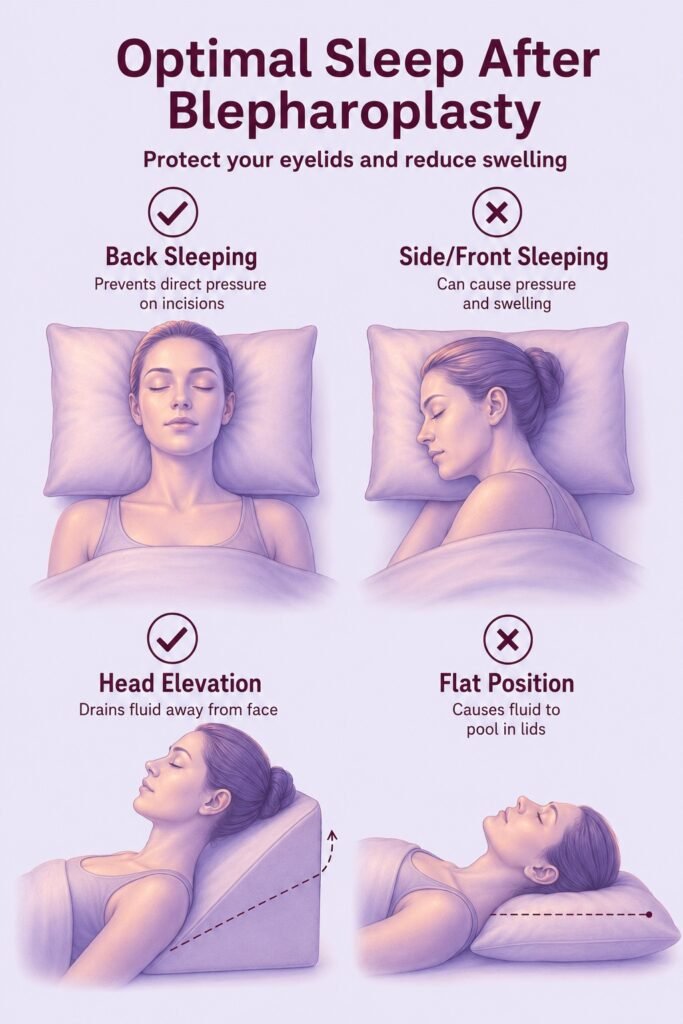
Keep your head clearly above the level of your heart. Two or three pillows work, though a wedge pillow or a reclining chair is more reliable, because stacked pillows tend to collapse overnight. Elevation is not a comfort measure — it is the mechanism by which fluid drains away from the face instead of pooling in the lids. Patients who keep this up strictly for the first three nights consistently look better on day four than those who don’t.
If you wake up markedly more swollen than when you went to bed, that is usually a sign your head slipped down flat during the night rather than a sign of a problem.
Activity Limits
Anything that raises the blood pressure in your head raises the risk of bleeding into the tissues, which is why the restrictions in the first fortnight are stricter than people expect.
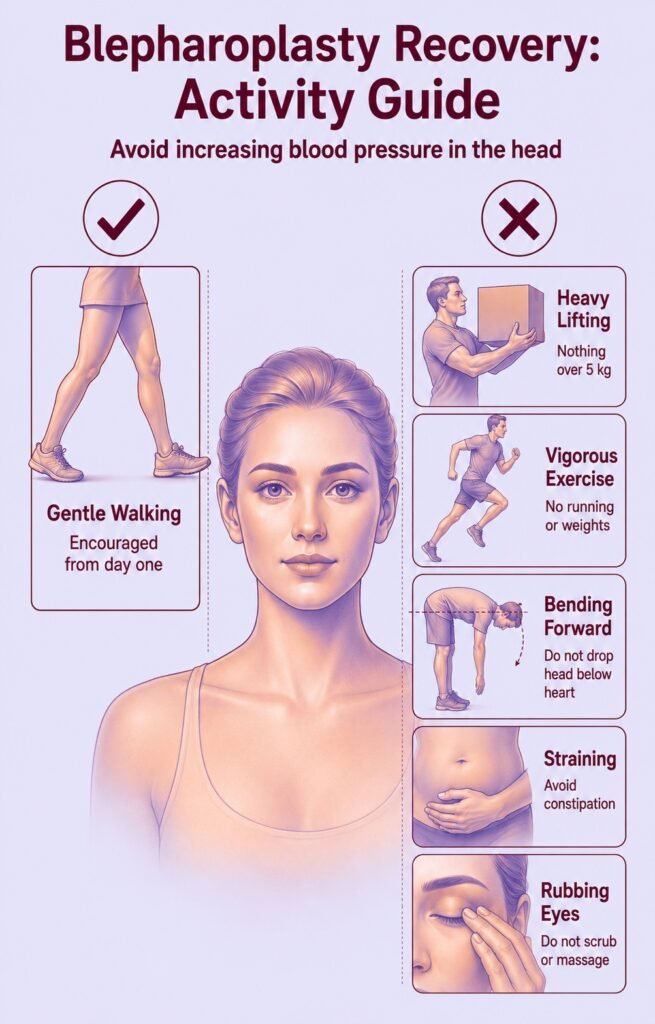
- No lifting over 5 kg (about 10 pounds) for two weeks. This includes children, shopping bags, and gym equipment.
- No vigorous exercise for two weeks. Running, jumping, weights, and anything that leaves you breathless can all spike pressure at the surgical site.
- No bending forward at the waist. Squat down instead if you need to pick something up — dropping the head below the heart is one of the commonest ways patients set their swelling back.
- Avoid straining. This includes constipation, so keep fluids and fibre up in the first week.
- Do not rub, scrub, or massage the eyes or face, however much they itch. Itching is a normal part of healing.
- Gentle walking is encouraged from day one. It helps circulation and mood without any of the above risks.
Eye Comfort, Dryness, and Protection
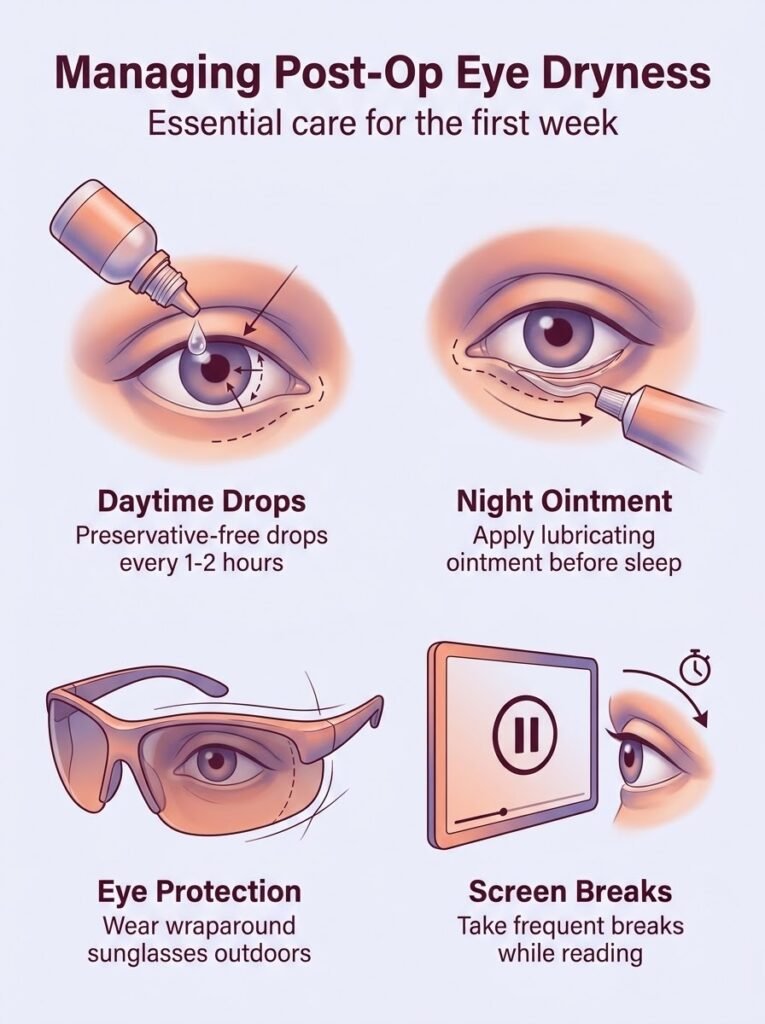
Temporary dryness, grittiness, watering, and light sensitivity are among the most common complaints in the first week. They happen because the lids blink incompletely and less often while they are swollen, so the tear film breaks up faster than usual. This is a transient problem in the vast majority of patients, but it does need active management — and it is managed with lubrication, not with a shield.
- Use preservative-free lubricating eye drops through the day, as often as every one to two hours if your eyes feel gritty.
- Use the lubricating ointment we prescribe at night. It will blur your vision temporarily. This is expected and clears by morning.
- Wear wraparound sunglasses outdoors, both for light sensitivity and to keep dust and wind off the incisions.
- No contact lenses for at least two weeks, or until we confirm the lids are settled.
- Expect screen and reading fatigue. Take frequent breaks in the first week; your blink rate drops sharply when you concentrate on a screen, which makes dryness worse.
If we have given you a protective eye shield, wear it at night while you sleep — its purpose is to stop you rubbing the area unconsciously. It is not something you wear during the day, and it does nothing for dryness.
Incision Care and Hygiene
- Clean the incisions exactly as instructed, usually with cooled boiled water or the solution we provide, using a fresh piece of gauze for each eye.
- Apply the prescribed ointment to the incision line in a thin film. More is not better.
- You may usually shower from around day two, but keep the face out of the direct spray and pat — never rub — the area dry.
- Sutures are typically removed between day five and day seven. We will confirm your date before you leave.
- No eye makeup until at least two weeks, and only once the incisions are fully sealed and we have cleared you. Applying and removing makeup too early irritates the healing scar and risks pigment settling in it.
- No smoking, which measurably impairs wound healing, and avoid alcohol in the first week, as it worsens both swelling and bruising.
- Driving is usually possible once vision is clear, comfortable, and unaffected by ointment or swelling — realistically towards the end of the first week for most patients, but do not drive while you are still taking sedating painkillers.
Medication and Pain Control
Most patients describe blepharoplasty as more uncomfortable than painful — a tight, heavy, gritty sensation rather than sharp pain. Severe pain is not a normal feature of this recovery, which is why it appears in the warning signs below.
| Medication | What it is for | How to use it |
|---|---|---|
| Simple analgesia (paracetamol) | First-line control of the aching and tightness of the first few days. | Take at regular intervals for the first 48 hours rather than waiting for pain to build. |
| Prescribed painkillers | Reserved for breakthrough discomfort in the first day or two. | Exactly as directed. Do not drive or make decisions while taking these. |
| Anti-inflammatory tablets (ibuprofen and similar) | Only if we have specifically prescribed them for you. | Do not take these on your own initiative. NSAIDs increase bleeding and bruising and are often deliberately avoided in the early post-operative period. |
| Topical antibiotic ointment | Applied to the incision line to keep it clean and moist. | As directed, usually two to three times daily. |
| Lubricating drops and ointment | For dryness, grittiness, and incomplete blink. | Drops through the day as needed; ointment at night. |
Take regular analgesia on a schedule for the first two days rather than chasing the pain once it has established. Tell us about any other medication or supplement you take — several, including some herbal preparations, increase bleeding risk.
Our separate guide on managing discomfort after eyelid surgery goes into more detail.
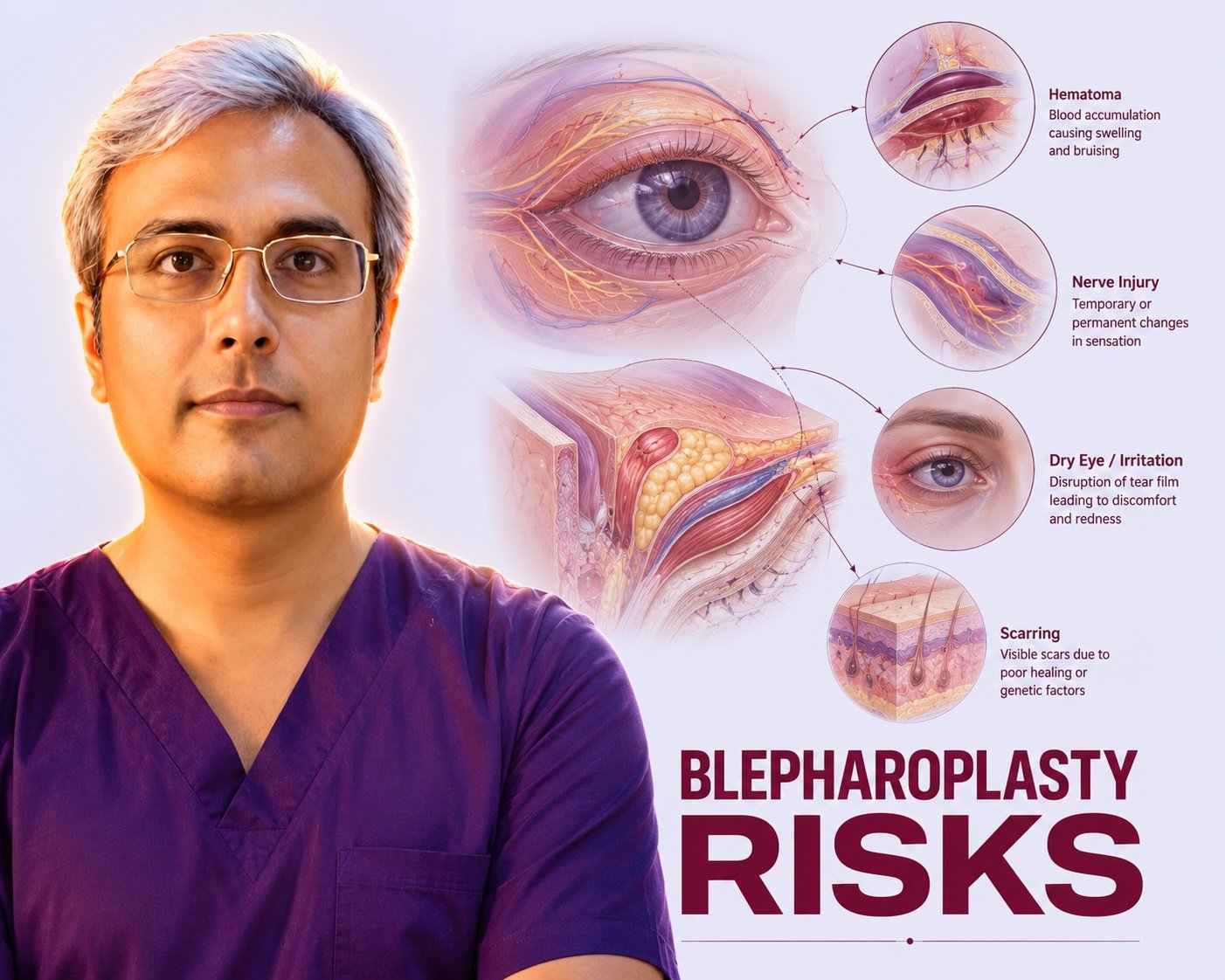
Warning Signs: When to Contact Us
Almost everything you experience in the first week will be normal. A small number of things are not.
Seek emergency care immediately — do not wait for a callback
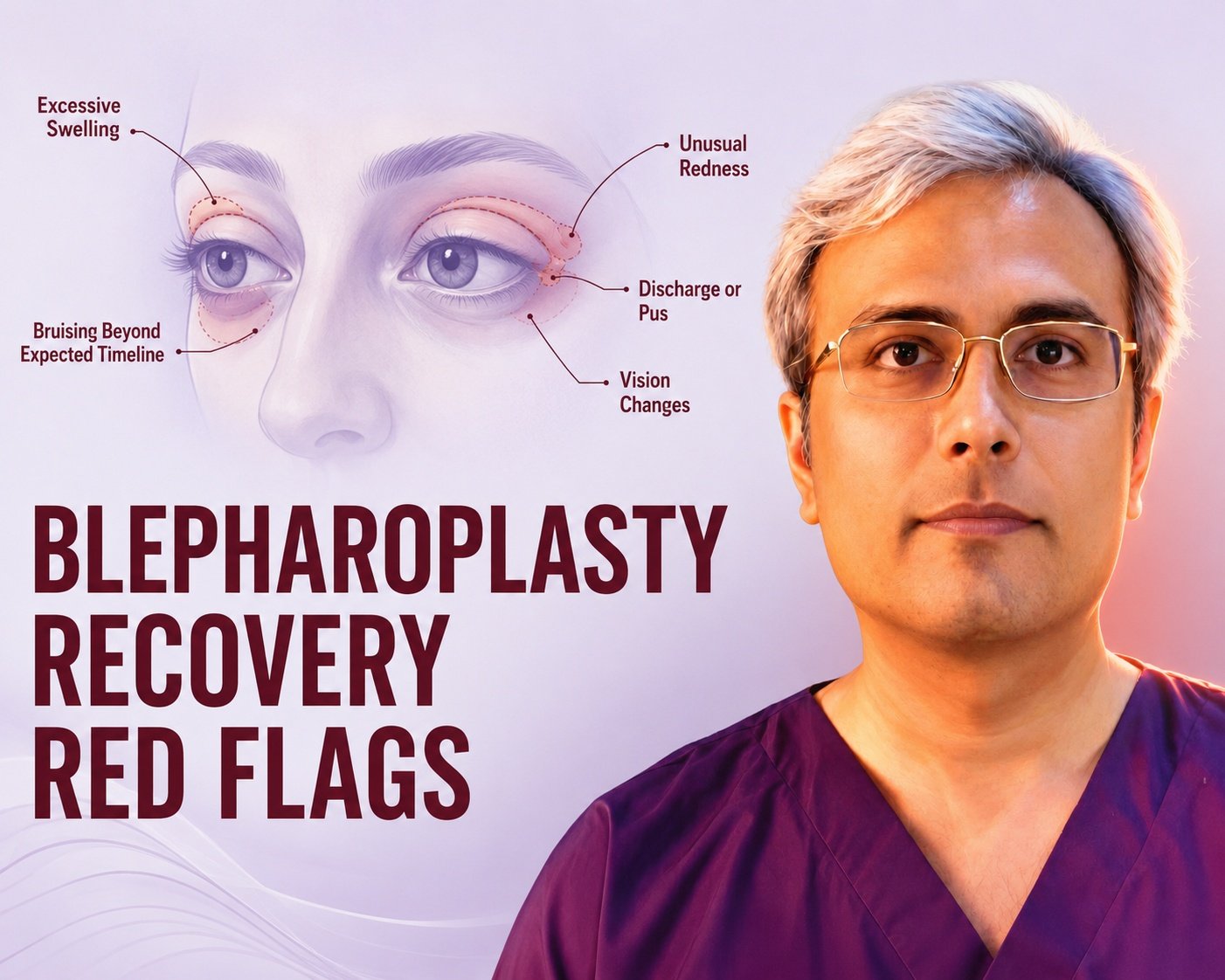
Escalating, severe pain behind the eye together with rapidly increasing swelling, a tense or bulging eye, or any loss or dimming of vision. This combination can indicate bleeding behind the eye, which is rare but sight-threatening and time-critical. Go to the nearest emergency department and call us on the way. Do not wait to see whether it settles.
Call our office the same day
- Swelling or redness that is clearly worsening after day three, rather than improving.
- Signs of infection: thick yellow or green discharge, pus at the incision, or spreading redness.
- Fever or chills.
- Bleeding from the incision that does not stop with five minutes of gentle pressure.
- Double vision, or an eyelid that will not close.
- Pain that is not controlled by the medication we have given you.
Contact Dr. Purohit’s team on +91-7718183535. Our full guide on when to seek medical attention after eyelid surgery describes each of these in more detail.
Frequently Asked Questions
How long will the swelling last after blepharoplasty?
Swelling peaks at 48 to 72 hours and then begins to improve. Most of the visible swelling has gone within one to two weeks, though subtle puffiness along the incision can take several weeks more to settle completely.
When can I start exercising again after eyelid surgery?
Light walking from day one. No lifting over 5 kg and no vigorous exercise for two weeks, after which we will guide you back gradually at your follow-up.
How do I know if it’s infected after a blepharoplasty?
Look for thick yellow or green discharge, pus at the incision, spreading redness, or fever — particularly if these appear or worsen after day three. Clear watering and yellow-green bruising are not infection.
Why do my eyelids feel heavy and my vision blur after eyelid surgery ?
Heaviness comes from swelling and settles over the first week. Intermittent blurring is usually from the lubricating ointment or an unstable tear film, and clears between applications. Persistent or worsening blurring is different — see the warning signs above.
When can I wear eye makeup again after blepharoplasty?
At least two weeks, and only once the incisions are fully sealed and we have cleared you at follow-up. Earlier application risks irritation and pigment settling into the healing scar.
When can I wear contact lenses after blepharoplasty?
At least two weeks, and only once we confirm the lids are settled. Inserting lenses requires handling the lid, which is exactly what you are avoiding in the early weeks.
About the Author
Dr. Vishal Purohit — MBBS, MS (General Surgery), MCh (Plastic Surgery) — is a plastic and cosmetic surgeon practising in Jaipur at Kalpana Aesthetics, where every recovery plan is tailored to the individual patient.
To discuss your suitability for eyelid surgery or to book a consultation, call +91-7718183535, or read more about cosmetic surgery in Jaipur.
Medically reviewed by Dr. Vishal Purohit. Last updated 26 July 2026.
Disclaimer: This article is general information about recovery after cosmetic eyelid surgery and does not replace the specific instructions given to you by your own surgeon. Where the two differ, follow your surgeon’s instructions. If you are concerned about a symptom, contact your surgical team.
References
- Initial inflammatory phase in periorbital surgery — https://doi.org/10.1055/s-0032-1312705
- Cold therapy and localised inflammation — https://doi.org/10.7759/cureus.53858
- Dry eye after blepharoplasty — https://doi.org/10.4274/tjo.galenos.2025.69812
- Infection and antibiotic considerations in oculoplastic surgery — https://doi.org/10.1097/IOP.0000000000002442
- Post-operative pain scores after eyelid surgery — https://doi.org/10.3341/kjo.2023.0011





 English
  Hindi
Hindi