
Two questions come up more than any others in the weeks after eyelid surgery: why do my eyes feel dry and gritty, and why does one side look different from the other.
Both are common. Both usually settle. But “usually” is not “always,” and knowing where the line sits — between an expected part of healing and something that needs to be looked at — is what stops a normal recovery from becoming an anxious one.
This page covers what to expect, what you can do about it, and the small number of symptoms that mean you should stop reading and get medical help immediately.
For the wider procedure overview, see our full guide to blepharoplasty.
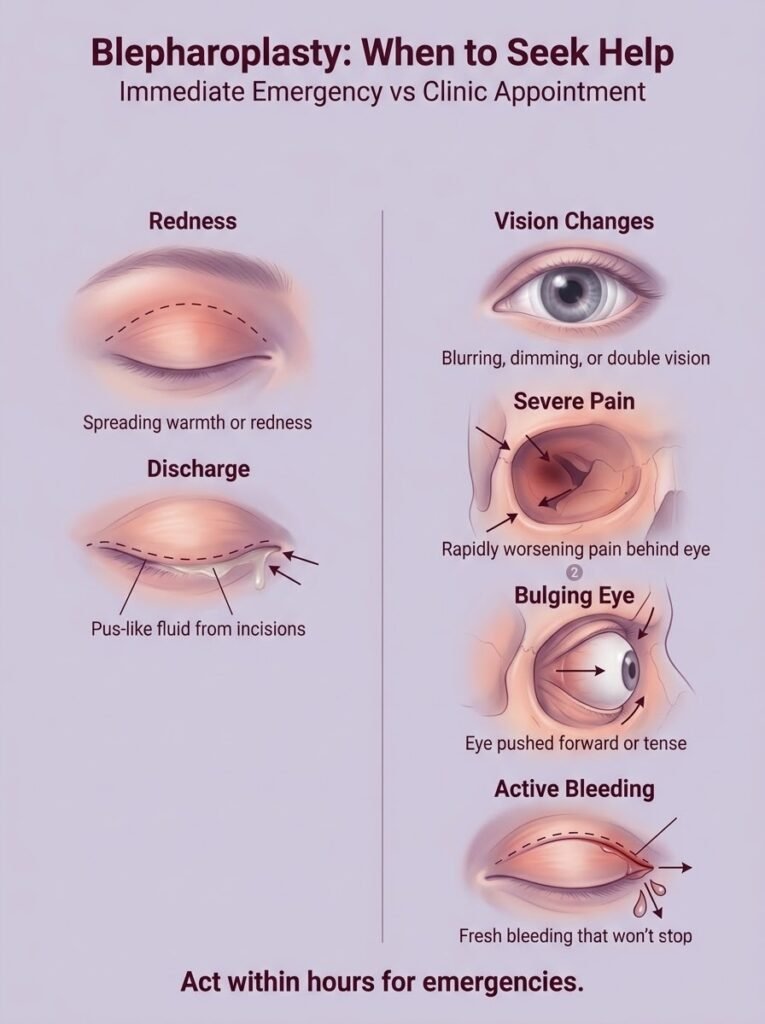
Urgent warning signs — do not wait
Contact an emergency department or eye casualty immediately, at any hour, if you experience:
- Sudden or rapidly worsening pain behind or around the eye, especially pain that is out of proportion to what you have been feeling
- Any change in vision — blurring, dimming, double vision, loss of vision
- A tense, bulging or forward-pushed eye, or an eyelid so swollen and hard you cannot open it
- Heavy or fresh bleeding from an incision that does not stop with gentle pressure
Together these can indicate a retrobulbar haemorrhage — bleeding in the space behind the eye. It is rare, but it is time-critical, and vision is preserved by acting within hours rather than waiting for a clinic appointment.
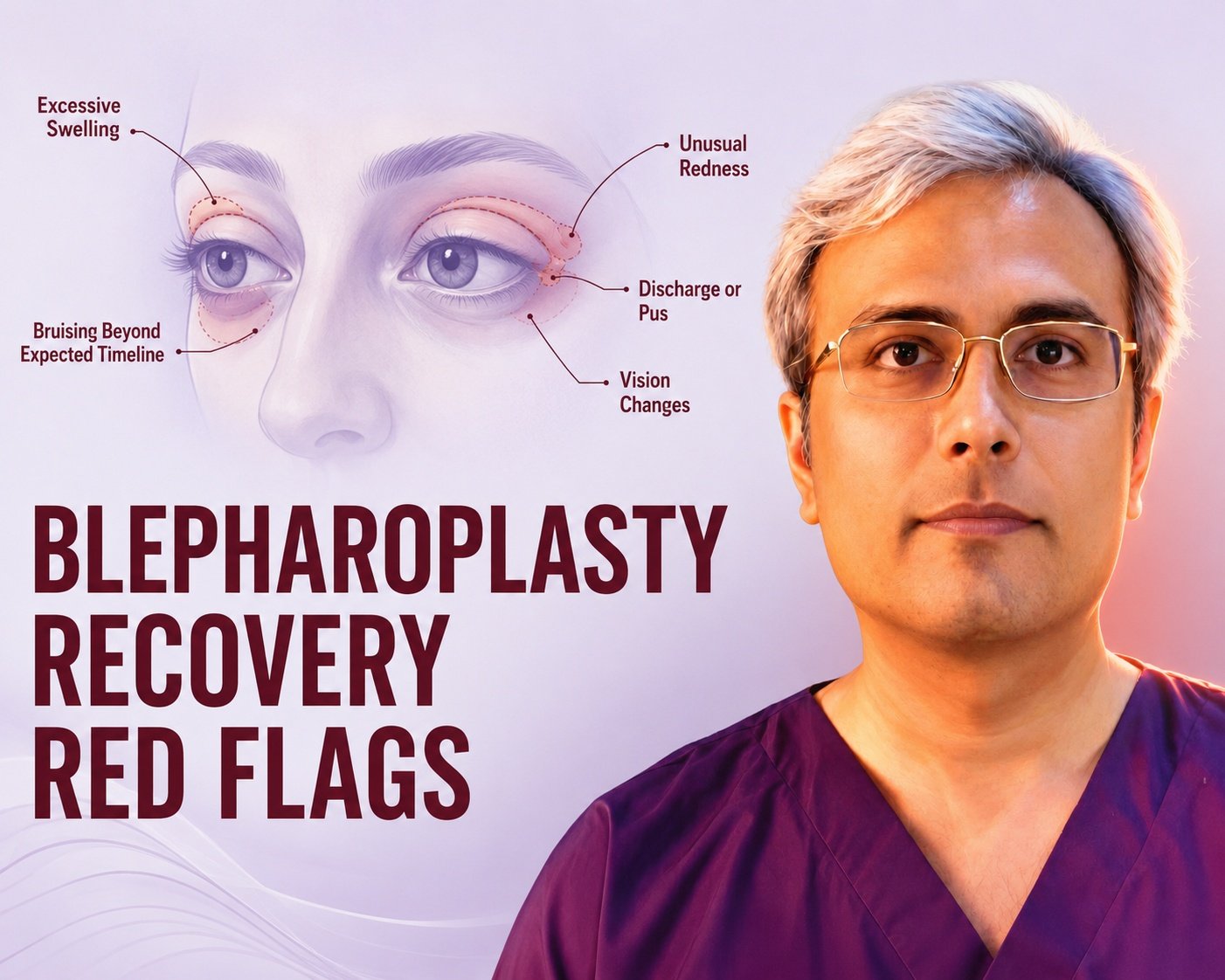
Also call the clinic (during working hours is fine) for: spreading redness and warmth around the incisions, pus-like discharge, fever, or an eyelid that has started to turn outward or inward.
Dry eyes after eyelid surgery
Why it happens
Blepharoplasty temporarily disrupts the mechanics of the tear film in several ways at once. Swelling changes how the lids sit against the eye. Blink strength and completeness are reduced while tissues are tender. In upper lid surgery, mild lagophthalmos — an inability to close the lids fully, particularly during sleep — is common in the early weeks, which leaves the lower part of the cornea exposed and drying overnight. Sensory nerve fibres in the lid skin are also interrupted, which blunts the reflex that triggers tear production.
The result is the familiar cluster: grittiness, burning, a foreign-body sensation, light sensitivity, fluctuating blurred vision that clears when you blink, and — counterintuitively — watering. Reflex tearing is a classic sign of a dry eye, not a wet one.
Post-operative dry eye symptoms are well described in the ophthalmic literature (review), and lubrication remains the first-line response (aesthetic surgery review).
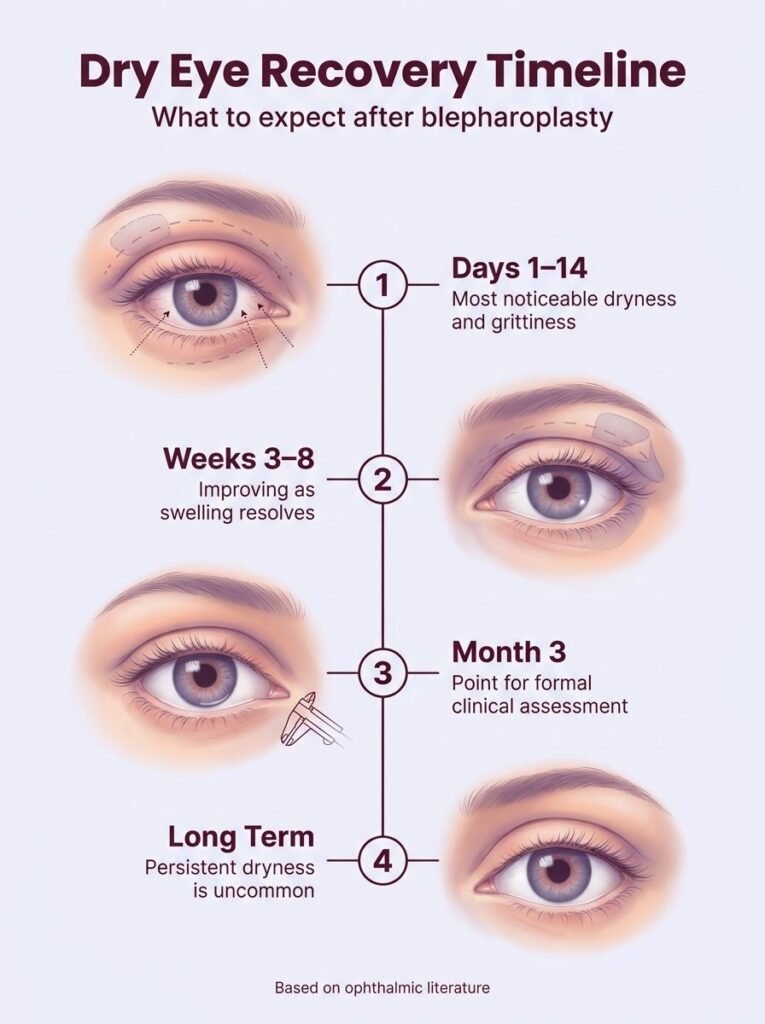
How long it lasts
Be prepared for longer than a week.
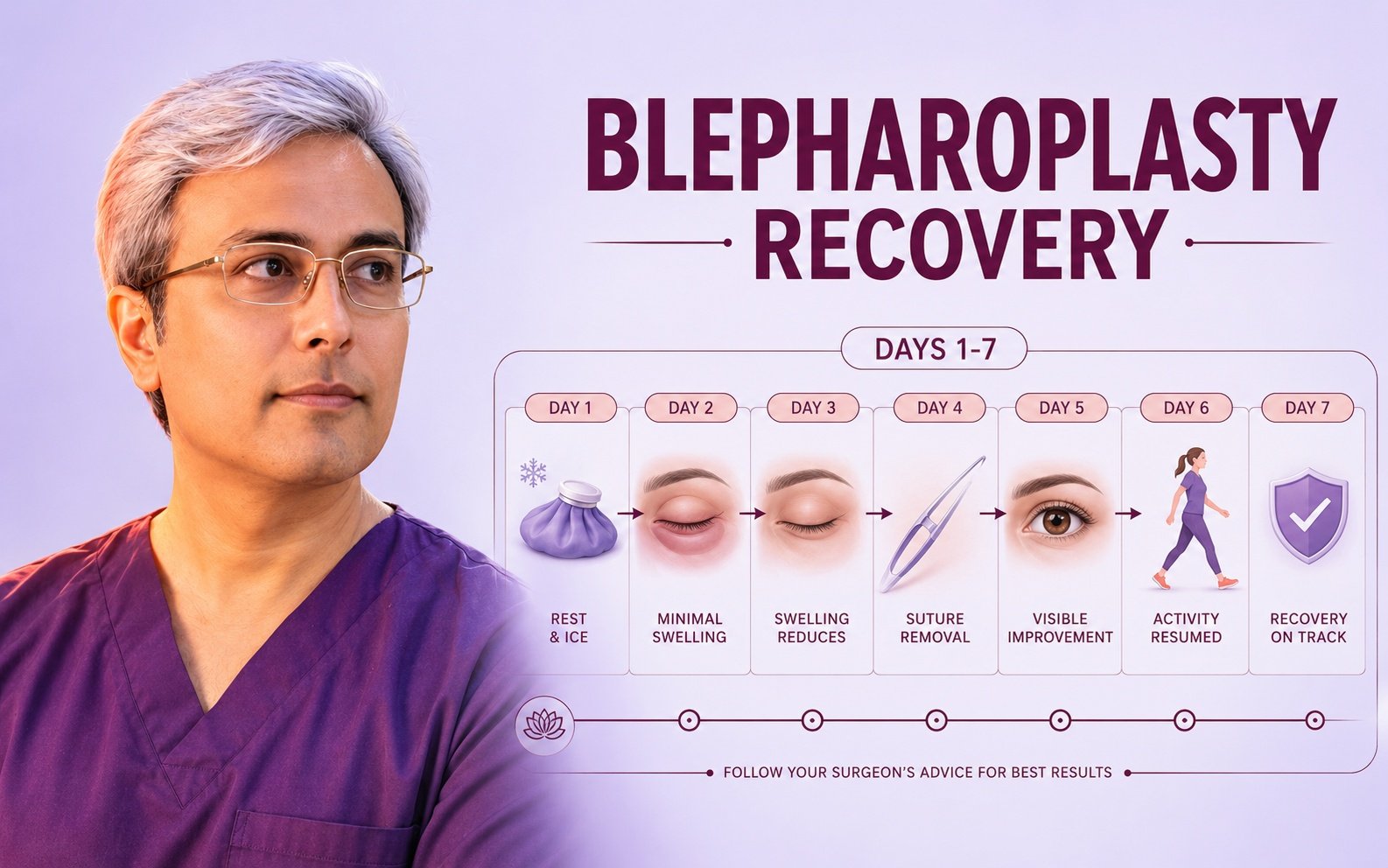
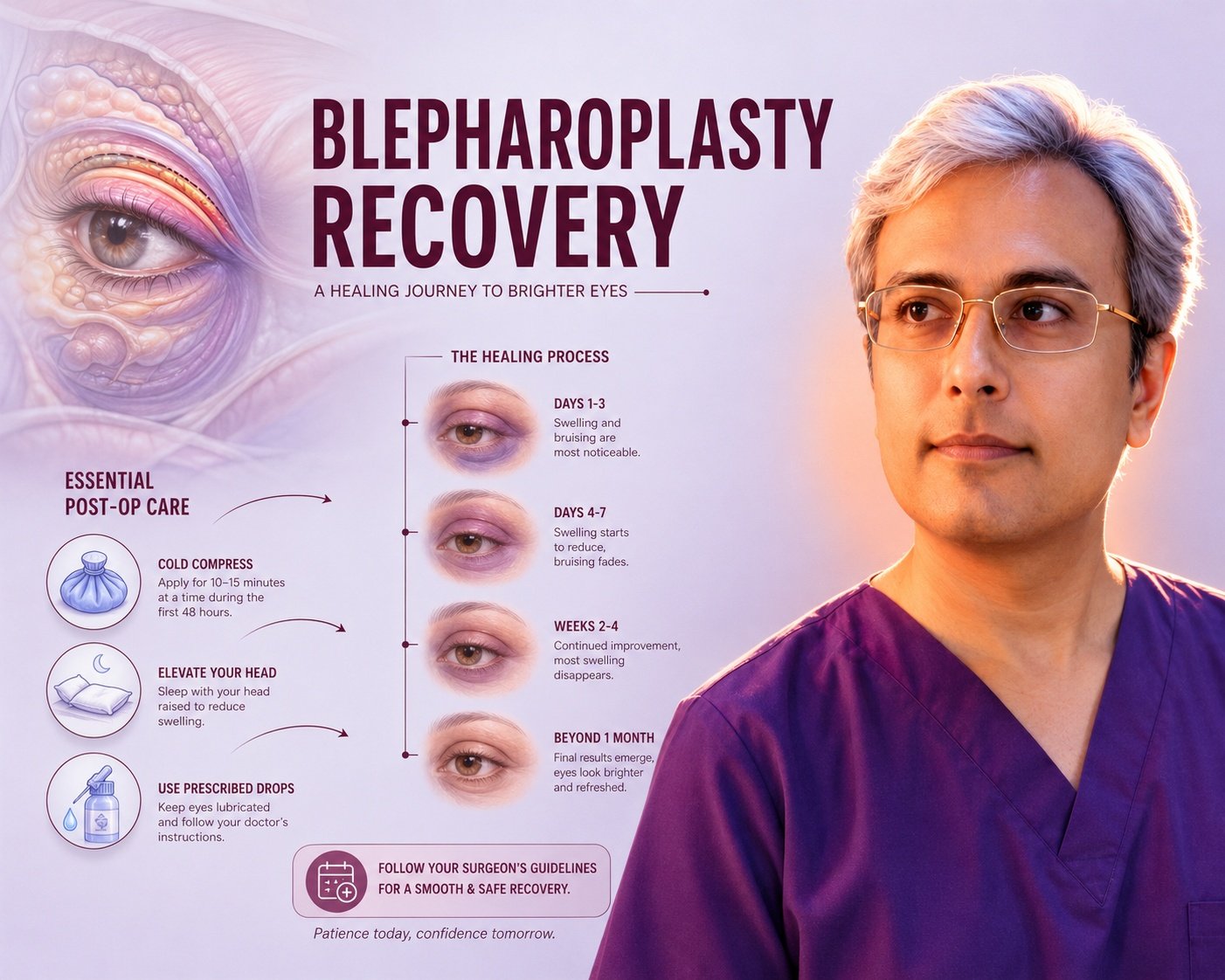
- Days 1–14: most noticeable. Nearly everyone experiences some degree of dryness or grittiness here.
- Weeks 3–8: steadily improving as swelling resolves and lid closure returns to normal.
- Beyond 3 months: a minority of patients still have symptoms. This is the point at which we want to assess you formally rather than continue with drops alone.
Published incidence varies widely — anywhere from roughly 8% to 25% depending on how “dry eye” is defined and how hard investigators look for it. The honest answer is that mild transient dryness is very common and persistent troublesome dryness is uncommon.
Who is at higher risk
Some patients start from a lower reserve. You are more likely to have prolonged dryness if you have:
- Pre-existing dry eye disease or meibomian gland dysfunction — including undiagnosed cases where you simply use drops occasionally and think nothing of it
- Previous LASIK, PRK or other corneal refractive surgery — corneal nerve density is already reduced
- Thyroid eye disease or any condition causing lid retraction or a prominent globe
- Negative vector anatomy — a prominent eye relative to the cheek, where the globe sits forward of the infraorbital rim
- Lower lid laxity — a lid that snaps back slowly when pulled away from the eye
- Facial nerve weakness or previous Bell’s palsy affecting blink
- Age over 60, or post-menopausal hormonal change
- Long screen hours, contact lens wear, or medications such as antihistamines, diuretics, beta blockers and some antidepressants
This is why we test tear film and lid laxity before surgery, not after. If you fall into these groups, the surgical plan changes — often toward a more conservative skin excision, or adding lower lid support.
What actually helps
Specific measures, in rough order of usefulness:
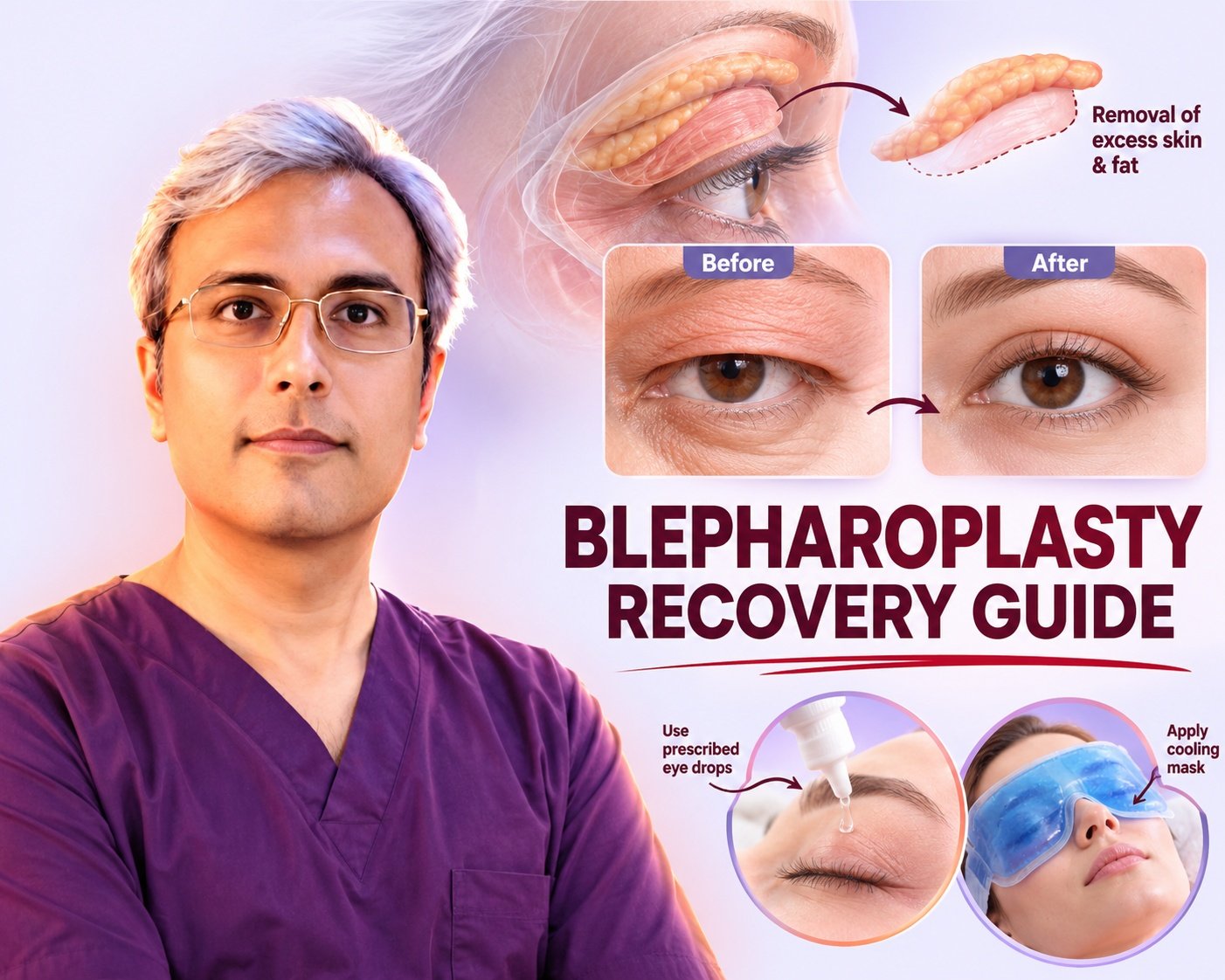
- Preservative-free artificial tears, four to six times a day as a baseline, more if needed. Preservative-free matters — benzalkonium chloride in multi-use bottles worsens surface irritation with frequent use.
- A thicker gel or ointment at bedtime. This is the single most useful step for overnight exposure. It will blur vision temporarily, which is why it is a night-time measure.
- Sleep with the head elevated on two pillows for the first two weeks. Reduces swelling, which improves lid closure.
- Keep airflow off your face. No sleeping directly under a ceiling fan or in the path of an air conditioner or car vent. In Jaipur’s dry pre-monsoon air this makes a substantial difference — see our notes on caring for your eyes in a dry climate.
- Run a humidifier in the bedroom if indoor air is dry.
- The 20-20-20 rule for screens: every 20 minutes, look 20 feet away for 20 seconds. Blink rate drops sharply during concentrated screen use.
- Lid taping at night, if we have identified lagophthalmos at your review. We will show you the technique — done incorrectly it can abrade the cornea, so please don’t improvise this.
- Cool compresses — 10 minutes at a time, several times daily, for the first 48–72 hours. Never place ice directly on the skin.
- Contact lenses stay out for at least two weeks, and longer if the surface is still irritable.
If symptoms are still limiting you at three months, there are further options — punctal plugs, topical anti-inflammatory therapy, meibomian gland treatment — and persistent cases are worth a joint assessment with an ophthalmologist (discussion of persistent post-blepharoplasty dryness).
Asymmetry: three different things wearing the same name
“My eyes look uneven” can mean three quite different situations, and they have different answers.
1. Swelling-related asymmetry (very common, self-resolving)
Fluid does not distribute evenly. One side drains faster than the other, particularly if you tend to sleep on one side. This is the commonest cause of uneven appearance in the first six weeks and it needs no treatment beyond time, head elevation and patience.
You cannot judge your result during this window. Genuinely — photographs taken at week two are not informative about your outcome.
2. Pre-existing asymmetry (very common, and it was always there)
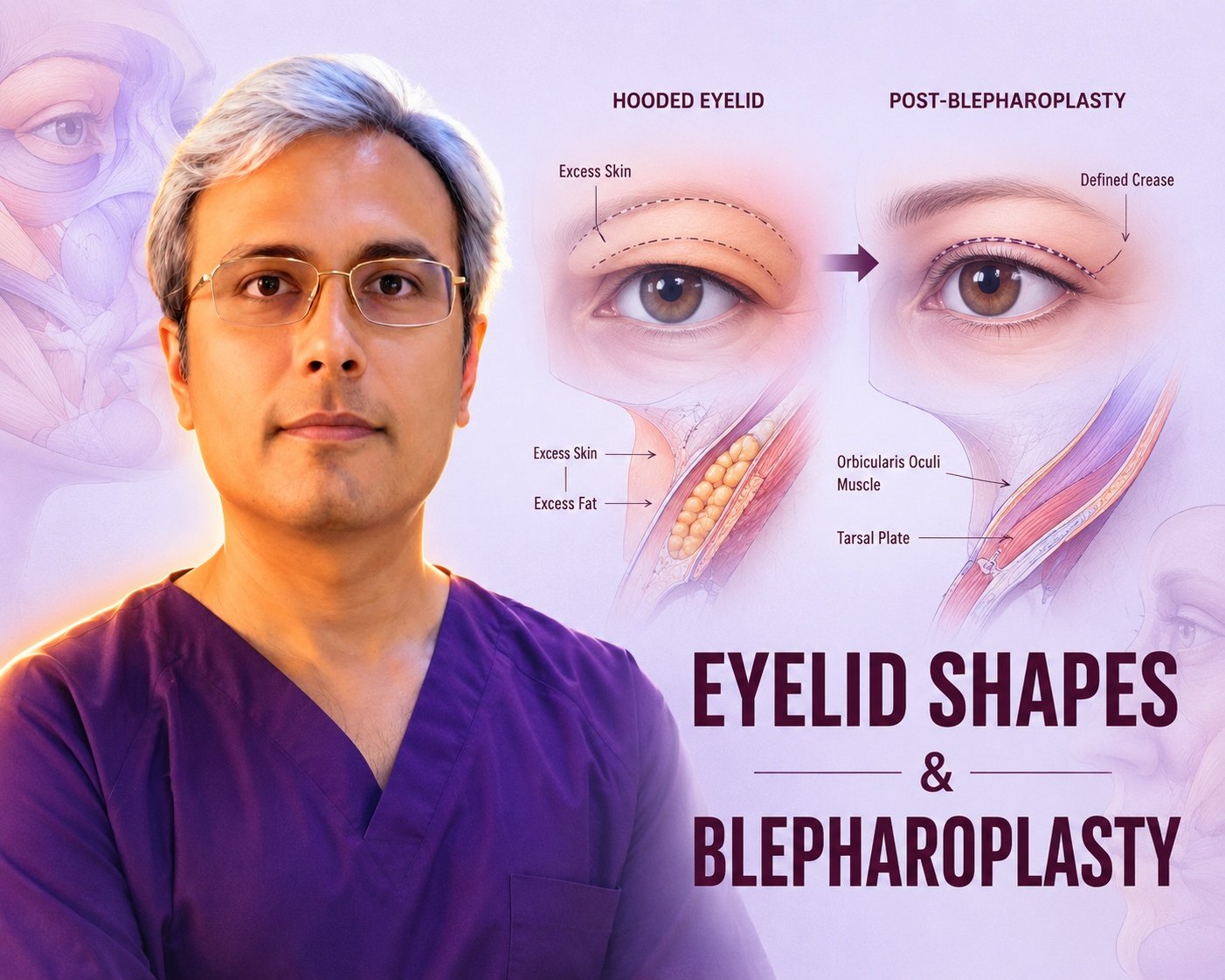
Almost no face is symmetrical. Brow height, lid crease height, upper lid show, orbital rim projection and even eye position differ between sides in the overwhelming majority of people. Most patients have simply never studied their own eyes closely before — and then spend the recovery period looking at nothing else.
A pre-existing difference in brow position is the one most often mistaken for a surgical asymmetry, because the brow drives how much upper lid skin shows. If one brow sits lower than the other, that lid will look heavier no matter how precisely the skin was marked.
This is why we photograph and point out existing asymmetries during your consultation. Surgery can reduce some of them; it cannot make an asymmetrical face symmetrical, and a surgeon who promises that is overpromising.
3. True post-surgical asymmetry (uncommon)
A genuine difference in crease height, skin removal or lid position that persists after swelling has fully resolved. Assessment is possible from around three months, and revision — if warranted — is normally considered at six months, once scar tissue has matured and softened.
Operating earlier into inflamed, still-remodelling tissue tends to produce a worse result than waiting. Revision is a real and effective option; it is just not an urgent one.
The exception is a functional problem — an eyelid that is not closing, or one that has rolled outward (ectropion) — which is assessed early rather than watched.
Things you can control that genuinely affect healing
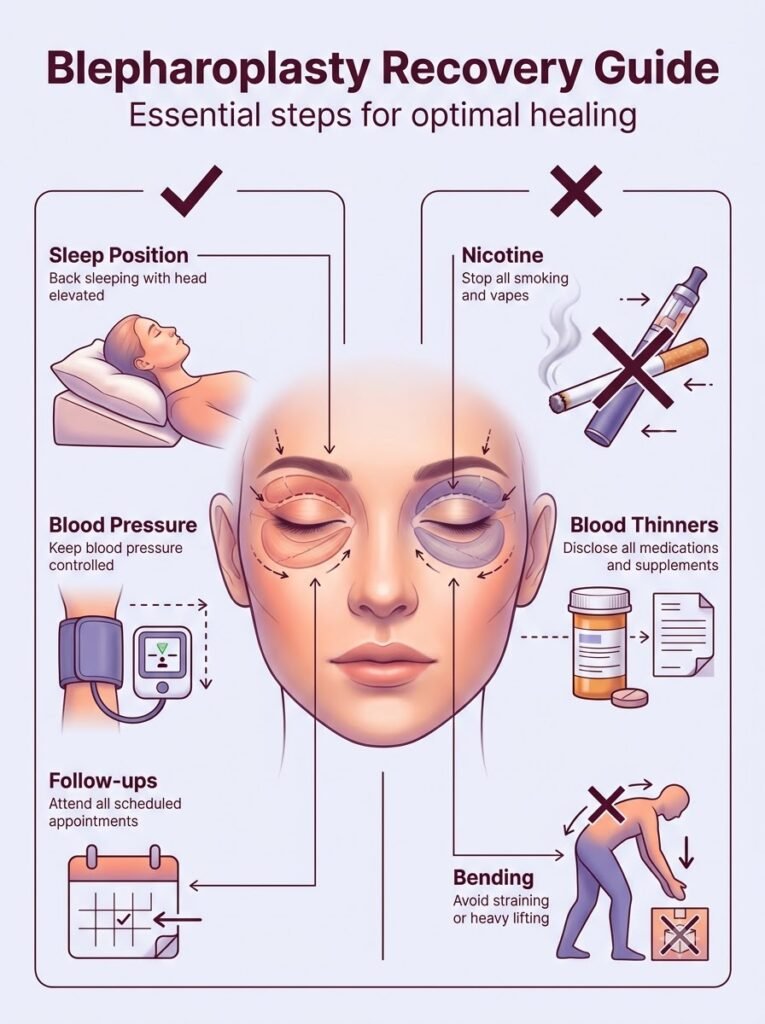
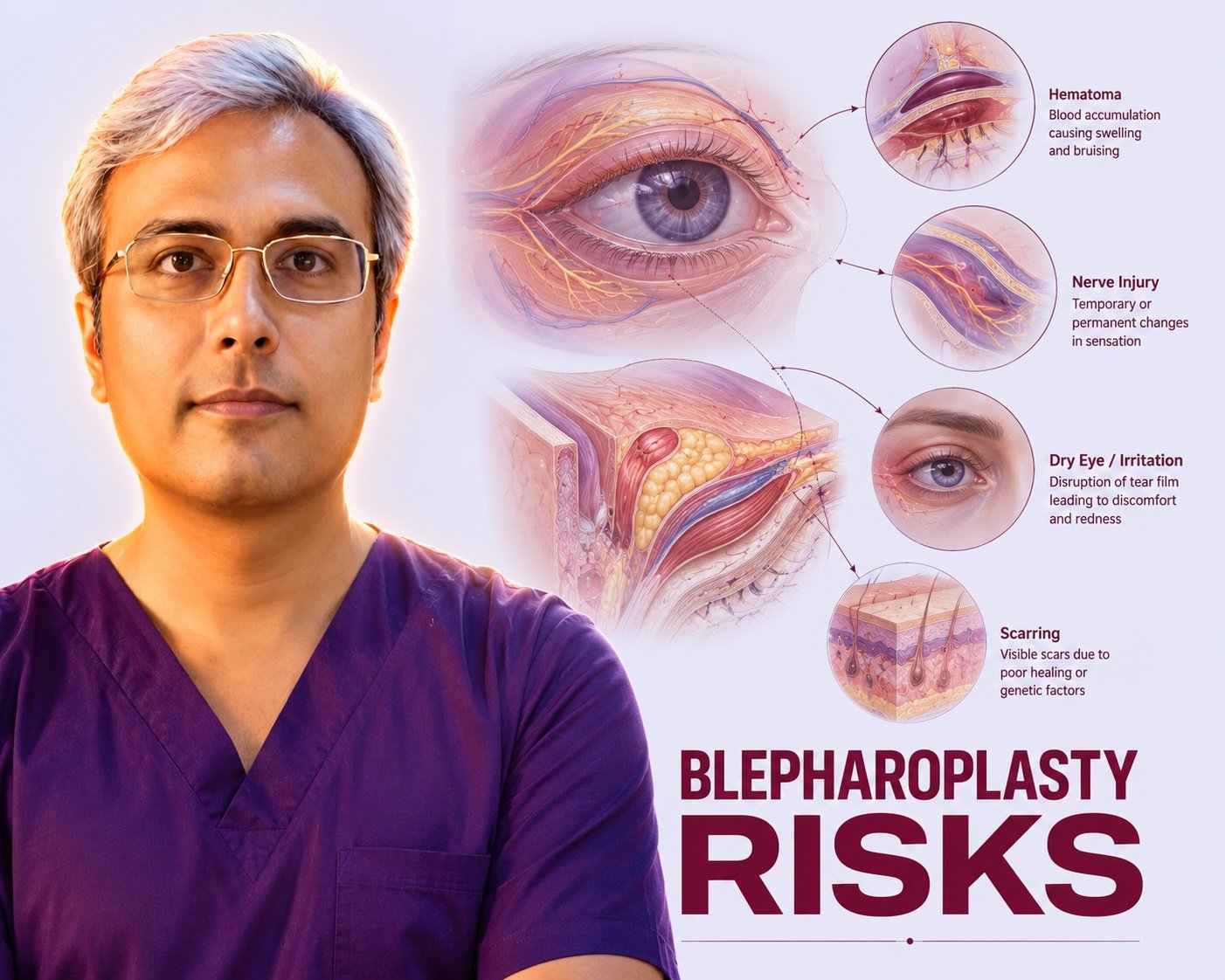
- Stop smoking and all nicotine — vapes, patches and gum included. Nicotine constricts the small vessels supplying the healing skin flap. This has a larger effect on eyelid healing than almost any product you could buy (on circulation and healing).
- Disclose everything you take. Aspirin, clopidogrel, warfarin, DOACs, NSAIDs, fish oil, vitamin E, ginkgo, ginseng, garlic supplements and turmeric in supplement doses all affect bleeding. Never stop a prescribed anticoagulant on your own — that decision is made jointly with the doctor who prescribed it.
- Control blood pressure in the peri-operative period. Post-operative hypertensive spikes are a recognised contributor to bleeding complications.
- Avoid bending forward, straining and heavy lifting in the first weeks — all raise venous pressure in the head.
- Sleep on your back, head elevated, for the first two weeks.
- Attend your follow-ups, particularly if something feels wrong. Problems identified early are far easier to address.
When revision is appropriate
Revision is considered when a specific, identified problem persists after tissues have settled — a genuine asymmetry, residual excess skin, an unfavourable scar, a crease at the wrong height, or a functional issue such as incomplete lid closure.
The two things that most influence a good revision outcome are timing and a clear, specific goal. Six months is the usual point at which tissue is stable enough to operate on predictably. And “I don’t like it” needs to be translated into a defined anatomical target before anyone picks up a marker pen — otherwise a second operation risks the same disappointment.
If you notice a sudden change at any stage, do not wait for a scheduled review: see when to seek medical attention after eyelid surgery.
Frequently asked questions
How long do dry eyes last after blepharoplasty?
For most patients, symptoms peak in the first two weeks and settle substantially by six to eight weeks. A smaller number have symptoms lasting three months or more. If you are still using drops more than four times a day at the three-month mark, book a tear film assessment rather than continuing to self-manage.
My eyes water constantly afte blepharoplasty. Isn’t that the opposite of dry?
No — reflex watering is one of the classic signs of a dry ocular surface. The eye detects irritation and floods it with poor-quality tears that drain away rather than coating the surface. Treatment is the same: lubrication.
One eye looks different from the other after blepharoplasty. Should I be worried?
In the first six weeks, this is almost always uneven swelling and it resolves without intervention. It is also worth comparing against your pre-operative photographs — most people have brow and lid asymmetry they had never noticed. A genuine surgical asymmetry can only be assessed from around three months.
When can I judge my final result after blepharoplasty?
Broad shape by three months. Scars and fine contour continue to improve for six to twelve months. Judging at week two is a reliable way to make yourself unnecessarily miserable.
When is revision surgery considered after blepharoplasty?
Usually at six months, once scar tissue has matured. The exception is a functional problem — an eyelid not closing properly, or a lid margin that has turned outward — which is assessed and addressed early.
When should I go to an emergency department after blepharoplasty rather than call the clinic?
Sudden severe pain, any change in vision, or a hard bulging eye. Go immediately — do not wait for clinic hours or for a call back. Everything else can wait for a phone call.
References
- Post-blepharoplasty dry eye — ophthalmic review. https://doi.org/10.18240/ijo.2020.03.18
- Lubrication and ocular surface management in aesthetic eyelid surgery. https://doi.org/10.1007/s00266-023-03436-6
- Persistent dryness following eyelid surgery. https://doi.org/10.4274/tjo.galenos.2025.69812
- Facial anatomy and individualised planning in periorbital surgery. https://doi.org/10.1016/j.fsc.2022.01.007
- Circulation and wound healing. https://doi.org/10.1055/s-0036-1572360
- Aesthetic assessment of periorbital balance. https://doi.org/10.61186/wjps.13.2.19
About the author
Dr. Vishal Purohit is a plastic and cosmetic surgeon practising in Jaipur, with an M.Ch. in Plastic Surgery and a practice focused on facial aesthetic surgery at Kalpana Aesthetics.
To discuss your recovery or arrange a consultation, call +91-7718183535.
This article is for general information and does not replace individual medical advice. Your own surgeon’s instructions take precedence over anything written here. If you are experiencing sudden pain or any change in vision after eyelid surgery, seek emergency medical care immediately.








 English
  Hindi
Hindi