
Most people recovering from blepharoplasty are surprised by the same thing: not the bruising, but the grittiness. Your eyes feel dry, sandy, sometimes watery in a way that seems contradictory. This is normal, it is temporary, and it has a specific cause worth understanding — because understanding it is what makes the aftercare make sense.
If you are still weighing up the procedure itself, start with the full guide to blepharoplasty. This article is about what happens afterwards.
Read This First: When to Call Immediately
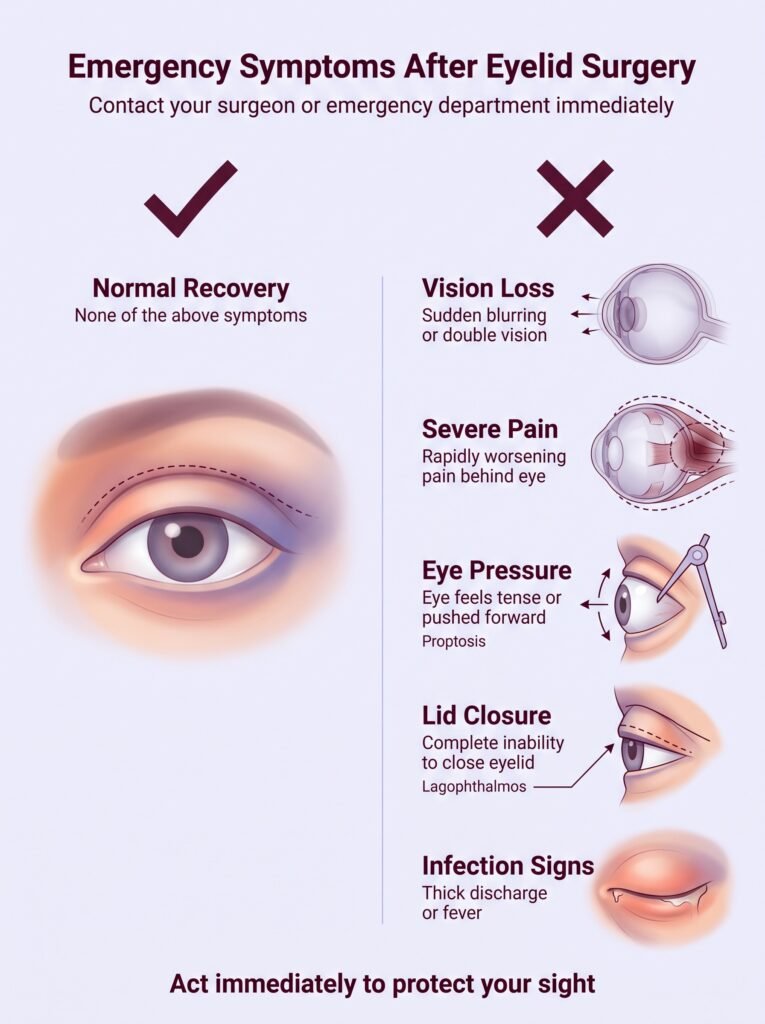
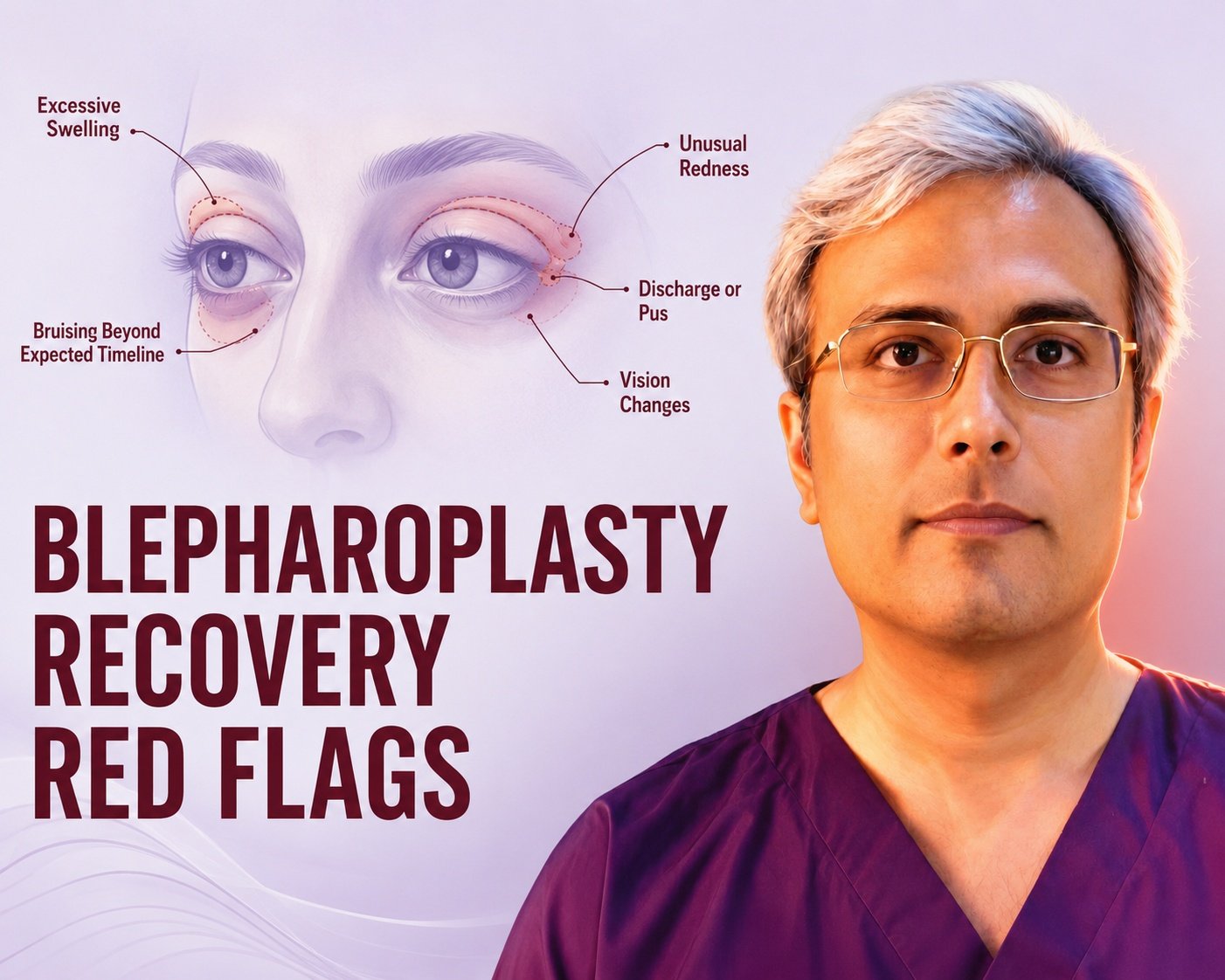
Complications after eyelid surgery are uncommon, but a small number are genuinely time-critical. Contact your surgeon or attend an emergency department at once if you experience:
- Sudden loss of vision, blurring, or double vision
- Severe or rapidly worsening pain behind the eye
- Swelling or bruising that expands quickly, or an eye that feels tense and is pushed forward
- Complete inability to close the eyelid
- Thick discharge, spreading redness, or fever
The first three can indicate bleeding behind the eye. It is rare, but it threatens sight and is treatable only if addressed within hours. Do not wait until morning, and do not wait for a scheduled appointment.
Everything below assumes you have none of these.
Why Your Eyes Feel Dry After Eyelid Surgery
The dryness is a consequence of the surgery itself, not of the weather. Understanding this matters, because it explains why the symptoms appear even in an air-conditioned room and why they settle on their own timeline.
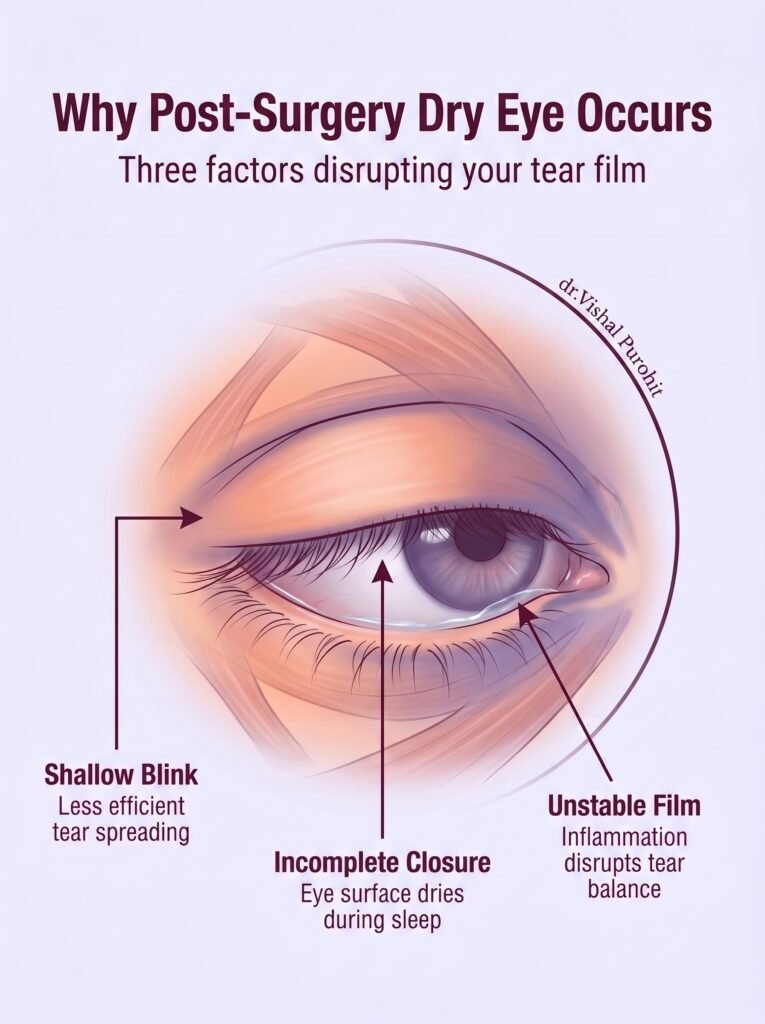
Three things happen during eyelid surgery that disturb the tear film:
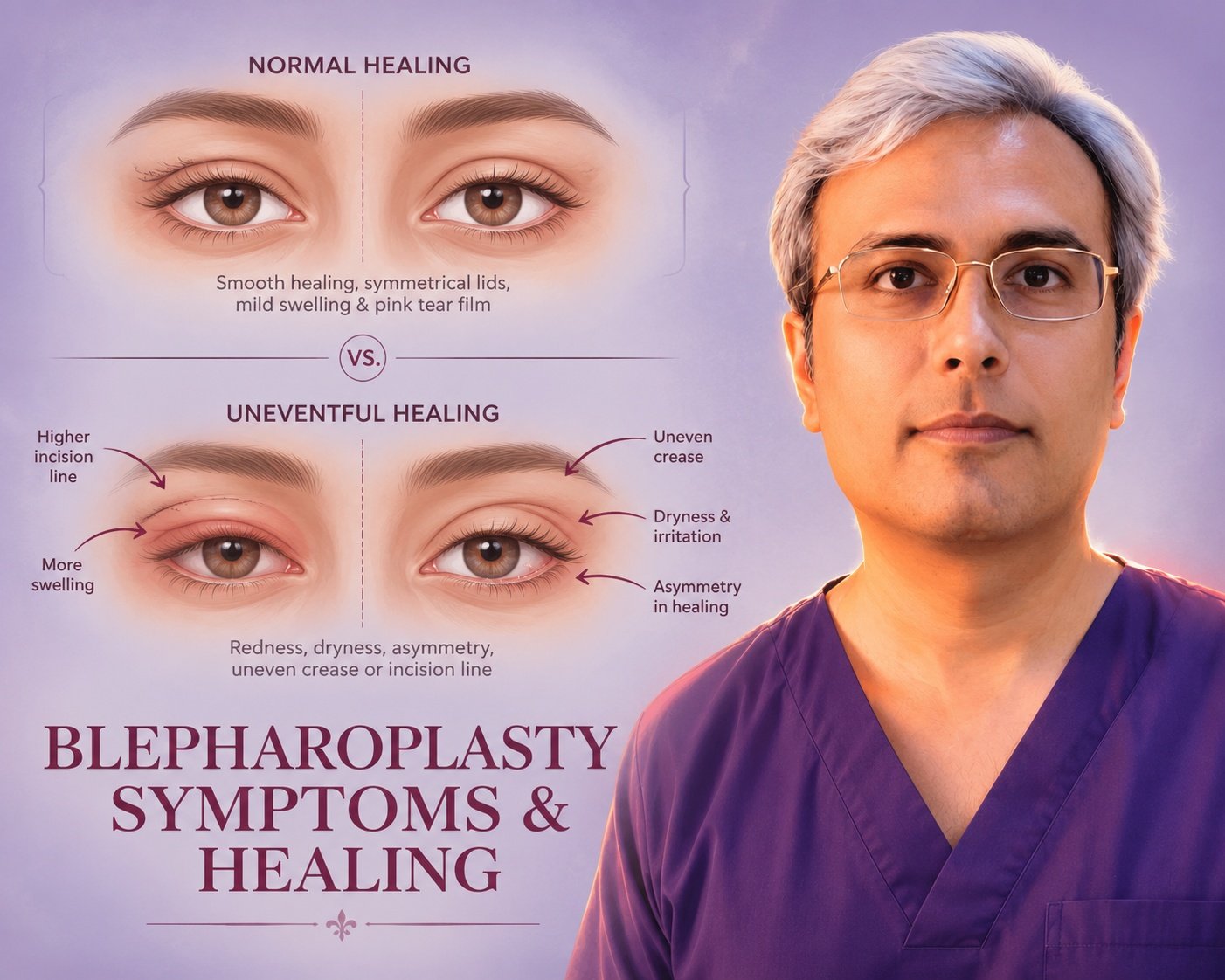
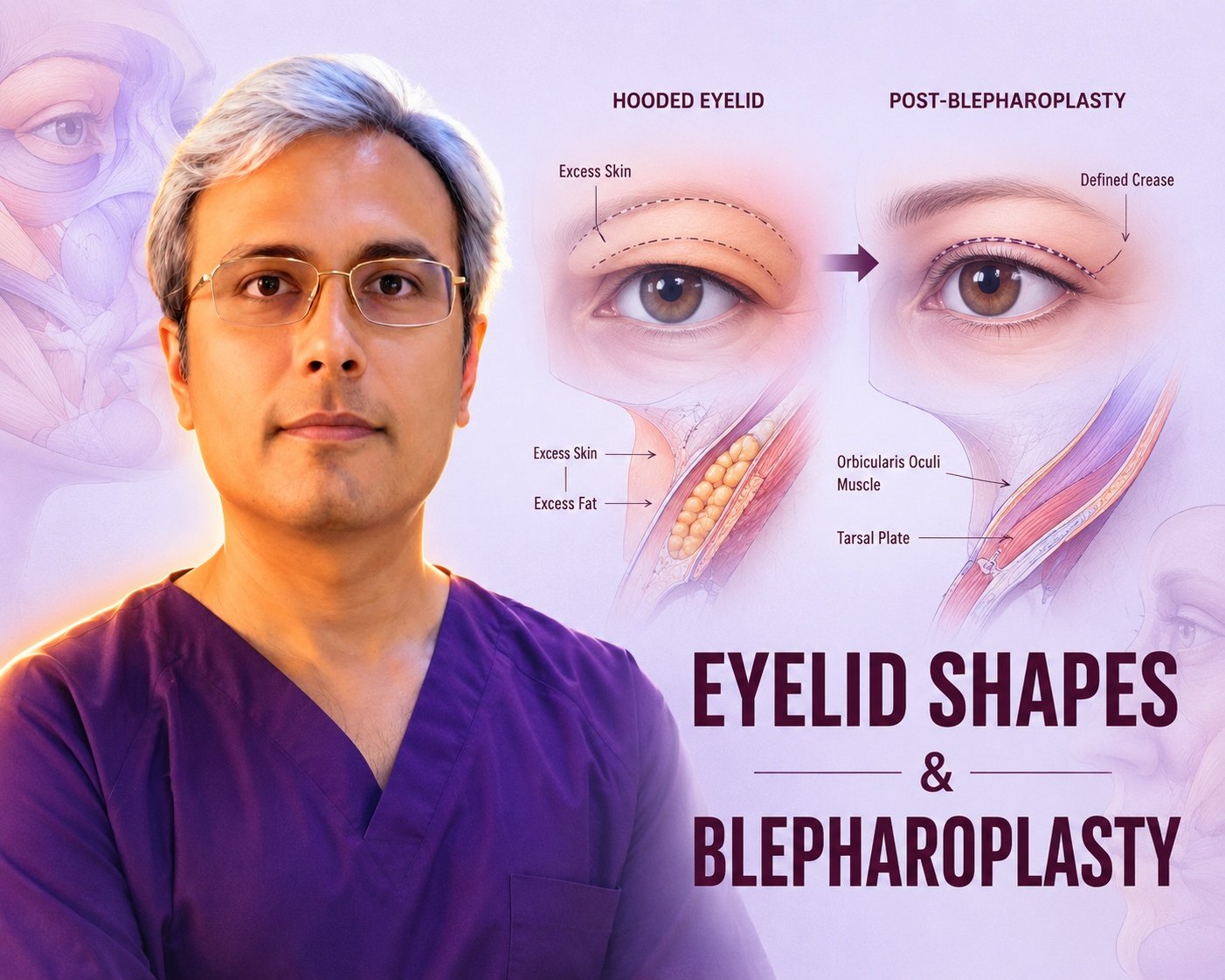
Your blink changes temporarily. Swelling and handling of the orbicularis muscle — the ring of muscle that closes the lid — make the blink shallower and less efficient for a few weeks. A complete blink is what spreads tears evenly across the cornea. An incomplete one leaves patches of the surface exposed.
The lids may not fully close. Mild, temporary incomplete closure, called lagophthalmos, is common in the early weeks, particularly at night. The eye surface dries out during sleep without you being aware of it. This is the single most important reason for the night-time care described below.
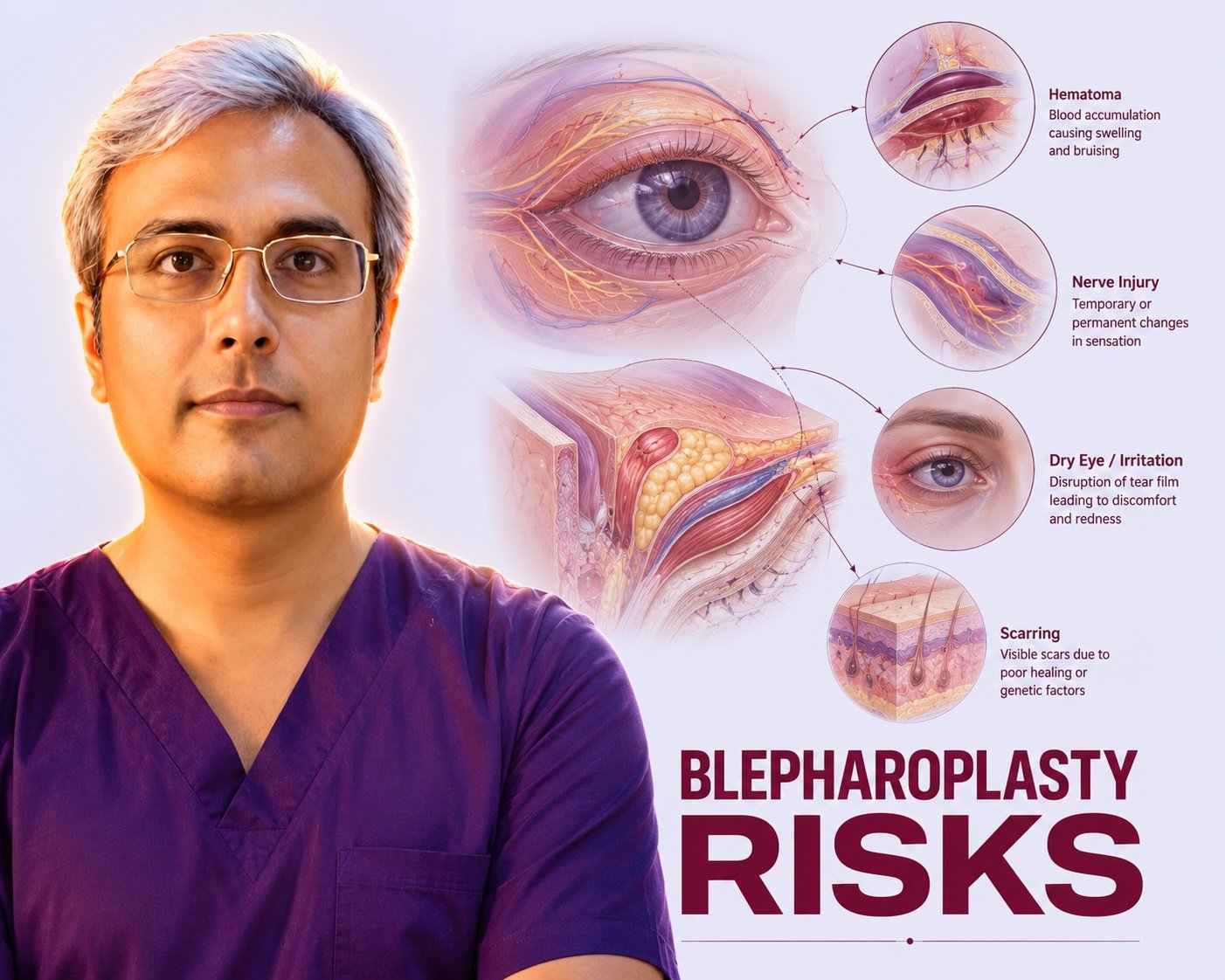
The tear film becomes unstable. Post-operative inflammation and altered corneal sensation disrupt the balance of the tear film. Dry eye of this type is now recognised as a distinct clinical entity in the ophthalmology literature, arising from tear film instability, ocular surface inflammation, and neurosensory changes rather than from any single cause.[1,2]
The paradox of watery eyes is explained by the same mechanism: an irritated, dry surface triggers a reflex flood of poor-quality tears that run off the lid rather than coating it.
Certain people are more prone to this. Previous LASIK surgery raises the risk substantially, because corneal nerves are already affected. So does pre-existing dry eye, combined upper and lower lid surgery, and thyroid eye disease.[1,3] If any of these apply to you, tell your surgeon before the operation, not after.
Jaipur’s Climate: The Aggravating Factor
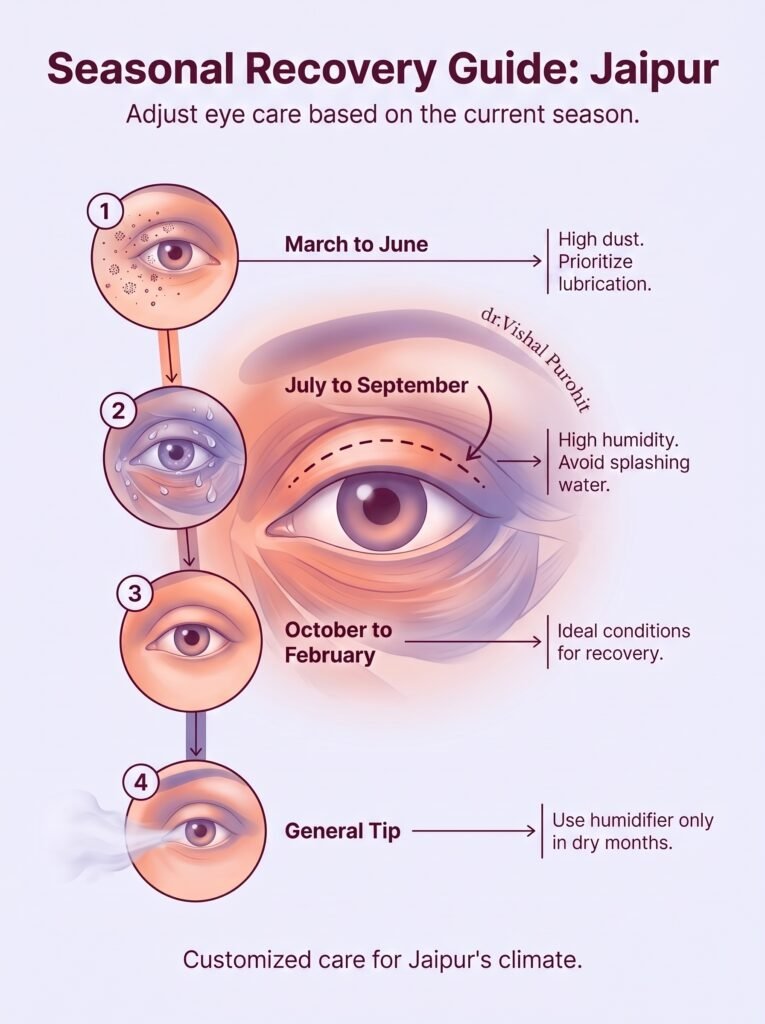
Jaipur does not cause post-operative dry eye. It does make it harder to ride out, and it does so seasonally rather than year-round.
March to June are the difficult months. Relative humidity drops sharply, and pre-monsoon dust storms carry fine particulate into every corner of the city. If your surgery falls in this window, expect to work harder at lubrication and eye protection.
July to September is monsoon. Ambient humidity is high, and dryness is far less of a problem — but airborne pollen and mould rise, and standing water means you should be stricter about avoiding pools, lakes, and anything that might splash the incision.
October to February is generally the easiest period to recover in: moderate humidity, low dust, comfortable temperatures.
The practical point is that generic advice to “run a humidifier” is right in April and largely pointless in August. Adjust to the season you are actually in.
Your Lubrication Routine
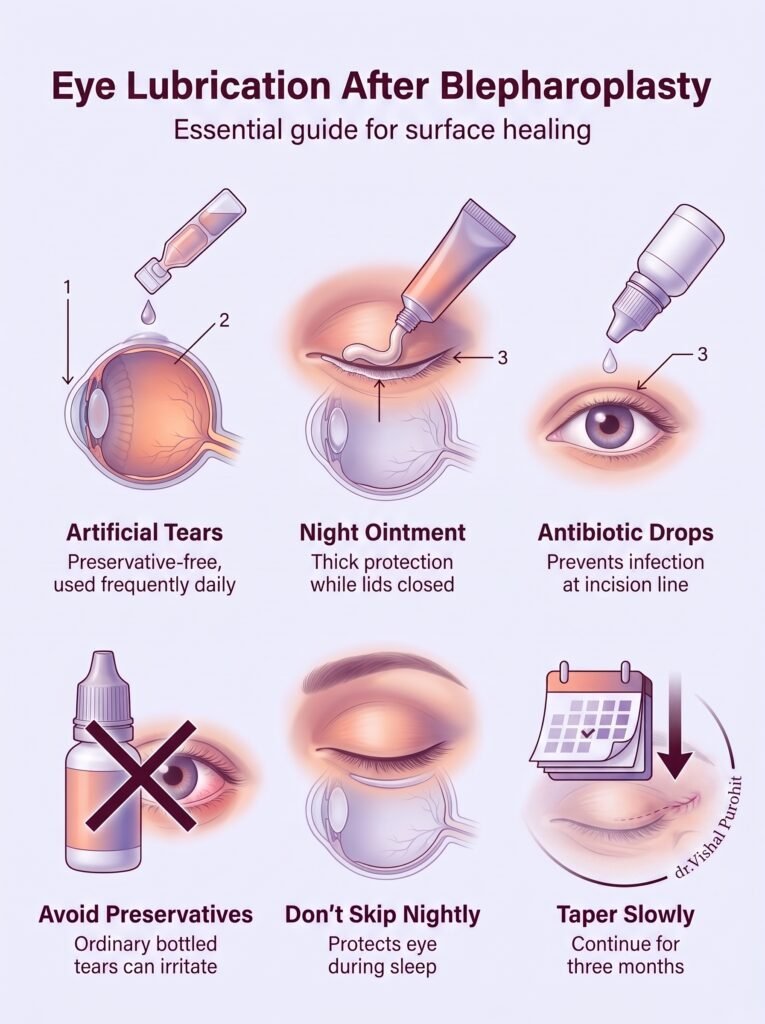
Lubrication is the core of recovery. Two distinct things are usually prescribed, and patients frequently confuse them.
| What it does | How it is used | |
|---|---|---|
| Preservative-free artificial tears | Replaces the tear film and soothes the surface | Frequently through the day — often four to six times, more in dry months |
| Lubricating ointment | Thick, long-lasting protection while the lids are closed | At bedtime, and this is not optional |
| Antibiotic ointment or drops | Prevents infection at the incision line | Short course, exactly as prescribed |
Three points that make a real difference:
Use preservative-free drops. With frequent dosing, the preservatives in ordinary bottled tears become an irritant in their own right. Single-use vials cost more and are worth it.
Do not skip the night ointment. This is the part patients abandon first, because it blurs vision for a few minutes. It is also the part that protects you during the eight hours your lids may not be fully closing. If your surgeon has additionally advised taping the lids at night, do that too.
Do not stop early. Symptoms usually improve within four to six weeks, but the tear film often takes three months to fully stabilise. Stopping lubricants the week you feel better is the most common reason for a relapse. Taper, do not quit.
For more on the full range of what to expect, see managing side effects after eyelid surgery.
Protecting the Eyes from Dust and Sun
Airborne dust in Jaipur is an irritant. It is worth taking seriously on those grounds, but not on the grounds of infection — blepharoplasty has one of the lowest infection rates of any surgical procedure, because the periorbital tissues have an exceptionally rich blood supply, and the incisions are closed.
What dust actually does is scratch an already-compromised ocular surface and provoke rubbing, which is the real risk.
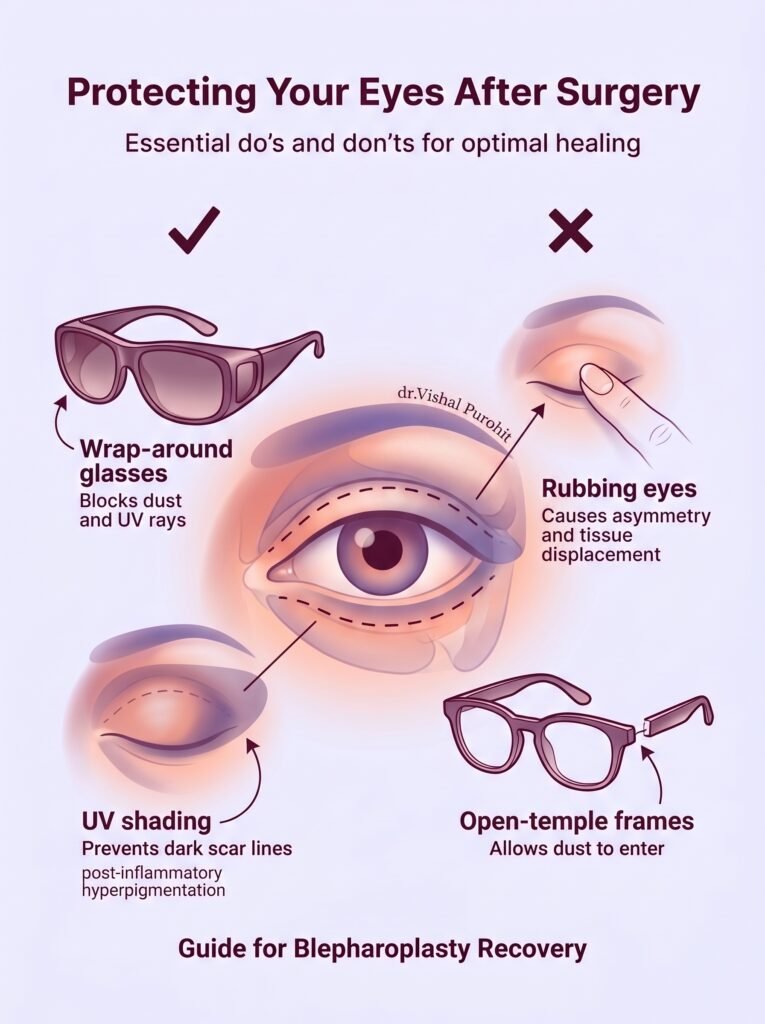
Wrap-around sunglasses when you go outdoors. Side coverage matters more than the darkness of the lens — a fashionable pair with open temples does very little.
UV protection has a specific purpose here, and it is not about the eye alone. Fresh incision lines exposed to sunlight are prone to post-inflammatory hyperpigmentation, which on Indian skin tones can leave a visible darkened line that takes many months to fade. Shading the scar for the first three months is one of the highest-return things you can do for the cosmetic result.
Do not rub your eyes. If they itch, use a drop instead. Rubbing displaces healing tissue and is the fastest route to an asymmetric outcome.
Activity and Daily Life
Old advice to stay indoors for two weeks is outdated and counterproductive — early gentle movement is good for you. What you need to avoid is exertion that raises pressure in the head and neck.
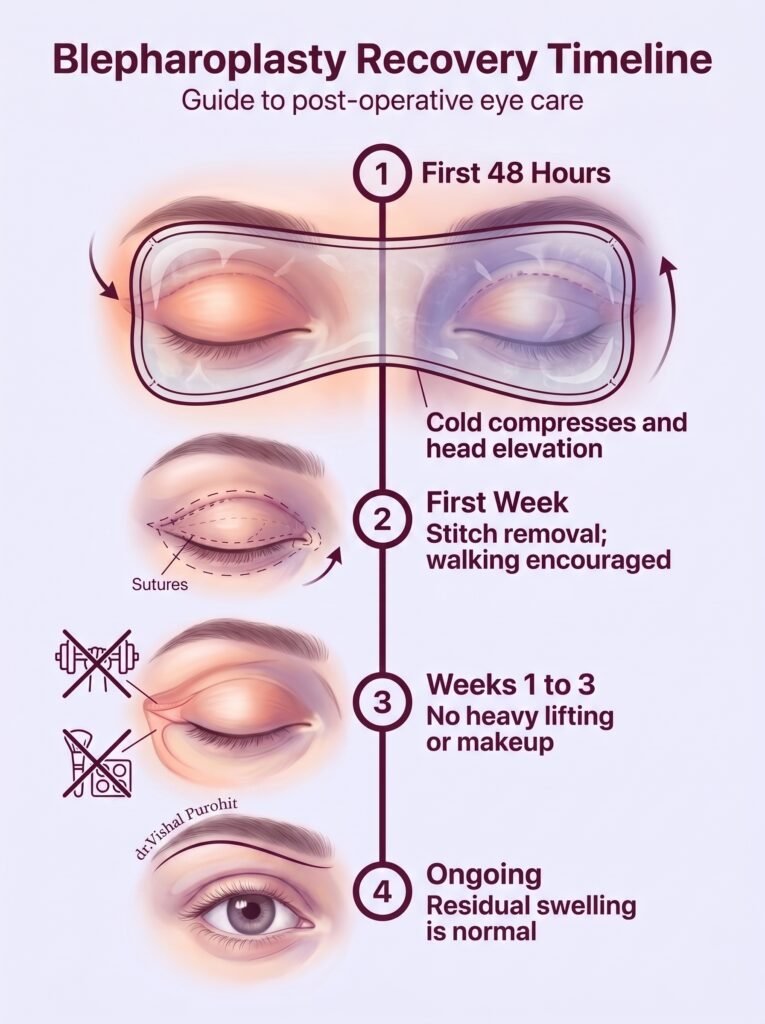
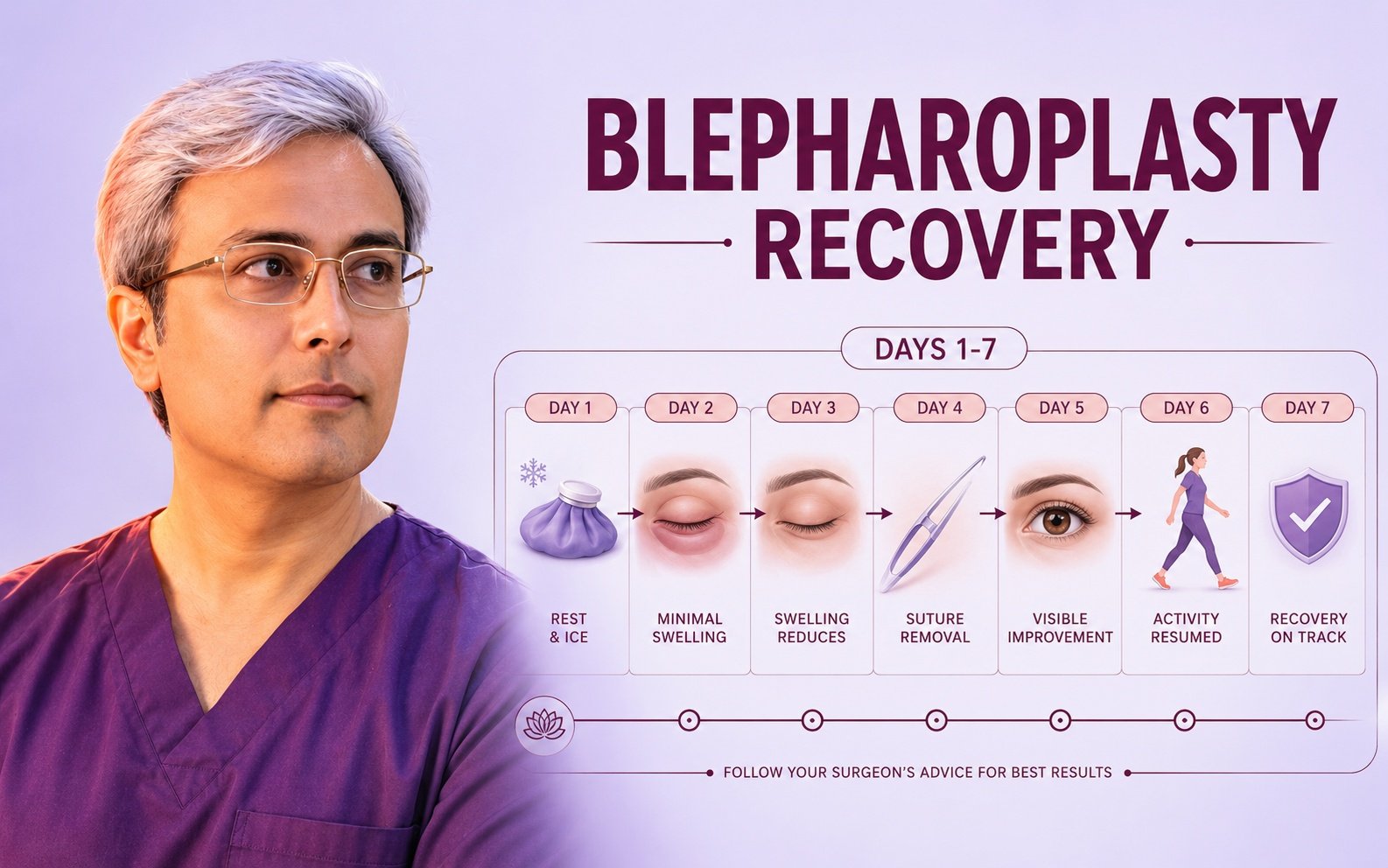
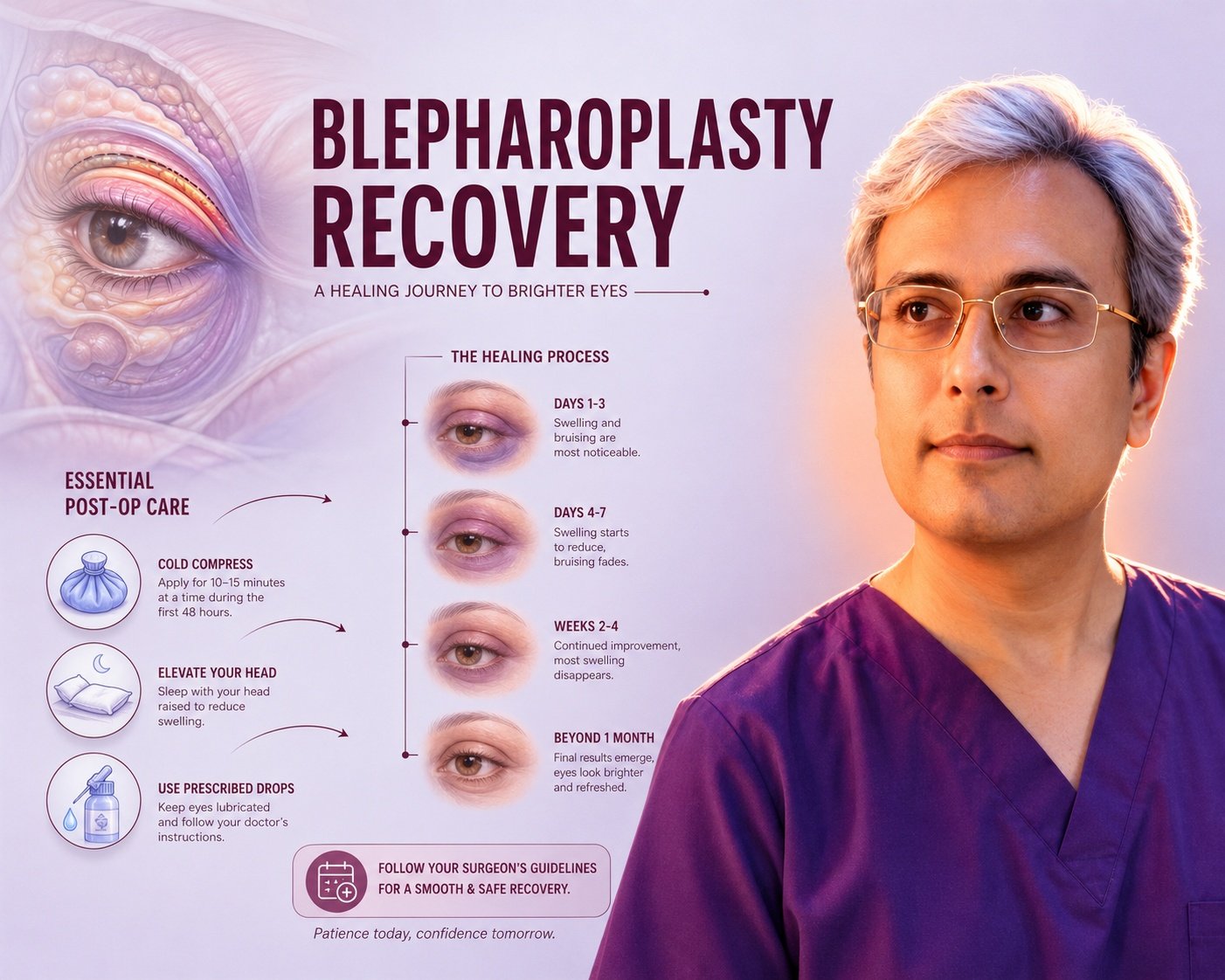
First 48 hours: Cold compresses over closed lids, in short intervals. Sleep with your head elevated on two or three pillows. Expect swelling to peak around day two or three.
First week: Sutures typically come out around day five to seven. Walking is encouraged. Reading and screens are fine in moderation, though both reduce blink rate and worsen dryness — take breaks and dose your drops beforehand.
Weeks one to three: No strenuous exercise, heavy lifting, or bending forward at the waist. No swimming pools, hot tubs, saunas, or steam. No contact lenses for at least two weeks, and often longer if dryness persists. No eye makeup for around two weeks.
Ongoing: Most people return to desk work within seven to ten days. Residual swelling and a slightly firm feel to the lids can persist for several months. This is normal and does not indicate a problem.
For a fuller breakdown, see how long recovery takes after blepharoplasty, and for symptom-by-symptom guidance, managing post-operative eye discomfort.
Will the Dryness Become Permanent?
For the large majority of patients, no. Post-operative dry eye is transient, and the tear film returns to its pre-operative state within a few months.
Persistent dryness is more likely where the underlying anatomy was already marginal — previous refractive surgery, established dry eye disease, or an aggressive resection that leaves the lids unable to close fully. This is why conservative, orbicularis-sparing technique and honest pre-operative assessment matter more than any aftercare regimen. Preserving the muscle preserves the blink, and preserving the blink preserves the tear film.[3,4]
If your symptoms are worsening rather than improving after six weeks, that warrants an assessment rather than more drops.
Frequently Asked Questions
Is a humidifier worth using in Jaipur?
In the dry months of March to June, yes — a bedroom humidifier overnight can noticeably reduce morning grittiness. During monsoon, when ambient humidity is already high, it adds little. Judge by the season rather than following blanket advice.
When can I start wearing sunglasses?
Straight away. Sunglasses are helpful from day one for light sensitivity, wind, and dust, and they conceal bruising. Choose a wrap-around style with genuine UV protection, and avoid frames that press on the incision.
My eyes are watering constantly. Isn’t that the opposite of dry?
It is the same problem. A dry, irritated surface triggers reflex tearing, and those reflex tears are watery and unstable, so they run off rather than coating the eye. Lubricating drops usually reduce the watering rather than adding to it.
How long will I need eye drops?
Most patients use artificial tears frequently for the first four to six weeks, then taper over the following weeks. Night-time ointment is usually continued for at least two to four weeks, or longer if lid closure is still incomplete. Your surgeon will adjust this based on examination, not on a fixed calendar.
I had LASIK years ago. Does that change anything?
Yes, and it is important to disclose. Refractive surgery affects corneal nerves and raises the risk of post-operative dry eye significantly. It does not rule out blepharoplasty, but it changes the pre-operative assessment, the surgical plan, and the aftercare.
References
- Mack WP. Blepharoplasty complications. Facial Plastic Surgery. 2012;28(3):273–287. doi:10.1055/s-0032-1312705
- Taşkıran Çömez A, et al. Iatrogenic dry eye disease in surgical and cosmetic practice. Turkish Journal of Ophthalmology. 2026;56(3):187–197. doi:10.4274/tjo.galenos.2025.69812
- Zhang SY, Yan Y, Fu Y. Cosmetic blepharoplasty and dry eye disease: a review of the incidence, clinical manifestations, mechanisms and prevention. International Journal of Ophthalmology. 2020;13(3):488–492. doi:10.18240/ijo.2020.03.18
- Heidari M, Haydar AA, Rajabi MT, Rafizadeh SM. Corneal biophysical changes after upper eyelid blepharoplasty and ptosis surgery: a review. BMC Ophthalmology. 2023;23(1):253. doi:10.1186/s12886-023-03010-3
This article is general educational information and does not replace individual medical advice. Post-operative instructions vary with the technique used and your own anatomy — always follow the specific guidance given by your treating surgeon.
Written and medically reviewed by Dr. Vishal Purohit, MBBS, MS, MCh (Plastic Surgery), practising plastic and cosmetic surgeon in Jaipur. Last updated 26 July 2026.
To discuss your recovery or arrange a consultation, contact the clinic in Jaipur on +91-7718183535. If you are considering the procedure itself, you can read more about cosmetic surgery in Jaipur.





 English
  Hindi
Hindi