
What Is Liposuction Surgery?
Hello! I am Dr Vishal Purohit, a plastic and cosmetic surgeon practising in Jaipur. One of the most common questions my patients ask is, “What exactly is liposuction?”
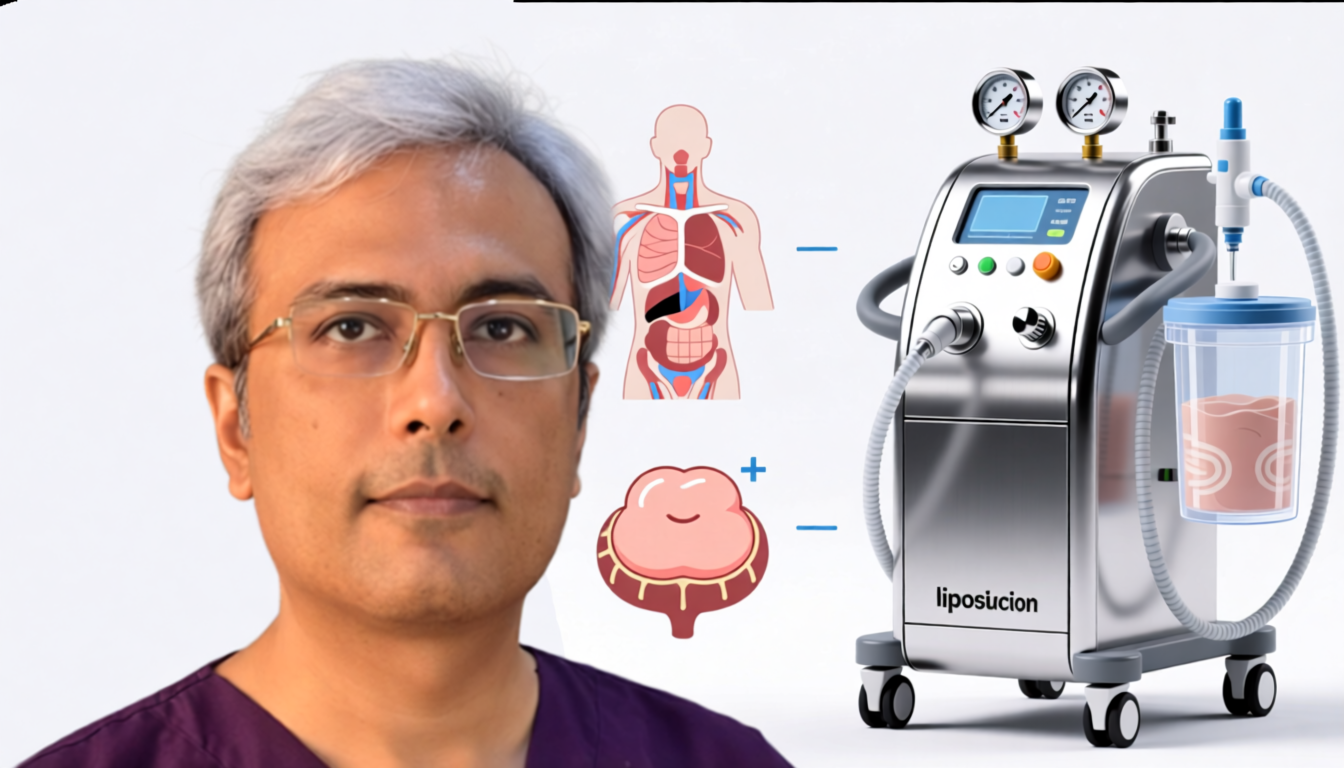
In simple terms, liposuction is the removal of fat using cannulas (tubes) inserted through tiny incisions into the adipose tissue, where the fat is vacuumed out. It is a surgical procedure I perform to help patients slim and reshape specific areas of the body.
The procedure is also known by other names, including lipoplasty, lipectomy, and sometimes, less precisely, by synonyms like “lipodisection” or “lipolysis aspiration”.
It is an effective tool, but to ensure the best and safest outcome, it is essential to understand precisely what it is—and the critical nuances involved. What it does and, just as importantly, what it doesn’t do.
Primary Purpose of Liposuction: Contouring, Not Weight Loss
The main goal of liposuction surgery is to permanently alter your body’s fat distribution by reducing localised, disproportionate adipose deposits that are refractory to diet and exercise.
It is critical to understand that liposuction is not a treatment for general obesity or a substitute for weight reduction.
The ideal candidate is near their ideal body weight. Individuals with a Body Mass Index (BMI) greater than 30 are typically seen as a contraindication for the procedure. While some research suggests that successful large-volume procedures may occasionally encourage and motivate patients to adopt long-term weight control, the procedure should never be approached as a primary means of weight loss.
How Liposuction Works: Permanent Fat Cell Removal
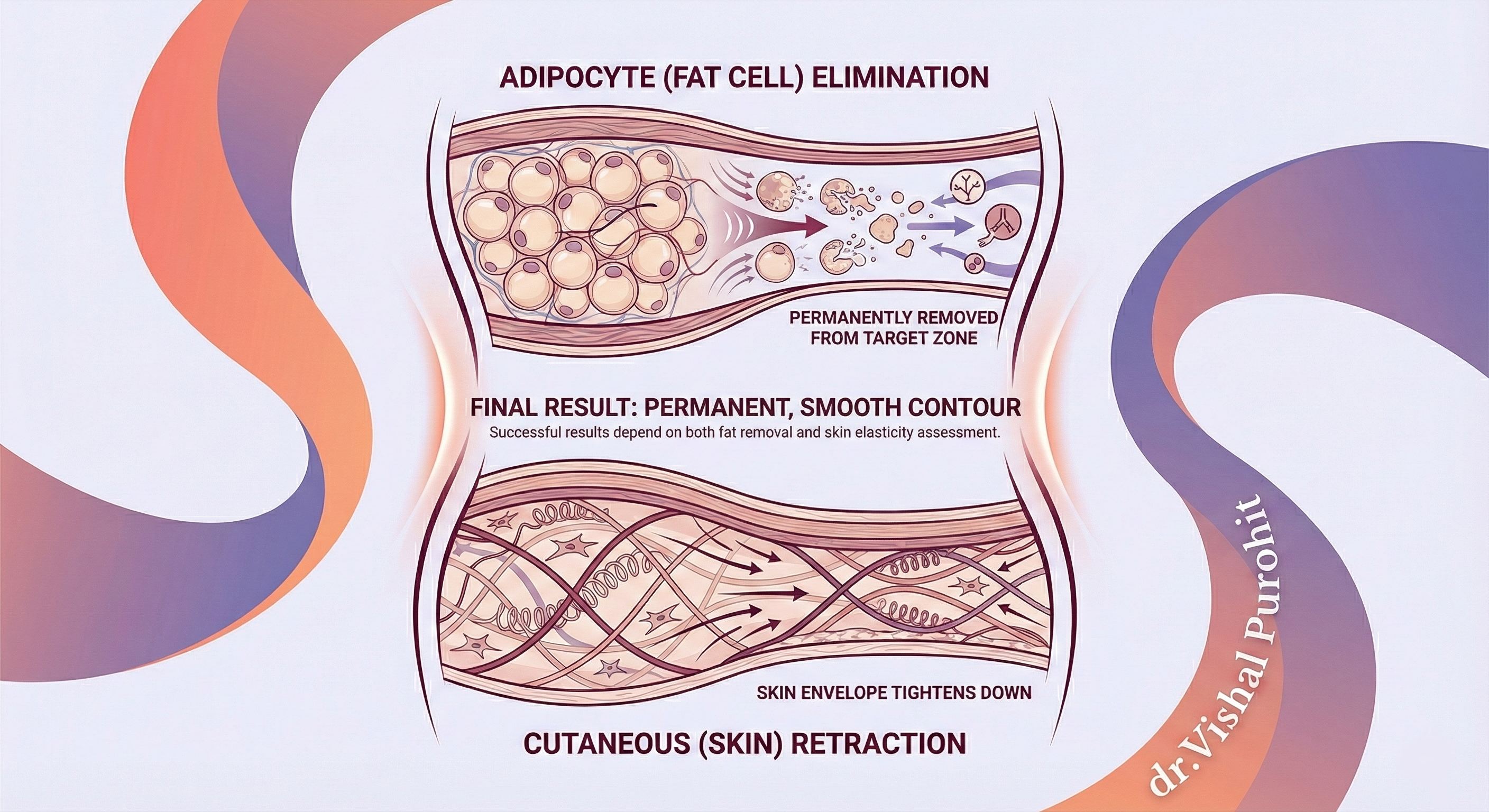
Liposuction is far more than simply emptying fat cells; the successful aesthetic result depends on two interconnected physical responses: fat removal and skin retraction.
The reason liposuction results are permanent is that we are physically removing the fat cells (adipocytes) from the target area. Once these cells are removed, they do not grow back. This process permanently lowers the total number of fat cells in that specific zone, guaranteeing a long-lasting contour.
Removal of Localised Fat
The procedure targets adipose tissue composed of two layers: the superficial areolar fat and the deep lamellar fat. It is essential to treat the deep layer, as this is the layer that may thicken significantly when weight gain occurs.
This process permanently lowers the total number of fat cells in that specific zone, guaranteeing a long-lasting contour.
Skin Retraction:
The crucial facet of successful liposuction is the retraction of the cutaneous envelope. If the overlying skin has poor elasticity (which is common in mature patients), simply removing the fat may lead to skin ptosis or an undesirable “rough look”.
The refinement of liposuction techniques, such as the development of subdermal superficial liposuction, was aimed precisely at working closer to the dermal layer to promote better skin contraction, enabling better results for minimal deformities and difficult cases.
This intricate reliance on skin quality highlights why a thorough assessment of your skin elasticity is a mandatory part of choosing the ideal candidate for liposuction.
The Surgical Process: Techniques and Technologies
A simple explanation of the actual procedure that i do involves a process of infusion and extraction:
- Infusion: First, I infuse a sterile, medicated fluid known as “tumescent solution.” This fluid contains saline, a local anaesthetic (lidocaine) to relieve pain, and a vasoconstrictor (epinephrine) to significantly reduce bleeding and trauma.
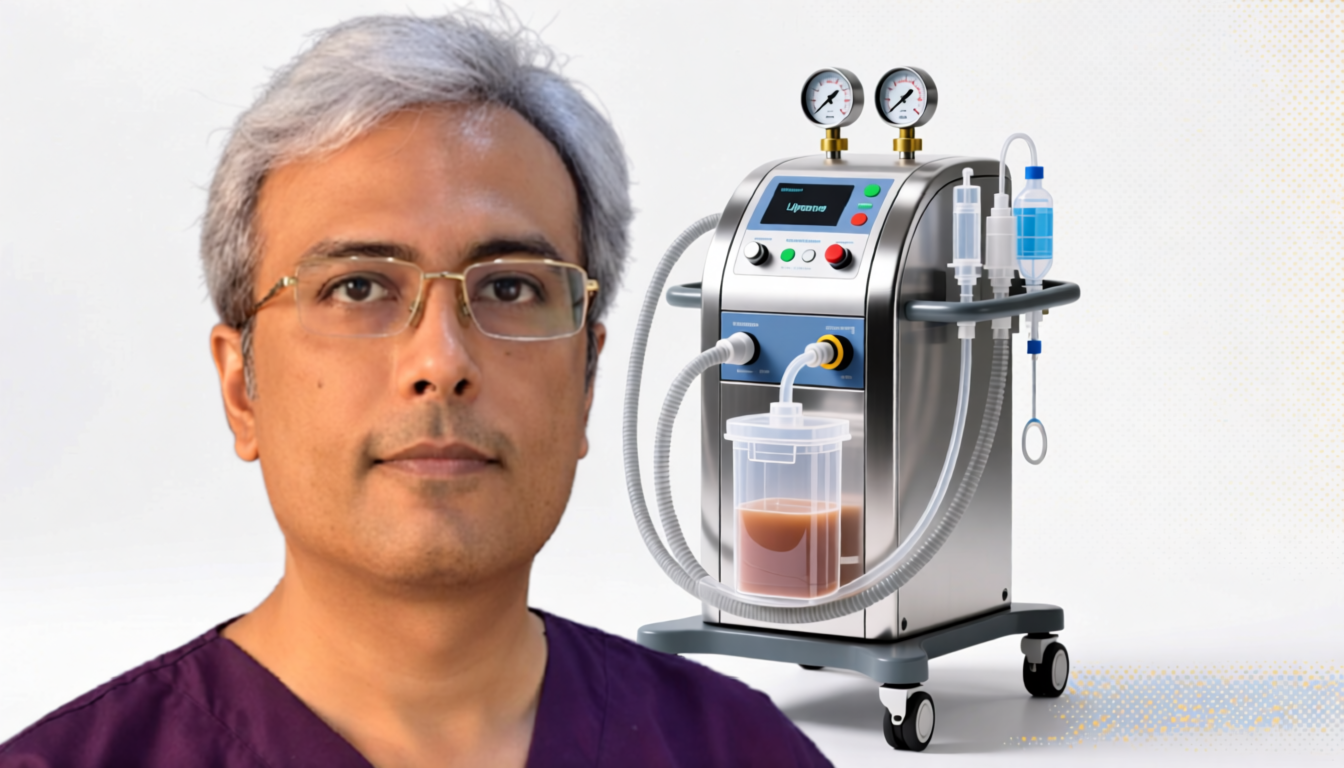
- Extraction: I then make very small, inconspicuous incisions, typically just 3-5 mm long. Through these openings, I insert a thin, hollow tube called a cannula. This cannula is attached to a surgical vacuum or syringe, and as I move it, it gently loosens the fat and suctions it out of the body.
While the underlying principle of aspiration remains constant, various technologies have been developed to enhance the process.
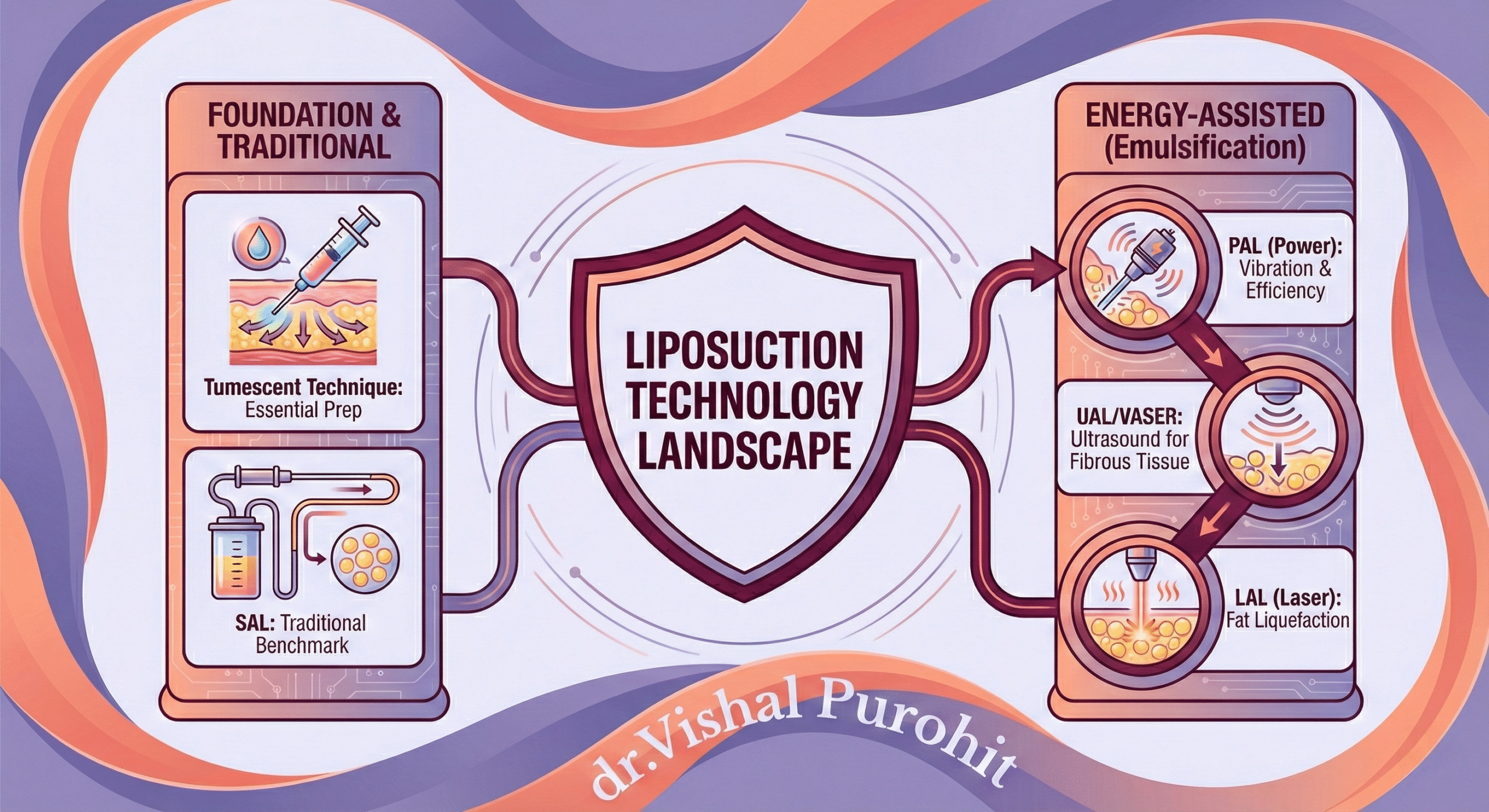
Tumescent Liposuction: This foundation technique involves infiltrating a wetting solution (saline, local anaesthetic, epinephrine) into the fat deposits. This minimises blood loss and provides anaesthesia.
Suction-Assisted Lipoplasty (SAL): The traditional method, serving as the benchmark against which all other techniques are compared.
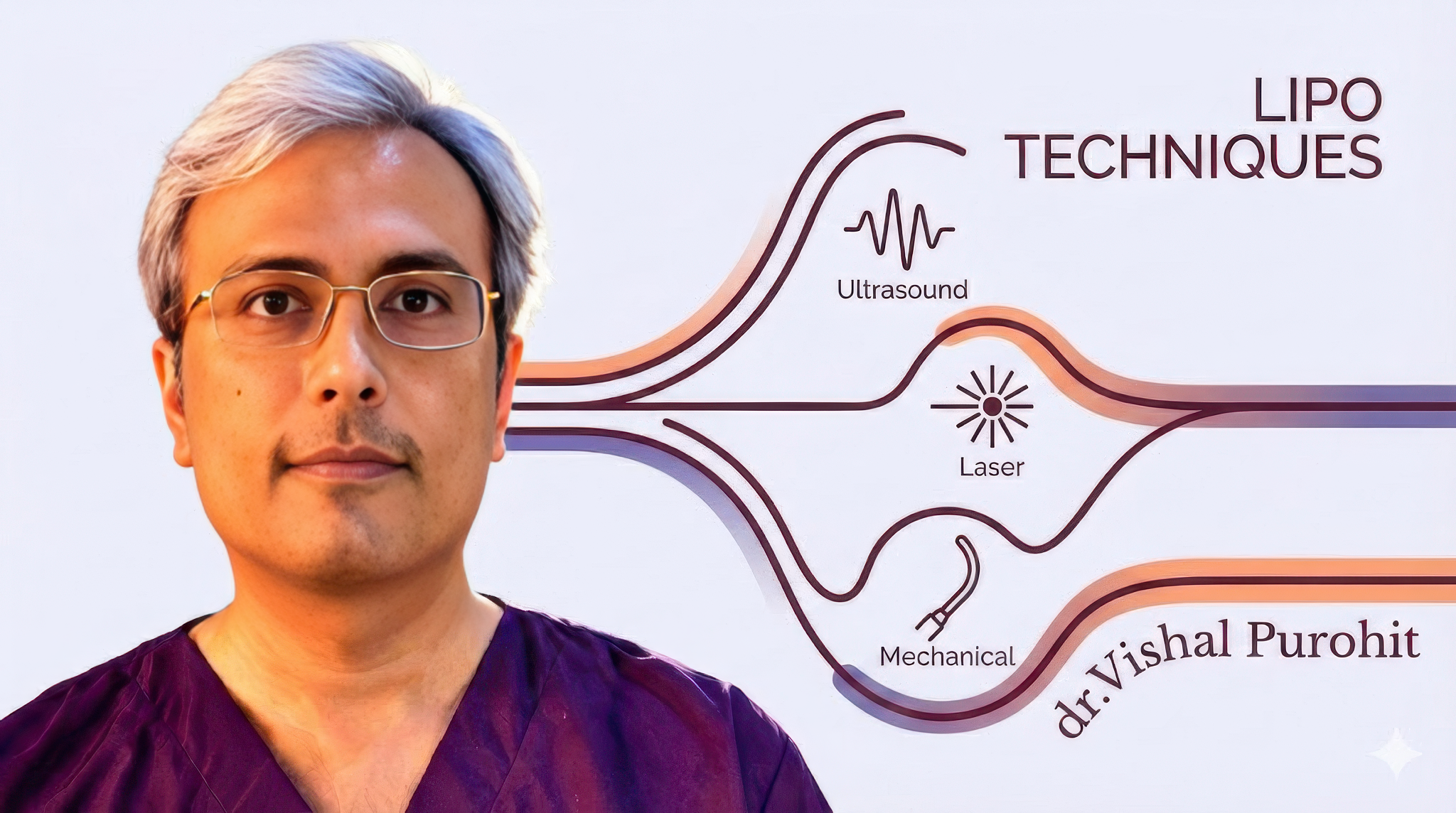
Energy-Assisted Liposuction: These methods use energy (sound, light, or mechanical power) to help emulsify or loosen the fat before it is aspirated:
- Power-Assisted Liposuction (PAL): Uses mechanical vibration to reduce surgeon fatigue and enhance efficiency, particularly in fibrous tissues.
- Ultrasound-Assisted Liposuction (UAL) / VASER: Uses ultrasonic energy to emulsify the fat, which is often preferred for fibrous areas like the male chest or for repeat procedures.
- Laser-Assisted Liposuction (LAL): Uses laser energy to liquefy fat. It is distinct from suction-assisted lipectomy and laser lipolysis.
Beyond Aesthetics: Medical and Adjunctive Applications
Although widely known for cosmetic applications, liposuction is a versatile surgical tool used in reconstructive and purely medical contexts:
Adjunctive Aesthetic Procedures:
Liposuction is frequently used to enhance other procedures, functioning as a frequent adjunct to conventional surgical procedures, such as facelift or abdominoplasty.
Treatment of Fat Disorders
It is the appropriate surgical therapy for benign adipose tissue diseases. For example, liposuction is used to remove massive, chronic fat deposits in conditions like lipedema and is now widely accepted for managing the volumetric excess of chronic lymphedema, where it is used to remove adipose tissue to achieve significant volume reduction.
It is also the treatment of choice for Benign Symmetric Lipomatosis (Madelung’s disease) to replace or as an adjunct for surgical excision.
Metabolic Research
There is evidence suggesting that large-volume fat removal may lead to additional metabolic benefits, such as improved insulin sensitivity, though this is an ongoing area of research.
The Essential Counter-Argument for Liposuction
Liposuction is a Complex Surgery
Due to its popularity and minimally invasive nature, liposuction is often mistakenly viewed in the media and by laypersons as trivial or minor surgery. However, it is a complex procedure that requires extensive knowledge and experience.
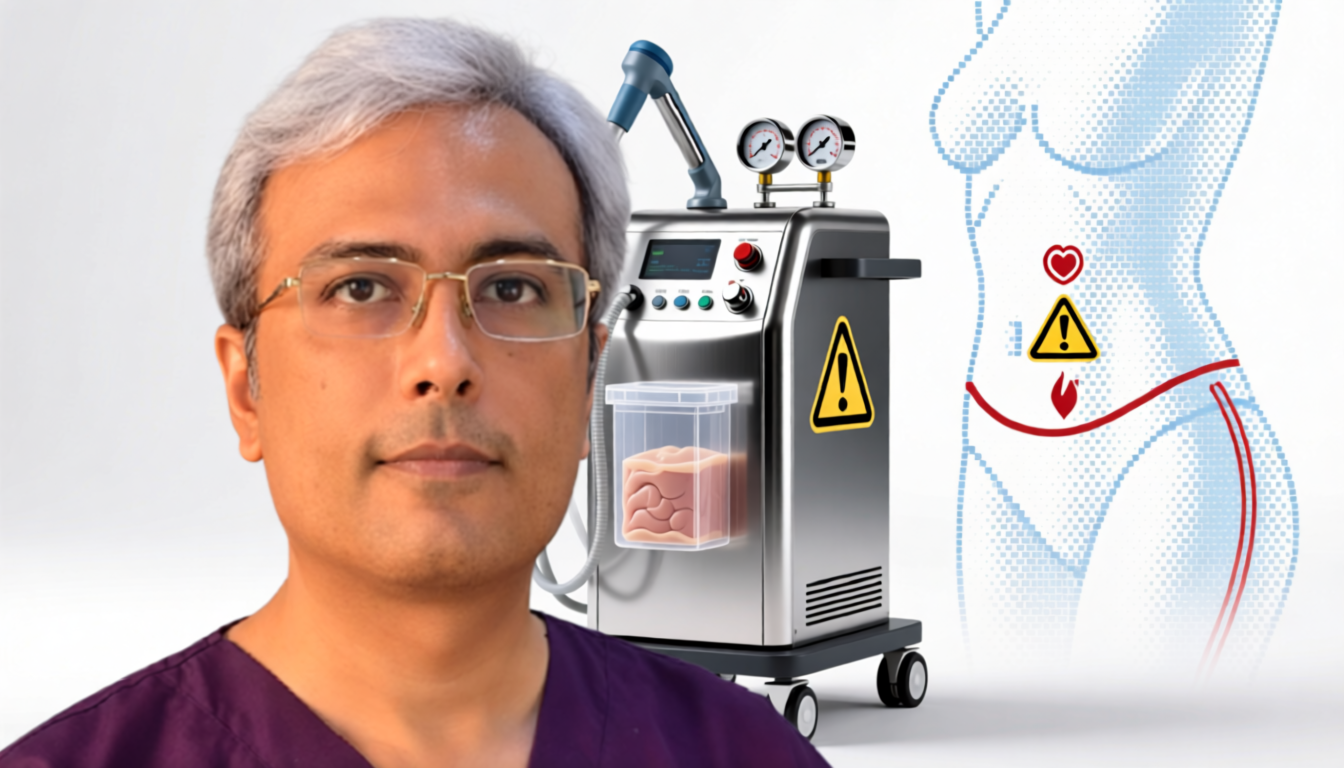
While most complications are minor, severe adverse outcomes, including contour irregularities or systemic issues, can occur. Specific and rare complications such as morphea may appear after liposuction.
A full understanding of the Main Risks of Liposuction Surgery is essential for patient safety, which relies heavily on the surgeon’s training, the established safety protocols, and careful fluid management.
A Critical Distinction: Liposuction Is Not a Weight Loss Tool
All my patients must have realistic expectations. Liposuction is not a weight-loss procedure, nor is it an obesity treatment.
If you are significantly overweight, you will lose far more weight through lifestyle changes like diet and exercise, or through bariatric surgery. This procedure is most effective for individuals who are already at or slightly above their normal body weight but are frustrated by specific, localised pockets of fat.
This is why patient selection is so important. Who is the ideal candidate for liposuction depends heavily on having a stable body weight and being committed to a healthy lifestyle.
What Liposuction Cannot Treat: Cellulite and Loose Skin
Liposuction targets the soft, subcutaneous fat tissue. This means it cannot address issues related to skin texture or significant skin laxity.
- Cellulite: The procedure does not treat cellulite (the dimpled, “orange-peel” appearance of skin). Cellulite is a complex issue caused by fibrous bands under the skin, which liposuction does not target.
- Stretch Marks: Liposuction does not remove stretch marks.
- Loose Skin: The success of liposuction depends on your skin having good elasticity, allowing it to “shrink-wrap” over the new, slimmer contour. If your skin is thin or already loose, it may appear baggy after the underlying fat is removed. This is one of the main risks of liposuction surgery, known as a contour irregularity. In such cases, a different procedure like a lift or a tummy tuck, may be required to remove the excess skin.
Take the Next Step in Jaipur
Understanding what liposuction is, and what it isn’t, is the first step on your journey. We can also discuss the recovery time for liposuction and what you can expect during your healing.
If you believe you are a good candidate and wish to discuss your personal aesthetic goals, I am here to help. As an experienced liposuction surgeon in Jaipur, I can create a personalised plan to help you achieve the results you desire, safely and effectively.
Contact my clinic to schedule your consultation.
- 📞 Call: 7718183535
- 💬 WhatsApp: 7718183535
- 📍 Visit: Kalpana Aesthetics, 2nd Floor, Jaipur Hospital, Mahaveer Nagar, Tonk Road, Jaipur
Disclaimer: This website provides general information and discussions about medical procedures. The information and other content provided on this website, or in any linked materials, are not intended and should not be construed as medical advice, nor is the information a substitute for professional medical expertise or treatment. All results are individual and may vary. Please consult Dr Vishal Purohit for a personalised consultation.



 English
  Hindi
Hindi